5 Best Movies Starring Rappers
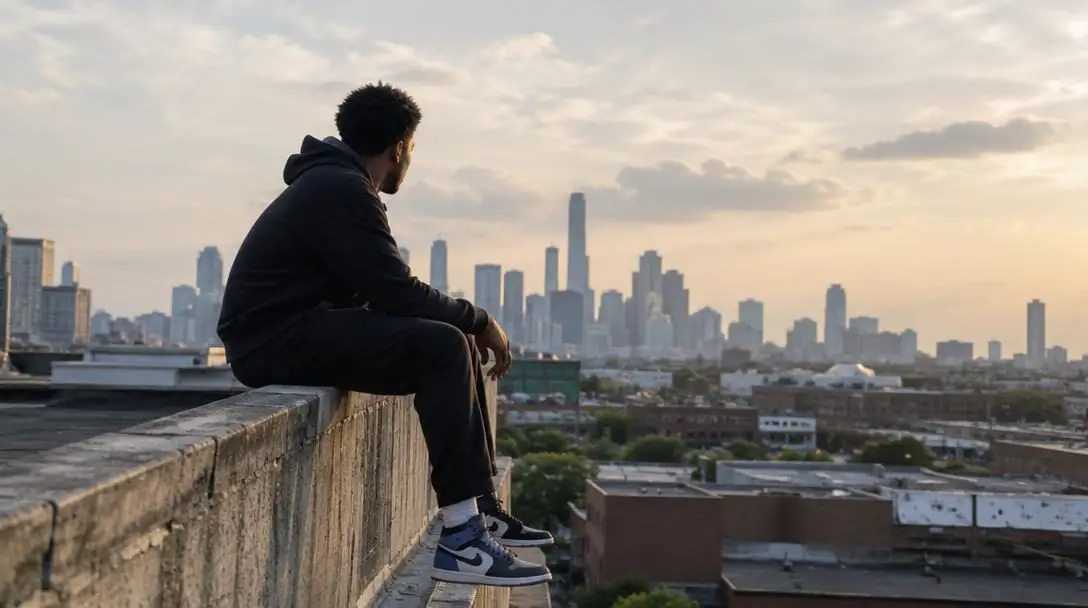
Rap music has always operated as an expressive form of oral literature. Long before an MC ever steps onto a cinematic soundstage, they spend years honing the craft of character building, pacing narratives, and projecting raw emotion across short musical verses. The charisma, rhythmic instinct, and stage command required to capture an audience in music share remarkable common ground with the demands of screen acting.
While film studios have frequently recruited musicians merely to leverage built-in record sales, a distinct group of hip-hop artists proved they could carry major cinematic productions on dramatic merit alone. Rather than serving as novelty cameos, these performers transformed their lyrical authenticity into unforgettable movie moments, anchoring narratives that continue to define modern American cinema.
Key takeaways
- The strongest cinematic crossovers occurred when recording artists balanced major film shoots while still operating at their peak commercial and musical relevance.
- Hip-hop performers frequently adapted their mastery of vocal cadence, breath control, and storytelling to deliver grounded dramatic and comedic performances.
- Iconic entries like Boyz N The Hood and Friday demonstrated Ice Cube's exceptional range across both heavyweight social drama and neighborhood comedy.
- Commercial smashes like 8 Mile proved that personal, semi-autobiographical subcultures could yield global box office dominance alongside major academy awards.
Evaluating the peak-era crossover phenomenon
Identifying the absolute best crossover moments requires establishing firm analytical boundaries. Many music stars transition into full-time screen acting decades after walking away from the recording booth. However, this survey highlights performers who took on demanding, career-defining film roles while remaining fully engaged and dominant in the contemporary music landscape. Evaluating films through this lens captures the electric friction of an artist simultaneously dominating airwaves and movie theater screens.
Because the hip-hop film archive is deep and varied, several beloved titles narrowly missed inclusion in the top tier. Notable projects that were considered but sat just outside the final five include New Jack City, Juice, House Party, ATL, and Four Brothers. The following five selections showcase musicians operating at the absolute peak of their cultural authority, delivering performances that reshaped their creative legacies.
| Film | Featured Rapper | Character | Key Accolades & Milestones | Box Office |
|---|---|---|---|---|
| Friday | Ice Cube | Craig Jones | Co-written by Ice Cube; massive cult comedy classic | Over $27 million |
| Boyz N The Hood | Ice Cube | Doughboy | Two Oscar nominations (Director, Screenplay); #1 R&B soundtrack | $57.5 million |
| 8 Mile | Eminem | Jimmy "B-Rabbit" Smith Jr. | Oscar for Best Original Song; MTV Movie Award for Best Male Performance | Over $240 million |
| Set It Off | Queen Latifah | Cleopatra "Cleo" Sims | NAACP Image Award nomination for Queen Latifah | $41.6 million |
| Above the Rim | Tupac Shakur | Birdie | Scripted by Barry Michael Cooper; critically lauded villain role | $16.2 million |
Five landmark films starring hip-hop icons
Friday

- Release Year: 1995
- Primary Rapper: Ice Cube
- Character Portrayed: Craig Jones
- Production Budget: $3.5 million
- Worldwide Box Office: Over $27 million
Arriving in theaters in 1995, Friday completely redefined the landscape of independent urban comedies. While frequently categorized as a quintessential stoner comedy, the film remains widely regarded as one of the sharpest comedy releases of the 1990s. The entire narrative unfolds across a single day, focusing on the conversational rhythms, interpersonal friction, and daily routines of a residential block in Compton.
Although the production featured experienced comedic powerhouses like Chris Tucker alongside seasoned dramatic talent like Nia Long, top billing belonged directly to Ice Cube, who was only a few years removed from his groundbreaking tenure with N.W.A. In the central role of Craig Jones—a young man navigating the immediate aftermath of losing his job—Ice Cube played an exceptional straight man to Tucker's hyperactive Smokey. Beyond his on-camera work, Ice Cube also co-wrote the screenplay alongside fellow recording artist DJ Pooh. Produced on a modest budget of $3.5 million, the film went on to gross more than $27 million at the box office, generating immense long-term returns through home video rentals and establishing an influential franchise blueprint.
Boyz N The Hood

- Release Year: 1991
- Primary Rapper: Ice Cube
- Character Portrayed: Doughboy
- Production Budget: $6.5 million
- Worldwide Box Office: $57.5 million
Before demonstrating his comedic talents in Friday, Ice Cube introduced his screen presence through John Singleton's groundbreaking 1991 coming-of-age drama, Boyz N The Hood. Set against the intense socioeconomic backdrop of South Central Los Angeles, the movie explored the complexities of family support systems, community disenfranchisement, and personal accountability. Ice Cube shared the screen with a celebrated ensemble that included Cuba Gooding Jr., Morris Chestnut, and Larry Fishburne.

Portraying the street-hardened yet deeply protective Doughboy, Ice Cube delivered a performance layered with fatalism, loyalty, and concealed grief. Made on a lean budget of $6.5 million, the production went on to generate $57.5 million at the box office. Singleton's film offered audiences nationwide an unflinching portrait of urban realities, securing Academy Award nominations for Best Director and Best Original Screenplay. The film's companion soundtrack also proved to be a major cultural force, earning the number-one position on the R&B charts.
Street-level storytelling shares deep artistic common ground with classic theatrical drama.
8 Mile

- Release Year: 2002
- Primary Rapper: Eminem
- Character Portrayed: Jimmy "B-Rabbit" Smith Jr.
- Notable Awards: Academy Award (Best Original Song), MTV Movie Award (Best Male Performance)
- Worldwide Box Office: Over $240 million
It remains extraordinarily rare for a musical artist at the absolute pinnacle of worldwide record sales to star in a major studio film drawn directly from their private upbringing. Detroit rapper Eminem had made only sporadic cameo appearances before taking on the lead role in Curtis Hanson's 8 Mile. Playing the character of B-Rabbit, the narrative presented a loose, semibiographical chronicle of Eminem's early struggles as Marshall Mathers, navigating working-class industrial Detroit.
The film provided an authentic, atmospheric look at underground battle rap, treating competitive rhyming not as a novelty pastime, but as a high-stakes arena of self-respect, identity, and personal survival. Despite sharing scenes with proven dramatic actors like Brittany Murphy, Mekhi Phifer, and Academy Award winner Kim Basinger, Eminem delivered a completely unpretentious, naturalistic performance. The film became an undeniable global blockbuster, generating more than $240 million worldwide. Alongside taking home an Academy Award for Best Original Song, Eminem won an MTV Movie Award for Best Male Performance, demonstrating that subcultural realism could captivate mainstream cinema audiences globally.
Set It Off

- Release Year: 1996
- Primary Rapper: Queen Latifah
- Character Portrayed: Cleopatra "Cleo" Sims
- Notable Honors: NAACP Image Award nomination (Outstanding Supporting Actress)
- Worldwide Box Office: $41.6 million
During the mid-1990s, Hollywood heist films rarely focused on the complex structural circumstances faced by working-class women. Following a prominent multi-year run as the most commercially visible female rapper in hip-hop, Queen Latifah took on the boldest role of her early acting career in F. Gary Gray's 1996 crime drama Set It Off. The film chronicles four inner-city friends who orchestrate a series of high-risk bank robberies after experiencing severe personal and financial trauma.
Set against the backdrop of Los Angeles, Queen Latifah co-starred alongside Jada Pinkett, Vivica A. Fox, and Kimberly Elise. As Cleo, she created an unapologetic, intensely loyal, and fierce presence who drove the crew's operations with boundless energy. Her work earned her an NAACP Image Award nomination and widespread praise from critics who admired her ability to humanize an outlaw archetype. The film resonated strongly with moviegoers, earning $41.6 million at the box office and paving the way for Queen Latifah's sustained career as an acclaimed leading lady across multiple Hollywood genres.
Above the Rim

- Release Year: 1994
- Primary Rapper: Tupac Shakur
- Character Portrayed: Birdie
- Screenwriter: Barry Michael Cooper
- Worldwide Box Office: $16.2 million
Tupac Shakur remains one of the most culturally vital figures in the history of hip-hop, but his brief life was also marked by a compelling screen presence. In the 1994 sports drama Above the Rim, Shakur stepped into the role of Birdie, a charismatic local drug dealer and playground basketball tournament sponsor. Written by Barry Michael Cooper, who previously authored New Jack City, the narrative centers on a high school basketball prodigy caught between conflicting moral influences.
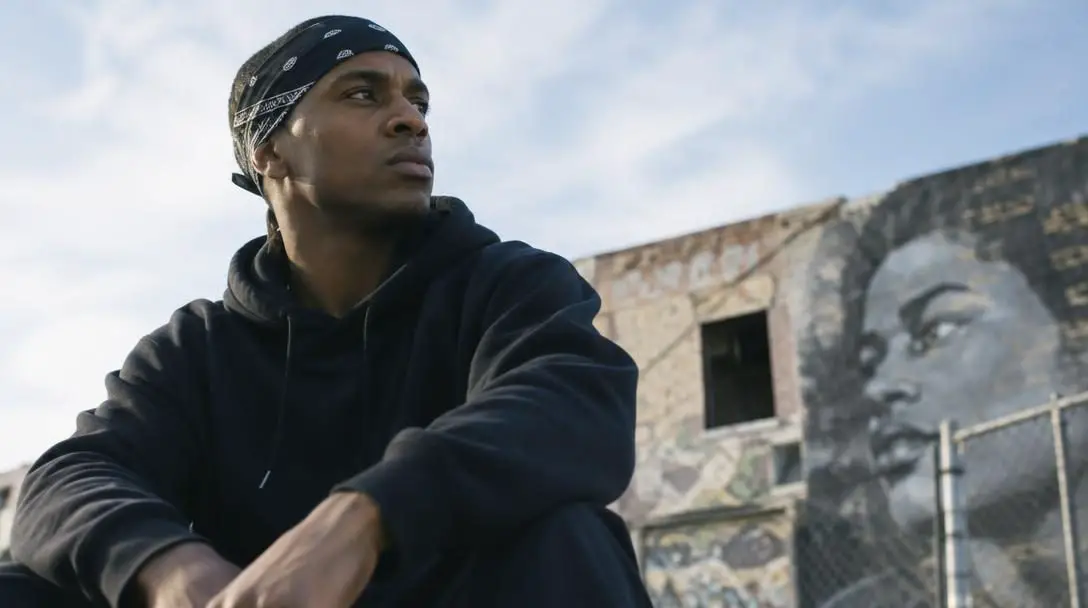
Shakur starred alongside Leon, who played Birdie's estranged older brother, Shep. While the production had a modest theatrical run—grossing approximately $16.2 million at the box office—Shakur's performance garnered substantial praise from critics. His portrayal offered a masterclass in psychological intimidation, seamlessly pivoting from infectious neighborhood charm to razor-sharp, unpredictable volatility. Even reviewers who were lukewarm on the overall sports narrative praised Shakur's commanding gravity, which consistently electrified the scenes he occupied.
How musical discipline translates to cinematic acting
The successful shift from performing in recording booths to acting on film sets is driven by specific craft techniques. Hip-hop artists who excel on screen frequently repurpose tools learned through vocal production and live stage presence:
- Vocal control and rhythmic timing: Recording artists are trained to regulate breath control, cadence, and tone. This verbal discipline translates to authentic line readings, preventing scripted dialogue from sounding stiff or unnatural.
- Persona adaptation: Musical artists build unmistakable public personas. Sincere screen acting requires deconstructing that brand in order to adopt the vulnerabilities and flaws of a scripted character.
- Ensemble awareness: While writing and recording can be an insular craft, film production requires continuous collaboration with directors, screenwriters, and scene partners.
- Controlled physical restraint: Stadium concerts demand large, expansive gestures to communicate with the back rows. Film acting requires the exact opposite: micro-expressions, stillness, and repeatable continuity across multiple camera angles.
Curating a rapper-led film marathon
Viewers seeking to explore the dramatic contributions of major hip-hop figures can follow this structured approach to examine how musical artists left their imprint on American filmmaking:
- Begin with early-1990s urban realism: Start your viewing schedule with foundational dramas like Boyz N The Hood and Above the Rim to observe how filmmakers initially tapped into the raw charisma of contemporary recording artists.
- Trace key director collaborations: Pay close attention to filmmakers like John Singleton and F. Gary Gray, who understood how to coach musicians unfamiliar with the conventions of Hollywood soundstages.
- Examine the companion soundtracks: Note how the musical releases tied directly into the promotional life cycle of films like Friday and 8 Mile, noting instances where albums topped sales charts alongside theatrical runs.
- Track stylistic tone shifts: Contrast how a single performer navigates vastly different genres, such as watching Ice Cube transition from the heartbreaking social drama of Boyz N The Hood to the dry comedic neighborhood rhythms of Friday.
- Incorporate celebrated near-misses: Round out the study by viewing other key releases mentioned during the selection process, including Juice, New Jack City, House Party, ATL, and Four Brothers.
Common analytical traps when evaluating hip-hop cinema
When assessing the work of recording artists who venture onto the big screen, critics and fans often fall into predictable analytical pitfalls. Avoiding these traps encourages a much fairer appraisal of their cinematic achievements:
- Assuming performers merely portray themselves: Audiences frequently make the mistake of assuming that because an artist stars in an urban environment, they are simply documenting their day-to-day life rather than executing scripted character work.
- Overlooking veteran co-stars: Outstanding performances rely on dynamic counterweights. Failing to recognize the contributions of experienced co-stars like Larry Fishburne in Boyz N The Hood or Kim Basinger in 8 Mile minimizes how ensemble chemistry elevates an artist's screen presence.
- Dismissing genre films as lightweight novelties: Urban comedies and heist thrillers frequently struggle against unfair critical bias. Overlooking Friday simply as a stoner comedy discounts its sharp pacing, tight screenwriting, and low-budget profitability.
- Relying exclusively on commercial box office grosses: Measuring the cultural footprint of a movie solely through ticket receipts overlooks films like Above the Rim, which gained profound, long-term critical respect regardless of its initial theatrical run.
Frequently asked questions
Which movie starring a rapper made the most money at the box office?
Among the standout titles analyzed, 8 Mile was the highest-grossing film by a significant margin, pulling in over $240 million at the global box office following its 2002 theatrical release.
Did Ice Cube write the movie Friday himself?
Ice Cube co-wrote the screenplay for Friday alongside fellow recording artist and collaborator DJ Pooh, crafting a neighborhood comedy that cost just $3.5 million to produce before earning over $27 million.
What major awards did 8 Mile win?
8 Mile earned an Academy Award for Best Original Song for Eminem's lead soundtrack single, while Eminem also took home an MTV Movie Award for Best Male Performance for his lead dramatic turn.
What role did Tupac Shakur play in Above the Rim?
Tupac Shakur portrayed the central antagonist, Birdie, a magnetic yet dangerous local drug dealer and street basketball sponsor who attempts to recruit a promising young prep athlete.
Which notable movies starring rappers just missed the final top-five list?
Several culturally significant films narrowly missed inclusion, including New Jack City, Juice, House Party, ATL, and Four Brothers.
The bottom line
The transition from recording artist to movie star is rarely simple. It demands that a performer surrender the total creative control of the sound booth in order to navigate the collaborative, high-risk machinery of filmmaking. The standout movies produced by artists like Ice Cube, Queen Latifah, Tupac Shakur, and Eminem remain culturally resonant because these performers did not approach their roles as quick commercial sidelines.
Instead, they brought the storytelling discipline, verbal cadence, and raw emotional vulnerability of hip-hop directly to the screen. By stepping into challenging roles while still actively commanding the music charts, these artists proved that dramatic acting and street-level lyricism are natural creative partners, leaving behind a cinematic blueprint that continues to inspire modern storytellers.