5 Best War Movies
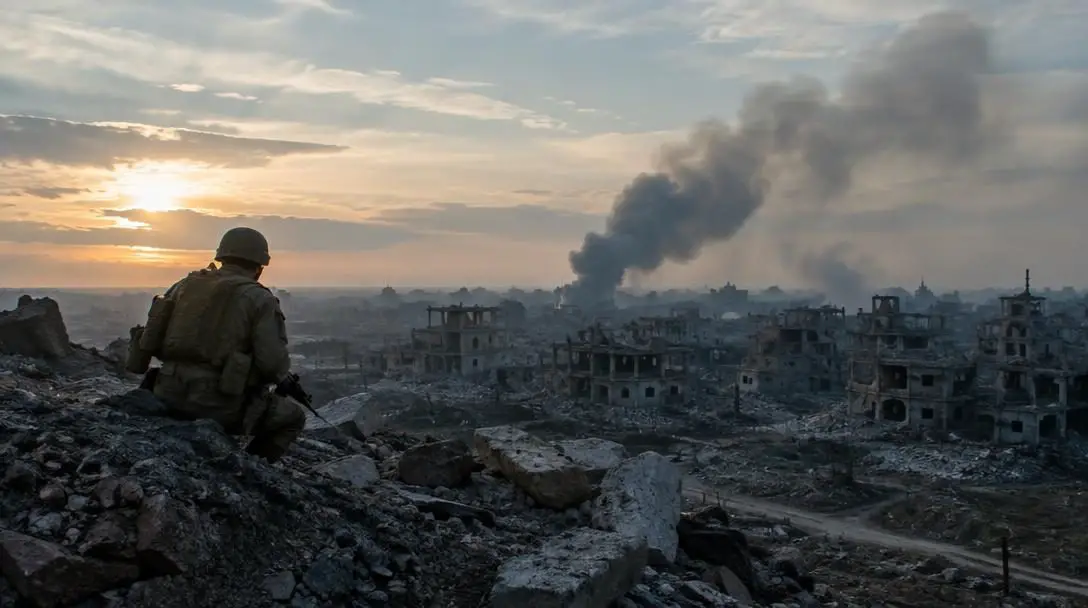
Few cinematic forms capture the extreme boundaries of human experience quite like military conflict. By stripping away ordinary civilian routines, war forces individuals to confront life-and-death moral choices, intense physical danger, and psychological unraveling. The greatest war films do not merely reproduce the chaos of battle; they trace how command decisions reverberate through ordinary ranks and examine how ideals such as duty, camaraderie, and self-preservation operate under extreme duress.
Across decades of cinema, storytellers have repeatedly focused on two pivotal twentieth-century conflicts: World War II and the Vietnam War. While World War II narratives often explore massive logistical undertakings, military discipline, and institutional scale, Vietnam War films typically delve into moral ambiguity, the collapse of traditional command, and internal psychological fragmentation. Examining these historical moments through distinct artistic visions reveals how war cinema has evolved from grand patriotic framing into deeply personal, visceral investigations of combat.
Key takeaways
- Landmark war movies explore the psychological, ethical, and organizational tolls of combat beyond surface-level battlefield action.
- Representations of twentieth-century warfare center largely on World War II's strategic scale and the Vietnam War's moral and psychological ambiguity.
- Directorial techniques have evolved from formal mid-century character studies to autobiographical accounts and intensely immersive, technical realism.
- Analyzing war cinema requires paying attention to leadership hierarchies, narrative viewpoints, and the ethical dilemmas confronting ordinary soldiers.
At a Glance: Five Defining War Pictures
The following landmark films represent distinct storytelling approaches to armed conflict, spanning the disciplined prisoner-of-war camps of World War II to the disorienting jungles of Southeast Asia.
| Movie | Release Year | Conflict Depicted | Primary Setting | Central Narrative Focus |
|---|---|---|---|---|
| Apocalypse Now | 1979 | Vietnam War | Cambodian jungle riverways | A covert mission to terminate a rogue commander |
| The Bridge on the River Kwai | 1957 | World War II | Burmese prisoner-of-war camp | Strict military pride conflicting with wartime objectives |
| Saving Private Ryan | 1998 | World War II | Normandy and French interior | A squad risking multiple lives to extract a single infantryman |
| Platoon | 1986 | Vietnam War | Vietnamese combat zones | An infantry unit fractured by competing command philosophies |
| Full Metal Jacket | 1987 | Vietnam War | Parris Island boot camp and urban Vietnam | The deconstruction of civilian identity into combat readiness |
A great war picture does far more than stage loud clashes on an open field; it examines how command decisions ripple down through the ranks and test the limits of human morality.
Landmark Titles Defining Modern War Cinema
Each of the five films below transformed how military conflict is conceptualized on screen. Through diverse directing philosophies, historical perspectives, and aesthetic approaches, they examine how soldiers navigate extreme ethical environments.
Apocalypse Now
- Release Year: 1979
- Historical Conflict: Vietnam War
- Key Figures: Martin Sheen, Marlon Brando
- Core Setting: The remote jungle waterways of Cambodia
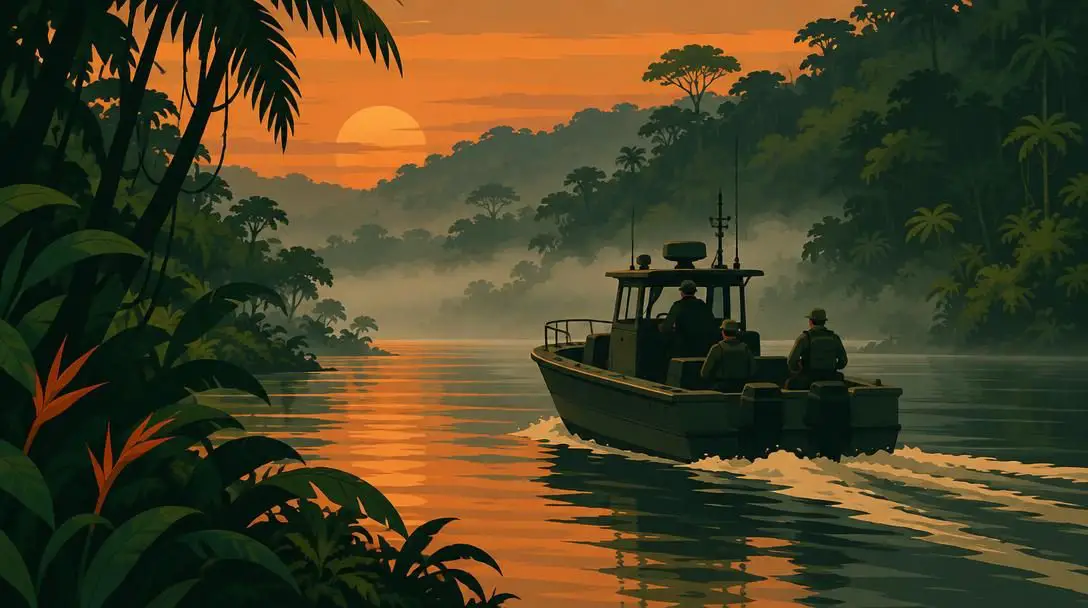
Set during the Vietnam War, Apocalypse Now details the clandestine journey of Captain Willard, played by Martin Sheen, who receives orders to assassinate Colonel Kurtz, played by Marlon Brando. Kurtz, a decorated and brilliant officer, has broken away from the military establishment, setting up an uninhibited private kingdom deep within the Cambodian jungle. As Willard travels upriver toward Kurtz's outpost, the film steadily abandons conventional military structure in favor of a surreal, hypnotic descent into psychological chaos.
Rather than framing the conflict as a collection of tactical victories or defeats, the narrative highlights the deep hypocrisy of institutional military bureaucracy when contrasted with Kurtz's raw, unmitigated brutality. Willard's fascination with Kurtz deepens as he reviews the colonel's personnel file, recognizing that the conventional rules of engagement have eroded entirely under the weight of an uncontainable war.
The Bridge on the River Kwai

- Release Year: 1957
- Historical Conflict: World War II
- Key Figures: Alec Guinness
- Core Setting: A Japanese prisoner-of-war camp in Burma
Taking place inside a World War II Japanese prisoner-of-war camp in Burma, The Bridge on the River Kwai focuses on the psychological struggle between captors and captives. British officer Colonel Nicholson, portrayed by Alec Guinness, is commanded by his captors to oversee the construction of a railway bridge intended to serve the Japanese military. Nicholson resolves to complete the bridge to the highest possible standard of engineering, regardless of the harsh conditions imposed on his men.
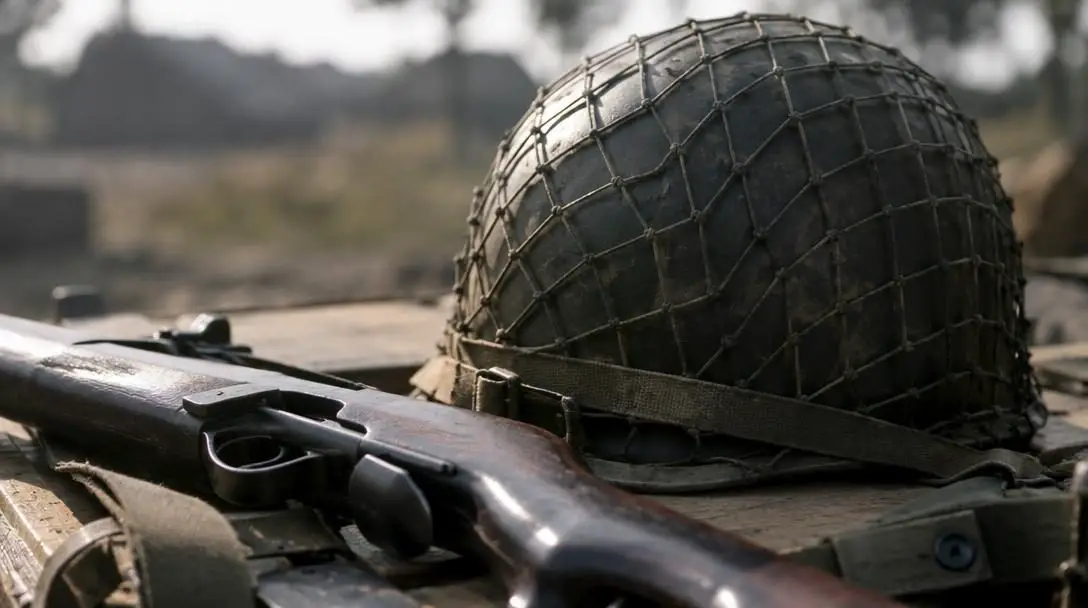
The film explores how an unbending devotion to military discipline and professional pride can produce tragic ironies. Nicholson views the construction project as a vital instrument to maintain soldier morale, self-respect, and hierarchy under captivity. However, his obsessive dedication to the craft blinds him to the broader tactical reality: by building a superior bridge, his insistence on British excellence directly facilitates the operational success of his enemy.
Saving Private Ryan
- Release Year: 1998
- Historical Conflict: World War II
- Key Figures: Steven Spielberg, Matt Damon
- Core Setting: The beaches of Normandy and war-torn France
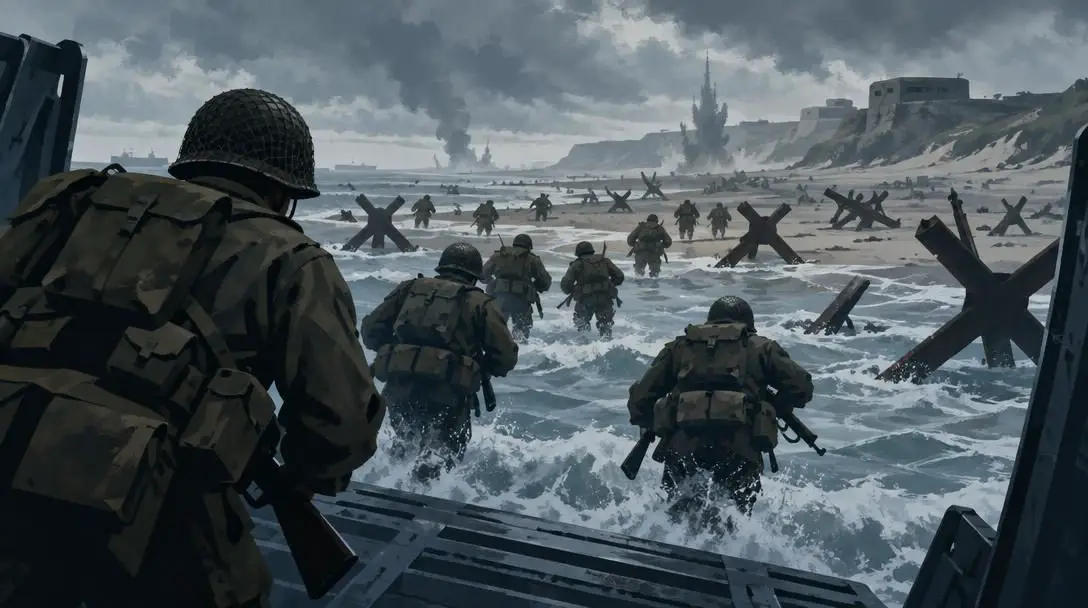
Directed by Steven Spielberg, Saving Private Ryan established a transformative visual baseline for cinematic combat. The story centers on a squad of soldiers sent deep into hostile territory following the Normandy invasion to retrieve Private Ryan, played by Matt Damon. Ryan is the sole surviving brother of a family that has already lost two sons to the war. The mission forces the squad to confront an agonizing arithmetic: whether the military should gamble the lives of many battle-hardened soldiers to spare a single grieving household.
The film's opening sequence, depicting the amphibious assault at Normandy, rejected traditional, sanitized cinematic heroics. By employing rapid handheld camerawork, desaturated tones, and sound design that highlights the terrifying disarray of incoming artillery, Spielberg created an intense, visceral perspective. The technical realism underscores the central ethical paradox facing the squad as they navigate devastated European towns.
Platoon
- Release Year: 1986
- Historical Conflict: Vietnam War
- Key Figures: Oliver Stone
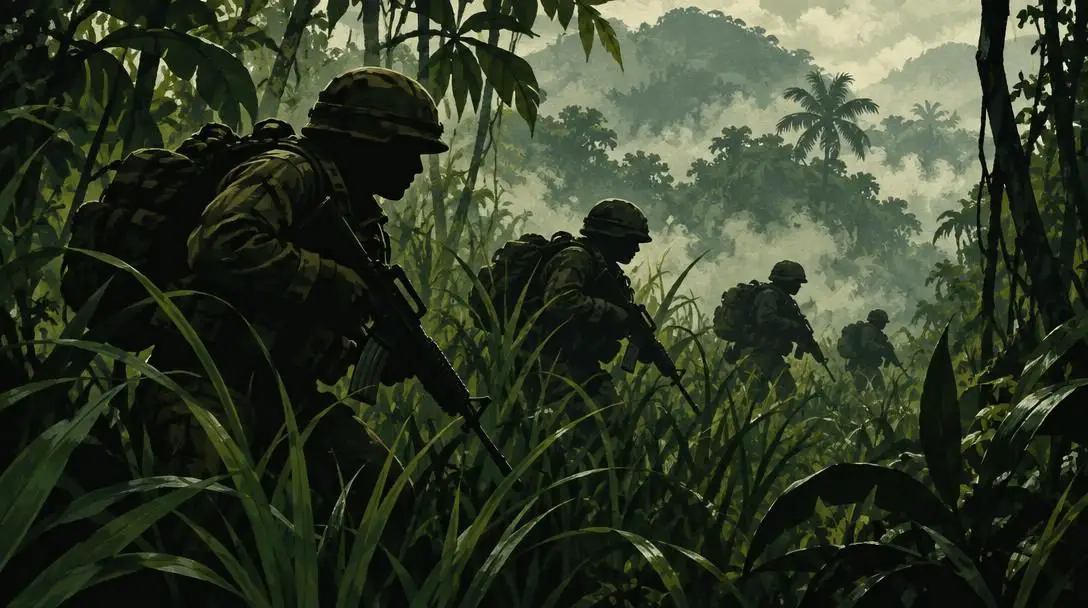
- Core Setting: The dense brush and outposts of Vietnam
Written and directed by Oliver Stone, Platoon provides a raw, autobiographical portrait of an infantry unit drawn from the director's own personal military service during the Vietnam War. The narrative follows a group of frontline soldiers caught within an ideological civil war between two opposing commanding officers. As hostile external forces press in on the platoon, the internal friction between these leaders creates an equally dangerous environment within their own perimeter.
The film examines the ethical collapse that occurs when leadership becomes deeply polarized. One officer operates through a ruthless, survival-at-all-costs mentality that disregards moral limits, while the other strives to maintain core ethical standards despite the lawlessness of the jungle. Enlisted personnel find themselves pressured to choose sides, showing how internal division can erode an infantry unit from within.
Full Metal Jacket
- Release Year: 1987
- Historical Conflict: Vietnam War
- Key Figures: Marine recruits and drill instructors
- Core Setting: Military recruit depot and urban combat zones
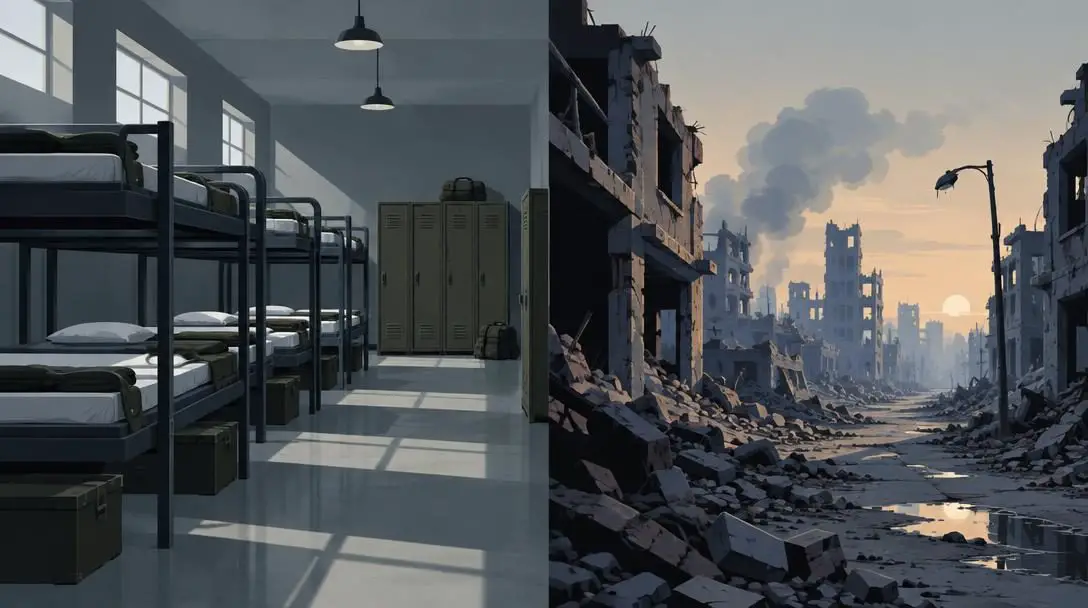
Full Metal Jacket adopts an uncompromising, two-part structural approach to examine how military organizations prepare human beings for combat. The initial segment of the film documents the intense physical and mental conditioning of Marine recruits at boot camp, demonstrating how civilian individuality is broken down and replaced with reflexive lethal training. The second segment transitions directly into the urban combat zones of Vietnam, where the rigid doctrines taught during training clash with the disorienting reality of guerrilla warfare.
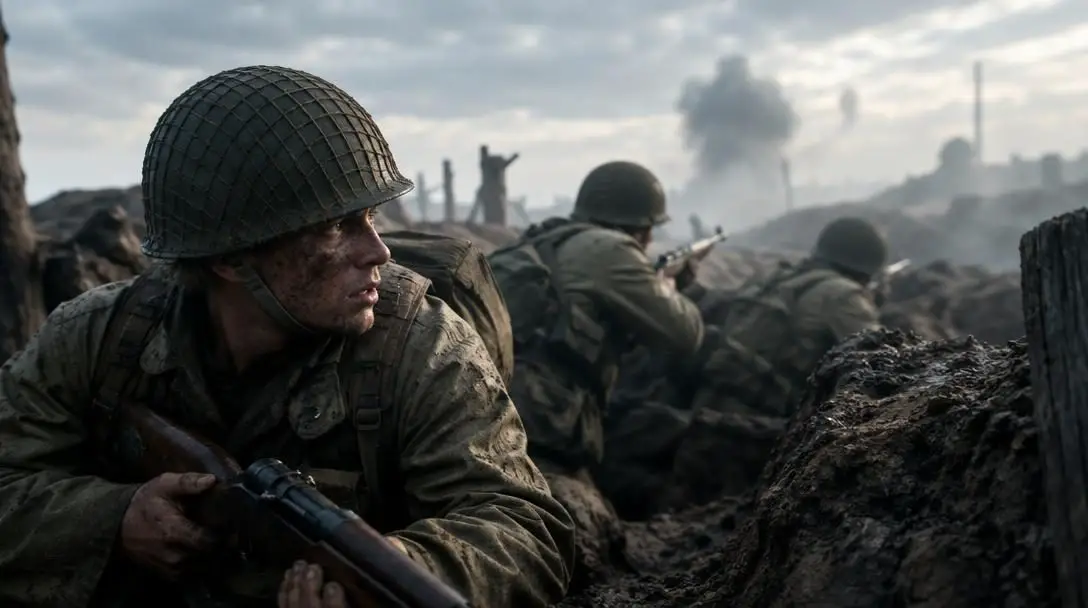
By contrasting the calculated order of the drill field with the unpredictable violence of active combat, the film illustrates the severe psychological toll of modern warfare. The strict conditioning designed to ensure survival and obedience leaves the recruits ill-prepared for the moral ambiguity and chaotic urban skirmishes they encounter in the field.
How the War Film Genre Evolved
The cinematic presentation of military conflict has transformed significantly over the decades, driven by changing public sentiments, historical reassessments, and technical innovations.
- Mid-century institutional focus: Films produced during and immediately after World War II frequently reinforced concepts of institutional duty, clear moral clarity, and national purpose, framing combat primarily through the lens of patriotic necessity.
- The Vietnam-era shift toward skepticism: As public perspectives shifted in the 1970s, filmmakers abandoned sanitized heroics to explore psychological fragmentation, administrative dysfunction, and the moral ambiguity confronting frontline soldiers.
- The rise of autobiographical realism: During the 1980s, veteran directors such as Oliver Stone brought direct personal experience to the screen, providing authentic representations of internal unit friction and ground-level combat.
- Sensory and technical immersion: In the late 1990s, works like Steven Spielberg's Saving Private Ryan reshaped cinema with aggressive sound design, handheld tracking, and visual immediacy, establishing modern technical standards for combat scenes.
The Mechanics of Combat Cinema
War cinema operates through specialized filmmaking mechanics designed to place audiences in the middle of extreme logistical and emotional environments. The most effective works utilize specific technical and narrative conventions to convey the pressure of conflict.
- Sound design and sensory immersion: Combat scenes frequently build auditory tension by alternating between oppressive concussive silence and overwhelming sonic bursts—such as whistling artillery shells and erratic small-arms fire—to recreate the sensory overload experienced by soldiers.
- The squad dynamic: Combat films frequently construct units from diverse socioeconomic and cultural backgrounds. This dynamic forces characters with contrasting personal ethics and temperaments into interdependence, testing their loyalties under hostile conditions.
- Erratic pacing and tension: Rather than maintaining continuous action, effective war films mirror the reality of deployment by contrasting long, monotonous periods of marching and waiting with violent, unpredictable firefights.
- Visual realism: Handheld camera work, desaturated palettes, and low shutter angles simulate the perspective of an embedded observer, minimizing theatrical polish in favor of raw documentary immediacy.
Practical Steps for Analyzing War Movies
Viewing war cinema with an analytical perspective allows audiences to evaluate underlying themes that extend beyond action choreography. Follow these structured steps to evaluate a war film critically:
- Identify the framing perspective: Note whether the narrative is observed from high-ranking command, conflicted field officers such as Colonel Nicholson, or junior enlisted infantrymen.
- Examine the depiction of leadership: Analyze how authority figures wield power and whether command decisions are motivated by strategic necessity, bureaucratic indifference, or personal survival.
- Trace psychological changes: Track how characters evolve from their introduction to the conclusion, observing the gradual mental erosion caused by fear, isolation, and moral compromise.
- Assess drama versus realism: Determine whether the film emphasizes visceral tactical authenticity, like the Normandy beach landing, or relies on allegory and surrealism to critique military institutions.
- Evaluate the core ethical dilemma: Identify the central moral crisis posed by the plot, asking whether the operational mission aligns with or contradicts the soldiers' personal ethics.
Common Mistakes When Watching War Cinema
Because war films frequently showcase intense action sequences, viewers often misread their themes or overlook structural nuances. Being aware of these frequent misinterpretations helps preserve the film's deeper messaging:
- Confusing graphic combat for celebration: Mistaking visceral battle sequences for conventional action entertainment overlooks how films like Platoon use violence to underscore physical trauma and ethical tragedy.
- Expecting total historical literalism: Criticizing films for minor deviations from real-world timelines ignores that works like Apocalypse Now rely on allegory and stylized environments to explore human psychology rather than historical documentation.
- Skipping camp and training sequences: Treating boot camp segments or barracks negotiations as secondary filler misses critical character establishment, which explains why soldiers act as they do when combat begins.
- Imposing black-and-white moral labels: Viewing all combatants through simple concepts of good and evil ignores the central premise of films like The Bridge on the River Kwai, where stubborn pride turns a principled commander into an unwitting collaborator.
Frequently asked questions
Why is the opening sequence of Saving Private Ryan considered so influential?
Steven Spielberg's depiction of the D-Day landings at Normandy altered modern war filmmaking by rejecting stylized heroics in favor of visceral, sensory realism. Through handheld camerawork, desaturated imagery, and immersive sound design, the sequence captures the overwhelming confusion and terror of an amphibious assault under heavy artillery.
How does Apocalypse Now differ from traditional combat films?
Rather than focusing on straightforward frontline engagements, Apocalypse Now presents a surreal journey upriver into the Cambodian jungle. It highlights the psychological fragmentation of its characters and uses the rogue kingdom of Colonel Kurtz to expose the breakdown of conventional military rules.
What makes the leadership dynamic in Platoon unique?
Because director Oliver Stone drew directly on his own combat service in the Vietnam War, Platoon explores internal divisions within an infantry unit. The soldiers are caught between two commanding officers who hold fundamentally opposed worldviews: one committed to brutal survival and the other attempting to uphold a moral standard.
Why does Colonel Nicholson build the bridge in The Bridge on the River Kwai?
Colonel Nicholson, played by Alec Guinness, insists on building the bridge to the best of his men's ability to maintain their discipline, pride, and morale while held in a Japanese prisoner-of-war camp. His inflexible focus on professional standards blinds him to the fact that completing the project aids the enemy's war effort.
What is the purpose of the two-part structure in Full Metal Jacket?
The film deliberately contrasts the rigid, systematic deconstruction of recruit identities during Marine boot camp with the chaotic reality of combat in Vietnam. This two-part format illustrates how drill-field conditioning fails to prepare soldiers for the disorientation of urban warfare.
The Bottom Line
War cinema remains a compelling lens for studying human nature under extreme conditions. Whether illustrating the sweeping logistical operations of World War II or the disorienting, morally ambiguous terrain of the Vietnam War, masterworks in this genre go far beyond battlefield spectacle. By balancing historical scope with intimate psychological study, these films challenge audiences to examine the true costs of duty, discipline, and armed conflict.