
5 Biggest Grammy Snubs of All Time
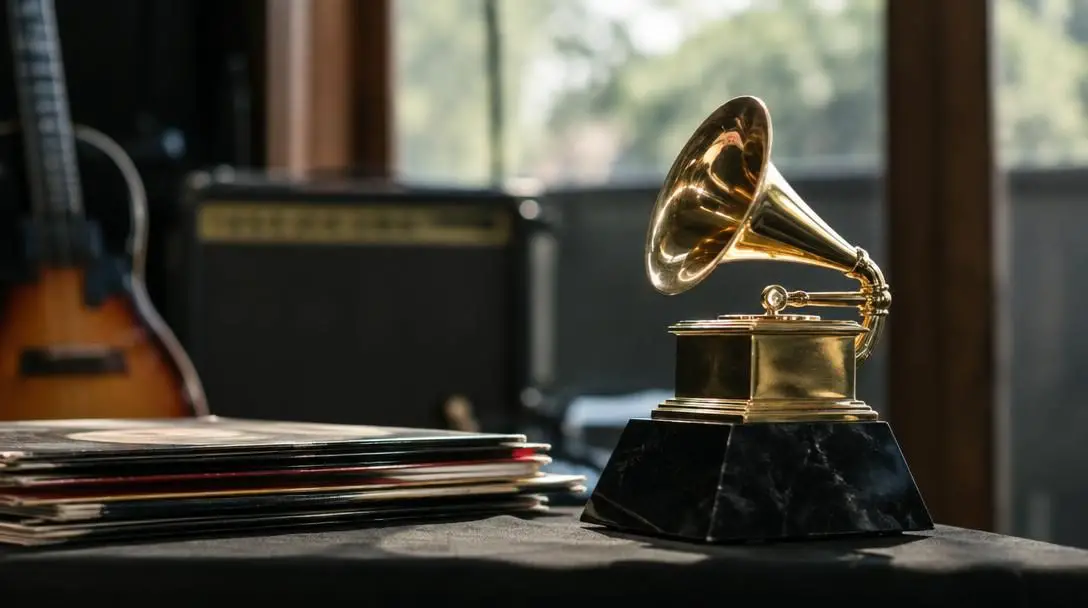
Each year, the Recording Academy convenes to honor what its voting members consider the pinnacle of musical achievement across the recorded sound industry. The golden gramophone trophy presented at the annual Grammy Awards ceremony carries immense prestige, and for generations, many casual listeners and industry observers have viewed its outcomes as definitive stamps of greatness. The prevailing assumption has often been that whoever takes the stage to accept an award represents the unquestioned artistic benchmark for that eligibility period.
Yet across the decades, public opinion among passionate music fans has repeatedly clashed with the Academy's official verdicts. When major envelopes are opened—whether for top general field prizes such as Album of the Year and Song of the Year, or within specific genres like rock and hip-hop—the results frequently spark heated debates. These institutional decisions reveal how sharply the tastes and priorities of industry peers can diverge from the collective memory and passions of the listening public.
Key takeaways
- The Recording Academy's peer-driven balloting frequently favors veteran prestige, traditional craftsmanship, and name recognition over emerging cultural movements.
- Iconic songs and albums from artists like The Beatles, Nirvana, and Kendrick Lamar have been famously bypassed for awards that subsequently faded from public awareness.
- Vote-splitting among multiple nominations for the same artist can create openings for unexpected competitors to win with a modest plurality.
- Widespread backlash to glaring misjudgments, such as the 1989 metal decision, has occasionally forced the Academy to overhaul its category architecture.
- Institutional accolades do not dictate cultural longevity, as generation-defining masterworks routinely outlast the trophies handed out on award night.
At a glance: five historic Grammy upsets
To understand the scope of historical Grammy disputes, it helps to review the winners alongside the celebrated tracks and records that voters overlooked. The table below outlines five of the most baffling outcomes in the history of the telecast.
| Year & Category | Official Winner | Notable Snubbed Contender(s) | Key Contributing Factor |
|---|---|---|---|
| 1969 Song of the Year | "Little Green Apples" (O.C. Smith) | "Hey Jude" (The Beatles), "Mrs. Robinson" (Simon & Garfunkel) | Voter preference for traditional pop styling over rock innovations |
| 1984 Song of the Year | "Every Breath You Take" (The Police) | "Beat It" & "Billie Jean" (Michael Jackson) | Potential vote-splitting across two Michael Jackson mega-hits |
| 1989 Best Hard Rock/Metal Performance | "Crest of a Knave" (Jethro Tull) | "...And Justice for All" (Metallica) | Academy voter unfamiliarity with the emerging thrash metal movement |
| 1993 Best Rock Song | "Layla" (Eric Clapton, live acoustic) | "Smells Like Teen Spirit" (Nirvana), "Jeremy" (Pearl Jam) | Reluctance to embrace 1990s grunge over classic rock pedigree |
| 2014 Best New Artist | Macklemore & Ryan Lewis | Kendrick Lamar | Broad mainstream pop accessibility prioritized over rap critical acclaim |
Five of the biggest Grammy snubs in music history
While disagreements follow nearly every awards ceremony, several outcomes across Grammy history caused widespread disbelief that still resonates with listeners. These five specific decisions stand out as benchmark moments where institutional peer choices diverged entirely from cultural reality.
1984 Song of the Year

- Official Winner: "Every Breath You Take" by The Police
- Key Snubbed Works: "Beat It" and "Billie Jean" by Michael Jackson
- Additional Nominees: "Maniac" by Michael Sembello; "All Night Long" by Lionel Richie
The field for the 1984 Song of the Year honor was arguably one of the most commercially and culturally dominant lineups ever assembled. Michael Jackson stood at the absolute zenith of his global popularity, holding two separate nominations in the category for his era-defining tracks "Beat It" and "Billie Jean." The competition also featured chart-topping powerhouses including Michael Sembello's energetic dance anthem "Maniac" and Lionel Richie's international smash "All Night Long."
Given the immense footprint of Jackson's releases, critics and audiences widely expected either "Beat It" or "Billie Jean" to walk away with the prize, particularly because "Beat It" dominated the broadcast by capturing multiple other trophies that very evening. Instead, the Academy awarded Song of the Year to The Police for "Every Breath You Take." The choice was so startling that even Sting, the song's primary author, openly stated that he did not believe it deserved the Song of the Year win over the heavy competition assembled that evening.
2014 Best New Artist

- Official Winner: Macklemore & Ryan Lewis
- Key Snubbed Artist: Kendrick Lamar
- Additional Nominees: James Blake, Kacey Musgraves, Ed Sheeran
The Best New Artist category has long carried a reputation for igniting volatile audience pushback. In 2011, jazz virtuoso Esperanza Spalding triggered shock waves by besting a commercially formidable pool featuring Justin Bieber, Drake, Florence and the Machine, and Mumford & Sons. However, an even more polarizing dispute surfaced during the 2014 ceremony when hip-hop duo Macklemore & Ryan Lewis captured the award against an eclectic ballot that included James Blake, Kacey Musgraves, Ed Sheeran, and Kendrick Lamar.

Lamar entered the evening on the strength of his universally lauded conceptual masterpiece, good kid, m.A.A.d city, which had even secured a nomination for the night's premier honor, Album of the Year. In the end, Lamar walked away completely empty-handed across all of his nominations for the evening. Rap fans and music critics expressed immediate, vocal outrage, viewing the decision as an unmistakable sign of the Academy's inability to appreciate groundbreaking hip-hop on its own artistic merits.
1993 Best Rock Song

- Official Winner: "Layla" (Unplugged) by Eric Clapton
- Key Snubbed Works: "Smells Like Teen Spirit" by Nirvana; "Jeremy" by Pearl Jam
- Category Origin: Inaugural award granted in 1992 to Sting for "The Soul Cages"
The early history of the Best Rock Song category was fraught with disputes. The inaugural award in 1992 had already generated significant friction when Sting's "The Soul Cages" triumphed over a powerhouse nominee slate that included "Silent Lucidity" by Queensrÿche, "Enter Sandman" by Metallica, "Learning to Fly" by Tom Petty and the Heartbreakers, and "Been Caught Stealing" by Jane's Addiction. Yet the 1993 outcome proved even more bewildering to rock enthusiasts.
The 1993 prize went to Eric Clapton for an acoustic live rendition of "Layla," recorded during his popular MTV Unplugged broadcast. What alienated contemporary rock audiences was the fact that "Layla" had originally been written and released in the early 1970s. Contemporary rock was undergoing a seismic cultural revolution led by alternative rock and grunge, and the clear favorites for the songwriting honor were Nirvana's genre-defining anthem "Smells Like Teen Spirit" and Pearl Jam's "Jeremy." Bypassing those modern anthems in favor of a reworked twenty-year-old classic convinced many listeners that the Recording Academy maintained an ingrained aversion to grunge during its creative peak.
1989 Best Hard Rock/Metal Performance

- Official Winner: Crest of a Knave by Jethro Tull
- Key Snubbed Work: ...And Justice for All by Metallica
- Additional Nominees: AC/DC, Iggy Pop, Jane's Addiction
In 1989, the Grammy Awards attempted to officially recognize the aggressive soundscapes of heavy music by inaugurating a combined category for Best Hard Rock/Metal Performance. Leading up to the telecast, the broad consensus throughout the music community was that thrash metal titans Metallica would effortlessly claim the award for their technically ambitious, groundbreaking album ...And Justice for All.
The Academy's voting body took an entirely unexpected path. Although the ballot featured heavy hitters such as AC/DC, Iggy Pop, and Jane's Addiction alongside Metallica, the golden gramophone was presented to progressive rock veterans Jethro Tull for their album Crest of a Knave—a band renowned for fronting a flute rather than heavy metal riffs. The immediate fury from metal fans made headlines across the industry. Lars Ulrich, Metallica's drummer, publicly voiced the anger of the metal community by declaring that Jethro Tull winning was an outright mockery, adding that the outcome pulled back the curtain to reveal that the Grammys lacked any real finger on the pulse of rock music. The backlash was so intense that the combined category was permanently scrapped after that single debut.
Extreme public backlash can force the Academy to rethink its genre classifications and acknowledge its cultural blind spots.
1969 Song of the Year

- Official Winner: "Little Green Apples" written by Bobby Russell, performed by O.C. Smith
- Key Snubbed Work: "Hey Jude" by The Beatles
- Additional Nominees: "Mrs. Robinson" by Simon & Garfunkel; "Harper Valley PTA" by Jeannie C. Riley; "Honey" by Bobby Goldsboro
The Beatles collected numerous awards over their storied tenure together, but the 1969 ceremony witnessed one of the most perplexing omissions of their career. Their monumental single "Hey Jude" was nominated for Song of the Year, with most contemporary observers anticipating that its only authentic competition for the honor was Simon & Garfunkel's wildly popular anthem "Mrs. Robinson." The field was rounded out by popular entries like Jeannie C. Riley's "Harper Valley PTA" and Bobby Goldsboro's "Honey."

Neither Paul McCartney's uplifting masterpiece nor Simon & Garfunkel's cultural staple won the category. Instead, Song of the Year went to O.C. Smith's recording of "Little Green Apples." While "Little Green Apples" was an undeniable radio hit that enjoyed solid popularity during its time, it has largely drifted from the cultural consciousness of modern audiences. In stark contrast, "Hey Jude" continues to be celebrated across generations as an immortal piece of music, cementing the 1969 vote as one of the earliest examples of an enduring Grammy snub.
Inside the Recording Academy selection process
Understanding why unexpected or deeply unpopular winners emerge requires a close examination of how the Recording Academy organizes its voting system. Unlike fan-driven ceremonies where raw public popularity dictates the winners, the Grammys rely on a multi-stage, peer-driven apparatus that functions across five structured phases:
- Submission and Eligibility: Record labels, media companies, and Academy members register recordings released during the designated eligibility window. The Academy catalogues these works to verify compliance with category criteria.
- Screening: Specialized committees conduct screening sessions to ensure that submitted tracks and albums are classified into their proper musical styles, determining whether a work belongs under rock, rap, country, or pop.
- Nomination Round: Eligible voting members cast preliminary ballots within their areas of craft expertise as well as in the four major general field categories to decide the final nominees.
- Final Balloting: The full voting body casts final ballots to select a single winner in each category, with results tabulated confidentially by independent accounting firms until the live telecast.
- Peer Dynamic Tendencies: Because voters are practicing industry peers—including songwriters, studio engineers, instrumentalists, and producers—ballots frequently lean toward veteran name recognition, traditional musicianship, and technical industry relationships rather than commercial buzz or youth counterculture.
How to analyze historical music snubs
When assessing disputed award outcomes or evaluating whether a historical loss truly qualifies as an institutional snub, listeners can use an objective framework to analyze the circumstances behind the nominations.
- Separate songwriting credits from recording honors. Distinguish carefully between Song of the Year (awarded strictly to composers and lyricists for compositional merit) and Record of the Year (awarded to performing artists, producers, and audio engineers for the sonic execution of a track).
- Examine the demographic and generational context of the era. Research the cultural climate when the ballots were cast. As illustrated by the 1989 metal debacle and the 1993 grunge snub, Academy voters historically trailed behind sudden, youth-driven subcultural movements.
- Account for the vote-splitting phenomenon. Identify whether multiple nominated works targeted the same demographic or came from the same artist. When Michael Jackson held two Song of the Year nominations in 1984, supporters split their votes between "Beat It" and "Billie Jean," paving the way for The Police to win with a smaller plurality.
- Assess the work's long-term cultural endurance. Compare the modern relevance of the victor against that of the runner-up. A loss truly crystallizes as a snub when history remembers the overlooked work as an enduring cultural monument while the actual winner slips into obscurity.
Common mistakes when evaluating award decisions
Discussions regarding historic Grammy results often suffer from common analytical traps. Avoiding these misconceptions helps music fans build a much clearer perspective on recorded music history.
- Equating commercial sales with an automatic win: Accumulating record-breaking sales numbers, chart-topping streaks, or massive streaming impressions does not guarantee a trophy, as Academy guidelines direct voters to evaluate artistic and technical peer merit rather than commercial performance.
- Conflating Record of the Year with Song of the Year: Fans often assume a nominated track was thoroughly dismissed when it merely lost out on the songwriting credit while potentially taking home awards for performance or studio engineering.
- Assuming the Academy acts as a single boardroom: The Recording Academy is not a monolithic committee; it is composed of thousands of individual voters with diverse generational viewpoints, regional preferences, and aesthetic sensibilities whose ballots create an aggregate tally.
- Projecting contemporary hindsight backward: It is a mistake to critique outcomes from 1969 or 1984 through the lens of modern retrospective adoration, ignoring the specific commercial and industry environment present when Academy members were marking their ballots.
Frequently asked questions
What is the difference between Record of the Year and Song of the Year?
Song of the Year is a songwriting award presented to the lyricists and composers who wrote the song's melody and words. Record of the Year honors the recording artist, producers, recording engineers, and mixing teams who built the specific recorded performance.
Why did Jethro Tull win Best Hard Rock/Metal Performance over Metallica in 1989?
The newly formed category combined hard rock and heavy metal, and the majority of voting Academy members were unfamiliar with the emerging thrash metal movement represented by Metallica's ...And Justice for All. Voters defaulted to progressive rock veterans Jethro Tull, prompting immense public outcry that led to the immediate elimination of the combined category.
Did Eric Clapton's "Layla" qualify as a new song when it won in 1993?
Eric Clapton's victory for Best Rock Song was granted for his acoustic performance on MTV Unplugged, even though "Layla" had originally been composed and released in the early 1970s. The decision to honor a re-recorded classic over defining contemporary grunge anthems by Nirvana and Pearl Jam remains one of the category's most debated moments.
Did Sting believe The Police deserved to win Song of the Year in 1984?
Following his win for "Every Breath You Take" at the 1984 telecast, Sting openly remarked that he did not feel the song was deserving of the Song of the Year award over the formidable competition assembled that evening, which included Michael Jackson's "Beat It" and "Billie Jean."
How many awards did Kendrick Lamar win at the 2014 Grammy Awards?
Despite earning major nominations including Album of the Year for good kid, m.A.A.d city and Best New Artist, Kendrick Lamar walked away without winning any awards across the entire evening, leading to widespread criticism from hip-hop fans and music journalists.
The bottom line
The enduring history of the Grammy Awards demonstrates that institutional recognition and cultural longevity do not always travel the same path. When the Recording Academy chooses winners based on industry seniority, broad mainstream comfort, or voting compromises, it frequently generates outcomes that baffle future generations. The swift retirement of the joint hard rock and metal honor following the 1989 Jethro Tull controversy proves that acute public pushback can prompt the Academy to re-examine its musical boundaries.
Ultimately, a loss on award night does not diminish an artist's place in cultural history. Masterworks such as "Hey Jude," "Smells Like Teen Spirit," and good kid, m.A.A.d city did not require a golden gramophone to reshape the modern musical landscape. Decades after the envelopes are opened and discarded, critical appreciation, generational influence, and listener devotion consistently outweigh the temporary judgments of industry balloting.