
5 Conspiracies That Are Fully Documented and Verified
When the term conspiracy theory arises in public conversation, it is routinely met with healthy skepticism. Most people immediately dismiss claims of elaborate clandestine plots, associating such narratives with fringe speculation or paranoia. Throughout modern culture, an endless stream of unverified ideas has captured the public imagination, from alleged sightings of cryptids like Bigfoot to enduring claims that Elvis Presley faked his death, that professional sports matches are systematically rigged, or that the Apollo moon landing was staged in a desert studio. Because unfalsifiable rumors are easy to invent and remarkably difficult to completely disprove, society naturally tends to view grand claims of secret plots with extreme doubt.
Yet world history demonstrates that genuine institutional cover-ups occasionally occur. In rare instances, government bodies, intelligence apparatuses, and multinational corporations have engaged in coordinated, clandestine operations that remained hidden from citizens for years or even decades. When official documentation is declassified, whistleblowers testify, or investigative probes force corporate admissions, fringe theories transform into documented historical fact. The following accounts represent five verified operations where real-world evidence proved that shocking institutional plots were authentic history.
Key takeaways
- Authentic conspiracies leave verifiable physical evidence, legislative transcripts, and official declassified records.
- Government intelligence agencies and major private corporations have both executed extensive covert initiatives shielded by strict compartmentalization.
- Declassification mandates and whistleblowers have repeatedly exposed long-hidden operations years or decades after their conclusion.
- Evaluating extraordinary claims requires distinguishing between authorized proposals that were rejected and covert programs that were actually executed.
At a glance: Five documented historical conspiracies
| Initiative | Key Entity | Active or Proposed Period | Core Objective | Public Confirmation |
|---|---|---|---|---|
| Tobacco Cancer Concealment | Major Tobacco Corporations | Mid-20th Century | Suppress scientific links between smoking and cancer to protect commercial profits | Formal public admissions in the 1990s; mandatory warning labels |
| Operation Popeye | Central Intelligence Agency (CIA) | Late 1960s – July 1972 | Extend the Southeast Asian monsoon to flood the Ho Chi Minh Trail | Exposed deep in the Vietnam War; lead to ban on rain weaponization |
| Operation Paperclip | United States Government | Post-WWII through 1950s | Recruit former German specialists to advance domestic science and technology | Full scope revealed through records declassified in the 1970s |
| Operation Northwoods | U.S. Military Planners / CIA | Early 1960s | Execute false flag hijackings to justify military intervention in Cuba | Declassified in the late 1990s alongside JFK assassination records |
| Project MKUltra | Central Intelligence Agency (CIA) | 1953 – 1973 | Test psychoactive drugs and interrogation methods to develop mind control | Initial leaks in 1975; final files declassified in 2001 |
Documented and verified historical conspiracies
Tobacco Industry Cancer Cover-Up

- Responsible entity: Major tobacco corporations
- Suppression duration: Exceeded 40 years
- Public admission: Formally acknowledged in the 1990s
- Regulatory outcome: Mandated cancer warning labels on packaging
In modern society, particularly among younger demographics such as millennials and Generation Z, cigarette smoking is understood to be a hazardous habit with an indisputable connection to fatal health conditions. For decades, however, the smoking public was intentionally misled. Medical and scientific researchers originally identified strong evidence that cigarette smoking caused lung cancer more than forty years prior to any formal corporate accountability. Rather than sharing these alarming findings with consumers, major tobacco corporations embarked on a sustained campaign of suppression, concealing internal research and using aggressive public relations to cloud public comprehension.
The motive behind this coordinated silence was financial preservation. Tobacco companies recognized that confirming the carcinogenic reality of their products would collapse revenue and trigger immediate regulatory crackdowns. As a result, industry leaders funded counter-messaging, cast doubt on independent epidemiological research, and kept their internal corporate files heavily guarded. It was not until the 1990s, under immense legal pressure and mounting documentary evidence, that major tobacco companies publicly admitted what scientists had known for generations: smoking causes cancer. This verification led directly to sweeping consumer protection mandates, including prominent, compulsory cancer warning labels on all cigarette packaging.
Operation Popeye

- Operating agency: Central Intelligence Agency (CIA)
- Key authorizing official: Henry Kissinger
- Operational lifespan: 5 secret years; ended July 1972
- Legislative consequence: Deliberate weather weaponization made illegal
Weather is broadly perceived as an uncontrollable force of nature, yet during the height of the Vietnam War, military and intelligence strategists sought to harness regional climate patterns to obtain a tactical battlefield advantage. For years, rumors circulated that the Central Intelligence Agency possessed the capability to manipulate atmospheric precipitation over Southeast Asia. Observers dismissed these assertions as outlandish wartime folklore until formal disclosures demonstrated that covert weather modification was an active military reality.
Operating under the official codename Operation Popeye, the initiative received top-level authorization when Henry Kissinger signed off on the project. The operational concept aimed to induce heavy rainfall and artificially extend the natural monsoon season over the Ho Chi Minh Trail. Intelligence officials calculated that saturating regional roadways would cause massive mudslides, wash out primary transport bridges, and effectively sever the vital supply routes relied upon by northern forces. The rainmaking program functioned in absolute secrecy for five years before investigative scrutiny and leaks brought it to light deep in the conflict. Operation Popeye officially concluded in July 1972. In the wake of its public exposure, the international community acted decisively, rendering the weaponization and intentional generation of rain strictly illegal under international law.
Operation Paperclip

- Primary recruiter: United States Government
- Recruitment volume: More than 1,500 German specialists
- Operational window: Late 1940s through the 1950s
- Historical revelation: Full archival scope exposed in the 1970s
In the chaotic immediate aftermath of World War II, as the Nazi regime collapsed across Europe, hundreds of high-ranking military officers, engineers, and technical personnel fled or vanished to avoid standing trial for wartime conduct. While public attention often focused on escape networks leading into South America, a coordinated American intelligence initiative was simultaneously directing a very different outcome. Under a covert operation titled Operation Paperclip, the United States government actively evacuated and integrated more than 1,500 German specialists into its own technical apparatus.
The program, which continued operating through the 1950s, targeted elite personnel working in cutting-edge domains of science, aeronautics, technology, and engineering. The strategic objective was to prevent these individuals from falling into the hands of competing geopolitical powers, particularly the Soviet Union, while accelerating domestic scientific advancements. While the public during the post-war era knew that a handful of German scientists were assisting with domestic research, the true scale, background, and moral compromises of the operation were deliberately withheld. It was not until the 1970s, when declassified archival records became available, that citizens learned the comprehensive magnitude of the covert integration effort.
Operation Northwoods
- Authoring body: High-ranking military planners and the CIA
- Target nation: Cuba
- Decisive action: Shelved and firmly opposed by President John F. Kennedy
- Public release: Declassified in the late 1990s
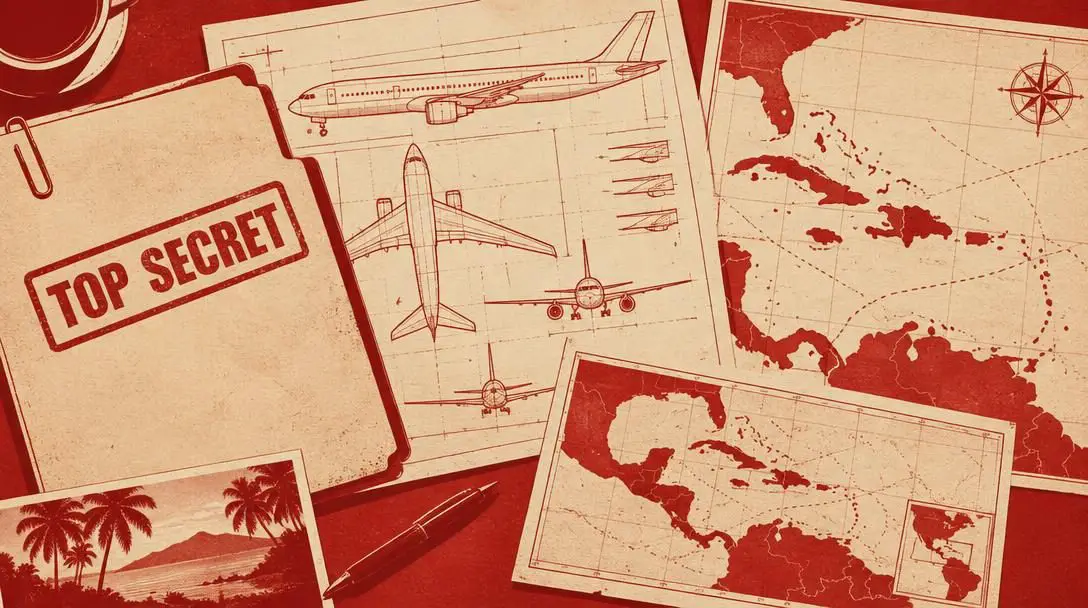
During the escalating geopolitical tensions of the early 1960s, American intelligence and military personnel searched for an effective justification to intervene militarily against the emerging communist government in Cuba. Recognizing that civilian populations are profoundly affected by aviation threats and acts of domestic terror, military planners devised a covert strategy known as Operation Northwoods. The plan recommended that the Central Intelligence Agency orchestrate several false flag aviation hijackings alongside violent staging operations on American soil.
The core objective was to engineer believable acts of violence, publicly pin the blame directly on the Cuban government, and harness the ensuing wave of public outrage to build popular domestic and international support for an invasion. However, when the classified proposal reached the Oval Office, President John F. Kennedy expressed vehement opposition and immediately shelved the operation. The documentation detailing Northwoods remained strictly guarded under federal classification protocols for decades. The American public only learned of this dramatic plan in the late 1990s, when the records were finally declassified following broad public disclosure mandates tied to the historical investigation of President Kennedy's 1963 assassination.
Project MKUltra

- Managing agency: Central Intelligence Agency (CIA)
- Active timeframe: 1953 to 1973
- Methods utilized: Psychoactive drugs, psychological trauma, sensory isolation
- Declassification completion: Concluding related files released in 2001
Among all declassified American intelligence operations, few carry the cultural notoriety of Project MKUltra. Initiated in 1953 and running uninterrupted until 1973, MKUltra emerged from intelligence community anxieties that adversarial foreign nations were pioneering biochemical mind control and advanced behavioral manipulation techniques against captured Western personnel. In response, the CIA launched a top-secret counter-initiative designed to research mind-altering chemical compounds and develop effective psychological interrogation tools.
In execution, the project abandoned standard medical ethics. Researchers subjected both unwitting human subjects and institutionalized patients to massive doses of psychoactive drugs, severe psychological damage, emotional abuse, and prolonged sensory isolation. These extreme methods have since been widely classified as forms of institutional torture. The operation operated beneath an intense veil of institutional secrecy for twenty years. Initial fragments of the program first leaked to the public in 1975, two years after its formal cancellation, triggering national congressional inquiries. However, due to extensive destruction of operational files ordered by intelligence leadership, the final surviving documentation was not fully released to the public until 2001.
The verification of clandestine operations transforms fringe speculation into established historical fact supported by official records, declassified intelligence files, and corporate admissions.
How covert programs function and unravel
Documented historical cover-ups share distinct operational mechanics that allow them to remain hidden from oversight for decades before external forces bring them into view.
- Institutional Compartmentalization: Programs operate on a strict need-to-know basis. Personnel are assigned isolated micro-tasks without visibility into the overarching strategic goal, ensuring that few people understand the entire operation.
- Administrative Secrecy and Classification: Sensitive planning, such as the memos authored for Operation Northwoods or Operation Popeye, is shielded behind high-level government classification to avoid legal scrutiny and legislative oversight.
- Corporate Concealment: Commercial entities protect operational viability by funding deceptive public relations, suppressing internal scientific discoveries, and legally contesting external inquiries, as demonstrated by the tobacco industry.
- Exposure via Declassification: Archival review statutes and legislative review windows eventually force secret files into the open, illustrated by the release of JFK assassination files that revealed historical proposals.
- Whistleblowers and Public Admissions: Massive operations eventually degrade. Leaks from operational staff, congressional committee hearings, or inescapable liability forces institutions to formally concede historical realities.
Evaluating extraordinary claims: A step-by-step approach
When analyzing rumors of institutional wrongdoing or secret initiatives, researchers should utilize a rigorous, evidence-based methodology to separate fact from speculation.
- Check for Primary Documentation: Look for tangible physical records, including executive directives, congressional hearing transcripts, corporate admissions, or declassified files bearing official agency letterheads.
- Investigate the Origins of the Claim: Verify whether the reporting comes from verified archival repositories, credentialed investigative journalists, or formal judicial proceedings rather than anonymous Internet forums.
- Assess the Logical Scope of the Secret: Consider how many individuals were supposedly involved. Large initiatives like Operation Paperclip and Operation Popeye eventually generated paper trails and leaks because maintaining silence across hundreds of staff becomes mathematically improbable over time.
- Identify Concrete Institutional Outcomes: Legitimate cover-ups leave identifiable marks on modern law. Verified cases led directly to the creation of warning labels, international prohibitions against weather warfare, and sweeping intelligence oversight committees.
Critical pitfalls to avoid when researching conspiracies
Navigating historical secrets requires analytical care to prevent falling into common logical traps.
- Assuming all rumors are true because some were verified: The confirmed existence of Project MKUltra does not mean that every unsubstantiated story regarding faked moon landings or cryptid sightings is valid. Each claim requires its own independent proof.
- Ignoring the timeline of documentation: Authentic operations leave contemporaneous paperwork written at the time events occurred, such as military orders or internal scientific memos, rather than retroactive speculation.
- Equating a proposed plan with an executed action: Official plans are often drafted without ever receiving executive clearance. Mistaking an unapproved proposal like Operation Northwoods for an active operation distorts the historical record.
- Dismissing verified history due to its shock value: Because covert programs often involve extreme methods, researchers sometimes dismiss factual historical evidence as unbelievable fiction. Remaining strictly focused on documentation prevents this bias.
The evolving landscape of public transparency
Recognizing that major institutions have maintained real-world secrets underscores the enduring importance of investigative oversight, robust whistleblowing protections, and statutory declassification rules. Current information declassification protocols ensure that classified state secrets undergo mandatory periodic reviews. As these statutory periods expire, previously restricted historical files from the mid-to-late twentieth century continue to populate public archives, refining our understanding of past intelligence maneuvers.
Similarly, modern corporate governance and consumer protection laws have evolved specifically to prevent long-term data suppression. Regulatory structures enforce open scientific reporting, establishing direct guardrails so that commercial entities cannot conceal hazardous public health findings the way the tobacco industry managed for over forty years. On the international stage, the precedent established following Operation Popeye remains active, serving as an ongoing legal framework governing how new technologies, climate intervention concepts, and emerging methods of warfare are regulated under global treaties.
Frequently asked questions
Why did the tobacco industry hide its cancer research for four decades?
Tobacco executives understood that verifying smoking as a direct cause of cancer would destroy consumer demand, trigger immediate government regulations, and open corporations to catastrophic legal liabilities. By hiding internal studies and funding misleading public relations campaigns, companies preserved their profits until legal pressures compelled public admissions in the 1990s.
Was Operation Northwoods ever actually carried out?
No. While military leaders and the CIA formally drafted Operation Northwoods to stage false flag hijackings and blame Cuba, President John F. Kennedy firmly rejected the plan. The classified proposal was permanently shelved and was only brought to light decades later when related records were declassified in the late 1990s.
How was Operation Popeye finally exposed to the public?
Operation Popeye functioned as a top-secret rainmaking initiative over the Ho Chi Minh Trail for five years before it was uncovered through investigative leaks and congressional scrutiny deep into the Vietnam War. Following its exposure, the operation was halted in July 1972, and international law subsequently banned deliberate environmental modification in warfare.
What was the primary goal of Project MKUltra?
Project MKUltra was launched by the CIA in 1953 out of concern that foreign adversaries had developed effective mind control techniques. The agency sought to develop chemical substances and interrogation methods to manipulate human behavior, resulting in unethical experiments that subjected participants to psychoactive drugs, psychological abuse, and sensory isolation.
What is the difference between an unproven theory and a verified historical conspiracy?
An unproven theory relies primarily on hearsay, circumstantial speculation, and unfalsifiable assertions without physical proof. In contrast, a verified historical conspiracy is supported by primary source evidence, including declassified government documents, executive signatures, legislative inquiry records, and formal corporate acknowledgments.
The bottom line
The distinction between fringe myth and genuine history rests entirely on verifiable documentation. While popular folklore will always capture imaginations, authentic conspiracies like Operation Popeye, Operation Paperclip, Operation Northwoods, Project MKUltra, and the corporate tobacco cover-up were proven through tangible archival evidence and direct admissions. Maintaining rigorous, skeptical, and source-focused standards ensures that society can hold powerful institutions accountable while dismissing groundless speculation.





