5 Different Animals That Get Along With Cats
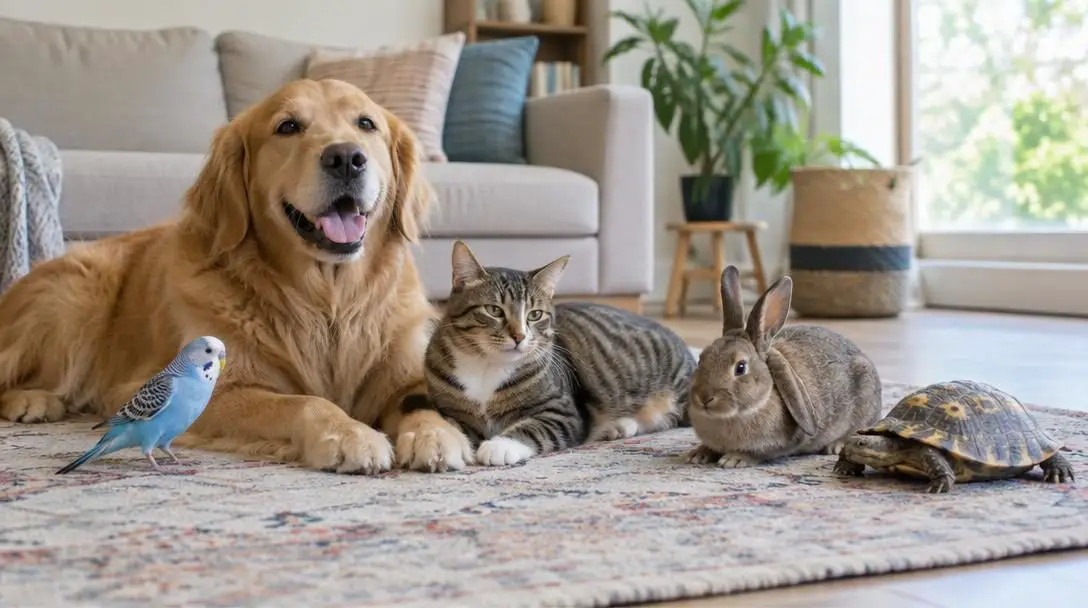
Cats have long held a cultural reputation as solitary, aloof, and fiercely territorial animals, leading many prospective pet owners to assume that keeping multiple species under one roof is an impossible task bound to cause continuous tension. While domestic felines certainly retain their ancestral predatory reflexes and a protective instinct over their personal territory, they are also remarkably adaptable social creatures. In practice, felines are fully capable of forming meaningful, peaceful bonds with a wide range of housemates when given patient guidance and an orderly environment.
Far from merely tolerating other creatures, living alongside different animals can actively enrich a cat's daily life. Dynamic multi-species households provide consistent mental stimulation, prevent boredom, and satisfy innate social curiosities. Whether engaging in reciprocal grooming with small mammals, observing aquatic life, or resting alongside a gentle canine, felines can flourish alongside other species when pet owners understand cross-species communication and honor each animal's emotional boundaries.
Key takeaways
- Cats are social and adaptable creatures that can establish peaceful, enriching bonds across species lines under structured conditions.
- Dogs with low aggression and gentle temperaments, such as golden retrievers, beagles, and basset hounds, often make exemplary feline companions.
- Rabbits, birds, and guinea pigs can cohabitate successfully with felines when owners enforce constant supervision and secure enclosures.
- Aquariums provide a safe, visually stimulating environment that captivates and calms cats without requiring physical interaction.
- Successful cohabitation depends on gradual scent swapping, visual barriers, and ensuring cats always have access to elevated retreat spaces.
Comparing multi-species roommates at a glance
Each animal species brings a distinct social style, physiological vulnerability, and behavioral language to a household. Choosing the right companion depends heavily on the level of direct interaction you expect and the physical containment measures your living space can support.
| Animal | Interaction Style | Supervision Requirement | Primary Safety Need |
|---|---|---|---|
| Dogs | Physical and cooperative | High during initial introduction | Dedicated elevated escape routes for the cat |
| Rabbits | Gentle and docile | Mandatory during direct contact | Controlled playpens and monitored body language |
| Birds | Visual or distant spatial sharing | Continuous when out of cage | Secure cage bar spacing and off-limits perches |
| Guinea Pigs | Docile social grooming | Mandatory during floor time | Enclosed shelters and hiding boxes within the habitat |
| Fish | Passive visual observation | Minimal active oversight | Reinforced, weight-bearing tank covers |
Five animals that can share a home with cats
While feline predatory instincts are always a factor to consider, domestic cats can form affectionate, cooperative, or peacefully indifferent relationships with traditional and non-traditional companions. The following five animals have proven track records of successful coexistence in domestic environments.
Dogs

- Compatible breeds: Golden retrievers, beagles, basset hounds
- Temperament profile: Gentle, patient, and low aggression
- Interaction style: Physical play and shared resting areas
Although popular culture depicts canines and felines as sworn enemies, many dogs make devoted companions for cats. The primary determinant of a successful canine-feline partnership is the dog's temperament and innate drive to chase. Breeds such as golden retrievers, beagles, and basset hounds are widely recognized for their easygoing demeanors, emotional patience, and low inclination toward territorial hostility, which helps prevent overstimulating an anxious cat.
When given appropriate boundaries, dogs and cats often develop cooperative living habits, curling up together on furniture or peacefully sharing common family rooms. The key is curbing sudden lunging behaviors early on and ensuring the dog understands that the cat is not a pursuit toy.
Rabbits
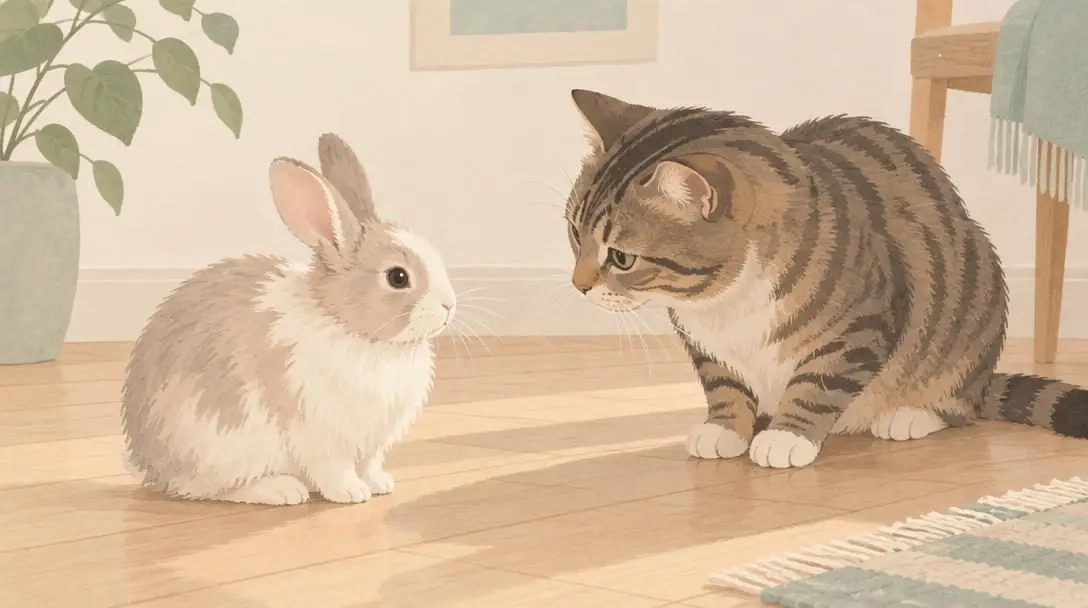
- Interaction style: Calm, docile companionship
- Primary risk: Accidental rough play or pursuit
- Supervision level: Constant human oversight
At first glance, pairing a natural predator like a cat with an herbivorous prey animal seems counterproductive. However, rabbits possess a gentle, unassuming presence that frequently causes no perceived territorial threat to a curious feline. Many rabbits are naturally placid, allowing them to form calm, affectionate friendships with felines that might otherwise react aggressively to more boisterous animals.

Because domestic rabbits are physically fragile and prone to stress, direct physical encounters must always be supervised. Even playful feline swats can unintentionally injure a rabbit's sensitive skin, making active human oversight mandatory whenever both animals are out in the same room.
Birds

- Smaller varieties: Finches and canaries
- Larger varieties: Parrots and cockatiels
- Management strategy: Cage security and territory training
Inviting an avian pet into a feline-occupied home requires thoughtful management, yet peaceful coexistence remains entirely achievable. Smaller birds, including finches and canaries, often do not register as immediate hunting prey to well-fed indoor cats, particularly when their cages are placed in secure, high locations that discourage climbing.
Larger birds, such as parrots and cockatiels, introduce a different dynamic. These intelligent birds can be trained to avoid direct contact with the cat and to stay away from surfaces within physical leaping range. With heavy-duty habitats and trained spatial awareness, birds and cats can inhabit the same living areas without constant distress.
Guinea Pigs

- Social behavior: Known to groom feline fur during rest
- Habitat requirement: Multiple covered hiding spots
- Personality trait: Surprisingly resilient and welcoming
Often assumed to be far too delicate to cohabit with felines, guinea pigs possess an unexpected resilience that makes them remarkable companions. Many guinea pigs actively welcome feline interaction, exhibiting remarkable confidence during quiet social moments. In some households, calm guinea pigs will even approach a resting cat to gently groom its fur.
To keep guinea pigs feeling secure, their enclosures must be furnished with multiple enclosed hiding boxes. Having immediate access to private shelters gives guinea pigs the agency to retreat whenever they feel overwhelmed, preventing chronic stress and letting them approach the household cat strictly on their own terms.
Fish

- Interaction style: Passive visual stimulation
- Physical contact: Strictly none
- Essential equipment: Weight-bearing, tightly fastened tank lid
For pet owners seeking a hands-off, zero-conflict dynamic, fish offer an ideal cohabitation experience. While aquatic pets will never cuddle or engage in reciprocal play with a cat, they serve as an exceptional source of passive environmental enrichment. Felines are naturally captivated by the fluid, rhythmic motions of fish swimming through an aquarium, which provides endless mental engagement and can have a noticeably calming effect on high-energy cats.
The single most critical requirement for keeping fish alongside cats is structural security. Aquariums must have durable, heavy-duty covers capable of supporting the full weight of a leaping cat, preventing unwanted fishing attempts or accidental falls into the water.
The science and psychology of interspecies relationships
Understanding how domestic animals perceive one another explains why interspecies households can thrive. In wild ecosystems, animals categorize other creatures into rigid groups: competitors for resources, dangerous predators, consumable prey, or irrelevant background elements. In a secure domestic environment where food, water, and shelter are abundantly provided, these rigid instincts soften considerably.
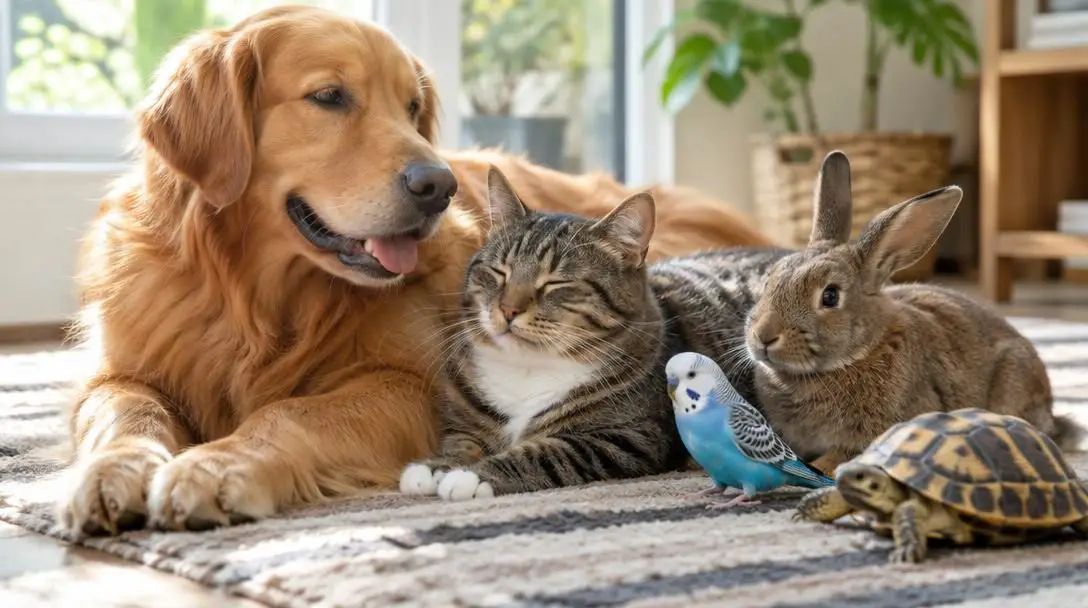
In a domestic setting free from resource competition, a cat's predatory drive softens, allowing natural curiosity and mutual tolerance to take root.
When an indoor cat realizes that another creature does not threaten its meal supply or sleeping territory, territorial defensive reactions begin to fade. Similarly, social herd or pack animals like dogs and guinea pigs are driven by communal cohesion; once they learn through repeated neutral interactions that a cat does not pose an immediate danger, defensive fear responses recede.
However, cross-species communication hurdles always remain. Dogs communicate excitement by wagging their tails, while a lashing feline tail signals irritation, overstimulation, or an impending strike. Cats use subtle ear tilts, whisker positions, and slow blinking to show contentment, signals that small mammals and canines do not instinctively read. Successful cohabitation occurs when animals spend enough structured time together to learn each other's individual behavioral limits.
Practical steps for introducing cats to other animals
Rushing two unfamiliar animals together is the most common cause of interspecies conflict. Following a measured, progressive framework ensures that every animal feels secure throughout the transition.
- Establish separate sanctuary zones: Give each animal its own dedicated, private room equipped with all necessary resources, including food, water, litter pans, and bedding, before any physical contact occurs.
- Implement scent swapping: Exchange unwashed bedding, blankets, or soft toys between the cat and the other animal. Praise and reward the cat while it sniffs these items to form an immediate association between the newcomer's scent and positive experiences.
- Facilitate controlled visual introductions: Allow the pets to view one another through a sturdy baby gate, a cracked door, or the secure wire mesh of a primary cage, keeping sessions brief and calm.
- Conduct structured, leashed encounters: Bring the animals into the same open room while maintaining full control. Keep dogs on a short lead, hold small animals safely in a lap or playpen, and leave all room exits open so the cat never feels cornered.
- Reward calm demeanor and lengthen exposure: Offer high-value treats and soft praise whenever animals display relaxed posture. Gradually lengthen the duration of shared sessions over several weeks as mutual tolerance becomes the baseline.
Common mistakes pet owners must avoid
Even conscientious owners can derail an interspecies relationship by underestimating natural animal instincts. Avoiding these common mistakes preserves household safety and reduces daily stress for every pet involved:
- Forcing physical closeness: Restraining a cat in your arms to force an introduction restricts its flight response, often provoking defensive biting, hissing, or clawing.
- Ignoring individual canine drive: Assuming all individual dogs of a gentle breed are safe around cats can lead to dangerous surprises; energy level and chase instinct must always be evaluated individually.
- Using fragile habitat covers: Leaving birdcages, reptile tanks, or aquariums protected only by flimsy mesh or plastic covers invites catastrophic structural collapses if a cat leaps onto them.
- Depriving small pets of hiding areas: Failing to include enclosed tunnels and hideouts inside guinea pig or rabbit habitats forces them into perpetual alert, causing chronic physiological stress.
- Eliminating elevated escape routes: Restricting cats to floor level around large or active animals removes their natural coping mechanism, significantly elevating anxiety and defensive aggression.
Frequently asked questions
Can cats really be trusted around small rodents like guinea pigs?
Yes, but direct interactions must always be actively supervised by a human. While many guinea pigs and cats share peaceful bonds and even groom one another, sudden darting motions can trigger a feline's predatory chase instinct unexpectedly.
Which dog breeds adapt best to living with cats?
Breeds celebrated for their patient manners, low aggression, and calm dispositions adapt best to feline housemates. Golden retrievers, beagles, and basset hounds are prime examples of dogs that consistently demonstrate the gentleness needed for peaceful cohabitation.
How can I prevent my cat from disturbing fish in an aquarium?
The most important step is installing a heavy-duty, tightly secured lid that can support your cat's full body weight without bending or giving way. Providing an approved viewing perch nearby allows your cat to observe the fish safely without trying to access the water.
What should I do if my cat stalks a caged bird?
Interrupt the fixation immediately by redirecting your cat's attention with a toy or calling it into another room. Ensure the birdcage is mounted securely out of leaping range, verify that bar spacing is narrow enough to block curious paws, and cover the cage temporarily if stress signs appear.
How long does it take for a cat to accept a new animal housemate?
The timeline varies widely based on individual temperaments, past socialization, and the species involved. A seamless introduction typically takes anywhere from a few weeks to several months of deliberate scent swapping, visual barriers, and supervised meetings.
The bottom line
Felines are nuanced, emotionally capable animals that do not need to live an isolated existence. When provided with dedicated territories, clear escape pathways, and unhurried introductions, cats can thrive alongside a diverse cast of animal companions. By matching compatible temperaments, respecting innate instincts, and maintaining steady oversight, you can transform your home into a calm, multifaceted sanctuary where every species feels secure and valued.