
5 Earth-shattering Sci Fi Movies

Science fiction motion pictures hold an enduring grip on the popular imagination, in large part because the most gripping narratives contain an undeniable seed of truth. Decades after audiences watched fictional explorers traverse galaxies with handheld communicators, contemporary society treats those once-futuristic concepts as ordinary household technology. From real-world government disclosures regarding unidentified aerial phenomena to consumer gadgets that mirror devices once brandished on television sets in the 1970s, the boundary between speculative fantasy and genuine reality continues to blur.
Yet the most unforgettable cinematic journeys do not merely showcase futuristic trinkets; they push humanity to the absolute brink of total annihilation. When planetary survival hangs by a thread, storytelling cuts past shallow spectacle to tap directly into our foundational instincts for perseverance, courage, and communal resilience. In exploring catastrophic celestial collisions, robotic uprisings, and terrifying incursions from deep space, speculative cinema forces audiences and characters alike to confront insurmountable odds.
Key takeaways
- High-stakes science fiction resonates deeply by anchoring planetary survival within intimate family bonds and individual character arcs.
- End-of-the-world cinema has historically evolved from small-scale scientific cautionary tales into expansive planetary defense epics.
- Iconic threats—ranging from high-speed rogue asteroids to unyielding cyborgs—succeed because they present an adversary that cannot be reasoned with.
- Balancing cosmic devastation with personal conviction allows high-concept disaster films to deliver lasting emotional resonance rather than just sensory spectacle.
Five Planetary Survival Movies That Shook Cinema
Throughout cinematic history, several milestone films have distinguished themselves by raising the stakes to an absolute existential level. Whether depicting an unfeeling deep-space anomaly hurtling toward our atmosphere or an organized extraterrestrial reconnaissance campaign, these five films place the entire destiny of the human species on the line.
| Film Title | Release Year | Existential Threat | Key Talent Involved |
|---|---|---|---|
| Armageddon | 1998 | Massive rogue asteroid | Bruce Willis, Ben Affleck, J.J. Abrams |
| Signs | 2002 | Extraterrestrial reconnaissance | M. Night Shyamalan, Mel Gibson, Joaquin Phoenix |
| The Terminator | 1984 | Infiltrating combat cyborg | Arnold Schwarzenegger, Linda Hamilton, Michael Biehn |
| Star Trek | 2009 | Time-traveling Romulan with red matter | Chris Pine, Zachary Quinto, Eric Bana |
| War of the Worlds | 2005 | Subterranean alien harvesting tripods | Steven Spielberg, Tom Cruise, Justin Chatwin |
Armageddon

- Release Year: 1998
- Box Office Standing: Highest-grossing film of 1998
- Academy Recognition: Four Oscar nominations
- Key Screenplay Contributor: J.J. Abrams
In 1998, cinema embraced apocalyptic action on an astronomical scale. The high-octane premise of a rogue celestial body hurtling toward our home planet transformed this film into the highest-grossing release of its year. The narrative centers on a massive, high-speed asteroid on a direct collision course with Earth. With traditional defense options exhausted, the planetary defense initiative turns to deep-core drilling experts, sending a colorful and undisciplined group of blue-collar workers into orbit to execute an unprecedented subsurface demolition.
The film secured four Academy Award nominations, none of which were in acting categories—an amusing footnote considering the powerhouse ensemble assembled on screen. The cast featured household names including Bruce Willis, Billy Bob Thornton, Ben Affleck, Liv Tyler, Will Patton, Steve Buscemi, William Fichtner, Owen Wilson, Michael Clarke Duncan, and Peter Storage. With contributions to the screenplay by J.J. Abrams, the narrative thrives on unpredictable chaos, highlighting how perilous space missions become when inexperienced civilians confront the unforgiving vacuum of space to save billions of lives.
Signs

- Release Year: 2002
- Director & Writer: M. Night Shyamalan
- Lead Performers: Mel Gibson, Joaquin Phoenix
- Setting: Rural family farmhouse
Written, directed, and produced by M. Night Shyamalan, this atmospheric 2002 thriller approaches an extraterrestrial invasion through a remarkably quiet lens. Rather than depicting military command centers and shattered monuments, the production confines the global crisis to an isolated farmhouse. Mel Gibson stars as a former preacher who has completely abandoned his faith following the tragic, untimely death of his wife. Alongside him, Joaquin Phoenix plays his younger brother, a former minor league baseball player who helps run the homestead and protect his young niece and nephew.
The tension escalates when intricate crop patterns appear across their fields, signaling a coordinated reconnaissance operation by militant extraterrestrial forces. Humanity splinters into divided perspectives, with some viewing the planetary arrival as peaceful first contact while others declare it the end of days. As physical incursions begin, the family barricades themselves inside, discovering that seemingly coincidental details of their traumatic past form an intricate tapestry of survival. By grounding cosmic hostility in domestic vulnerability, the narrative illustrates how an existential crisis can ultimately restore shattered personal convictions.

The Terminator

- Release Year: 1984
- Key Cast: Arnold Schwarzenegger, Michael Biehn, Linda Hamilton
- Central Antagonist: Cyberdyne Systems Model 101
- Narrative Focus: Temporal warfare in modern-day Los Angeles
The 1984 release of this genre-defining masterpiece altered science fiction cinema by shifting the battlefield. Rather than confining the war for human survival to a distant, bleak future, the narrative brings the apocalypse into the gritty alleys of contemporary Los Angeles. By sending an unstoppable synthetic killer backward through time to eliminate the future mother of human resistance, the film injected relentless suspense into a modern urban setting.
The production found its greatest asset by giving humanity's ultimate enemy an unforgettable face in Arnold Schwarzenegger. The former Mr. Olympia champion captured the calculating menace of an unfeeling android assassin. The sheer terror of this adversary is perfectly captured by resistance soldier Kyle Reese, played by Michael Biehn, who explains: “Listen, and understand! That Terminator is out there. It can’t be bargained with. It can’t be reasoned with. It doesn’t feel pity, or remorse, or fear. And it absolutely will not stop, ever, until you are dead.” Alongside this relentless chase, Sarah Connor, portrayed by Linda Hamilton, evolves from an unsuspecting diner waitress into one of the grittiest, most capable heroines in screen history.
Stories where existence hangs by a thread connect with our deepest instincts for survival, forcing characters to confront unfathomable odds.
Star Trek

- Release Year: 2009
- Lead Roles: Chris Pine, Zachary Quinto, Zoe Saldana, Karl Urban
- Antagonist: Captain Nero (Eric Bana)
- Core Threat: Time-displacement and black hole weaponry
Rebooting a beloved television and film property with decades of continuity is an immense creative challenge, yet the 2009 cinematic reimagining invigorated the franchise with fresh kinetic energy. The story traces the origins of James T. Kirk, played by Chris Pine, as he navigates his rebellious nature, works his way through Starfleet Academy, and confronts the towering legacy of his heroic father, who sacrificed his life to save hundreds of evacuees during an interstellar attack.
The production assembled a dynamic new ensemble to embody iconic crew members, including Zachary Quinto as the emotionally conflicted Mr. Spock, Zoe Saldana as the gifted communications officer Ohura, and Karl Urban as the cynical yet loyal Dr. Leonard "Bones" McCoy. The narrative stakes explode when Captain Nero, a vengeful Romulan commander portrayed by Eric Bana, emerges from a temporal rift. Wielding volatile red matter capable of generating artificial black holes, Nero sets out to wipe out foundational planetary civilizations, including Earth itself. The resulting battle tests the untested crew, proving that strategic ingenuity and unity remain humanity's greatest defense against annihilation.
War of the Worlds
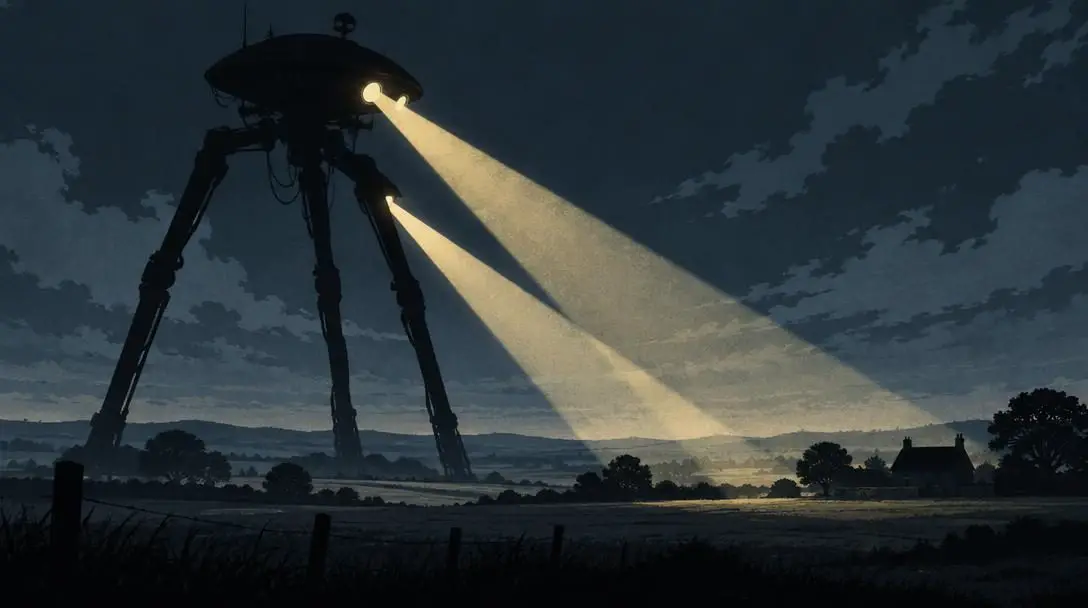
- Release Year: 2005
- Director: Steven Spielberg
- Lead Performers: Tom Cruise, Justin Chatwin
- Cultural Precedent: 1938 Orson Welles radio broadcast
Directed by Steven Spielberg, the 2005 cinematic adaptation of H.G. Wells' foundational invasion novel taps into historic cultural anxieties. The story plays upon long-standing conspiracy theories surrounding the infamous 1938 Halloween radio drama narrated by Orson Welles, which sparked public panics and led fringe theorists to speculate that a genuine alien skirmish had been concealed by authorities. Spielberg removes modern cinematic bravado, replacing military triumph with raw civilian helplessness.
Tom Cruise stars as Ray Ferrier, an estranged father working alongside his son Robbie, played by Justin Chatwin, as they flee an industrialized assault spanning from New Jersey to Boston. Ancient extraterrestrial war machines, buried beneath major urban centers long before human settlement, rise to harvest civilian populations for sustenance. By focusing strictly on the chaotic perspective of fleeing refugees, the narrative exposes the profound defenselessness of modern society when confronted by a superior predatory force, turning an extinction-level crisis into an intimate tale of parental dedication.

The Evolution of High-Stakes Speculative Fiction
Apocalyptic narratives have mirrored cultural anxieties across different eras of cinematic production. When early science fiction surfaced in mid-twentieth-century cinema, existential threats were typically isolated cautionary allegories. Dangerous monsters or rogue laboratory experiments often served as transparent stand-ins for atomic weapons or wartime fears. The scope remained tightly bound to single research facilities, remote testing grounds, or localized military outposts.
As filmmaking technology matured and theoretical sciences entered the public consciousness, storytellers expanded their canvas across the cosmos. The birth of the space age and computational networks provided screenwriters with rich foundations. Fictional annihilation was no longer confined to supernatural occurrences or simple monster attacks; writers drew upon real-world principles of orbital mechanics, deep-space surveillance, automated computing networks, and astrophysical phenomena. Modern disaster cinema operates as a social mirror, dramatizing contemporary vulnerabilities to technological dependency, ecological disruptions, and cosmic hazards beyond our control.
The Narrative Blueprint of Existential Sci-Fi
Crafting a compelling screenplay where the destiny of humanity hangs in the balance requires structural precision. If planetary destruction is presented merely through distant statistical overviews and falling skyscrapers, viewers become detached from the human cost. Successful high-stakes storytelling employs several crucial techniques to maintain emotional investment:
- Grounding crises in family dynamics: Monumental destruction gains meaning when viewed through fractured domestic relationships, such as estranged parents protecting their children or brothers reconciling amidst panic.
- Establishing an unyielding threat: The opposing force—whether an unthinking mass of rock, an alien harvester, or an emotionless machine—must be entirely immune to conventional negotiation or diplomatic compromise.
- Enforcing an uncompromising ticking clock: Relentless temporal deadlines, such as an orbital entry trajectory or an impending atmospheric deployment, eliminate downtime and heighten tension.
- Utilizing familiar environments: Placing cosmic horrors against mundane backdrops like suburban kitchens, cornfields, and local highways makes fantastic threats feel terrifyingly plausible.
- Connecting survival to internal transformation: The external survival struggle frequently mirrors an internal journey, demanding that protagonists recover lost faith, shed selfishness, or discover unexpected courage.
How to Organize an Extinction-Level Film Marathon
Screening multiple disaster and invasion features back-to-back can quickly become emotionally exhausting without deliberate planning. To maintain engagement throughout several feature-length depictions of planetary collapse, use the following operational steps to curate an engaging home marathon:
- Select an overarching narrative theme, such as mechanical uprisings, cosmic anomalies, or deep-space reconnaissance, to give the marathon a cohesive thematic throughline.
- Vary the pacing and visual tone by sandwiching claustrophobic, domestic thrillers between explosive, large-scale orbital action spectacles.
- Calibrate domestic sound systems specifically for dynamic audio ranges, ensuring whisper-quiet character dialogue remains audible without being overwhelmed by concussive explosive effects.
- Schedule structured intermissions between screenings to allow viewers to step away from sustained apocalyptic tension, refresh refreshments, and decompress.
- Facilitate reflective discussions at the conclusion of each film, analyzing how each story balances civilian resilience against organized institutional responses.
Analytical Traps to Avoid When Reviewing Disaster Sci-Fi
Approaching apocalyptic science fiction with rigid analytical frameworks frequently leads viewers and critics to misjudge a film's creative achievements. Avoiding these common analytical missteps provides a richer appreciation of high-concept cinema:
- Prioritizing hard scientific accuracy over narrative drama: Condemning a thrilling speculative story entirely for bending orbital physics or gravitational realities overlooks the artistic intent of dramatic storytelling.
- Dismissing action-focused disaster films as emotionally shallow: Overlooking subtle character redemption arcs amidst heavy pyrotechnics causes viewers to miss underlying messages of selflessness and resilience.
- Ignoring the historical production context: Analyzing older disaster movies without considering the geopolitical, military, or social anxieties of their respective release years strips the story of its cultural subtext.
- Equating extreme nihilism with artistic sophistication: Assuming that a completely hopeless resolution is inherently superior to an optimistic ending misjudges the narrative value of triumph through adversity.
- Fixating purely on digital visual effects: Evaluating a film solely on its spectacle ignores the critical role that practical sets, sound design, and actor chemistry play in building genuine dread.
Frequently asked questions
Why did Armageddon receive Academy Award nominations if its performances were overlooked?
Armageddon earned four Academy Award nominations entirely in technical disciplines rather than acting categories. Its nominations celebrated visual achievements, sound editing, sound mixing, and original music, recognizing the technical complexity required to depict an orbital planetary defense mission.
How does Signs approach an alien invasion differently from typical disaster films?
Rather than portraying sweeping military counterattacks or catastrophic damage across global capitals, Signs confines its perspective to an isolated Pennsylvania farmhouse. The film focuses on a grief-stricken former minister and his immediate family, treating the planetary invasion as an intimate domestic struggle that challenges individual faith.
What makes the threat in The Terminator unique compared to other survival stories?
Instead of setting its human survival conflict in a distant post-apocalyptic era, The Terminator stages the existential war in contemporary urban society. The threat is embodied by an unrelenting cybernetic assassin disguised in human flesh that cannot be reasoned with, negotiated with, or deterred by pain.
What weapon threatens Earth in the 2009 Star Trek reboot?
In the 2009 reboot, the primary existential weapon is red matter, an exotic substance wielded by the vengeful Romulan commander Captain Nero. When ignited, red matter generates an artificial black hole capable of consuming entire planets, placing Earth in immediate peril.
What historical event inspired the premise behind the 2005 War of the Worlds?
The film engages with the lore surrounding the 1938 Halloween radio dramatization of War of the Worlds narrated by Orson Welles. That broadcast famously caused localized panic and sparked enduring conspiracy theories that an actual extraterrestrial encounter had occurred and was subsequently concealed by military authorities.
The Bottom Line
Science fiction stories centered on planetary survival continue to captivate audiences because they reveal how humanity responds when pushed to the absolute edge. Whether confronting a rogue asteroid, an unstoppable robotic infiltration unit, or an ancient subterranean invasion, these films demonstrate that survival rarely hinges on flawless technology alone. Instead, the ultimate weapon against extinction is the enduring human spirit—our willingness to sacrifice for loved ones, confront insurmountable odds, and hold onto hope when the universe seems determined to wipe us out.