5 Foods Prohibited in the Bible
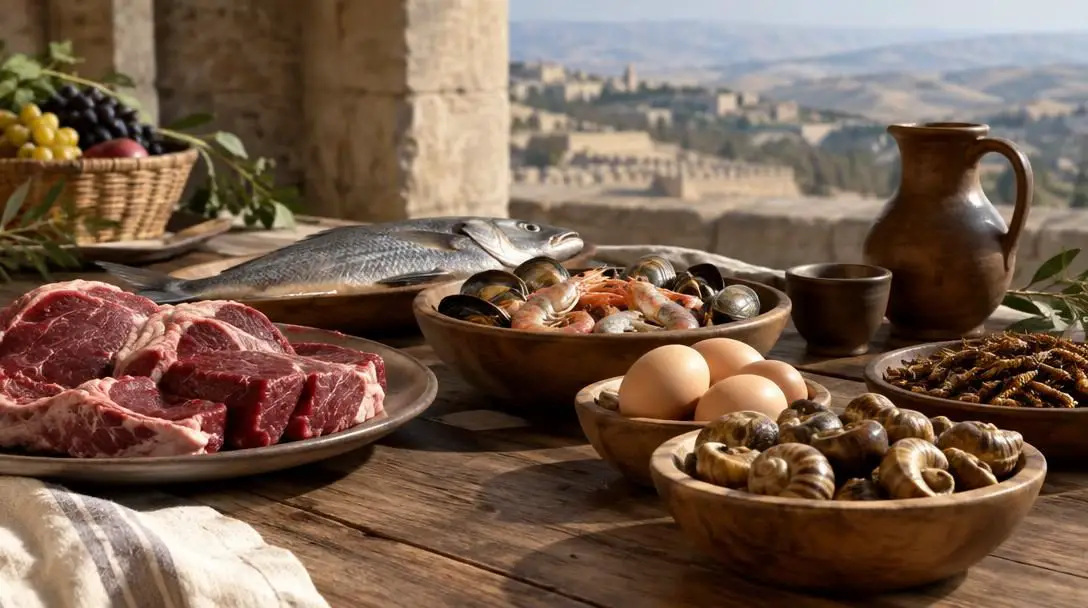
Dietary restrictions hold a central position throughout biblical literature, tracing their conceptual origins back to the Garden of Eden. In the foundational narrative of Genesis, humanity's initial boundary was defined through food when Adam and Eve were commanded to abstain from the tree of the knowledge of good and evil. Their decision to consume the forbidden apple resulted in expulsion from paradise, establishing a lasting scriptural pattern where eating habits serve as a direct expression of obedience, reverence, and spiritual discipline.
Beyond the Eden narrative, scriptures across books such as Exodus, Leviticus, and Nehemiah construct an intricate framework of dietary regulations. Rather than providing arbitrary prohibitions, biblical law relies on specific physical markers, anatomical locations, and circumstances of death to demarcate what was clean and proper for holy communities. Understanding which foods are strictly banned provides valuable perspective into ancient regulatory traditions and the scriptural definition of holiness.
Key takeaways
- Biblical prohibitions ban specific hard internal organ fats known as peder while allowing other fats.
- Carcasses of animals slain or torn by wild predators are completely forbidden for human food and must be thrown to the dogs.
- Most flying birds, particularly scavengers, birds of prey, and bats, are classified as vermin and excluded from the table.
- Rabbits are deemed unclean because, although they chew the cud, they lack the required split hoof.
- Aquatic creatures are permitted only if they possess both fins and scales, eliminating popular seafood like shrimp and calamari.
At a glance: Five prohibited biblical foods
| Forbidden food | Biblical source | Core prohibition criteria | Prescribed outcome or allowable alternative |
|---|---|---|---|
| Hard internal fat (peder) | Leviticus, Nehemiah | Fat surrounding specific internal organs like the liver and kidneys | Other livestock fats and rich foods may be eaten freely |
| Pre-killed animal carcasses | Exodus | Torn apart, hunted, or killed by wild predatory beasts | Must be cast outside and thrown to the dogs |
| Flying birds and bats | Leviticus | Winged creatures categorized as vermin, scavengers, or raptors | Flightless poultry such as chickens and turkeys remain standard |
| Rabbits | Leviticus 11 | Possesses a cud-chewing digestive process but lacks a split hoof | Herbivorous livestock possessing both split hooves and cud-chewing |
| Certain sea life | Leviticus 11 | Water creatures lacking the combination of fins and scales | Fish bearing both fins and scales, including large predatory species |
The 5 prohibited foods mentioned in the Bible
The scriptures explicitly identify several categories of food that were strictly barred from human consumption. These prohibitions addressed mammals, avian species, marine life, and specific anatomical byproducts.
Certain types of fat
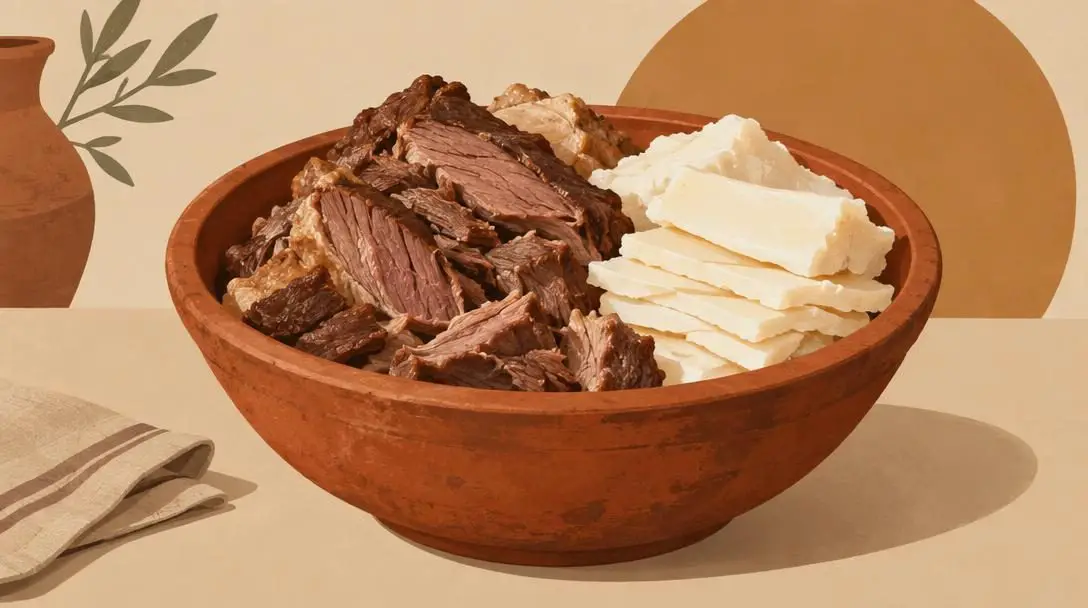
- Forbidden type: Hard visceral fat known as peder
- Anatomical site: Surrounding internal organs including kidneys and liver
- Scriptural texts: Leviticus, Nehemiah 8:10
The biblical stance on fat presents an apparent paradox at first glance. On an individual level, the scriptures caution against gluttony, yet storing body fat is celebrated as a protective blessing from God that shields internal anatomy. Furthermore, passages such as Nehemiah 8:10 actively encourage joyful feasts, telling believers to go their way, eat the fat, and drink the sweet. At the same time, earlier legal texts explicitly order people never to consume the fat of livestock animals like cattle.
The resolution to this seeming contradiction rests on anatomical fat placement. The biblical ban does not apply universally to every layer of lipid in an animal's body. Instead, the prohibition isolates the dense, hard fat known as peder. This specific variety of fat forms a protective barrier encasing vital internal organs, most notably the liver and kidneys. While peripheral fat marbled throughout the meat could be consumed during authorized feasts, the hard organ fat was entirely off-limits for dining.
Pre-killed animals

- Cause of death: Slain or torn up by wild predatory animals
- Governing passage: Book of Exodus
- Mandatory disposal: Cast out and thrown to the dogs
In standard biblical practice, animals utilized for food had to be processed directly through controlled human slaughter. The book of Exodus presents an explicit injunction forbidding anyone from eating meat harvested from an animal that fell victim to wildlife: "You must be my holy people. Therefore, do not eat any animal that has been torn up and killed by wild animals." Consuming carrion or salvaging the leftovers of a predator's hunt violated the ceremonial integrity required of the community.
Unlike modern hunters or foragers who might consider salvaging fresh meat from the wilderness, ancient communities were given an unequivocal disposal protocol. The text of Exodus commands that whenever a torn carcass was discovered, the remains had to be thrown to the dogs. By assigning the meat to domestic scavengers, the law ensured that humans maintained distinct physical and spiritual boundaries between themselves and predatory wildlife.
Flying birds

- Levitical designation: Regarded as vermin
- Prohibited examples: Vultures, kites, falcons, crows, owls, hawks, and bats
- Permitted poultry: Flightless birds such as chickens and turkeys
While flightless domestic birds like chickens and turkeys serve as staple protein sources across cultures, the biblical catalog in Leviticus strictly bars most birds capable of flight. The text offers an extensive inventory of winged creatures classified as detestable vermin, warning that they must never appear on a dining table. The catalog emphasizes raptors and carrion eaters that feast on blood, rot, and smaller animals.
The comprehensive list in Leviticus identifies the griffon-vulture, black vulture, bearded vulture, kite, every kind of falcon, every kind of crow, the desert owl, short-eared owl, long-eared owl, and every kind of hawk. The passage proceeds to enumerate several additional varieties of owls before concluding with the bat, which ancient classifications grouped among flying creatures. Because these winged animals were either predatory hunters or scavengers, they were designated as utterly unfit for human consumption.
Rabbits

- Disqualifying defect: Lacks a divided, split hoof
- Qualifying trait: Chews the cud
- Biblical location: Leviticus 11, cataloged directly prior to the pig
Rabbit meat is widely prepared and eaten in numerous culinary traditions around the world, yet in other societies it carries cultural taboos. Within biblical law, the verdict on rabbits is clear and uncompromising. Leviticus 11 positions the rabbit directly alongside the pig when detailing prohibited terrestrial quadrupeds, providing an unambiguous anatomical test for its exclusion.
According to Leviticus, an acceptable land mammal must satisfy two concurrent physical requirements: it must chew the cud and it must possess a completely divided, split hoof. The text observes that the rabbit chews the cud but lacks a split hoof, rendering it ritually unclean. For many contemporary readers who cherish rabbits exclusively as docile household pets rather than culinary ingredients, this ancient prohibition aligns naturally with modern domestic sentiments.
Certain sea life
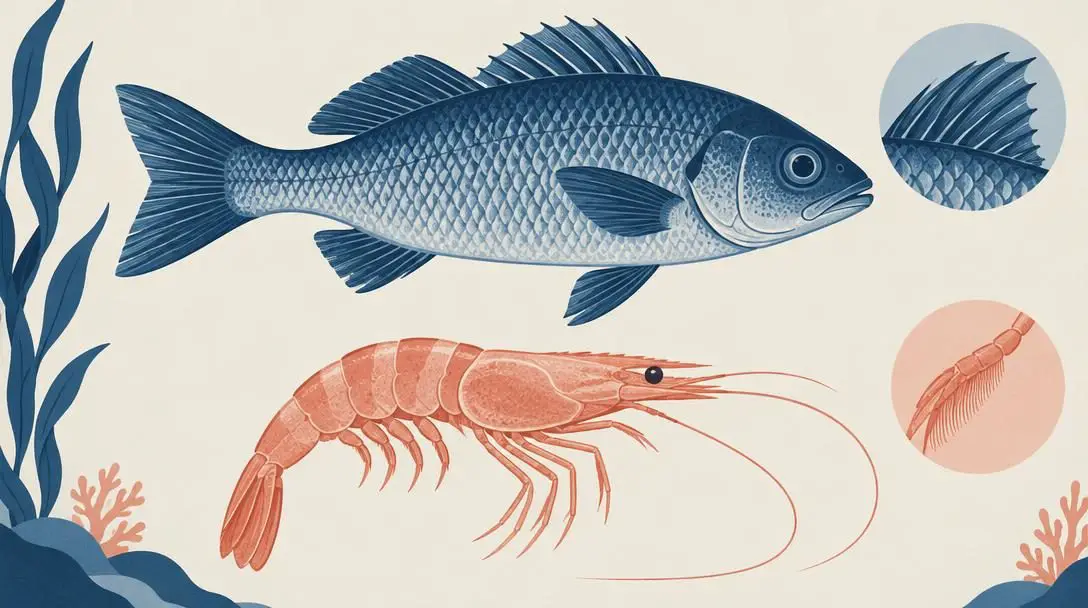
- Required physical traits: Presence of both fins and scales
- Prohibited varieties: Calamari, shrimp, and swarming marine creatures
- Primary scriptural passage: Leviticus 11
Fish consumption is frequently highlighted throughout the Old and New Testaments, often portrayed as an everyday, God-given dietary staple. However, strict anatomical boundaries govern all aquatic organisms. Leviticus 11 outlines a straightforward criterion: humans may freely consume any creature dwelling in the seas or freshwater streams, provided it possesses both fins and scales.
Under this precise physical rule, predatory marine species that retain both traits—such as the Great White Shark—technically meet the scriptural threshold for acceptability. Conversely, any aquatic animal lacking either fins or scales is declared detestable. This strict requirement eliminates popular modern delicacies such as calamari, shrimp, lobster, and other soft-bodied or shell-bearing marine organisms from the permissible biblical menu.
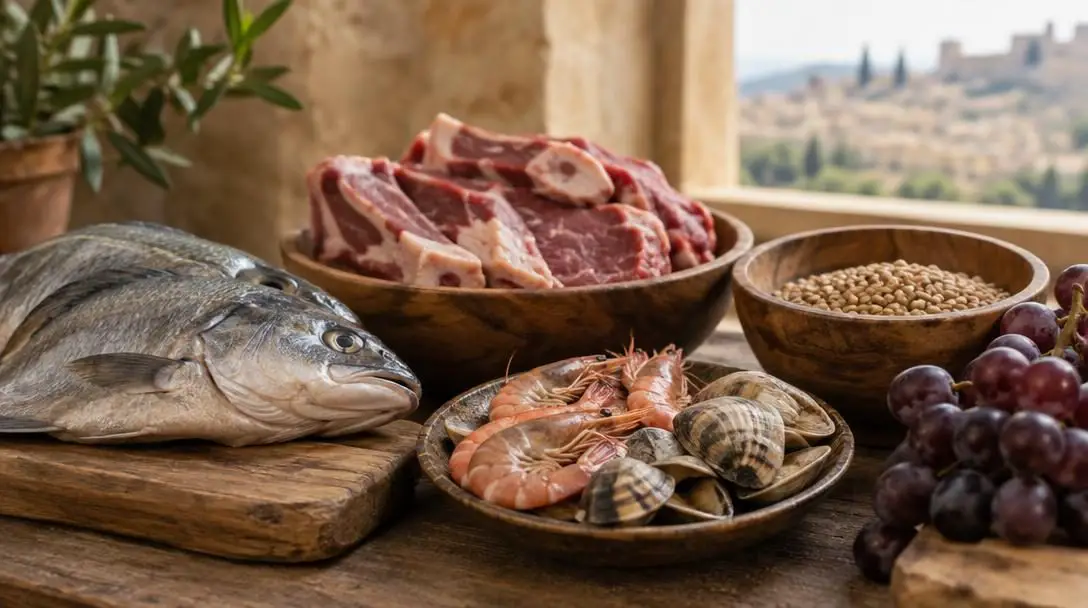
Biblical food restrictions rely on observable anatomical traits and the manner of an animal's death rather than personal taste or culinary preference.
How biblical dietary classifications function
The biblical dietary system does not operate on subjective preferences, culinary appeal, or arbitrary whims. Instead, the legal texts construct an objective framework based on clear biological observations, physical characteristics, and the precise conditions under which an animal died. Examining these foundational principles reveals a consistent method of categorizing the natural world into orderly, sacred boundaries.
- Specific anatomical fat placement: The scriptures do not enact a blanket ban on all dietary lipids. Rather, the legal prohibition isolates the dense, hard fat layer known as peder. Because this fat specifically encapsulates internal organs like the liver and kidneys, the rule depends entirely on internal anatomical location rather than fat content as a whole.
- Manner and agency of death: The acceptability of meat depends heavily on how the animal died. When an animal is brought down and torn apart by a predatory beast, it is immediately disqualified from the human table and must be abandoned to the dogs, preserving a separation between human society and wild predators.
- Dual mammalian markers: Terrestrial mammals must satisfy two simultaneous anatomical tests to be deemed clean. As illustrated by the rabbit, an animal that chews the cud is still forbidden if it lacks a fully cloven or split hoof.
- Winged scavenger exclusions: Rather than permitting all poultry, Leviticus creates an extensive registry of prohibited winged creatures. The banned catalog focuses on predatory raptors, carrion scavengers, owls, and bats, contrasting them with domestic, flightless fowl.
- Aquatic physical markers: Marine life is evaluated not by habitat, size, or predatory behavior, but solely by external anatomy. Any creature inhabiting freshwater or saltwater must possess both fins and scales; swarming, soft-bodied, or shell-bearing organisms are strictly rejected.
Navigating biblical food rules step-by-step
For readers studying ancient dietary laws or seeking to understand how biblical categories apply to modern grocery aisles, following a structured evaluation process clarifies how each item is classified under scripture.
- Isolate and inspect livestock fats: When handling cuts from domestic cattle or sheep, differentiate between peripheral fat and organ fat. Discard the hard visceral fat (peder) situated directly around the kidneys and liver, while allowing ordinary marbling.
- Verify the source and manner of slaughter: Confirm that red meat originates from a controlled, humane slaughter rather than an animal that perished from natural trauma, sickness, or the claws of a wild predator. If an animal was mauled in the wild, discard it entirely.
- Choose compliant poultry: Select common domestic, flightless birds such as chickens and turkeys for consumption. Explicitly exclude winged predators, night birds, scavengers—including hawks, falcons, vultures, crows, and owls—as well as bats.
- Screen land mammals for split hooves and cud: Before considering meat from an unfamiliar herbivore, evaluate its digestive and foot anatomy against the standard applied to rabbits. Disqualify any mammal that fails to exhibit both a fully split hoof and a cud-chewing digestive process.
- Examine seafood for both fins and scales: Inspect fresh aquatic species to ensure both physical features are visibly present. Eliminate shellfish, mollusks, squid, calamari, shrimp, and scaleless bottom-dwellers from permissible dining options.
Common mistakes when interpreting biblical dietary rules
Evaluating scriptural dietary mandates frequently causes confusion among modern readers. A historical text addressing ancient livestock management and wildlife classification can easily be misread without careful attention to detail.
- Assuming all animal fat is forbidden: Readers often interpret Levitical fat bans as universal, concluding that scripture contradicts Nehemiah's endorsement of eating the fat. This error overlooks the precise biological boundary separating ordinary dietary fat from peder, the hard fat enveloping the kidneys and liver.
- Treating all avian species equally: It is a common mistake to assume that because poultry like chicken is standard, all winged birds are permitted. In truth, Leviticus catalogues a lengthy list of flying birds—predominantly raptors and scavengers—that are explicitly branded as vermin.
- Assuming fish consumption allows all seafood: Because fish is endorsed throughout the biblical narrative, many assume that any creature harvested from the ocean is suitable. This misconception leads people to accept calamari, crab, and shrimp, which lack the essential markers of fins and scales.
- Believing all predators are automatically banned: While predatory birds and animals torn by predators are excluded, the marine rule relies solely on fins and scales. Consequently, large predatory fish like the Great White Shark satisfy the biblical criteria, despite their predatory nature.
- Ignoring the mandatory disposal protocol: When an animal is torn by predators, readers often assume the meat was simply discarded as trash. Scripture, however, specifies an intentional functional disposal: the carcass was commanded to be thrown to the dogs.
Frequently asked questions
Why does the Bible allow eating fat in Nehemiah but forbid it in Leviticus?
The prohibition in Leviticus applies specifically to peder, which is the hard fat that encases vital internal organs such as the kidneys and liver. Nehemiah 8:10 refers to rich, celebratory food and peripheral livestock fats, which were permitted for communal feasts once the organ fats were set aside.
Why are rabbits prohibited if they chew the cud?
Under Leviticus 11, a land mammal must exhibit two distinct physical characteristics to be considered clean: it must chew the cud and it must possess a split hoof. Although the rabbit chews the cud, it lacks a cloven hoof, immediately placing it in the unclean category alongside the pig.
What makes seafood like shrimp and calamari forbidden in the Bible?
Leviticus 11 mandates that any aquatic animal taken from seas or streams must possess both fins and scales to be acceptable for food. Because shrimp are crustaceans and calamari are cephalopods, neither possesses scales and fins, making them detestable under biblical law.
What should be done with an animal killed by a wild predator according to scripture?
The book of Exodus explicitly commands that an animal torn apart and slain by wild beasts must not be eaten by humans. Instead, the text directs that the carcass must be thrown to the dogs, preserving the holy boundary of the human community.
Why is the bat listed alongside forbidden birds in Leviticus?
Ancient biblical classification grouped flying creatures together based on their locomotion rather than modern biological taxonomy. Because the bat possesses wings and takes flight, Leviticus catalogs it among the winged vermin and scavengers that were off-limits for dining.
The bottom line
The dietary restrictions recorded throughout the biblical canon established tangible, everyday boundaries for community life. Starting from the primordial prohibition regarding the fruit of Eden and extending into the detailed legal codes of Exodus, Leviticus, and Nehemiah, what a person placed on their plate served as an active demonstration of spiritual obedience and social distinctiveness.
By enforcing precise tests—distinguishing hard organ fat from ordinary meat, requiring animals to be slaughtered by humans rather than scavenged from predators, identifying split hooves and cud-chewing, barring birds of prey, and demanding both fins and scales on sea life—scripture organized the physical world into clear categories. These ancient boundaries continue to influence cultural perspectives, religious disciplines, and dietary practices across the globe today.