5 Greatest Crossword Writers Of All Time
Every single day, millions of solvers pick up a pen, pencil, or smartphone to untangle the black-and-white grid of a crossword puzzle. Crosswords offer an enduring blend of cognitive exercise, linguistic play, and quiet entertainment, serving as a staple ritual in newspapers, magazines, specialty books, and mobile apps. Yet while solvers routinely marvel at a particularly clever clue or furrow their brows over an intricate intersection, they seldom stop to consider the minds behind the paper.
Behind every clean symmetrical layout, imaginative theme, and misleading pun is a skilled crossword constructor or editor. Crafting a superior puzzle demands spatial awareness, rigorous vocabulary mastery, encyclopedic cultural knowledge, and an instinct for puzzle logic. Over the past several decades, a handful of visionary constructors have reshaped how crosswords are designed, edited, and enjoyed across generations. Here are the five greatest crossword writers of all time, along with an inside look at how they built their legendary reputations.
Key takeaways
- Crossword construction requires balancing visual grid symmetry, interlocking vocabulary, and clever cluing.
- Prodigies like Brendan Emmett Quigley and David Steinberg injected youth culture and modern editorial leadership into the craft.
- Iconic constructors such as Merl Reagle and Will Shortz crossed over into mainstream pop culture, including television appearances on The Simpsons.
- British compiler John Halpern brought international fame to cryptic crosswords through deceptive wordplay and anagrams.
At a glance: The top crossword constructors
| Constructor | Key Specialty | Early Breakthrough | Major Publications & Roles |
|---|---|---|---|
| Brendan Emmett Quigley | Indie crosswords, rock/youth themes | Published in The New York Times in early twenties | Major syndicates, indie site, tournament contributor |
| David Steinberg | Modern cluing, prolific construction | Published in Los Angeles Times at age 15 | Orange County Register, Andrews McMeel Universal |
| Merl Reagle | Inventive puns, tournament grids | Published in The New York Times at age 16 | Self-syndicated Sunday puzzle, tournament organizer |
| John Halpern | Cryptic crosswords, wordplay | Discovered human constructors at The Guardian | The Guardian, British national newspapers, television |
| Will Shortz | Puzzle editing, mainstreaming crosswords | Created puzzles professionally, dubbed "The Puzzlemaster" | The New York Times puzzle editor since 1993 |
The 5 greatest crossword writers of all time
While hundreds of talented constructors publish grids each year, these five creators changed the standards of grid design, editorial voice, and public engagement forever.
Brendan Emmett Quigley
- Alma Mater: University of New Hampshire
- First Major Byline: The New York Times in his early twenties
- Platform: Independent website featuring custom, multi-tiered puzzles
Brendan Emmett Quigley developed a reputation as a puzzle prodigy from a remarkably young age, growing up with immense admiration for the master constructors whose company he now shares. After earning his degree from the University of New Hampshire, Quigley achieved his major professional breakthrough when The New York Times accepted and published his work while he was still in his early twenties. He immediately demonstrated an ear for contemporary speech, musical subcultures, and sharp wit, bridging the gap between traditional puzzle aesthetics and younger demographics.
Quigley quickly became a mainstay across virtually all major American print publications. Beyond traditional newspaper syndication, he pioneered the independent puzzle movement by launching his own personal website. There, he distributes original, varied-difficulty crosswords directly to puzzle enthusiasts on a regular schedule. Known for his high-energy, contemporary voice, Quigley's grids are also a staple at competitive crossword tournaments, where the fastest solvers in the world gather to test their skills against his tricky cluing and modern vocabulary.
David Steinberg

- Hometown: Philadelphia, Pennsylvania
- Early Milestone: Published in the Los Angeles Times at age 15
- Editorial Role: Puzzles and Games Editor at Andrews McMeel Universal
Few figures have left such an indelible mark on the crossword landscape at such an early age as David Steinberg. Born in Philadelphia, Steinberg spent his youth moving across the country before establishing roots in California. His affinity for puzzle logic showed itself almost immediately: at just 15 years old, he saw his first construction published in the prestigious Los Angeles Times, an age when most teenagers are barely beginning to grasp the mechanics of solving.
That precocious debut signaled a historic career trajectory. Steinberg shattered industry conventions when he was appointed the puzzle editor for the Orange County Register, making him the youngest crossword editor ever hired by a major American newspaper. Over the years, his inventive themes and fresh fill have appeared in every leading news publication nationwide. Later appointed Puzzles and Games Editor at Andrews McMeel Universal, Steinberg has constructed and edited hundreds upon hundreds of puzzles, serving as a leading architect of modern crossword conventions.
Merl Reagle
- Hometown: New Jersey
- Debut Publication: The New York Times at age 16
- Lifespan: 1950–2015 (passed away at 65)
Long considered one of the most beloved and inventive minds in crossword history, Merl Reagle began drafting his own grids when he was merely six years old. Raised in New Jersey, Reagle's precocious fascination with anagrams and puns propelled him into professional print early: The New York Times published his first crossword submission when he was just 16 years old. That early achievement was the opening chapter of a legendary career that defined the 1980s and 1990s puzzle landscape.
Reagle was an avid musician who performed in a rock band during his earlier years, bringing that rhythmic, playful sensibility into his puzzle craft. His self-syndicated Sunday puzzles were renowned for elaborate, humorous pun themes that turned ordinary language inside out. His celebrity extended well beyond the puzzle page: Reagle appeared as an animated version of himself on The Simpsons alongside Will Shortz. When Reagle passed away in 2015 at age 65, he left behind an enduring legacy of generosity, tournament leadership, and whimsical brilliance that remains a benchmark for constructors.
Crafting a superior crossword requires spatial logic, an ear for language, and the rare ability to misdirect solvers without frustrating them.
John Halpern
- Primary Style: Cryptic crosswords
- Key Publication: The Guardian
- Notable Media: Starred in a dedicated British television crossword show
While American constructors primarily design straightforward, quick-clue crosswords, British compiler John Halpern achieved legendary status through the complex world of the cryptic crossword. As an imaginative student, Halpern initially assumed that the fiendishly clever puzzles printed in The Guardian were constructed by artificial intelligence. Intrigued, he set out to investigate, discovered that flesh-and-blood humans were responsible, and soon joined their ranks to become one of the publication's most celebrated compilers.
Halpern's signature trait is unyielding wit combined with deceptive linguistic engineering. In a cryptic puzzle, every clue is an intricate riddle constructed from wordplay, anagrams, hidden words, and double definitions. Halpern mastered the craft of writing clues that sound like ordinary conversational sentences while secretly delivering precise blueprints for the answer. His creations became famous water-cooler conversation starters across the United Kingdom. After turning full-time professional compiler, Halpern reached such heights of popularity that his puzzles were featured in a British television program, solidifying his role as a modern cryptic master.
Will Shortz
- Hometown: Crawfordsville, Indiana
- NYT Tenure: Crossword Editor since 1993
- Output: Involved with over 10,000 crosswords at The New York Times
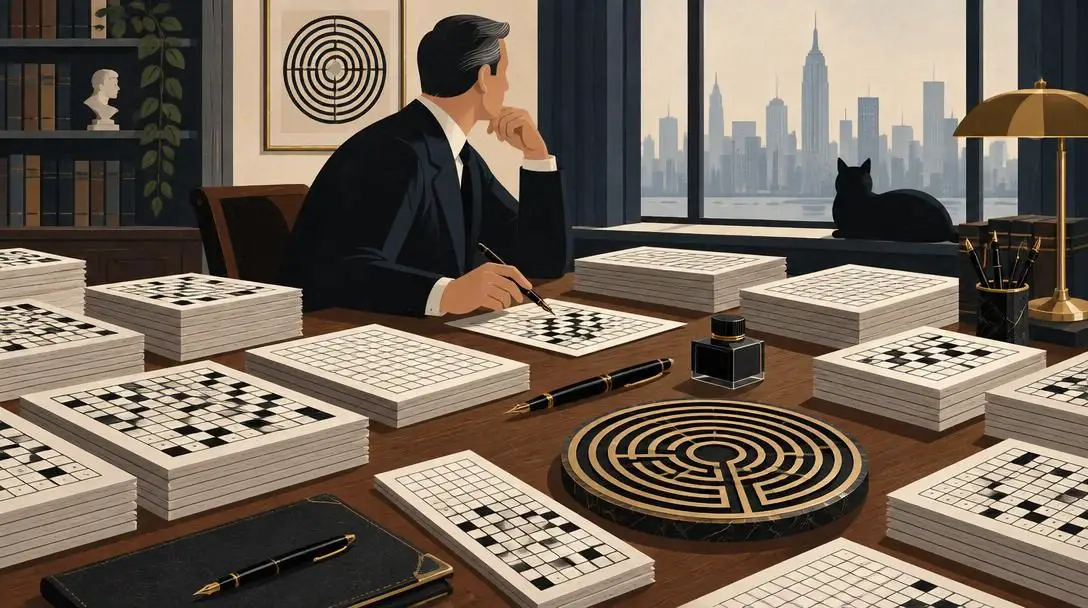
Universally acknowledged as the gold standard of crossword editing and construction, Will Shortz is the most famous figure in the puzzle universe. Hailing from Indiana, Shortz pursued his passion with singular focus, eventually earning the world's only known collegiate degree in enigmatology—the study of puzzles. Known far and wide as "The Puzzlemaster," Shortz revolutionized the American crossword scene when he took the helm as the puzzle editor for The New York Times in 1993.
Under Shortz's leadership, the Times crossword transformed from an academic exercise heavy on obscure dictionary words into a dynamic cultural touchstone featuring modern slang, pop culture, and playful wordplay. Shortz has overseen the editing and creation of more than 10,000 crosswords for the publication. His prominence catapulted crosswords into mainstream entertainment: Shortz has made cameo appearances as himself on The Simpsons, How I Met Your Mother, and Brooklyn Nine-Nine, remaining the undisputed ambassador of American puzzle culture.
The anatomy of crossword construction
Appreciating the work of master constructors requires understanding the intricate architectural phases involved in turning an empty grid into a finished puzzle.
First comes theme development. For themed crosswords, the author devises an overarching linguistic concept. This might be a sound change, a clever play on idioms, or a collection of long phrases that share a surprising commonality. Crucially, theme entries must come in pairs of matching letter lengths to preserve grid layout requirements.
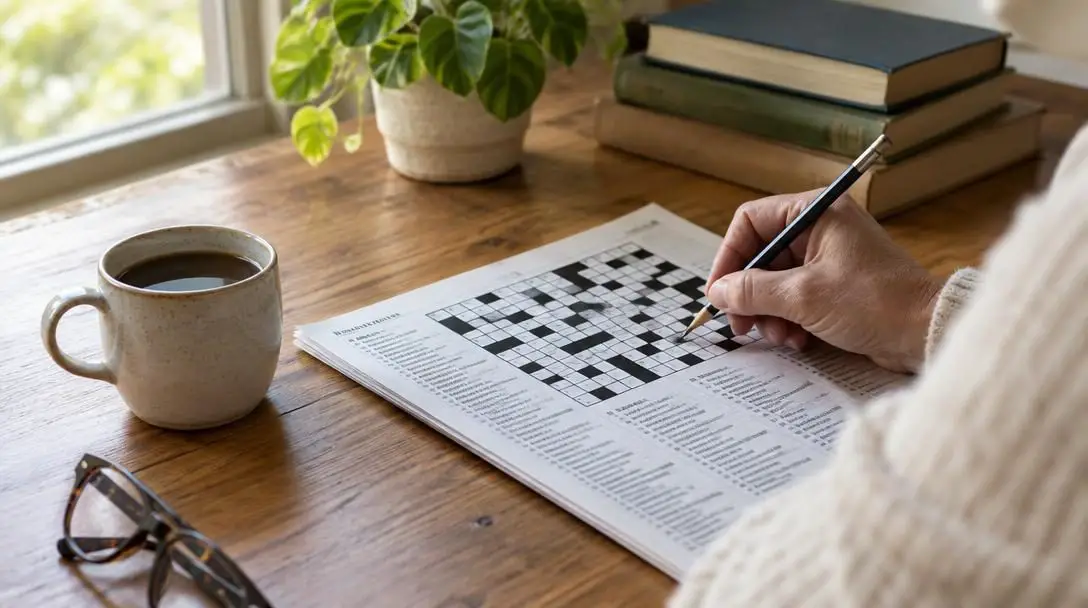
Second is grid design and symmetry. In traditional American crosswords, grids adhere to 180-degree rotational symmetry. If a constructor places a black square in the upper-left quadrant, a corresponding black square must sit in the identical spot when the grid is turned upside down. The constructor places the longest theme entries into the grid first, ensuring they cross cleanly without creating impossible letter combinations.
Next is grid filling. With the theme answers locked in place, the constructor fills the remaining white squares with standard vocabulary. Every single letter must make sense both horizontally (Across) and vertically (Down). The goal is to maximize crisp, recognizable language while strictly limiting obscure abbreviations, archaic terms, or awkward partial phrases.
Finally, the creator enters clue writing and editing. Clue writing is where an author's personality truly emerges. A clue can be a straightforward definition, a piece of trivia, or an elaborate misdirection relying on double meanings. The puzzle editor then reviews every clue for factual accuracy, refines the phrasing, balances the difficulty curve, and ensures the puzzle adheres to strict house standards.
How to solve crosswords like a professional
Whether tackling a challenging grid by Brendan Emmett Quigley or a mid-week puzzle edited by Will Shortz, adopting a systematic solving routine dramatically increases your success rate.
- Hunt for definite answers first: Scan the entire clue list for trivia items, fill-in-the-blank prompts, or obvious synonyms you know without hesitation. These anchor entries establish critical crossing letters throughout the grid.
- Match grammatical tenses and plural forms: Crossword clues and answers must always match in part of speech, tense, and number. A clue ending in "-ed" yields an answer ending in "-ed," while a plural clue guarantees an "-s" or "-es" at the end.
- Spot wordplay indicator flags: Clues ending with a question mark signal that the clue writer is using a pun, a homophone, or a deceptive double meaning rather than a literal definition.
- Work the crossing letters: Avoid looking at difficult clues in isolation. If an across clue seems impossible, shift your focus entirely to the down clues that intersect it to lock in three or four key letters.
- Memorize recurring crosswordese: Constructors rely on short, vowel-rich words like aria, era, aloe, and oreo to stitch larger answers together. Memorizing these frequent terms unlocks stubborn corners.
- Deconstruct cryptic recipes separately: When solving cryptic puzzles like John Halpern's, remember that the clue has two components: a direct definition and an anagram, container, or wordplay recipe. Split the clue in two to crack it.
Mistakes that derail everyday solvers
Frustration on the crossword page often stems from subtle cognitive traps rather than a lack of vocabulary. Solvers can bypass common roadblocks by avoiding these frequent missteps:
- Committing to ink prematurely: Writing guesses in ink without confirming the intersecting down letters can compromise an entire quadrant when a single letter is wrong.
- Fixating on a single part of speech: English words such as "leaves," "mine," or "record" function equally well as nouns, verbs, or adjectives. Assuming a clue represents a noun when the constructor intended a verb will keep you stuck.
- Disregarding the day of the week: Most daily newspaper puzzles follow an escalating difficulty curve. Expecting direct definitions on a Saturday puzzle will lead to frustration, just as overthinking an early Monday puzzle causes unnecessary confusion.
- Surrendering over unfamiliar names: Solvers frequently abandon grids when confronted with a proper noun they do not recognize. Trusting your crossing clues allows you to spell out unfamiliar names letter by letter.
Frequently asked questions
Who holds the title of the most famous crossword editor?
Will Shortz is widely regarded as the most famous crossword editor in the world. He has served as the puzzle editor for The New York Times since 1993, has edited over 10,000 crosswords for the publication, and is affectionately known to solvers as "The Puzzlemaster."
What makes a cryptic crossword different from an American crossword?
Standard American crosswords use straightforward definitions, trivia, or puns. Cryptic crosswords, popularized in Britain by compilers like John Halpern, use clues that contain two separate parts: a direct definition and an intricate wordplay recipe involving anagrams, hidden words, or double meanings.
Why do crossword grids follow rotational symmetry?
Rotational symmetry (typically 180 degrees) is an industry aesthetic standard in American crosswords. It ensures the black squares form an identical pattern when the grid is flipped upside down, creating a balanced visual layout and guaranteeing an even distribution of intersecting letters.
At what age did David Steinberg get his crossword breakthrough?
David Steinberg achieved national recognition when he had his first puzzle published in the Los Angeles Times at just 15 years old. He subsequently became the youngest editor of a major newspaper crossword at the Orange County Register.
The bottom line
Crossword puzzles are much more than ink on newsprint or interactive pixels on a screen; they are the creative masterworks of dedicated linguistic craftspeople. Legends like Brendan Emmett Quigley, David Steinberg, Merl Reagle, John Halpern, and Will Shortz have spent their lives elevating the humble grid into an enduring art form. By studying their techniques, honoring their constraints, and learning how to interpret their cluing habits, solvers can deepen their appreciation for the craft and conquer even the most daunting grids with confidence.