5 Hip Hop Acts Who Were Socially Aware
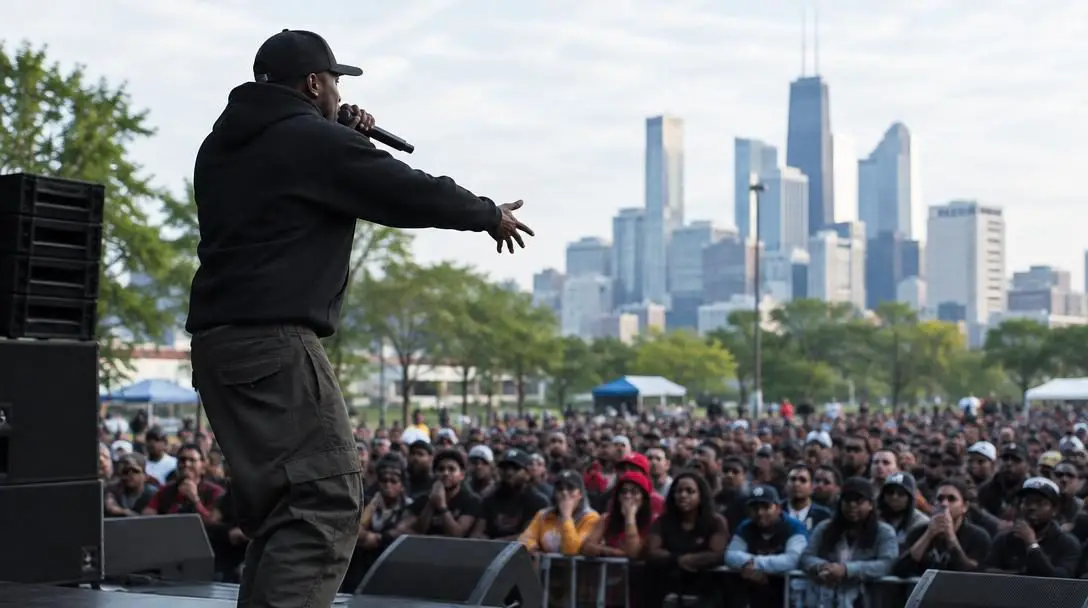
Rap music often faces criticism from outside observers who focus entirely on controversial subject matter. However, the culture runs much deeper than surface-level perceptions suggest, especially for listeners who take the time to examine the messages embedded in the music. Over the decades, numerous artists have engaged directly with social issues through their lyricism, community organizing, and public platforms, turning recordings into vehicles for accountability, historical memory, and community advocacy.
Rather than merely observing systemic struggles from afar, these creators have participated in rallies, delivered public speeches, and embedded vital cultural dialogue into their recordings. When artists articulate the friction between societal expectations, policy failures, and lived community realities, they provide a lens through which listeners can interpret complex social landscapes. The work of Kendrick Lamar, Common, Erykah Badu, Mos Def, and Tupac Shakur demonstrates how musical expression intersects with cultural critique, offering substantive insights into justice, identity, and resilience.
Key takeaways
- Socially conscious hip hop functions as frontline journalism that documents systemic inequality, institutional policy failures, and lived community struggles.
- Groundbreaking artists routinely balance chart-topping commercial accessibility with substantive sociopolitical commentary.
- Personal growth, spiritual study, and emotional maturity frequently reshape an artist's catalog, turning early commercial missteps into enduring, purpose-driven music.
- Conscious expression extends beyond traditional rap recordings into R&B, soul, grassroots activism, and global philosophical outlooks.
Pioneering voices in socially conscious music
The artists featured below represent diverse approaches to conscious music, ranging from street-level journalism and poetic spiritual reflection to structural political critique and philosophical introspection. Each artist proved that commercial visibility and uncompromising social awareness can comfortably coexist on the public stage.
Kendrick Lamar
- Key Milestone: Awarded the 2018 Pulitzer Prize for Music for his fourth studio album, DAMN.
- Notable Tracks: "DNA," "Determined," "Ignorance is Bliss," and "Average Joe"
- Core Themes: African American community struggles, systemic pressure, and societal portrayals
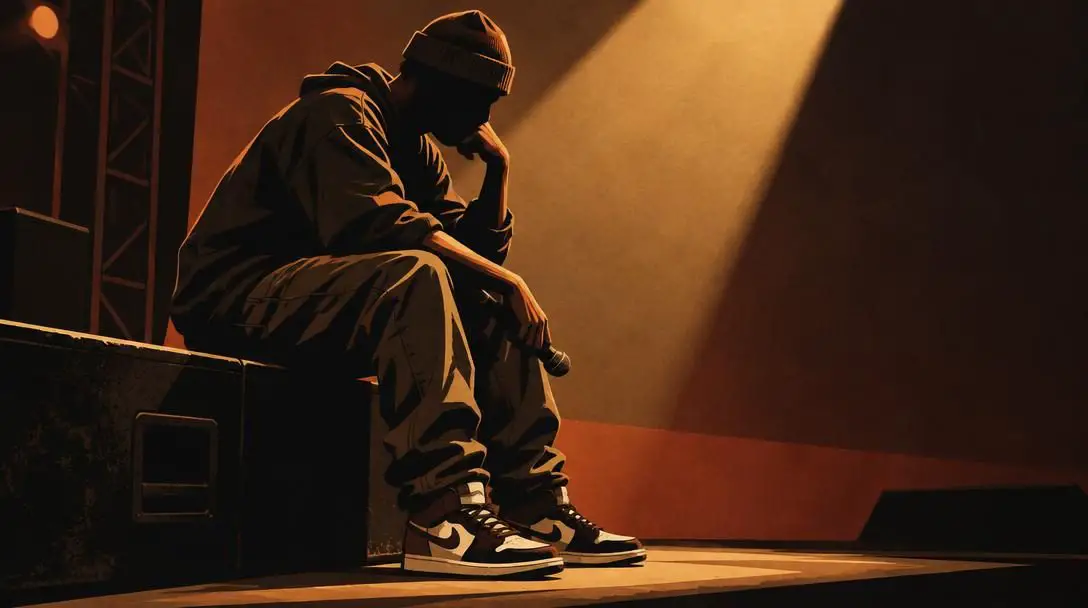
Kendrick Lamar has built an extraordinary career marked by a visible fight for social justice and an activist mindset across his entire catalog. Rather than relying on generic slogans, Lamar explores the internal and external conflicts experienced by individuals living under institutional neglect. In 2018, Lamar earned the prestigious Pulitzer Prize for Music for his socially conscious, influential project DAMN., his fourth studio album. That project contains songs like "DNA," which addresses the struggles experienced by the African American community, contrasting how these experiences appear from his own perspective with how they are portrayed by society. Across other records such as "Determined," "Ignorance is Bliss," and "Average Joe," Lamar consistently reflects on social structures, systemic pressure, and daily realities, establishing a critical bridge between commercial success and substantive social critique.
Common

- Breakthrough Release: Second studio album, Resurrection
- Debut Project: Can I Borrow a Dollar
- Artistic Philosophy: Emphasizes purposeful grassroots impact over celebrity status
Common stands as one of the original pioneers of socially conscious rap, emerging during an era when self-aware hip hop struggled for mainstream footing. His artistic journey was not instant. His debut project, Can I Borrow a Dollar, did not initially capture that reflective ethos and ultimately bombed commercially. Rather than giving up, Common studied religion, reflected on his purpose, and allowed himself to mature emotionally and mentally before delivering his second album, Resurrection, two years later. That release established his place in hip hop and cemented his reputation as a thoughtful lyricist driven by purpose. Explaining his philosophy, Common noted, "The truth of the matter is, you don't have to be that big-name person to have a really supreme impact."
Erykah Badu

- Career Origins: Opening act for D'Angelo during the early 1990s
- Genre Bridge: Powerhouse in R&B and soul with sharp social commentary
- Social Commentary: Intersections of poverty, race, and community organizing
Erykah Badu initially gained wider notice as an opening act for D'Angelo during the early 1990s before establishing herself as a powerhouse in the R&B world. Beyond the recording booth, Badu has remained vocal about broader societal developments and racial justice. During the mid-2010s, reflecting on the rising Black Lives Matter movement, Badu observed, "I felt it coming on," elaborating that she experienced a powerful desire to write about the changes around her. She explained that she had captured those emerging dynamics in her earlier creative work, meaning she did not feel an urgent need to re-write them later because she had already channeled them out. Addressing broader community conditions, Badu raised critical questions about systemic disenfranchisement: "Can we organize to stop black-on-black crime or poor-on-poor crime? Because, you know, poor is the new black. You don't have to be black now."

Mos Def
- Solo Debut: Black on Both Sides (1999)
- Early Collaborations: Performed with siblings and recorded with Talib Kweli
- Subsequent Output: Released three additional studio albums over the following decade
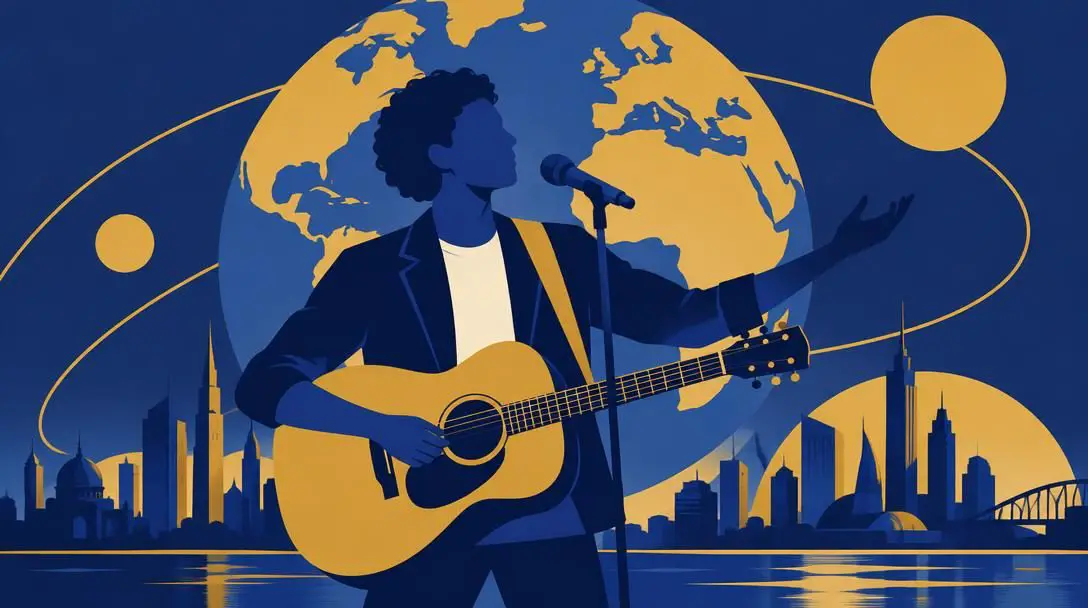
Mos Def played a crucial part in popularizing socially conscious hip hop during a pivotal era for the music industry. Before stepping forward as a solo act in 1999, he performed alongside his siblings and released an acclaimed collaborative album with Talib Kweli. Following his milestone solo debut, Black on Both Sides, he produced three additional albums over the next decade. His writing directly confronted police brutality, political controversies, and systemic prejudice impacting both African American and Muslim communities. His creative work merged political urgency with spiritual clarity. Mos Def later reflected on systemic friction within the United States during his relocation to South Africa, observing: "America is a very challenging place for me. I needed to take some time to put myself in environments where I felt good...my country is called Earth. This whole thing belongs to everyone that's on it."
Tupac Shakur

- Key Reflective Tracks: "Changes," "Dear Mama," and "White Man'z World"
- Commercial Anthems: "California Love" and "Hit Em Up"
- Legacy: Passed away at age 25 in Las Vegas in 1996
Tupac Shakur is celebrated by many as the greatest rapper in the history of the genre, remembered equally for his fiery temperament and his deep social awareness. Even alongside anthemic records like "California Love" and confrontational releases like "Hit Em Up," Shakur developed deeply reflective social commentary through songs like "Changes" and "Dear Mama." In "Changes," he confronted the realities of racism, drug addiction in African American neighborhoods, and police brutality. On tracks like "White Man'z World," he shared intimate thoughts regarding systemic survival, rapping, "So tell the babies how I love them, precious boys and girls, born black in this white man'z world." Shakur was killed at the age of 25 in 1996 in Las Vegas, cutting short his ability to convey his message directly to later generations, yet his catalog remains foundational to modern activist music.
Conscious hip hop functions as an enduring historical archive, preserving community struggles and grassroots political dialogue for future generations.
At a glance: Comparing conscious approaches
While all five artists share a dedication to illuminating societal challenges, their platforms, focal themes, and expressive vehicles reflect distinct creative paths.
| Artist | Primary Genre Focus | Prominent Themes | Notable Release or Track |
|---|---|---|---|
| Kendrick Lamar | Hip Hop | Systemic pressure, identity, African American community realities | DAMN. ("DNA") |
| Common | Hip Hop | Spiritual growth, purpose-driven action, community uplift | Resurrection |
| Erykah Badu | R&B / Soul | Economic inequality, social shifts, community organizing | Black Lives Matter reflections |
| Mos Def | Hip Hop | Police brutality, political controversies, global citizenship | Black on Both Sides |
| Tupac Shakur | Hip Hop | Systemic racism, poverty, police misconduct, family resilience | "Changes," "Dear Mama" |
The operational framework of socially aware rap
Socially conscious hip hop functions through distinct communicative layers. To evaluate how these songs influence public discourse, it helps to understand the underlying mechanics that make them resonate with listeners across different generations.
- Lyrical Journalism: Rappers act as frontline reporters, translating neighborhood conditions, historical injustice, and economic hardship into verse. This provides documentation for issues that mainstream news outlets often overlook or misrepresent.
- Perspective Framing: By detailing personal experiences alongside structural critiques, artists illustrate how societal policies directly affect individual lives. This reframing challenges listeners to empathize with realities they may not encounter themselves.
- Direct Public Action: Conscious hip hop is rarely confined to recorded audio. Artists often translate their lyrical convictions into public rallies, educational speeches, and direct community investments.
- Cultural Preservation: Through references to religion, civil rights history, and ancestral identity, socially aware music serves as an archive, keeping essential political histories accessible to younger audiences.
Step-by-step method for evaluating conscious tracks
For listeners interested in developing a deeper appreciation of the genre's messages, adopting an intentional listening method reveals nuance that passive listening often misses. The following structured sequence helps unpack complex lyrical themes.
- Read the complete lyrics alongside the track: Dense wordplay, metaphors, and historical references move quickly. Reading the full text helps you capture lines that might get lost underneath the production.
- Identify the socio-political context: Research when an album or song was written. Understanding the prevailing political climate, local events, or cultural shifts surrounding a release clarifies the artist's original intent.
- Trace the creative catalog in sequence: Listening to an artist's discography chronologically reveals their maturity over time, just as Common's transition from his debut to later releases reflected deep personal and spiritual development.
- Examine contrasting themes within the same catalog: Many conscious rappers do not produce solely serious, reflective music. Notice how artists like Tupac combined introspective sociopolitical tracks with party anthems and aggressive responses, presenting a rounded portrait of human complexity.
- Note public engagements beyond the studio: Follow the speeches, public commentary, and organizational involvement of the musicians to understand how their artistic principles align with their practical lives.
Common analytical mistakes to avoid
Evaluating conscious rap requires nuance. Casual listeners and outside commentators often fall into analytical traps that distort both the music and the artists behind it.
- Assuming conscious artists cannot make commercial music: Many observers mistakenly believe that an artist must solely release somber or overtly political songs to be socially aware. In reality, figures like Kendrick Lamar and Tupac Shakur regularly balanced chart-topping singles with serious commentary.
- Dismissing hip hop as inherently superficial: Critics outside the culture frequently judge the genre exclusively by its most provocative mainstream trends, overlooking decades of deep philosophical and social reflection.
- Expecting instant perfection from musicians: Artists are human and grow publicly. Judging an entire career on a disappointing first project ignores how personal study, spiritual growth, and maturity reshape creative output.
- Overlooking the global relevance: It is easy to view socially aware rap solely through an American lens, missing how artists frame their concerns globally, as demonstrated by Mos Def's broader philosophical view of planetary citizenship.
Evolution, industry dynamics, and musical intersections
Hip hop has always maintained an observational edge, emerging from marginalized neighborhoods where people needed an outlet to describe their immediate environments. In the formative decades of the genre, performers documented infrastructure neglect, local community politics, and economic struggle, proving that rhyming was capable of conveying urgent real-world journalism.
As the commercial potential of rap expanded during the late 1980s and 1990s, artists faced the challenge of balancing radio accessibility with authentic subject matter. Figures like Tupac Shakur and Mos Def showed that radio visibility and socially pointed lyricism did not have to exclude one another. Over time, the scope of conscious rap widened to address international movements, criminal justice reform, mental health, and institutional accountability.
When studying modern developments, evaluate how distribution methods and digital media influence the creation of conscious records. In previous decades, artists had to convince corporate record labels to release albums filled with challenging political content. Today, while digital distribution offers direct access to audiences, artists must still compete with rapid media turnover and short attention spans, making long-form narrative commentary harder to sustain.
Furthermore, consider how different musical genres intersect with hip hop to convey these messages. Erykah Badu demonstrated that R&B and soul can naturally weave conscious ideas into groove-driven music, while Mos Def and Kendrick Lamar have routinely integrated jazz, rock, and spoken-word traditions into their recordings. Observing these sonic textures shows that conscious music is as much about musical experimentation as it is about verbal storytelling.
Frequently asked questions
Which hip hop album won a Pulitzer Prize for its social commentary?
Kendrick Lamar's fourth studio album, DAMN., won the prestigious Pulitzer Prize for Music in 2018, recognized for its impactful storytelling and deep examination of social and community realities.
Can an artist be considered socially conscious if they also release party anthems?
Yes. Many prominent socially conscious artists, notably Tupac Shakur, balanced reflective social critiques like "Changes" with energetic party anthems like "California Love," reflecting the multifaceted nature of human experience.
How did Common shift his artistic approach after his debut album failed?
After his debut album Can I Borrow a Dollar bombed commercially, Common dedicated himself to studying religion, reflecting on his life's purpose, and maturing mentally before releasing his breakthrough second album, Resurrection.
What major social issues did Mos Def address in his recordings?
Mos Def used his platform to directly confront police brutality, controversial political policies, and systemic prejudice impacting both African American and Muslim communities.
How does Erykah Badu's work fit into the conscious music movement?
Although widely celebrated as an R&B powerhouse, Erykah Badu embeds sharp social observations regarding systemic poverty, racial dynamics, and community organizing into her music and public statements.
The bottom line
Socially conscious hip hop remains one of the most powerful forms of modern cultural critique and grassroots storytelling. While specific headlines change over the years, the core topics tackled by artists like Kendrick Lamar, Common, Erykah Badu, Mos Def, and Tupac Shakur—including racism, economic disadvantage, police violence, and personal integrity—remain deeply relevant across contemporary society. Engaging with these catalogs allows listeners to recognize both the progress made and the work that still remains.