
5 Ice Breakers For One On One And Group Situations

Meeting new people in professional or personal environments can trigger an immediate sense of social hesitation. Whether stepping into an unfamiliar corporate role, joining a cross-functional committee, attending a networking mixer, or simply welcoming a newcomer to an established team, the initial moments of an interaction carry significant weight. First impressions establish the emotional tone of future collaboration, yet individuals often respond to new social dynamics by putting up natural emotional defenses, speaking guardedly, or defaulting to uncomfortable silence. When these walls go up, constructive dialogue and authentic teamwork can stall before they even have a chance to take root.
Strategic conversational prompts, commonly referred to as ice breakers, are designed to ease this interpersonal friction. Rather than functioning as superficial party games or hollow administrative rituals, well-constructed questions serve as deliberate social catalysts. They supply a structured, low-stakes mechanism for participants to share personal viewpoints, creative preferences, and past experiences. By introducing a shared focal point, ice breakers shift an encounter away from mutual appraisal and steer it toward curiosity, comfort, and genuine connection in both one-on-one and group settings.
Key takeaways
- Ice breakers lower social anxiety and cognitive load by establishing clear conversational boundaries for all participants.
- One-on-one questions emphasize personal depth, active listening, and common ground without the pressure of competing for speaking time.
- Group prompts promote psychological safety and equitable airtime, preventing vocal participants from dominating the room.
- Effective facilitation requires setting time boundaries, modeling vulnerability, and bridging shared answers directly into the meeting agenda.
The Mechanics of Ice Breakers in Professional and Social Settings
At their foundation, ice breakers succeed by reducing cognitive load and removing social ambiguity. Whenever unfamiliar peers meet, both parties expend mental bandwidth calculating what subjects are safe, professional, or engaging. A direct, thoughtful prompt eliminates this exhausting guesswork. Because the conversational boundary is clearly defined, both the speaker and the listener understand the rules of engagement, which dramatically reduces baseline performance anxiety.
The interpersonal impact of an ice breaker shifts depending on the social configuration of the room:
- One-on-one dynamics: In individual dialogues—such as mentor sessions, manager-employee check-ins, or coffee catch-ups—the primary goal is fostering mutual trust and active listening. A strong prompt encourages individuals to stretch slightly outside their comfort zones without feeling interrogated. This dynamic cultivates an authentic back-and-forth rhythm where both speakers can explore specific topics in detail without having to compete against a larger crowd.
- Group dynamics: In team meetings, kickoff sessions, or department workshops, prompts are essential for balancing conversational turn-taking and cultivating psychological safety. Well-run group ice breakers prevent extroverted voices from seizing immediate control of the room, while offering introverted members a predictable, structured window to contribute. Hearing a range of answers surfaces hidden talents, broadens interpersonal empathy, and uncovers valuable context that strengthens ongoing teamwork.
At a Glance: Top Conversational Prompts
| Prompt | Ideal Setting | Core Focus | Primary Benefit |
|---|---|---|---|
| Activity that makes you forget time | One-on-One | Personal flow state | Bypasses rehearsed hobby answers to reveal genuine passions |
| Something to try for the first time | One-on-One | Forward-looking goals | Uncovers personal aspirations and milestone ambitions |
| Favorite karaoke song | One-on-One | Expressive taste | Injects humor and disarming vulnerability into the dialogue |
| Last movie or TV show watched | One-on-One | Popular culture | Provides a zero-pressure, universally relatable topic |
| Favorite team-building activity | One-on-One | Collaboration preferences | Yields actionable event ideas and interaction styles |
| Where in the world you want to visit | Group | Global curiosity | Sparks vivid storytelling and highlights geographic interests |
| Morning person or night person | Group | Productivity rhythms | Provides logistical insight into peak working hours |
| Ultimate dream job | Group | Career vision | Surfaces internal ambitions and hidden career trajectories |
| Best advice ever received | Group | Values and wisdom | Fosters deep mutual respect and philosophical insight |
| One thing nobody can beat you at | Group | Individual strengths | Celebrates niche mastery through friendly competition |
Top 5 Ice Breakers for One-on-One Situations
Individual meetings require conversational openers that move past superficial small talk. Open-ended inquiries encourage genuine dialogue, bypass automated yes-or-no answers, and reveal how a counterpart thinks and operates.
What activity makes you forget what time it is?
Inquiring about someone's generic hobbies frequently produces a polite pause or a generic reply. Phrasing the question around losing track of time bypasses those scripted answers and directly targets what psychologists identify as a flow state. Whether an individual loses themselves in coding software, tending a garden, writing prose, or testing complex cooking recipes, their response highlights what intrinsically motivates them outside of obligation.
What is something you want to try for the very first time this year?
Whether an individual dreams of skydiving, crossing an international border, or tackling an artistic craft, everyone possesses a roster of untried experiences. This prompt encourages the respondent to step slightly beyond their everyday comfort zone. By focusing on the future rather than past achievements, it highlights personal milestones, creative aspirations, and upcoming transformations.
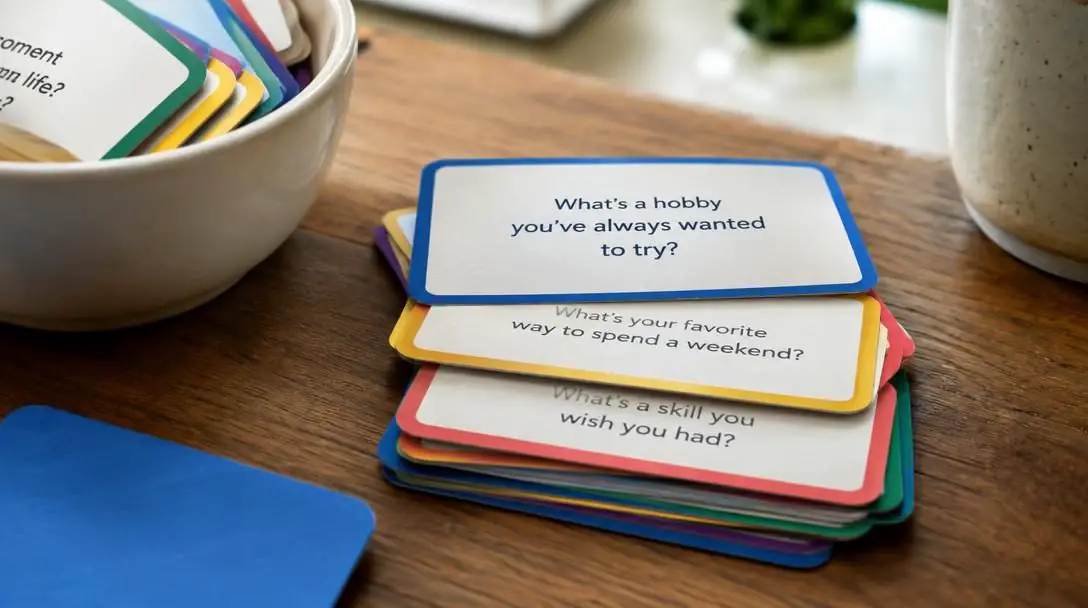
What is your favorite karaoke song?
Musical preferences offer immediate insight into an individual's character, but asking which anthem they are willing to belt out before an audience reveals something deeper. This prompt introduces healthy vulnerability wrapped in humor. A person's signature karaoke choice often unmasks a playful, expressive side of their temperament that rarely surfaces within routine business discussions.
A direct conversational prompt cuts through social uncertainty by establishing a clear, low-stakes boundary for authentic connection.
What is the last movie or TV show you watched?
Media consumption is one of the most accessible conversational entry points available. For adults navigating work and personal commitments, episodic television and films represent a primary form of shared recreation. The inquiry is completely non-threatening, universally accessible, and frequently leads to enthusiastic debates regarding unexpected plot twists, streaming habits, and weekend viewing recommendations.
What is your favorite team building activity?
When you are seeking fresh inspiration for group activities, turning to a peer in an individual setting can yield inventive suggestions you might not have considered. Beyond gathering practical recommendations for departmental calendars, this question illuminates how the individual prefers to collaborate. Their answer reveals whether they thrive in competitive, high-energy games or prefer reflective, low-key group problem solving.
Top 5 Ice Breakers for Group Situations
Group settings demand questions that are broadly accessible, quick to answer, and capable of including everyone in the room without making anyone feel trapped or self-conscious.
Where in the world do you want to visit the most?
Exploring aspirational travel destinations prompts colorful storytelling and taps into cultural curiosity. In larger organizations, learning where team members long to travel can also have practical professional utility. Surfacing an employee's interest in a specific region may reveal organizational synergies, international project opportunities, or geographical mobility that aligns with corporate growth.
Are you a morning person or a night person?
Understanding the natural energetic peaks and valleys of team members delivers immediate operational utility. While some employees complete their most demanding deep work at dawn, others hit their stride late in the day. Understanding these biological tendencies helps colleagues respect optimal collaboration windows, plan productive meetings, and establish sensible asynchronous communication cadences.
What is your ultimate dream job?
While many employees instinctively offer safe responses like their current position, facilitating this question with warmth encourages people to speak boldly about their long-term professional aspirations. Exploring ideal roles gives managers and peers visibility into an individual's internal drive, which can lead to customized career development, mentorship opportunities, and cross-departmental advancement.

What is the best advice you have ever received?
This reflective inquiry consistently elevates workplace conversation by encouraging soul-searching and storytelling. Answers typically illuminate the guiding philosophies, personal mentors, and pivotal trials that have shaped a colleague's worldview. Sharing formative wisdom establishes mutual respect and provides meaningful life lessons to everyone listening.
What is one thing nobody can beat you at?
Everyone possesses an area of deep interest, specialized skill, or eccentric knowledge. Inviting people to claim their strengths fosters lighthearted, friendly competition and lightens the emotional tone of the room. Responses span from obscure trivia mastery and lightning-fast keyboard typing to baking exceptional cookies, offering every team member an opportunity to shine.
Step-by-Step Guide to Introducing Ice Breakers Effectively
Selecting the right question is only the starting point; facilitating the interaction with clarity and care determines whether the exercise feels natural or forced. Facilitators should implement the following steps to ensure smooth conversational flow:
- Match the prompt to the occasion: Evaluate the group's mood and the meeting's objective before choosing a prompt. Reserve lighthearted inquiries like karaoke favorites for informal team socials, while selecting reflective prompts like influential advice for strategic workshops.
- Set a clear time expectation: Inform participants how long they have to speak before beginning. Allocating thirty to sixty seconds per person prevents early contributors from monopolizing the agenda and keeps the activity brisk.
- Lead by example: Step up and answer the question first. By sharing an authentic, thoughtfully paced answer, you illustrate the intended emotional vulnerability and brevity for the group.
- Practice active listening: Focus entirely on the person speaking instead of mentally preparing your next statement. Offer steady eye contact, nods, and brief verbal affirmations to demonstrate that their response is heard and appreciated.
- Bridge responses into the main agenda: Summarize recurring themes or unique connections that surfaced during the exercise as you transition into core business topics, proving that the warm-up held actual value.
Common Facilitation Mistakes to Avoid
Even well-intentioned conversational prompts can misfire if handled carelessly. Keep an eye out for these frequent facilitation pitfalls during individual or group meetings:
- Forcing overly intimate disclosure: Never pressure participants to reveal delicate, intensely private, or emotionally burdensome information. Prompts must invite willing participation without leaving anyone feeling exposed.
- Rushing the responses: Asking an engaging question only to cut the speaker off prematurely undermines rapport. Ensure the meeting agenda includes adequate space for authentic interaction.
- Allowing one speaker to monopolize the floor: If an enthusiastic participant delivers an overly long narrative, politely intervene to thank them and pass the floor to the next contributor so time is shared equitably.
- Treating the prompt as an empty ritual: When an ice breaker is treated as an obligation to rush through, participants respond with robotic, detached answers. Facilitators must demonstrate genuine curiosity.
- Putting participants on the spot without thinking time: Complex prompts require mental processing. Give the room a brief moment of reflection before calling for the first response.
Sustaining Engagement Over Time
Conversational exercises should evolve alongside the team. Relying on the same questions repeatedly leads to disengagement, especially within teams that meet frequently. Consider these long-term approaches:
- Assess meeting cadence: Running full ice breaker exercises in daily stand-ups causes conversational fatigue. Save thorough prompts for project kickoffs, milestone reviews, or sessions welcoming new personnel.
- Adapt for remote and hybrid environments: In virtual spaces, use chat feeds or collaborative digital whiteboards. Inviting team members to post images or brief notes about their travel aspirations creates an engaging, asynchronous visual record without consuming valuable audio time.
- Track recurring interests: Note personal details that emerge during check-ins. Referencing a colleague's upcoming travel goal or creative pursuit in subsequent weeks signals authentic attentiveness.
- Rotate facilitation responsibilities: Invite different team members to choose and direct the opening prompt for upcoming gatherings. Distributing ownership keeps the inquiries fresh and shares leadership across the roster.
Frequently asked questions
How much time should an ice breaker take in a group meeting?
A group ice breaker should typically last between five and ten minutes. Limiting individual contributions to thirty to sixty seconds keeps the pacing energetic and leaves adequate time for primary agenda items.
Can introverted team members participate comfortably in group ice breakers?
Yes, provided the prompts are low-stakes and participants are given a moment to reflect before speaking. Providing clear expectations and avoiding high-pressure cold calling helps introverted individuals share without distress.
What makes an ice breaker unsuitable for a workplace environment?
Prompts that probe into deeply personal finances, romantic lives, political viewpoints, or sensitive personal trauma are inappropriate for work settings. Questions should focus on aspirations, creative tastes, and lighthearted habits.
How can you adapt these prompts for large remote team meetings?
For large remote gatherings, invite participants to type their answers into the digital chat or onto a virtual whiteboard simultaneously. The host can read selected responses aloud, building connection without draining the meeting clock.
The bottom line
Ice breakers are far more than idle distractions; they are functional communication tools designed to dissolve social barriers and foster collaborative trust. By selecting the right prompt for the setting—whether diving deep into personal passions during a one-on-one session or uncovering hidden strengths within a large project group—facilitators create spaces where individuals feel recognized, respected, and motivated to contribute their best work.