5 Largest Live Music Crowds Ever
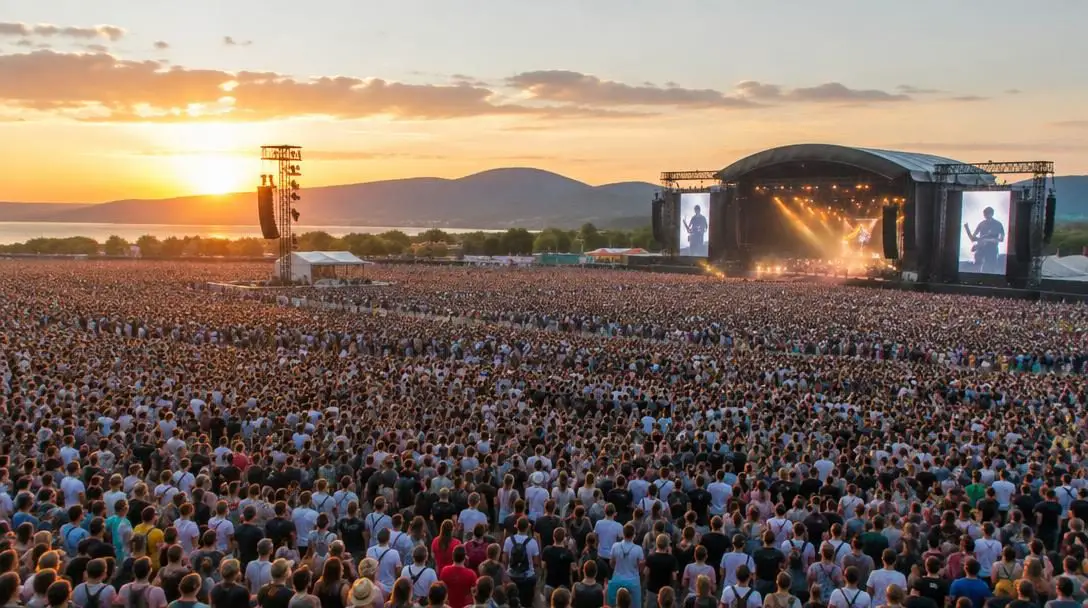
Live music possesses an unmatched power to unite tens of thousands of individuals under a single rhythm, transforming open spaces into vibrant cultural centers. While free public festivals and multi-day celebrations have drawn staggering numbers throughout history, single-artist paid concerts represent a completely different tier of commercial appeal and logistical precision. Persuading hundreds of thousands of ticket-buying attendees to gather at a single venue for one headlining act requires an extraordinary level of cultural momentum, precise sound engineering, and dedicated fandom.
Across the late twentieth and early twenty-first centuries, modern stadium engineering, distributed sound amplification, and international touring logistics allowed individual concerts to break attendance records once deemed impossible. By focusing strictly on standalone, single-artist headlining events where every attendee held a paid ticket, an exclusive group of legendary performances stands far above the rest.
Key takeaways
- Vasco Rossi holds the all-time world record for a paid single-artist concert, attracting over 225,000 ticket holders to Italy's Enzo Ferrari Park in 2017.
- Rio de Janeiro's famous Maracanã Stadium hosted two of history's largest paid crowds, setting back-to-back records with Tina Turner in 1988 and Paul McCartney in 1990.
- Tina Turner's 1988 performance remains the largest concert audience ever assembled for a female artist in history.
- Staging events of this scale requires temporary civil infrastructure, including audio delay towers across long distances and zoned crowd enclosures.
The top paid headlining concerts at a glance
The conditions behind these record-setting shows range from farewell tours and band reunions to special commemorative celebrations. The table below outlines how these historic events compare in official attendance figures, dates, and locations.
| Headlining Artist | Year | Venue & Location | Paid Attendance |
|---|---|---|---|
| Vasco Rossi | 2017 | Enzo Ferrari Park (Modena, Italy) | 225,000+ |
| Bijelo Dugme | 2005 | Belgrade Hippodrome (Belgrade, Serbia) | 220,000 |
| Glay | 1999 | Makuhari Messe grounds (Chiba, Japan) | 200,000 |
| Paul McCartney | 1990 | Maracanã Stadium (Rio de Janeiro, Brazil) | 184,000 |
| Tina Turner | 1988 | Maracanã Stadium (Rio de Janeiro, Brazil) | 180,000 |
The 5 largest paid headlining concerts in history
To qualify for this historic ranking, events must meet strict parameters: multi-day music festivals and free community concerts are excluded, focusing exclusively on single-headliner shows where the audience purchased admission. These five monumental concerts established global milestones that remain benchmarks for the live music industry.
Tina Turner
- Date: January 16, 1988
- Venue: Maracanã Stadium (Rio de Janeiro, Brazil)
- Attendance: 180,000 paid attendees
- Tour Earnings: Over $60 million
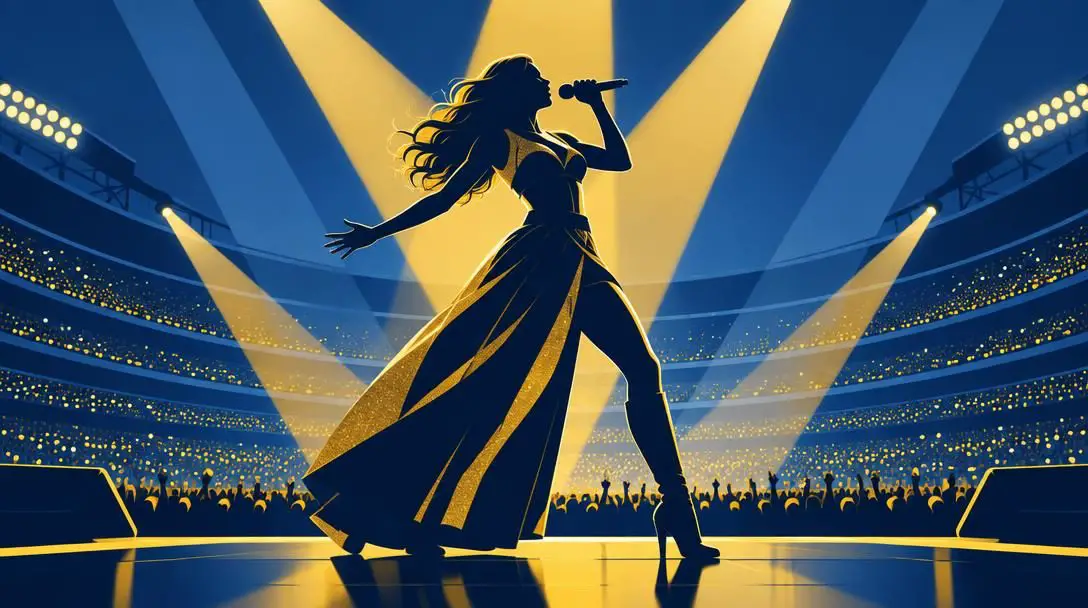
Tina Turner embarked on the sixth tour of her celebrated career between March 1987 and March 1988, generating one of the highest-grossing concert tours of the 1980s and the highest-earning tour for a female artist of that decade. Promoted widely as the final tour of her performing career, ticket demand reached a fever pitch worldwide, pulling in more than $60 million across its multi-continent run.
Each night of the tour followed a carefully planned theatrical arc, with Turner launching her set with "What You Get Is What You See" and concluding the evening with "Paradise Is Here." The undisputed peak of the tour occurred on January 16, 1988, at Maracanã Stadium in Rio de Janeiro, Brazil. A record-breaking crowd of 180,000 paying fans filled the venue to witness her perform her greatest hits. Decades later, this landmark performance still stands as the largest paid concert audience ever gathered for a solo female artist.
Paul McCartney
- Date: April 1990
- Venue: Maracanã Stadium (Rio de Janeiro, Brazil)
- Attendance: 184,000 paid attendees
- Tour Span: September 1989 – July 1990
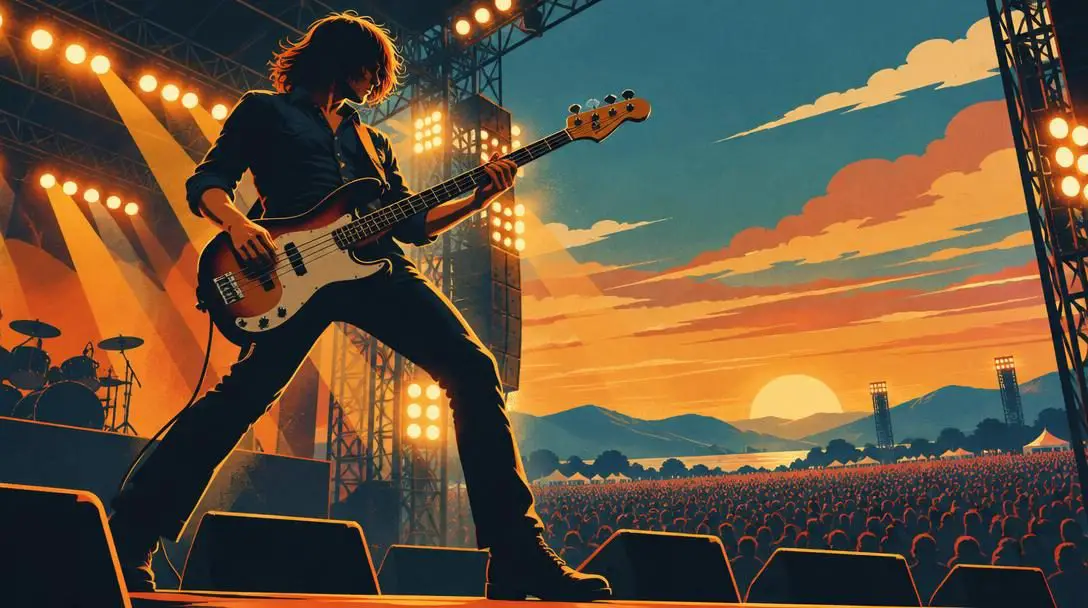
Following legendary eras performing with the Beatles and leading Wings, Paul McCartney launched an extensive solo touring venture in September 1989 that stretched through July 1990. Spanning over 100 shows worldwide, the tour initiated in Drammen, Norway, and concluded at Soldier Field in Chicago, regularly bringing audiences to their feet with grand finale performances of classics such as "Carry That Weight" and "The End."
The standout date of the entire worldwide run brought McCartney to the very same Brazilian venue Turner had conquered two years prior. His single South American stop at Maracanã Stadium drew an astonishing 184,000 paid ticket holders. The historic night broke the reigning world attendance record for a paid concert and showcased the enduring global resonance of McCartney's multi-decade catalog.
Glay
- Date: July 31, 1999
- Venue: Makuhari Messe / Chiba coastal area (Chiba, Japan)
- Attendance: Approximately 200,000 paid attendees
- Album Release Year: 1999 ("Heavy Gauge")
Formed in 1988, the Japanese rock band Glay developed into one of the most commercially dominant musical acts in Asian history. Alongside standard arena and stadium tours, the group pioneered massive standalone entertainment events they branded as "expos." In 1999—the same year the band released their landmark album Heavy Gauge—they staged their inaugural expo, titled Glay Expo '99 Survival, in Chiba, Japan.
The single-day event shattered Paul McCartney's nine-year-old world record, gathering approximately 200,000 paid attendees into an open-air venue customized specifically for the show. The sheer magnitude of the gathering established Glay as a cultural powerhouse and proved that non-Western acts could draw stadium crowds rivaling any legacy artist from the Western hemisphere.
Bijelo Dugme
- Date: June 28, 2005
- Venue: Belgrade Hippodrome (Belgrade, Serbia)
- Attendance: 220,000 paid attendees
- Active Era: 1974–1989 (Reunion in 2005)
Formed in Sarajevo in 1974, Bijelo Dugme stood as one of the most influential and widely celebrated rock bands across the former Yugoslavia and Eastern Europe until their initial disbandment in 1989. After sixteen years of silence, during which fans kept the band's legacy alive through greatest hits compilations, the group announced a three-city reunion tour in 2005 featuring stops in Sarajevo, Zagreb, and Belgrade.
The culminating performance at the Belgrade Hippodrome in Serbia eclipsed all expectations, welcoming 220,000 ticketed fans onto the expansive grounds. The historic gathering broke Glay's previous attendance record and stands as the largest paid music event in European history. To date, the band has not mounted another tour of this scale, cementing the 2005 Belgrade performance as an unrepeatable cultural reunion.
Vasco Rossi
- Date: July 1, 2017
- Venue: Enzo Ferrari Park (Modena, Italy)
- Attendance: Over 225,000 paid attendees
- Event Title: Modena Park 2017
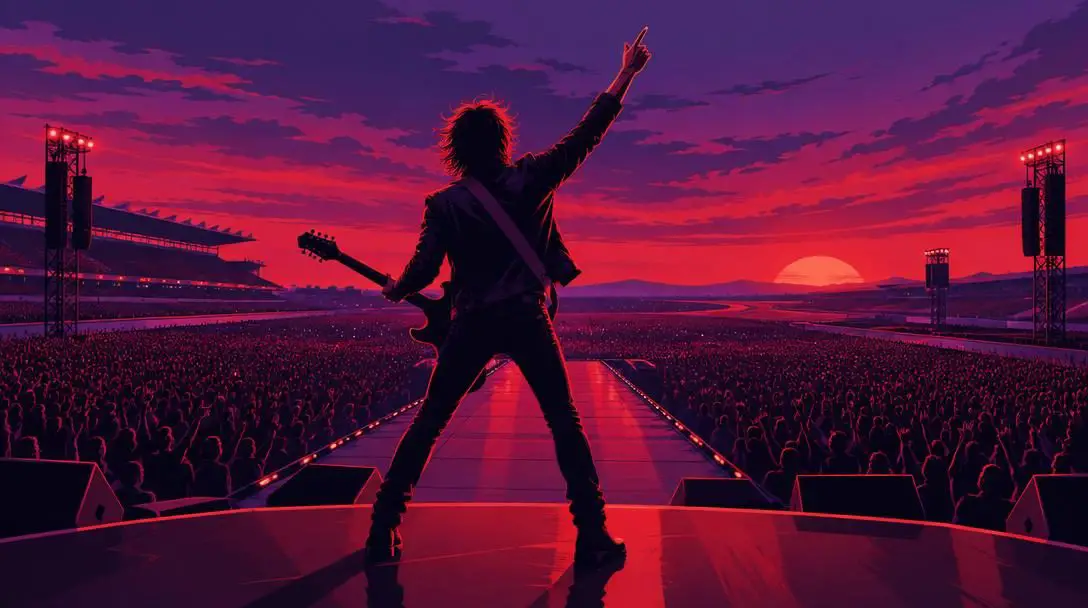
Italian singer-songwriter Vasco Rossi has long stood among Italy's best-selling musical figures, building a fiercely dedicated following across southern and central Europe since rising to prominence in the late 1970s and 1980s. To commemorate his 40-year career in music, Rossi arranged a monumental single-evening performance titled Modena Park 2017, held at Enzo Ferrari Park on July 1, 2017.
The venue, centered around an open raceway nearly 1.5 miles in length, was transformed into an colossal concert arena. More than 225,000 fans purchased tickets for the show, establishing an official world record for the highest attendance at a paid, single-headliner concert. Rossi was supported on stage by several guest musicians throughout the evening, culminating in a memorable closing appearance by the heavy metal group Manowar.
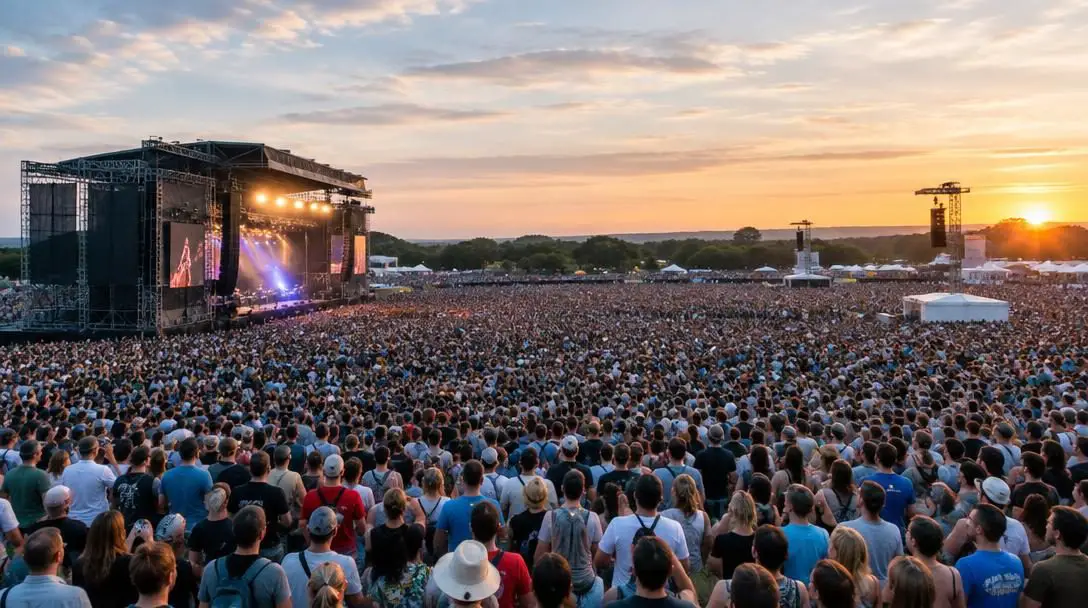
Gathering more than 220,000 paying fans for a single performance requires an extraordinary alignment of cultural devotion, staging logistics, and acoustic engineering.
How mega-concert logistics operate behind the scenes
Staging an event for 180,000 to 225,000 ticketed attendees requires turning an open field, race circuit, or sports stadium into a self-sustaining temporary city. The coordination spans months of preparation and relies on several specialized operational systems.
- Multi-tiered ticketing and perimeter control: Managing hundreds of thousands of paying spectators demands secure checkpoints far outside the main entrance. Promoters construct concentric perimeter rings to scan tickets and conduct security searches gradually, preventing dangerous crushing or gate bottlenecks.
- Synchronized audio delay towers: Sound travels through the air at roughly 1,125 feet per second—drastically slower than light. At venues spanning up to 1.5 miles, such as Enzo Ferrari Park, engineers install delay towers equipped with digital signal processors so that speakers placed hundreds of yards away fire in sync, preventing disorienting audio echoes.
- Zoned crowd containment pens: Large venues divide the viewing field into secure compartments separated by heavy-duty barrier lines. These pens distribute crowd weight evenly, stop surges toward the stage, and maintain open corridors for emergency medical personnel.
- Rapid utility scaling: Sites like the Belgrade Hippodrome or public parks do not possess permanent plumbing or power grids suited for quarter-million-person crowds. Event crews must lay miles of temporary cabling, install massive generator banks, and truck in hundreds of portable sanitation facilities.
Step-by-step guide to navigating massive concert venues
Attending a concert with over 100,000 people can be an exhilarating experience, but poor preparation can quickly ruin the day. Following a structured plan ensures safety and convenience from arrival through departure.
- Secure transit and parking plans early: Standard roads around mega-venues experience extreme gridlock hours before showtime. Book designated shuttle services, utilize regional rail lines, or reserve remote park-and-ride spots rather than attempting to drive directly to venue gates.
- Arrive early to clear security layers: Staggered perimeter checkpoints require significant walking and waiting. Arriving several hours ahead gives you sufficient time to navigate ticket validation, bag inspections, and wristband stations without rushing.
- Establish physical meeting landmarks immediately: High-density crowds routinely overwhelm local cellular towers, causing text messages and calls to fail. Identify a distinctive, permanent structure inside the venue as a rendezvous point with your group in case of separation.
- Locate water stations and medical tents: Identify the nearest primary aid stations and free water refill points before heading toward your viewing pen. Familiarizing yourself with these routes ensures quick access during emergencies.
- Dress for dynamic weather conditions: Open raceways and stadium floors offer virtually no protection from sun or sudden temperature drops. Wear comfortable footwear suited for miles of walking and pack waterproof, packable layers.
Mistakes to avoid when attending mega-events
Even veteran concertgoers can find themselves caught off guard by the sheer scale of stadium-sized audiences. Avoiding these common missteps will make your experience far smoother:
- Relying exclusively on mobile wallets and digital tickets: Saturated wireless networks frequently block banking apps and ticket portals from loading. Always bring printed paper backups of admission passes and carry emergency cash.
- Surging toward the main barrier without preparation: The physical density near the front barrier can reach dangerous levels. Entering front pens without adequate water or an identified exit path increases the risk of dehydration, heat exhaustion, and panic.
- Ignoring venue bag and item restrictions: Mega-events enforce strict limitations on bag dimensions, external food, and reusable containers. Arriving with disallowed items forces fans to surrender possessions or lose their place in line.
- Joining the immediate exit rush: Exiting alongside 200,000 people creates severe pedestrian bottlenecks at gates and transit stations. Resting in the seating area or venue concourse for 30 to 45 minutes after the final encore often results in a far quicker trip home.
The future of single-night mega-concerts
While historic crowds like Vasco Rossi's 225,000-strong assembly in Modena proved what is technically achievable, modern concert touring is shifting toward multi-night residencies. Contemporary superstars frequently choose to book three to six nights at modern, 60,000-capacity arenas or enclosed stadiums rather than gambling on a single 200,000-seat outdoor gathering.
Multi-night stays provide tighter acoustic control, superior sightlines, and reduced stress on local transportation networks, while delivering comparable overall revenue. Nevertheless, when legendary artists announce once-in-a-lifetime reunion runs or monumental career farewells, the singular, electric energy of an enormous outdoor mega-crowd remains the ultimate demonstration of musical stardom.
Frequently asked questions
What is the largest paid concert crowd in history?
The record belongs to Italian rock icon Vasco Rossi, who drew more than 225,000 ticketed fans to Enzo Ferrari Park in Modena, Italy, on July 1, 2017, for his Modena Park 2017 anniversary celebration.
Why aren't massive festivals like Woodstock or free shows like Rod Stewart on Copacabana Beach on this list?
This ranking strictly evaluates single-artist headlining shows that required paid admission. Multi-day music festivals with diverse rosters and unticketed free gatherings operate under fundamentally different commercial and logistical parameters.
Which female artist holds the record for the largest paid concert audience?
Tina Turner holds the record, having performed in front of 180,000 paying fans at Maracanã Stadium in Rio de Janeiro, Brazil, on January 16, 1988, during her Break Every Rule World Tour.
How do audio engineers ensure audiences in the back can hear clearly across 1.5-mile venues?
Engineers position synchronized delay towers across the grounds. Because sound travels slowly through air, digital processors introduce precise micro-delays to remote speakers so their output aligns perfectly with the sound arriving from the main stage.
Has Paul McCartney's attendance record at Maracanã Stadium ever been surpassed?
Yes. While McCartney's 184,000-person audience in 1990 surpassed Tina Turner's previous high mark at Maracanã Stadium, his record was later broken by Glay in 1999 (200,000), Bijelo Dugme in 2005 (220,000), and Vasco Rossi in 2017 (225,000).
The bottom line
Assembling hundreds of thousands of paying attendees for a single artist represents the absolute pinnacle of live performance production. From Tina Turner's electrifying 1988 night in Rio de Janeiro to Vasco Rossi's record-breaking Modena spectacle in 2017, these five legendary concerts showcase the boundless reach of musical fandom and the engineering triumphs required to stage them.