
5 Most Expensive Bollywood Movies of All Time
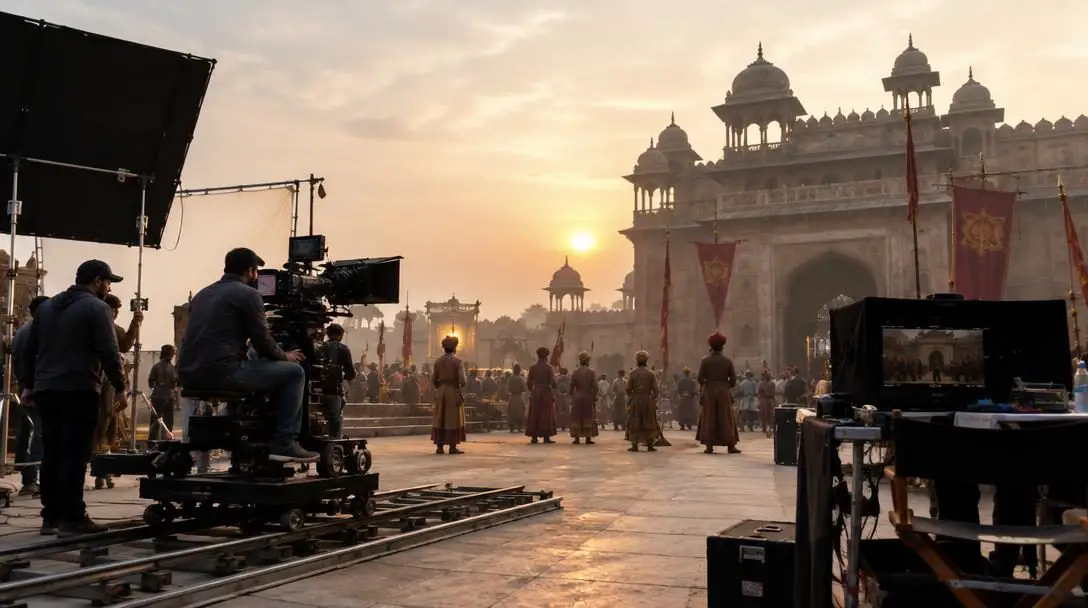
Indian commercial cinema has experienced an extraordinary transformation in production scale over recent years. Filmmakers, producers, and major studios have moved past focusing solely on domestic or regional markets, aiming instead for an expansive international footprint. This drive toward worldwide theatrical releases has caused production budgets to climb dramatically, reaching figures historically associated only with Hollywood tentpoles, including major superhero productions from the Marvel Cinematic Universe.
To support this global ambition, studios have poured hundreds of crores of rupees into advanced visual effects, elaborate world-building, multi-location international shoots, and complex technical set pieces. Five feature films highlight the zenith of this financial expansion: RRR, 2.0, Brahmāstra: Part One – Shiva, Saaho, and Radhe Shyam. Exploring how these productions were conceived, financed, and received reveals the high rewards and substantial risks that come with modern mega-budget filmmaking.
Key takeaways
- Rising global ambitions have pushed top Indian film budgets beyond $70 million to $87 million, rivaling major international studio features.
- Collaborative studio financing models and multi-language distribution across northern and southern domestic regions and global diaspora markets are now essential for managing high financial exposure.
- Immense box office gross receipts do not automatically guarantee profitability, as massive visual effects expenses and distributor splits can result in financial losses.
- High-budget releases vary wildly in commercial returns, ranging from historic blockbusters like RRR to underperforming franchise starters like Brahmāstra.
The 5 most expensive Indian film productions at a glance
The scale of production spending in modern commercial Indian cinema reflects a daring gamble on international audience interest. While some productions managed to turn extraordinary investments into historic box office earnings, others struggled to recoup their massive outlays through ticket sales alone.
| Film Title | Release Year | Estimated Budget | Worldwide Gross | Directorial Lead |
|---|---|---|---|---|
| 2.0 | 2018 | ₹600 crore (~$87.73M) | $91M – $117M | S. Shankar |
| RRR | 2022 | Over $70 million | Over $175 million | S.S. Rajamouli |
| Brahmāstra: Part One – Shiva | 2022 | ₹410 crore (~$59.95M) | $54 million | Ayan Mukerji |
| Saaho | 2019 | ₹350 crore (~$49.7M) | ~$60 million | Sujeeth |
| Radhe Shyam | 2022 | At least $38 million | ₹350 crore ($44M) | Radha Krishna Kumar |
A film grossing tens of millions of dollars across international markets can still finish in the red once staggering production costs and theater cuts are calculated.
In-depth look at the top five mega-budget productions
Each of the five films listed below tested the boundaries of traditional film spending, relying on extensive computer-generated imagery, major multi-language marketing pushes, and ambitious distribution rollouts to capture audiences across domestic and international territories.
RRR

- Release Year: 2022
- Production Studio: DVV Productions
- Estimated Budget: Over $70 million
- Worldwide Box Office: Over $175 million
Directed by S.S. Rajamouli and produced under the banner of DVV Productions, RRR stands as a landmark action epic within global commercial cinema. The narrative centers on two legendary historical figures, portrayed by N.T. Rama Rao Jr. and Ram Charan, depicting their passionate friendship and fierce armed struggle against the colonial British Raj during the 1920s.
Bringing this grand vision to movie screens proved to be a challenging logistical undertaking. The production encountered severe disruptions and recurring filming halts brought on by the global COVID-19 pandemic. These delays kept cast and crew on retainer, prolonged technical work, and elevated the final budget to just over $70 million. However, the theatrical release proved to be a triumph. RRR generated more than $175 million across the globe, earning the title of the highest-grossing film produced with Telugu as its primary language and proving that huge budgets can yield exceptional commercial rewards when paired with universal, emotionally resonant storytelling.
2.0

- Release Year: 2018
- Production Studio: Lyca Productions
- Estimated Budget: ₹600 crore (~$87.73 million)
- Worldwide Box Office: $91 million – $117 million
Arriving as the direct sequel to the hit science fiction film Enthiran, 2.0 brought high-concept android warfare back to the silver screen. Directed and co-written by S. Shankar alongside B. Jeyamohan and Madhan Karky, the production followed the ongoing narrative of Chitti, the humanoid robot who must confront unprecedented conflicts that threaten society.
Financed by Lyca Productions, the project required an astonishing ₹600 crore (approximately $87.73 million), securing its place as the second-most expensive title in this category. The sheer volume of intricate digital sequences, high-end 3D shooting techniques, and extensive visual effects pushed post-production timelines to their limits. In theaters, the film proved to be a major commercial draw, generating an estimated gross between $91 million and $117 million. This box office performance made 2.0 the fifth highest-grossing film in Indian cinematic history at the time of its theatrical run.

Brahmāstra: Part One – Shiva

- Release Year: 2022
- Production Studios: Dharma Productions, Starlight Productions, Prime Focus, Star Studios
- Estimated Budget: ₹410 crore (~$59.95 million)
- Worldwide Box Office: $54 million
Designed as the opening installment of a planned three-part fantasy cinematic universe named the Astraverse, Brahmāstra: Part One – Shiva set out to blend traditional Indian mythology with contemporary visual effects. Conceived, written, and directed by Ayan Mukerji, the story follows Shiva and Isha as they battle malevolent forces seeking to control ancient divine armaments, culminating in the race for the supreme cosmic weapon, the Brahmāstra.
The scale of world-building and special effects required substantial shared investment from Dharma Productions, Starlight Productions, Prime Focus, and Star Studios, ultimately totaling ₹410 crore ($59.95 million). Despite reaching theaters with heavy promotion and generating $54 million globally—enough to rank among the 20 highest-grossing movies in India—the box office total failed to match its immense production expenditure. As a result, the film fell short of financial viability in its theatrical phase and was categorized as a minor flop.
Saaho

- Release Year: 2019
- Production Studio: UV Creations
- Estimated Budget: ₹350 crore (~$49.7 million)
- Worldwide Box Office: Roughly $60 million
Blending fast-paced action sequences with crime elements and high drama, Saaho hit theaters under the banner of UV Creations. Written and directed by Sujeeth, the plot tracks two undercover operatives who must navigate an intricate criminal underworld marked by large-scale robberies, murders, and concealed motives.
Bringing the movie's heavy action choreography, expansive multi-city cinematography, and bilingual script to life required an outlay of approximately ₹350 crore ($49.7 million). The film drew appreciation from critics and audiences for its technical set pieces, visual style, and cast performances. At the turnstiles, Saaho grossed an estimated $60 million worldwide. While this overall gross positioned the project in net positive financial territory, the final receipts did not reach the high levels the studio originally anticipated given the massive capital deployed.
Radhe Shyam

- Release Year: 2022
- Production Studios: UV Creations, T-Series
- Estimated Budget: At least $38 million (alternative reports suggest $4 million)
- Worldwide Box Office: ₹350 crore ($44 million)
Stepping away from modern action and futuristic science fiction, Radhe Shyam offered an opulent romantic period drama set against the scenic backdrop of 1970s Italy. Written and directed by Radha Krishna Kumar and jointly produced by UV Creations and T-Series, the narrative centers on Vikramaditya, a world-renowned palm reader, and Prerana, a medical doctor, who fall in love while attempting to overcome a seemingly inescapable destiny.
The financial record for the film presented mixed reporting and challenging theatrical dynamics. The feature pulled in ₹350 crore ($44 million) in total gross receipts, earning a place among high-grossing Bollywood titles based on headline revenue alone. However, high underlying production expenses, estimated by experts to be at least $38 million despite alternative reports citing $4 million, proved difficult to overcome. The ultimate theatrical return was insufficient to prevent Radhe Shyam from operating at a loss in its primary domestic market.
The operational mechanics behind mega-budget productions
Reaching a production budget of $40 million to $80 million requires complex financing structures, specialized operational schedules, and multi-region release strategies. Film studios employ distinct tactical methods to manage these investments:
- Syndicated studio financing: Because astronomical budgets exceed the standard risk capacity of a single film company, studios frequently assemble syndicates. Projects like Brahmāstra pooled capital across Dharma Productions, Starlight Productions, Prime Focus, and Star Studios, while Radhe Shyam split risk between UV Creations and T-Series.
- Long-range universe planning: Rather than viewing a single production as an isolated venture, studios treat expensive films as anchor assets for wider franchises. Upfront investments for Brahmāstra funded foundational visual effects assets and lore meant to reduce setup costs across a three-part Astraverse.
- Cross-market distribution models: To maximize box office returns, high-budget features are produced with bilingual scripts or given synchronized dubbed releases across Telugu, Tamil, Hindi, and Malayalam circuits, while catering simultaneously to global diaspora audiences.
- Specialized VFX pipelines: Bringing complex characters and sequences to life—such as the robotic suits in 2.0 or celestial fire powers in Brahmāstra—requires contracting visual effects teams across multiple continents, generating thousands of specialized digital shots.
Practical steps for managing high-budget film productions
Creators, film executives, and producers seeking to scale up their production spending without compromising their studio balance sheets can adopt clear management strategies drawn from these productions.
- Establish financial contingency reserves: Unforeseen external disruptions, such as the pandemic-related pauses that affected RRR, quickly drive up production overhead. Producers should maintain cash reserves to survive multi-month production delays without freezing post-production.
- Harmonize technical ambition with the narrative core: Advanced visual effects should support the emotional center of the story rather than replace it. Even in action-heavy outings like Saaho, audiences engage most when choreography and visual style directly serve character conflict.
- Secure cross-territory distribution early: Films with budgets exceeding $50 million rarely recoup production debt from a single domestic market. Global theatrical, streaming, and satellite distribution networks must be established during pre-production.
- Standardize multi-currency accounting: Because global releases involve transactions in Indian rupees, US dollars, and other currencies, production teams need clear hedging and reporting systems to prevent exchange rate fluctuations from distorting box office returns.
Common mistakes in mega-budget film development
When film budgets reach the upper tens of millions, the margin for operational error narrows significantly. Examining both the massive successes and box office disappointments of these five films reveals common pitfalls:
- Overestimating domestic theatrical capacity: Studios frequently assume that local theatrical demand can single-handedly cover massive investments. Radhe Shyam demonstrated that even a $44 million total gross was not enough to prevent domestic losses against steep production costs.
- Confusing headline gross with net studio profit: Theater owners, regional distributors, and marketing campaigns take substantial cuts from gross revenues. A feature grossing $54 million against a ₹410 crore outlay, like Brahmāstra, can easily end up operating at a net loss.
- Underestimating post-production timelines: High-concept sci-fi and fantasy properties rely heavily on digital animation. When complex sequences require repeated revisions, post-production schedules lengthen, carrying substantial studio overhead that inflates the ultimate break-even point.
Evaluating upcoming Indian cinematic spectacles
As the Indian entertainment industry continues to expand its reach worldwide, the dividing line between regional cinema and international blockbusters will blur even further. Observers and film industry analysts evaluating future high-budget releases should look at two primary indicators:
First, consider whether a production is built as a self-contained story or a speculative universe starter. A standalone, high-energy spectacle like RRR delivers immediate emotional resolution to general audiences, while franchise starters like Brahmāstra rely on audience willingness to invest in future sequels to justify heavy upfront development costs.
Second, observe how studios distribute spending between physical location shooting and computer-generated environments. Productions like Radhe Shyam invested in extensive location filming in 1970s Italy, whereas 2.0 concentrated resources inside digital rendering suites. Balancing visual authenticity, engaging writing, and strict budget oversight remains the essential formula for high-budget commercial viability.
Frequently asked questions
What is the most expensive Indian film production among these five titles?
The science fiction film 2.0 holds the top spot among these productions with an estimated production cost of ₹600 crore, which amounts to approximately $87.73 million.
Which high-budget film generated the highest box office return?
RRR achieved the greatest commercial return, grossing more than $175 million globally against its budget of just over $70 million, making it the highest-grossing film produced primarily in Telugu.
Why did Brahmāstra: Part One – Shiva lose money despite grossing $54 million?
While Brahmāstra grossed $54 million and ranked among the 20 highest-grossing movies in India, its massive ₹410 crore ($59.95 million) production cost meant theatrical receipts were not high enough to cover production spending and distribution cuts.
Did Saaho turn a profit during its theatrical run?
Yes. Saaho accumulated roughly $60 million against an estimated production outlay of ₹350 crore ($49.7 million), allowing it to finish in net positive territory, although final earnings were lower than studio expectations.
How much did Radhe Shyam cost to produce?
Industry experts reported that Radhe Shyam cost at least $38 million to make, though alternative reports suggested costs around $4 million. Despite generating ₹350 crore ($44 million), it operated at a loss domestically.
The bottom line
The rise of mega-budget filmmaking across Indian cinema marks a bold new era of technical innovation, creative daring, and global distribution. From the staggering sci-fi visual effects of 2.0 to the breathtaking period action of RRR, these high-investment projects demonstrate that Indian studios can produce spectacles capable of capturing worldwide attention. Yet as titles like Brahmāstra and Radhe Shyam demonstrate, escalating budgets demand strict financial discipline, multi-market strategies, and compelling scripts to translate enormous production scale into lasting box office success.