
5 Most Significant Dates in Human History

Human history spans an immense timeline marked by profound shifts in governance, conflict, technology, commerce, and culture. While historians often debate which moments exerted the greatest influence on the planetary trajectory, choosing milestones that rely on verifiable, documented developments across civilizations provides a clear framework for understanding how modern societies took shape.
Rather than relying on localized myths or exclusive religious traditions, an objective examination highlights five decisive turning points: the earliest documented use of the wheel around 4500 BCE, the establishment of standardized currency around 3000 BC, the recording of modern gunpowder formulas in 1240 AD, the formal founding of the United States on July 4, 1776, and the outbreak of World War II on September 1, 1939. Each milestone permanently reorganized global balances of power, restructured day-to-day survival, and established frameworks that continue to dictate modern human existence.
Key takeaways
- Verifiable historical milestones represent structural turning points that reshaped technology, economics, and international politics across cultures.
- Early mechanical and commercial breakthroughs, such as the wheel and standardized currency, eliminated basic logistical bottlenecks in travel and trade.
- Chemical innovations like gunpowder transformed global warfare from hand-to-hand combat into industrialized, projectile-based conflict.
- Modern geopolitical dynamics were largely established by the birth of the United States as an independent power and the catastrophic worldwide engagement of World War II.
At a glance: Five dates that altered human society
Evaluating major historical markers side by side illustrates the progression from foundational mechanical tools to complex modern geopolitical confrontations. The table below outlines the core characteristics of each documented milestone.
| Historical milestone | Documented date | Origin or initial region | Initial practical application | Enduring global consequence |
|---|---|---|---|---|
| The Invention of the Wheel | Circa 4500 BCE | Ancient civilizations | Pottery shaping and craft production | Foundation for wheeled transport and modern complex machinery |
| The Creation of Currency | Circa 3000 BC | Lydia (Iron Age Kingdom, modern Turkey) | Universal trade tokens replacing direct barter | Standardized global commerce, debt settlement, and labor markets |
| The Invention of Gunpowder | 1240 AD | The Middle East | Incendiary arrows, early cannons, and explosive projectiles | Shift to mechanized warfare and portable firearm dominance |
| The Founding of the United States | July 4, 1776 | North America (Atlantic coast) | Declaration of independence from British colonial rule | Emergence of an international economic, cultural, and military power |
| The Start of World War II | September 1, 1939 | Central Europe (Invasion of Poland) | Territorial conquest aimed at establishing a Third Reich | Deadliest conflict in human history and redrawing of global geopolitics |
The five most significant dates in human history
Each of the following milestones introduced a sudden shift in human capability, governance, or international interaction. By tracing their documented origins, we can track how human society evolved from isolated agrarian communities into an interconnected, industrialized planet.
The Invention of the Wheel

- Earliest documented date: Circa 4500 BCE
- First documented use: Shaping clay pottery
- Transport combination: Domesticated horses
Popular folklore frequently suggests that the wheel originated in primitive caveman environments, but documented historical evidence places its true appearance around 4500 BCE. Before this innovation emerged, human labor was bound by extreme physical constraints. Every object, tool, harvest yield, and construction material had to be carried manually, and overland travel was conducted entirely on foot over punishing terrain.
Interestingly, the wheel did not begin as an instrument of overland transit. Its earliest recorded deployment was dedicated to pottery. Artisans recognized that a symmetrical spinning surface allowed wet clay to be shaped into vessels with far greater speed, uniform wall thickness, and structural integrity than manual coiling could achieve. Only after craftsmen mastered this rotational mechanism did early engineers apply it horizontally to axles for transport.
This transport breakthrough occurred at roughly the same historical juncture as the domestication of horses. By harnessing horses to wheeled platforms, societies eliminated the physical limitation of foot travel. Heavy agricultural surplus and trade goods could be hauled across vast distances, enabling settlements to expand their commercial networks. Beyond transport, the basic circular motion of the wheel provided the foundational mechanics behind complex future machinery, including the printing press, motorized water pumps, modern air conditioning systems, and the rotating hardware supporting modern telecommunication infrastructure.
The Creation of Currency

- Documented era: Circa 3000 BC
- First standardized coinage: The Lydia
- Geographic origin: Iron Age Kingdom in modern-day Turkey
- Primitive predecessor: Bone chips
Prior to the establishment of standardized money around 3000 BC, human economic interaction relied on barter. Under a pure barter framework, goods and services could only be traded through a direct reciprocal exchange. This system created immense economic friction known as the coincidence of wants. If an individual specialized in painting houses, they could obtain food only if they located a food producer who simultaneously required home painting.
Early communities attempted to alleviate this friction by experimenting with informal trade media, such as bone chips and uniform shells. However, the system changed permanently with the introduction of recognized currency. The earliest verified standardized money emerged in the form of the Lydia, circulated within an Iron Age kingdom situated in modern-day Turkey. Standardized coins offered a durable, universally accepted benchmark of value.

The introduction of the Lydia liberated workers and merchants from the inefficiencies of direct item-for-item exchange. A laborer could perform work for any employer, receive a recognized currency, and subsequently spend those tokens on unrelated necessities from different merchants. This universal liquidity established the modern architecture of commercial contracts, institutional lending, professional specialization, and market economies that drive global wealth generation today.
The Invention of Gunpowder

- Documented modern formula: 1240 AD
- Geographic location: The Middle East
- Earliest rudimentary trace: Second century AD
- Widespread firearm adoption: 16th century
Organized combat has accompanied human civilization across every era, but the physics of warfare were irrevocably altered by chemical propulsion. While rudimentary incendiary mixtures can be traced back to the second century AD, the first verified, modern formula for chemically balanced gunpowder was documented in 1240 AD within the Middle East. This milestone provided the precise chemical ratios necessary to unleash sustained, reliable explosive forces.
Early military deployments focused on launching flaming arrows, projecting ceramic and metal incendiary bombs, and powering primitive siege cannons. Over the ensuing centuries, metalworkers and military tacticians refined the explosive compound to function within smaller, handheld weapons. By the 16th century, guns entered battlefields across Europe and Asia, permanently replacing bows, spears, and heavy cavalry as the deciding instruments of war.
Firearms fundamentally changed the dynamics of geopolitical power. Military superiority shifted decisively away from large armies relying purely on physical strength toward nations equipped with advanced chemical armaments, specialized ballistics, and superior manufacturing. From early single-shot muskets that required a manual gunpowder recharge after every round to modern artillery, the documented formulation written down in 1240 AD laid the groundwork for industrialized warfare.
Military superiority shifted permanently away from physical hand-to-hand strength toward factions possessing superior chemical propulsion and firearm manufacturing.
The Founding of the United States

- Date: July 4, 1776
- Opposing authority: Great Britain
- Core geography: Atlantic coastal North America
Before European colonization, the North American continent existed without a unified continental nation-state. Following prolonged British control over the Atlantic coastal colonies, colonial populations organized coordinated political and military resistance against the British Crown. On July 4, 1776, the formal declaration establishing the United States was enacted, marking the birth of an independent sovereign state.
The fledgling nation occupied an advantageous geographical position within the Western Hemisphere, isolated from longstanding European territorial rivalries and endowed with vast natural resources, fertile farmland, and navigable waterways. These physical assets enabled rapid internal expansion, extensive industrialization, and sustained population growth over the 19th and 20th centuries.
As the United States expanded its territory, it translated its economic foundation into unparalleled global authority. Over the ensuing centuries, it grew into an international leader across worldwide finance, mass entertainment, aerospace innovation, and military power. The formal founding on July 4 established an administrative model that reshaped international diplomacy and created an enduring global superpower.
The Start of World War II
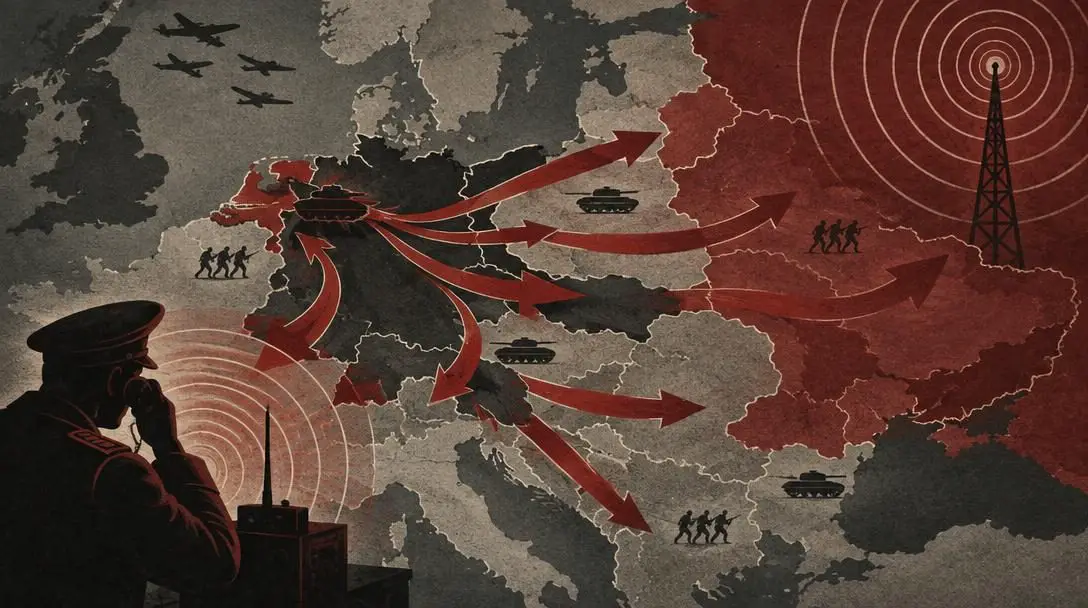
- Date: September 1, 1939
- Opening aggression: German invasion of Poland
- Duration of conflict: Six continuous years
- Key leader: Adolf Hitler
The conclusion of World War I failed to create lasting international stability. Across Germany, widespread economic collapse, crippling debt, and public humiliation over postwar treaties fostered deep civil resentment. Exploiting this collective grievance, Adolf Hitler consolidated total political control, established a totalitarian regime, and pledged to build an expansive Third Reich across Europe.

On September 1, 1939, German military divisions launched an unprovoked invasion of Poland. In response to this territorial aggression, Great Britain and France fulfilled their diplomatic commitments by declaring war against Germany. This fateful invasion immediately catalyzed World War II, sparking the deadliest, most destructive armed conflict ever documented in human history.
The warfare rapidly widened into a six-year global struggle encompassing dozens of nations across Europe, Asia, Africa, and the Pacific. Total mobilization transformed civilian industries into weapons factories, cost tens of millions of lives, and decimated entire national infrastructures. The war concluded officially just one day after the sixth anniversary of the Polish invasion, leaving Europe divided, dismantling historic colonial empires, and introducing the atomic era to modern geopolitics.
How foundational historical turning points function
Historical milestones do not occur as isolated accidents. Instead, they act as massive structural catalysts that disrupt existing technological, economic, and diplomatic balances. Understanding how these turning points operate reveals why their consequences persist across millennia.
- Technological convergence: Breakthroughs become exponentially more impactful when paired with complementary assets. The wheel gained worldwide utility only after human societies learned to domesticate horses, creating the first integrated long-distance transport system.
- Standardization of value: Moving from direct barter to the Lydia currency introduced universal metrics for measuring debt, labor, and commerce. This eliminated friction in transactions and allowed wealth accumulation across wide geographic regions.
- Harnessing chemical energy: Gunpowder replaced human and animal muscle with stored chemical energy, allowing projectiles to fly farther and strike with greater force than any mechanically drawn bow.
- Constitutional nation-building: The formal establishment of a resource-rich nation on July 4, 1776, illustrated how legal declarations, paired with vast natural assets, can construct an economic superpower that permanently alters global diplomacy.
- Interconnected alliance networks: The outbreak of war in September 1939 revealed the cascading volatility of modern mutual defense treaties, where an invasion in Eastern Europe instantly engulfed multiple world continents in total conflict.
Practical methodology for analyzing historic dates
Evaluating major historical milestones requires a disciplined, evidence-based approach. Without a structured research framework, students and researchers risk confusing historical facts with popular folklore or modern cultural assumptions.
- Locate verified primary documentation: Base historical evaluations on surviving written records and archaeological artifacts, such as the 1240 AD chemical texts or the signed documents of 1776, rather than relying on unverified word-of-mouth traditions.
- Investigate preceding socio-economic conditions: Scrutinize the underlying environment that sparked the event. For instance, evaluate Germany's severe post-World War I economic distress to comprehend how the 1939 invasion of Poland unfolded.
- Differentiate inception from mass adoption: Recognize that technologies evolve in phases. The wheel originated as an upright craft platform for shaping clay around 4500 BCE before evolving into a horizontal axle mechanism for road transport.
- Separate short-term effects from structural shifts: Distinguish between immediate aftermaths and long-term societal adaptations, such as the direct circulation of the Lydia versus the multi-millennium development of modern international banking.
- Evaluate cross-regional reverberations: Assess how a regional event altered global power structures, such as how the political independence of British North American colonies created an international military and financial titan.
Common mistakes when evaluating human history
Misconceptions frequently distort how the public views pivotal turning points. Avoiding these standard interpretive pitfalls is essential for understanding the true trajectory of human civilization.
- Believing complex technologies appeared overnight: Breakthroughs require long refinement cycles. Rudimentary gunpowder traces existed in the second century AD, but over a thousand years passed before the stable formula appeared in 1240 AD.
- Overlooking early trading systems: While true standardized currency emerged around 3000 BC, ancient communities were not entirely reliant on primitive barter; they actively experimented with bone chips and uniform trade tokens.
- Confusing folklore with archaeological facts: Popular culture frequently associates the wheel with prehistoric cave dwellers, whereas verified historical data places its emergence around 4500 BCE among organized pottery makers.
- Isolating major wars from their causes: Treating the 1939 invasion of Poland as a spontaneous crisis ignores two decades of interwar economic instability, failed treaties, and the authoritarian rise of Adolf Hitler.
- Ignoring technological cascades: Modern advanced infrastructure—including industrial climate control, high-speed rail systems, and telecommunication hardware—rests on ancient mechanical principles introduced by the wheel thousands of years ago.
Critical considerations for future historical study
Analyzing these five documented turning points opens up deeper questions regarding how modern civilization will evolve in the centuries ahead. Key areas for ongoing analysis include:
- The evolution of military systems: Examining how mechanized warfare moved beyond standard gunpowder firearms into automated, digital, and precision-guided weapons systems following the end of World War II.
- The future of commercial currency: Tracing how physical money, which originated with the Lydia in 3000 BC, continues to shift away from paper cash toward purely digital, decentralized, and electronic ledgers.
- Shifts in geopolitical dominance: Observing how global leadership balances have adjusted since the post-1945 landscape, particularly as new economic coalitions challenge Western institutions established after 1776 and 1945.
- Next-generation foundational mechanics: Identifying what emerging computational, biological, or materials innovations will deliver the same transformative, cascading civilizational impact that the wheel delivered in 4500 BCE.
Frequently asked questions
Was the wheel really invented by prehistoric cavemen?
No. Archaeological and historical evidence demonstrates that the wheel appeared around 4500 BCE, long after prehistoric cave eras. Furthermore, its earliest recorded application was dedicated to shaping pottery on a spinning platform rather than transportation.
What was the first recognized standardized money in history?
The first verified standardized currency was the Lydia, which emerged around 3000 BC in an Iron Age Kingdom located in modern-day Turkey, replacing direct barter and informal trade tokens like bone chips.
When did modern gunpowder formulas first appear?
While primitive, unstable mixtures trace back to the second century AD, the first verified written formula for modern, chemically balanced gunpowder was recorded in 1240 AD in the Middle East.
Why did the founding of the United States have such a profound global impact?
The declaration of independence on July 4, 1776, separated the North American colonies from British control. Positioned across vast natural resources, the United States leveraged its geography to become an international leader in global finance, military strength, and mass culture.
How long did World War II last after the invasion of Poland?
World War II began with the German invasion of Poland on September 1, 1939, and lasted for six continuous years, officially concluding just one day after the sixth anniversary of the initial invasion.
The bottom line
Examining the vast expanse of human history reveals that progress is anchored to distinct turning points where technology, economics, and politics collided. From the mechanical genius of the wheel in 4500 BCE and the financial liquidity enabled by the Lydia around 3000 BC to the destructive chemical energy of gunpowder in 1240 AD, these ancient breakthroughs laid the physical foundations of human civilization.
In modern eras, the formal founding of the United States in 1776 and the catastrophic outbreak of World War II in 1939 established the geopolitical borders, economic systems, and diplomatic institutions that govern contemporary life. By studying these five verifiable dates, we gain a clear, objective perspective on how human societies adapted to survival challenges, expanded global power, and shaped the interconnected modern world.