5 of the Greatest Miracles in the Bible
Across centuries of world literature and religious history, the biblical canon preserves a striking collection of accounts describing divine interventions that override natural laws. From the genesis of the physical cosmos to the emergence of early Christian belief, these narratives have permeated global culture, shaping Western art, classical literature, and popular media. Even individuals without direct theological training readily identify the dramatic episodes of individuals trapped by impassable bodies of water, prophets preserved inside leviathans, and the dead being summoned back to physical vitality.
Rather than functioning merely as spectacular visual exhibitions, biblical miracles are presented as decisive inflection points driven by judgment, providence, and preservation. In both the Hebrew Bible and the New Testament, these events emerge when human capacities are entirely exhausted. Examining five of the most renowned miracles provides profound insight into how ancient sacred narratives address crisis, community resilience, leadership, and divine covenant.
Key takeaways
- Biblical miracles consistently function as purposeful interventions designed to deliver communities, preserve life, and validate divine authority rather than serve as mere spectacles.
- Iconic episodes span from cosmic events like Genesis creation to intensely personal confrontations involving figures such as Moses, Jonah, and Jesus.
- Miraculous narratives frequently follow a structured progression marked by severe human crisis, precise divine instructions, and subsequent reaffirmations of communal faith.
- Textual accounts focus primarily on direct spoken commands and the observable results of deliverance rather than mechanical or technical explanations.
- Approaching these narratives through rigorous contextual reading prevents common conflations between modern media adaptations and the actual source texts.
At a glance: comparing five foundational miracles
The following overview summarizes the literary placement, key individuals, primary dilemmas, and definitive outcomes associated with these five landmark biblical accounts.
| Miracle | Scriptural source | Key figures | The human crisis | The miraculous outcome |
|---|---|---|---|---|
| The Creation | Genesis | God, humanity (male and female) | A void universe without form and cloaked in darkness | Formation of cosmos, dry land, life, and humanity through divine command |
| Water From the Rock | Numbers 20 | Moses, Aaron, wandering congregation | Extreme thirst, isolation in the wilderness, and communal despair | Abundant water flows directly from stone to sustain people and livestock |
| Jonah and the Whale | Book of Jonah | Jonah (son of Amittai), Ninevites, sailors | Resistance to divine command, violent sea storm, and drowning | Three-day survival inside a sea creature followed by deliverance on dry land |
| Parting of the Red Sea | Book of Exodus | Moses, Israelites, Egyptian forces | Entrapment between the sea and the armed Egyptian army | Waters divide to allow safe crossing; returning sea destroys pursuers |
| The Resurrection | Gospels (e.g., John 11:25-26) | Jesus Christ, Martha, the apostles | Execution by crucifixion and the permanence of physical death | Empty tomb discovered on the third day; appearances to followers |
Five of the greatest miracles in the Bible
While the scriptures record dozens of supernatural acts, five particular narratives stand apart due to their foundational theological importance and immense cultural longevity. Each episode showcases how the texts frame divine power confronting seemingly impossible human circumstances.
The Creation

- Scriptural origin: Book of Genesis
- Primary proclamation: "Let there be light"
- Human designation: Created male and female in the image of God
- Core mandate: Replenish the earth, subdue it, and exercise dominion
Widely regarded as the ultimate miracle, the origin of life and the physical cosmos forms the starting point of the biblical canon in the Book of Genesis. The narrative describes a primordial state where the earth existed completely without form and was cloaked in darkness. Order emerges not through manual labor, but through the sovereign utterance of divine authority, initiated by the command, "Let there be light."
Through sequential creative decrees, the visible world is furnished to provide an orderly habitat for living creatures, culminating in the unique origin of mankind. The Genesis text explicitly records: "God created man in his own image, in the image of God create he him; male and female created he them." The miracle concludes with an enduring blessing and commission directed toward early humanity: "And God blessed them, and God said unto them, 'Be fruitful, and multiply, and replenish the earth, and subdue it; and have dominion over the fish of the sea, and over the fowl of the air, and over every living thing that moveth upon the earth.'" Within the canon, the existence of life itself is framed as the premier miraculous act from which all subsequent interventions stem.
Water From the Rock

- Scriptural origin: Numbers 20
- Appointed leaders: Moses and his brother Aaron
- Physical implement: The rod
- Recipients: The wandering congregation and their animals
In the narrative of Numbers 20, the wandering Israelites faced an acute survival crisis after leaving Egypt. Lacking potable water in the arid wilderness, the congregation experienced severe physical thirst and erupted in direct confrontation with their leadership. The people openly challenged Moses, questioning why they had been brought away from Egypt only to suffer alongside their livestock without food or water, even expressing that they wished they had perished during earlier trials alongside their brethren.
Facing this intense public backlash, Moses turned to divine counsel and received specific operational instructions: "Take the rod; you and your brother Aaron gather the congregation together. Speak to the rock before their eyes, and it will yield its water; thus you shall bring water for them out of the rock, and give drink to the congregation and their animals." By producing an abundant stream of water out of barren stone, the crisis was averted. The sudden provision quenched the thirst of the extensive assembly and their herds while reinforcing Moses's administrative standing and reviving the assembly's faltering trust in divine providence.

Jonah and the Whale
- Scriptural origin: Book of Jonah
- Protagonist: Jonah, son of Amittai
- Intended destination: City of Nineveh
- Duration inside beast: Three days and three nights
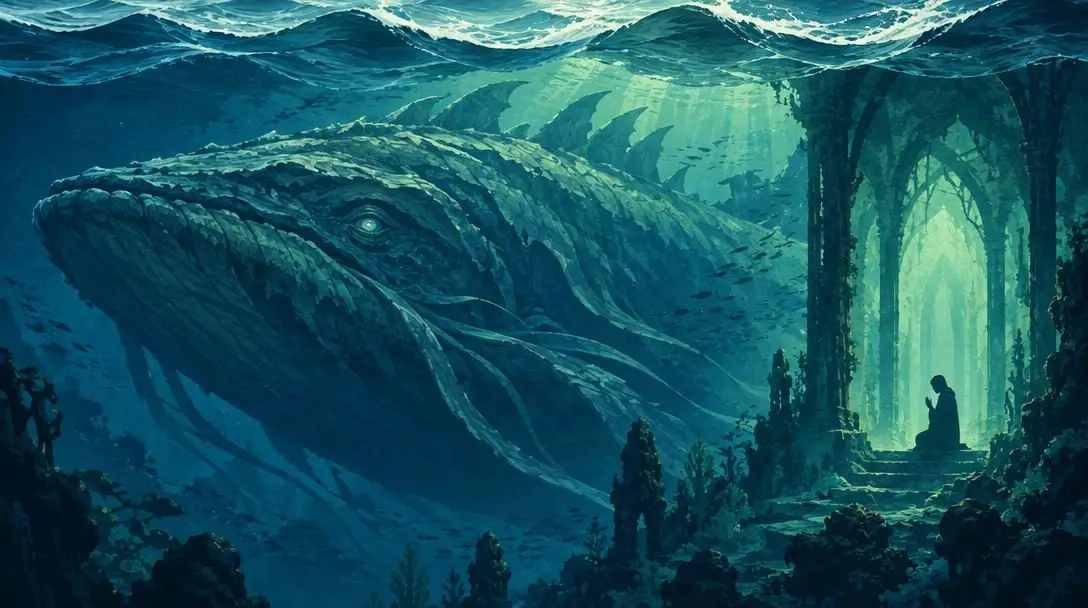
The story of Jonah and the great sea creature remains one of the most widely recognized accounts in world literature, celebrated across both religious and secular spheres. Jonah, an established prophet in the Hebrew Bible and the son of Amittai, received an explicit command to travel to the pagan city of Nineveh to deliver a prophetic warning. Resisting the assignment, Jonah boarded a seafaring ship to flee in the opposite direction. A violent tempest threatened the vessel, leading the terrified sailors to cast Jonah overboard into the sea to appease the waters.
Rather than drowning, Jonah was swallowed whole by a massive sea creature appointed for the task. The miracle operates on two levels: physical survival within the oxygen-deprived stomach of the beast for three full days, and the interior spiritual transformation of the prophet himself. Throughout his confinement, Jonah prayed earnestly. Following these prolonged petitions, divine authority commanded the beast to vomit Jonah unharmed onto dry land, clearing the path for him to finally proceed toward Nineveh as directed.
Parting of the Red Sea

- Scriptural origin: Book of Exodus
- Strategic barrier: Red Sea
- Protective phenomenon: Wall of fire
- Adversary: Pursuing Egyptian army and chariots
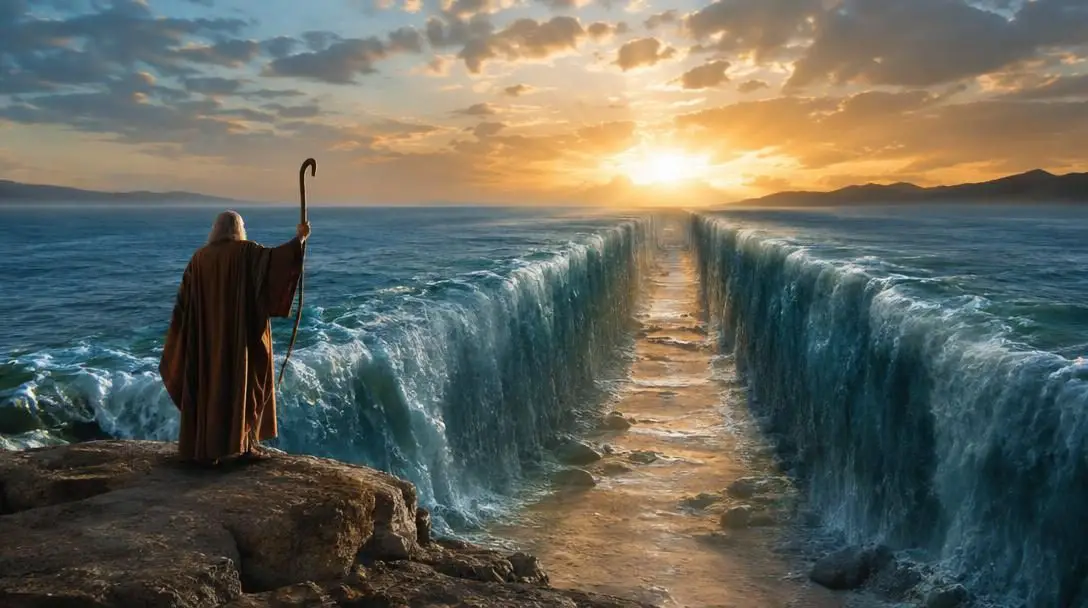
The parting of the Red Sea, chronicled in the Book of Exodus, represents the paramount miracle of national liberation in Hebrew history. Having secured permission to leave centuries of severe Egyptian slavery and persecution, the escaping Israelites found their journey abruptly blocked. Trapped against the deep shoreline of the Red Sea, they looked back to see the pursuing Egyptian military closing in rapidly to capture or slaughter them.
Without natural avenues of escape, a multifaceted miracle unfolded. A wall of fire materialized to block the Egyptian charioteers, preventing an immediate assault and buying essential time. Moses then extended his hand over the waters, causing the sea to divide and exposing dry seabed between flanking walls of water. The Israelites completed the passage safely. When the Egyptian military attempted to follow them into the canyon of water, the sea collapsed back into its natural state, drowning the armed forces and permanently removing the existential threat to the newly liberated nation.
Biblical miracles function as decisive interventions where natural limitations are set aside through divine authority to preserve human life and establish covenant trust.
The Resurrection of Jesus Christ
- Scriptural reference: New Testament Gospels; John 11:25-26
- Timeline: Raised on the third day following crucifixion
- Key evidence recorded: An empty tomb and spiritual appearances
- Central theological discourse: Dialogue with Martha
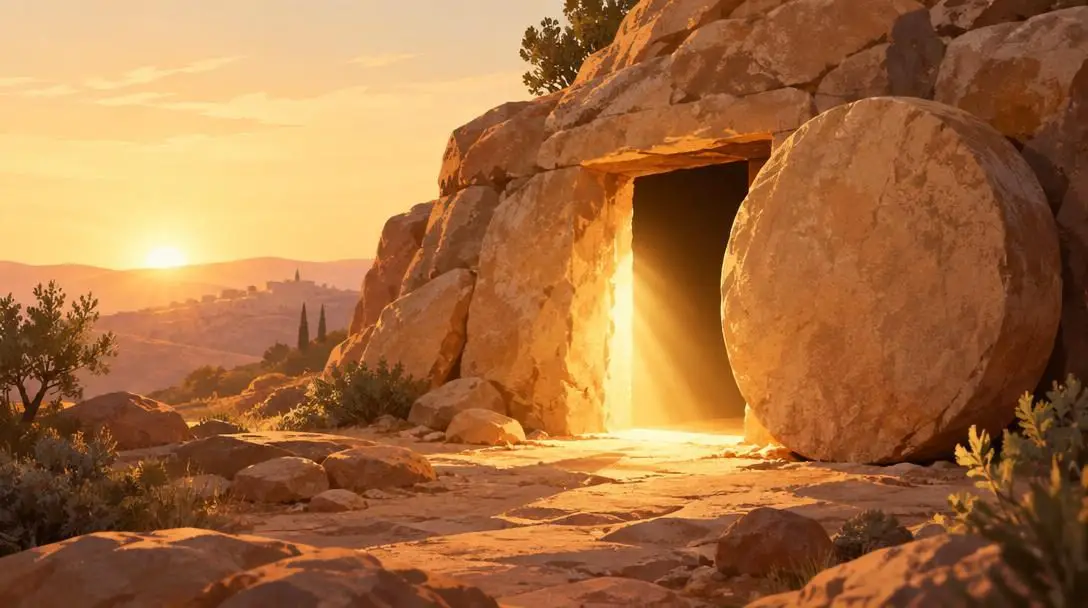
Jesus Christ occupies the central position in Christian theology, and his return from death serves as the fundamental cornerstone of the entire faith tradition. Following his public execution by crucifixion outside Jerusalem, Jesus was placed in a rock-hewn tomb. On the third day, the biblical narratives document the discovery of an empty tomb, with grave clothes left behind and angels announcing that he was no longer among the dead.
Notably, the biblical texts do not attempt to describe the mechanical physics or technical biological revival that occurred inside the sealed tomb; instead, the narrative focuses on the post-resurrection spiritual appearances of Jesus to Mary Magdalene, the apostles, and numerous gathered disciples. The theological gravity of this miracle was articulated prior to the event during Jesus's conversation with Martha in John 11:25-26: "Jesus told (Martha), 'I am the resurrection and the life. Anyone who believes in me will live, even after dying. Everyone who lives in me and believes in me will never ever die. Do you believe this, Martha?'" In early Christian writings, this bodily vindication serves as the guarantee of ultimate renewal for all believers.
Anatomy of a miracle: recurring narrative patterns
A closer reading of these famous accounts reveals that biblical miracles are rarely presented as random, arbitrary acts of magic. Instead, they consistently reflect a structured narrative blueprint comprising three core components:

- Human limitation and acute crisis: Miraculous events unfold against a backdrop of complete helplessness. The Israelites were boxed in by water and spears; the desert wanderers faced biological dehydration; Jonah was trapped in the abyss. Intervention occurs only when conventional human solutions are utterly exhausted.
- Divine direction and precise obedience: Supernatural occurrences are routinely tethered to explicit verbal instructions given to appointed leaders. Moses must hold the rod and speak to the rock; Jonah must submit to his geographical destination; light emerges only upon a spoken divine imperative.
- Affirmation of faith and institutional authority: Beyond solving immediate physical dilemmas, miracles function pedagogical roles. Water pouring from bedrock restored the wandering assembly's confidence in Moses and Aaron; surviving the sea monster confirmed Jonah's prophetic mission; the resurrection validated Jesus's messianic claims to his scattered followers.
How to analyze biblical miracle narratives
When examining historical and religious texts, general readers often miss critical nuances by treating miraculous episodes as isolated fables. Utilizing an orderly, step-by-step reading methodology ensures a comprehensive understanding of what the source text actually conveys.
- Read the surrounding textual passages: Rather than isolating a miracle to a single verse, read the complete chapter and surrounding narrative arc. For instance, reading the entirety of Numbers 20 reveals the deep interpersonal grievances and water shortages that prompted the crisis at the rock.
- Identify all participating figures: Document every character present in the narrative scene, noting both prominent leaders and community spectators. Noting secondary figures like Aaron beside Moses, or Jonah's paternal lineage as the son of Amittai, anchors the text in its specific historic framework.
- Analyze spoken dialogue and instructions: Carefully evaluate the exact words spoken by God, the prophets, and bystanders during moments of extreme stress. Tracking Martha's personal dialogue with Jesus or the panic-stricken complaints of the wilderness assembly provides valuable psychological texture.
- Distinguish explicit actions from mechanical explanations: Note what the ancient author chooses to record versus what is deliberately passed over in silence. The resurrection account highlights an empty chamber and subsequent personal encounters rather than attempting to outline the biological mechanics of revival.
- Contrast textual sources with artistic adaptations: Compare the literal biblical prose against popular cinematic and artistic representations. Identifying the artistic liberties taken in cinematic depictions of the Red Sea crossing or Jonah's sea beast clarifies the distinction between popular folklore and actual scriptural text.
Common reading mistakes to avoid
Approaching ancient miraculous accounts without methodological caution frequently leads to analytical errors. Readers should remain mindful of several prevalent missteps:
- Conflating Hollywood drama with textual details: Modern cinematic treatments frequently alter, embellish, or combine ancient stories for dramatic impact. Assuming films accurately replicate the Book of Exodus or the Book of Jonah often introduces details nowhere to be found in the original records.
- Overlooking the emotional stakes of the characters: Viewing miracles purely as mechanical wonders causes readers to miss the raw human drama—such as the genuine terror felt by families pinned against the Red Sea or Jonah's interior anguish in the dark depths of the sea creature.
- Ignoring the surrounding historical backdrop: Removing the socio-political context—including the extreme brutality of Egyptian enslavement or the legal mechanics of Roman crucifixion—robs the miracles of their profound cultural resonance.
- Demanding modern scientific mechanics: Modern readers often expect ancient manuscripts to explain natural phenomena through laboratory terminology. Biblical writers prioritized theological significance and divine commands over mechanical descriptions of physics.
Expanding your study beyond the core narratives
Having examined these five major milestones, interested readers can broaden their historical and literary horizons by investigating several related fields of study:
First, explore the wider canon of biblical miracles. Outside these five cornerstone events, the Hebrew Bible and the New Testament catalog dozens of other unusual interventions, ranging from dramatic atmospheric conditions and sudden provisions of food in desert regions to individualized physical healings performed during Jesus's public ministry.
Second, observe the enduring influence of miraculous motifs on world literature and visual arts. From the epic poetry of John Milton and the canvases of Renaissance painters to modern dramatic cinema, the thematic imagery of the divided sea, the leviathan, and the cosmic origin of light continues to furnish the creative imagination with iconic archetypes of struggle and triumph.
Finally, examine the Ancient Near Eastern and Greco-Roman contexts. Investigating how neighboring civilizations conceived of divine portents, omens, and heroic deliverances provides valuable perspective on how ancient audiences originally heard, understood, and preserved these dramatic stories of intervention.
Frequently asked questions
Does the biblical text specify that Jonah was swallowed by a whale?
The Book of Jonah describes the creature generally as a "great fish" or massive sea beast appointed by God, though widespread tradition, cultural translation, and later interpretations have long popularized the creature as a whale.
Why did Moses produce water from a rock in Numbers 20?
The wandering Israelites were suffering from extreme thirst in the wilderness and openly challenged Moses and Aaron over the lack of water. Under divine direction, Moses took his rod, assembled the congregation, and brought forth water from the rock to preserve both the people and their livestock.
How did the Israelites safely escape the pursuing Egyptian army?
According to the Book of Exodus, a wall of fire initially stalled the advancing Egyptian chariots, buying time for Moses to part the Red Sea. The Israelites crossed safely over dry ground, and the waters subsequently closed over the pursuing army.
What specific evidence of the resurrection is emphasized in the Gospels?
The biblical writers focus on the discovery of the empty tomb and subsequent spiritual appearances of Jesus Christ to his apostles and followers, rather than attempting to provide an explanation of the physical process of revival.
What was the primary command spoken during the Genesis creation account?
The creation narrative records God initiating the formation of the ordered world through the spoken command, "Let there be light," establishing illumination over an earth that was previously formless and shrouded in darkness.
The bottom line
The enduring prominence of biblical miracles stems not merely from their supernatural spectacle, but from their profound thematic engagement with human vulnerability. Whether depicting the vast expanse of cosmic creation in Genesis or the deeply personal prayers of an embattled prophet within the belly of a deep-sea creature, these accounts address humanity's perennial confrontations with scarcity, danger, and mortality. By approaching these ancient texts through their original literary and historical frameworks, modern readers gain an enduring appreciation for narratives that have fundamentally shaped global culture, literature, and moral thought across millennia.