5 Real Life Heroism Stories

Pop culture frequently presents heroes as larger-than-life figures with superhuman strength, bulletproof armor, or theatrical origins. In contrast, real-world heroism consistently emerges from ordinary individuals placed in unforeseen, perilous situations. These sudden emergencies unfold on neighborhood streets, quiet coastal lakes, transit platforms, and public beaches, leaving virtually no time for elaborate planning or hesitation.
When unexpected danger strikes, genuine courage reveals itself through swift decision-making, direct physical intervention, and collaborative community action. The five accounts detailed below illustrate that extraordinary outcomes do not require superhuman traits; they require moral resolve, immediate initiative, and an unwavering commitment to preserving human life.
Key takeaways
- Real-world rescues rely on quick threat recognition and immediate mobilization rather than specialized superhuman physical ability.
- Coordinated teamwork among total strangers often turns catastrophic hazards into successful rescue operations.
- Environmental threats such as cold-water submersion, approaching trains, and aggressive animals leave margins of error measured in seconds.
- Maintaining basic emergency awareness, staying calm, and utilizing available tools drastically improves survival rates for victims and rescuers alike.
Five remarkable accounts of everyday courage
Across diverse environments, everyday people encounter split-second scenarios that demand rapid risk assessment. Whether facing an aggressive animal attack, a rapidly sinking automobile, or an oncoming locomotive, these individuals chose decisive action over passive observation.
| Rescue Incident | Primary Setting | Critical Hazard | Core Intervention Strategy |
|---|---|---|---|
| Bridger Walker | Neighborhood yard | Vicious canine attack | Physical shielding and decoy protection |
| Hauser Lake Rescue | Hauser, Oregon | Vehicle submerged in water | Multi-rescuer coordination and winch retrieval |
| Kane County Rail Rescue | Kane County, Illinois | Stalled car on active tracks | Manual extraction of an incapacitated driver |
| New York Station Rescue | New York train station | Wheelchair fall onto live tracks | Immediate physical lift ahead of incoming train |
| Panama City Beach Chain | Panama City Beach | Treacherous surf and current | Multi-person human chain formation |
Bridger Walker

- Rescuer age: Six years old
- Protected person: Four-year-old sister Nicole Walker
- Medical impact: Severe facial lacerations, 90+ stitches, multiple follow-up surgeries
While visiting friends alongside his four-year-old sister Nicole, six-year-old Bridger Walker encountered an aggressive, charging dog. Rather than fleeing to protect himself, Bridger stepped directly between the animal and his young sister. Recognizing that the animal posed a deadly threat, he moved continuously to block the dog's path, actively preventing it from reaching Nicole.
The dog lunged and bit Bridger severely on the face. Despite the intense pain and trauma, Bridger screamed for Nicole to run away to safety. Once the dog finally released its grip, Bridger escorted his uninjured sister to a secure hiding spot until adults intervened. Bridger required extensive medical attention, including more than 90 stitches and several surgical procedures, yet his immediate, protective instinct preserved his sister's life without a scratch.
Hauser, Oregon Lake Rescue
- Location: Hauser, Oregon
- Identified rescuers: Molly Silva, Kris Hunter
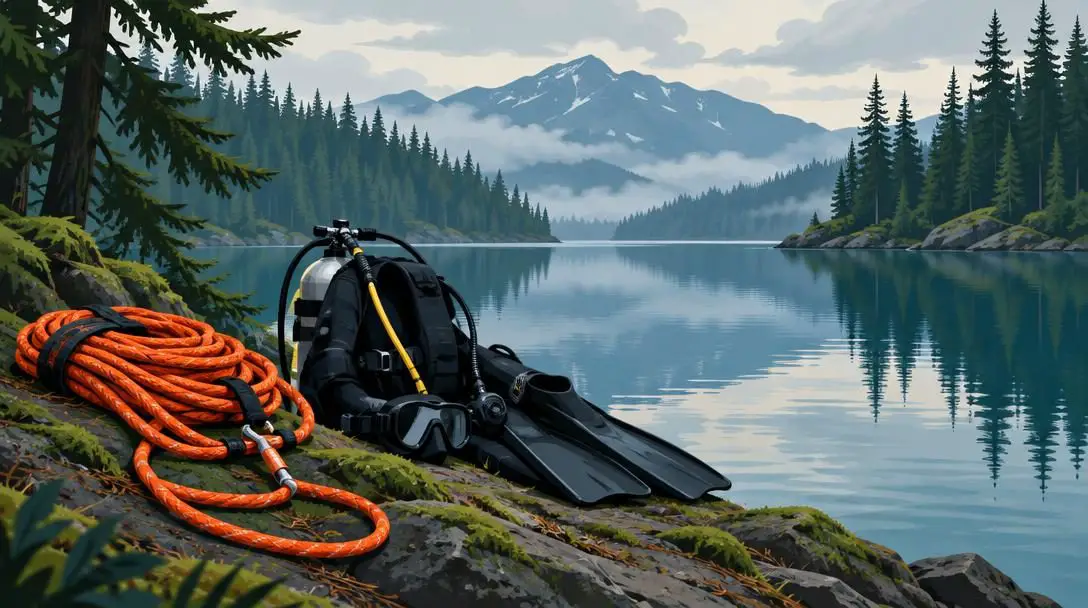
- Key tools: Commercial dive suit, vehicle-mounted truck winch
A catastrophic motor vehicle crash in Hauser, Oregon, sent a car veering off the roadway and into a lake, where it rapidly submerged with an unconscious driver trapped inside. Witnessing the accident unfold, passerby Molly Silva pulled over, leapt into the water, and swam out to reach the sinking automobile. Recognizing the escalating danger, commercial diver Kris Hunter immediately put on his professional dive gear and swam out to assist Silva at the submerged vehicle.
The operation expanded into a coordinated multi-person recovery when a third bystander brought a truck winch into play. Working with Hunter beneath the surface, the rescuer secured the winch cable to the vehicle, allowing the truck to drag the car through the water toward the shore. By the time the vehicle reached shallow water, emergency crews arrived to extricate the driver, subsequently reviving him to consciousness through timely medical intervention.
Kane County Railroad Rescue

- Location: Kane County, Illinois
- Motorist: 72-year-old driver
- Hazard: Approaching high-speed locomotive
In Kane County, Illinois, a 72-year-old driver found himself in grave danger when his vehicle stalled directly across active railroad tracks. An observant passerby noticed the immobilized vehicle just as an incoming high-speed train was detected down the line. Sprinting directly to the scene, the rescuer discovered that the elderly driver was suffering from an acute medical emergency and was physically incapable of freeing himself.
With the train closing in rapidly, the rescuer reached into the cabin, unbuckled the driver's seatbelt, hoisted the incapacitated man out of the vehicle, and carried him clear of the crossing. Moments later, the locomotive pulverized the stalled vehicle, reducing it to twisted wreckage. The bystander's refusal to abandon the driver averted a fatal collision by mere seconds.
New York Subway Station Rescue

- Location: New York train station
- Hazard: Passenger fall onto active tracks
- Time window: Approximately ten seconds
A routine commute inside a New York passenger station turned critical when a man using a wheelchair rolled off the platform edge and landed squarely on the active rails below. With an oncoming passenger train visibly approaching the station platform, a bystander recognized that the man could not climb back to safety on his own.
With an estimated window of roughly ten seconds before impact, the unidentified commuter jumped down onto the tracks, hoisted the man out of danger onto the platform, and climbed up just before the train entered the station. Once the victim was safe and the immediate danger passed, the rescuer quietly slipped into the surrounding crowd without seeking public recognition or recording his identity.
Panama City Beach Human Chain

- Location: Panama City Beach
- Initial victim: Young girl struggling in surf
- Bystander network: 12 connected individuals
Along the coastline of Panama City Beach, a recreational outing turned perilous when a young girl became trapped in rough surf and was pulled away from the shore. Two women immediately swam out into the choppy water to retrieve her. While one woman managed to guide the child safely back to the beach, the second rescuer became ensnared by the turbulent current, unable to return to shore.
A male beachgoer attempted a solo swimming rescue but was quickly overpowered by the aggressive conditions. Recognizing that individual swimmers could not beat the water, a group of 12 beachgoers linked hands and arms to form a continuous, unbroken human chain extending from dry sand into the crashing surf. By anchoring their collective weight, the chain reached the struggling swimmers and hauled everyone back to safety.
The mechanics of bystander intervention in severe crises
The transformation from an ordinary witness to an active rescuer is a documented social and psychological dynamic. In typical public crises, individuals frequently succumb to hesitation, assuming another person will step in. In each of the events above, the rescuers dismantled that barrier through instantaneous personal initiative.

Real-world heroism is defined by ordinary individuals who choose to act decisively in moments of extreme danger.
Successful crisis interventions typically progress through distinct, rapid-fire operational stages:
- Threat identification: Recognizing an abnormal, life-threatening situation, such as a submerged car, an approaching train, or an incapacitated swimmer.
- Direct mobilization: Moving decisively toward the hazard rather than freezing or retreating, closing the distance to the victim.
- Resource utilization: Employing specialized nearby equipment, such as commercial diving gear, vehicle winches, or flotation aids.
- Collective coordination: Merging distinct, unplanned efforts into an organized system, such as a multi-person shoreline chain.
- Safe extraction: Removing the endangered individual from the active hazard perimeter before attending to secondary needs.
Essential protocols: What to do when an emergency unfolds
While the individuals featured in these accounts showed tremendous natural bravery, managing life-threatening emergencies effectively requires a balance of speed and situational discipline. Bystanders who witness an accident can employ structured steps to stabilize the situation without creating additional victims.
- Assess the immediate environment: Run a rapid visual scan for live power lines, secondary traffic, approaching locomotives, or unstable structures before stepping directly into danger.
- Alert emergency services immediately: Directly appoint a specific individual in the crowd to dial emergency dispatch, ensuring that professional medical, fire, or police support is en route.
- Deploy reaching or throwing aids first: If addressing water rescues, prioritize reaching with poles, ropes, winches, or flotation equipment before choosing to swim into hazardous water.
- Form coordinated teams: Distribute physical loads by assigning clear, simple tasks to fellow bystanders, such as establishing an anchor line or assisting with physical lifting.
- Execute extraction and secure airways: Pull the victim completely clear of active hazards, reposition them onto a secure, stable surface, and monitor breathing until first responders take over.
Critical pitfalls to avoid during acute rescue operations
Adrenaline surges during life-or-death scenarios can distort perception and lead to costly tactical errors. Understanding common mistakes helps bystanders render aid effectively while mitigating personal danger.
- Failing to account for incoming hazards: Rescuers can suffer severe tunnel vision, focusing exclusively on a victim while remaining oblivious to oncoming trains, secondary road traffic, or shifting wreckage.
- Underestimating water dynamics: Attempting solo swimming rescues against strong tides, undertows, or cold-water submersions frequently results in the rescuer becoming an additional casualty.
- Leaving victims near the hazard line: Halting an extraction too close to active tracks, aggressive animals, or unstable water edges exposes everyone to secondary trauma.
- Neglecting available mechanical equipment: Overlooking practical tools nearby—such as ropes, vehicle winches, or heavy clothing—forces rescuers to rely on raw physical strength when mechanical advantage is available.
- Skipping post-rescue medical evaluation: Individuals freed from cold water, physical violence, or near-impact crashes often suffer internal trauma, hypothermia, or shock that requires prompt clinical attention.
Building long-term readiness and community resilience
Everyday heroism is rarely planned; it is an immediate response to an unexpected crisis. However, personal preparedness can significantly improve how effectively someone reacts when faced with a catastrophic event.
Developing foundational emergency capabilities strengthens personal confidence and community safety. Individuals can take concrete steps to prepare:
- Complete CPR and first aid training: Understanding basic wound dressing, tourniquet application, and airway management prepares bystanders to treat trauma like severe bites or water inhalation.
- Carry dedicated vehicle rescue tools: Storing seatbelt cutters, window-breaking tools, heavy tow straps, and comprehensive medical kits inside automobiles provides immediate solutions during transit emergencies.
- Understand local water conditions: Learning to identify coastal currents, undertows, and thin ice reduces the likelihood of entering dangerous water unprepared.
- Support local first responders: Recognizing the partnership between initial civilian intervention and professional search-and-rescue teams ensures a seamless chain of survival.
Frequently asked questions
How many stitches did Bridger Walker receive after protecting his sister?
Bridger Walker received more than 90 stitches to treat severe facial lacerations following the dog attack, and he subsequently underwent multiple follow-up surgical procedures while his four-year-old sister remained completely uninjured.
What equipment made the Hauser, Oregon lake rescue successful?
The rescue succeeded due to the quick deployment of professional diving gear worn by commercial diver Kris Hunter, combined with a bystander's truck winch, which allowed rescuers to haul the submerged car through the lake to the shoreline.
Why was the driver unable to escape the railroad tracks in Kane County?
The 72-year-old motorist had experienced an acute medical emergency that left him entirely immobilized inside the vehicle, requiring a passerby to unbuckle and physically carry him away from the approaching train.
How did beachgoers in Panama City Beach rescue the trapped swimmer?
When solo swimming efforts proved unable to overcome the strong current, a group of 12 beachgoers locked arms to form an extended human chain from the dry shore out into the surf, successfully hauling the stranded swimmers back to sand.
What is the first thing a bystander should do when witnessing a sudden accident?
A bystander should immediately conduct a rapid assessment of the surroundings to detect secondary hazards like oncoming traffic, fire, or live electricity, while ensuring emergency professionals are dispatched right away.
The bottom line
The actions of Bridger Walker, the multi-person team in Hauser, the quick-thinking rail rescuers in Illinois and New York, and the beachgoers of Panama City Beach demonstrate that heroism is defined by action rather than innate status. In severe crises, survival frequently hinges on ordinary people choosing to step forward, communicate, and face danger on behalf of others. By cultivating situational awareness, understanding foundational rescue protocols, and embracing collective responsibility, everyday citizens continue to prove that human courage remains the most powerful defense against sudden disaster.