
5 Reasons Why Making Random Decisions Can Be a Good Thing

From early adulthood onward, most people condition themselves to approach life through a strictly analytical lens. We evaluate pros and cons, assess risks, consult opinions, and project theoretical outcomes far into the future. For significant life commitments, professional career shifts, and major financial investments, this deep calculation is indispensable. However, when an exhaustive analytical process spills into everyday, routine moments, it often leads to unnecessary hesitation, cognitive fatigue, and an overemphasis on predictability.
Living an entirely calculated life provides comfort and creates an environment where expectations feel clear, yet adhering purely to routine can easily slide into monotony. When an outcome carries no severe or permanent consequences, relying strictly on analytical reasoning wastes valuable energy. Stepping away from rigid control and allowing randomness to guide your choice opens the door to a more adaptable, curious, and resilient mindset.
Key takeaways
- Analytical reasoning is essential for high-stakes commitments, but applying it to minor daily moments causes needless hesitation and routine monotony.
- Allowing chance to make low-stakes choices shifts your focus away from controlling outcomes and toward adapting dynamically to the journey.
- Embracing randomness can reignite childlike curiosity, reveal unexpected opportunities, expand social circles, and sharpen quick-witted thinking.
- Spontaneity requires clear boundaries, such as maintaining essential personal safety and avoiding chance when making major life or financial decisions.
The Mechanics of Random Decision-Making
Allowing randomness to influence your day is not about acting reckless or abandoning critical reason when important outcomes hang in the balance. Instead, it represents a deliberate choice to surrender control over minor, low-stakes decisions. When you face several equally viable options—such as selecting a restaurant, choosing an evening activity, or picking an unfamiliar route home—analyzing every angle produces diminishing returns. Outsourcing the final pick to chance eliminates personal bias, cuts through mental loops, and halts decision paralysis.
In many ways, making a random choice mirrors the art of theatrical improvisation. In improv, there is no predetermined script or rigid destination; performers invent their responses in real time based on whatever premise emerges. Applying this concept to your daily routine transforms life from an exercise in reaching a specific end point into an experience where you truly enjoy the journey. Rather than spending twenty minutes debating which movie to watch or which road to take, you commit to an option instantly and discover the experience as it unfolds.
By letting random factors dictate a step forward, you bypass the mental loop of trying to predict every outcome before you take action.
5 Core Reasons Why Making Random Decisions Can Be a Good Thing
For individuals who lean heavily on left-brained logic and structured planning, introducing randomness into daily habits can feel profoundly counterintuitive. Yet, stepping away from absolute predictability yields tangible psychological and experiential benefits.
| Reason | Primary Benefit | Mindset Shift |
|---|---|---|
| Sense of Wonder | Rekindles youthful curiosity | From scripted expectation to open discovery |
| New Opportunities | Uncovers paths overlooked by habit | From safe routine to serendipity |
| New Friendships | Broadens stagnant social networks | From familiar circles to diverse connections |
| Encouraged Exploration | Broadens worldview and physical horizons | From insular comfort to active exploration |
| Quick Thinking | Sharpens wit and mental adaptability | From premeditated answers to real-time response |
1. Triggers Your Sense of Wonder
During childhood, the world feels remarkably open, surprising, and full of enchantment because young minds do not approach each day with rigid preconceptions. As people mature, societal demands and daily responsibilities often cause that spark of wonder to fade. Days become a sequence of anticipated events, calculated schedules, and predictable outcomes. Making decisions in the spur of the moment can help bring some of that magic back into your life, reestablishing a connection with your inner child. Introducing spontaneity allows you to view familiar surroundings with fresh eyes and reignites an organic curiosity about what lies just around the corner.
2. Unlocks New Opportunities
Familiar routines offer security, but they rarely expose you to unexpected breakthroughs. When every action follows a predetermined script, you only encounter the environments, insights, and situations you already know. Stepping off the beaten path through random selection exposes you to possibilities you could never have anticipated or planned for on paper. Whether it involves attending an unfamiliar workshop, picking up an uncharacteristic hobby, or taking an impulsive detour, going with the flow introduces positive disruptions that can steer your day—or even your broader life—in a rewarding new direction.
3. Helps You Meet New Friends
Social circles naturally become static when you continuously visit the same establishments, attend the identical roster of events, and interact exclusively with the same peers. Whether you consider yourself naturally outgoing or lean toward the shy side, making random choices gently pushes you outside your social comfort zone. Choosing an event or venue by chance places you in environments filled with people you would never encounter during your standard schedule. The individuals you meet through serendipitous detours can offer novel perspectives, challenge your assumptions, and bring meaningful depth to your personal journey.
4. Encourages Exploration
Human history has always been defined by exploration; earlier civilizations routinely set out into uncharted lands and unpredictable seas to discover what lay beyond their known borders. Adopting a mindset of healthy exploration expands how you interpret the world. While historical pioneers faced existential unknowns, modern exploration can be practiced safely by letting chance choose an unfamiliar neighborhood, park, or scenic drive. So long as you observe basic awareness and preparation, choosing destinations at random revitalizes your relationship with the physical spaces around you.
5. Helps Practice Quick Thinking
Because daily routines rely on deeply ingrained habits, they rarely challenge your brain to solve novel problems in real time. Following a strict routine creates mental autopilot, which can dull your conversational wit and critical adaptability. When you make decisions on the fly and land in unexpected circumstances, you force your mind to react immediately to the environment rather than falling back on memorized scripts. This regular practice in improvisation sharpens your situational awareness, boosts your wit, and trains you to adapt gracefully to unforeseen events.

Practical Steps to Introduce Randomness into Your Day
Embracing the benefits of chance does not require overturning your life or abandoning organized scheduling altogether. You can build mental flexibility gradually through small, low-risk exercises designed to dismantle unnecessary overthinking.
- Isolate low-consequence choices: Identify daily scenarios where the outcome has no lasting bearing on your health, finances, or career, such as picking a streaming movie, choosing lunch, or selecting a leisure reading book.
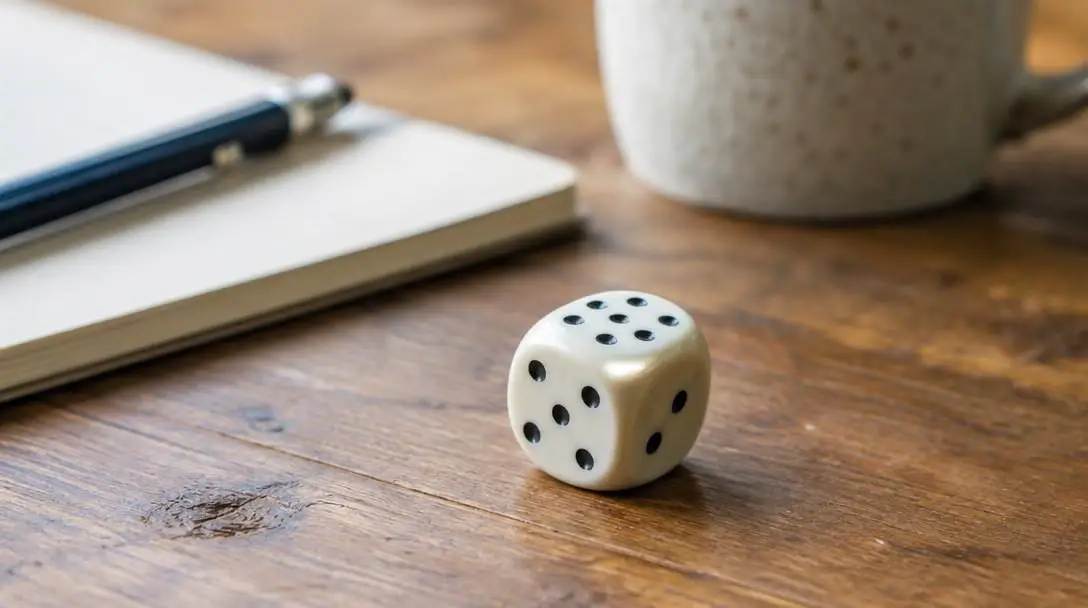
- Employ simple chance mechanisms: Eliminate internal debate by tossing a coin, rolling a die, or drawing a folded slip of paper from a bowl when you find yourself caught between two or three acceptable options.
- Alter a familiar route on impulse: During an ordinary walk, run, or weekend drive, make an unplanned turn down a street you have never visited before while maintaining general orientation.
- Say yes to unexpected invitations: When a colleague or acquaintance invites you to try an activity or visit a setting you would normally decline simply out of habit, accept without overanalyzing the details.
- Set a five-second limit: Give yourself a strict window of five to ten seconds to make trivial selections, such as choosing an entrée from a menu, conditioning your brain to act decisively without second-guessing.
Common Mistakes to Avoid with Spontaneous Decisions
While inviting chance into your life offers substantial benefits, misapplying the concept can cause unnecessary frustration or genuine trouble. Keep the following pitfalls in mind as you cultivate spontaneity:
- Applying randomness to high-stakes choices: Never leave critical medical choices, major investments, legal contracts, or core professional changes to chance. Random decision-making belongs strictly in the realm of low-consequence options.
- Disregarding fundamental safety standards: Being spontaneous does not excuse negligence. Whenever you explore unfamiliar outdoor settings or new neighborhoods, carry necessary provisions, maintain a phone connection, and respect private property boundaries.
- Second-guessing the random outcome: Flipping a coin only to ignore the result and resume agonizing over the decision defeats the entire exercise. Once chance has spoken, commit to the outcome and follow through with the experience.
- Expecting every choice to be extraordinary: Not every spontaneous detour leads to a life-changing epiphany or a picturesque discovery. Some random choices result in mediocre dinners or quiet dead ends; the primary objective is to break analytical paralysis and appreciate the journey itself.
Frequently asked questions
Does making random decisions mean giving up all control over life?
No. Random decision-making is a conscious strategy meant strictly for low-stakes situations where prolonged analysis produces little value. It complements long-term planning by freeing up mental bandwidth for major life choices that truly require analytical thought.
How can analytical or left-brained thinkers start being more spontaneous?
Begin with structured micro-experiments. Use external tools like a coin flip or a six-sided die to decide between simple options, like picking a podcast or deciding where to eat lunch. This lets you practice letting go of control in a safe, controlled environment.
What types of decisions should never be left to chance?
You should never use random decision-making for significant medical treatments, long-term financial investments, professional career changes, legal agreements, or any scenario where a poor outcome could cause lasting harm to yourself or others.
What should I do if a random choice leads to a disappointing experience?
Accept the outcome as a natural part of the process. The purpose of random choices is not to ensure flawless perfection every time, but to eliminate overthinking, break monotonous routines, and build resilience in handling unexpected circumstances.
The Bottom Line
Analytical thinking is a vital skill that safeguards our well-being and guides our most meaningful life milestones. However, when every minor aspect of daily life is subjected to exhaustive calculation, routine quickly turns into rigidity. Living strictly within planned margins dampens natural curiosity and limits exposure to the serendipitous events that make life memorable.
By delegating low-stakes choices to chance, you establish a healthier relationship with uncertainty. You create space for wonder, uncover unseen opportunities, broaden your community, and train your mind to react quickly and with humor. Reserve your deep analytical focus for the matters that genuinely determine your future, and let chance handle the rest to experience the full, rich variety of the journey.