5 Surprising Facts About the Solar System
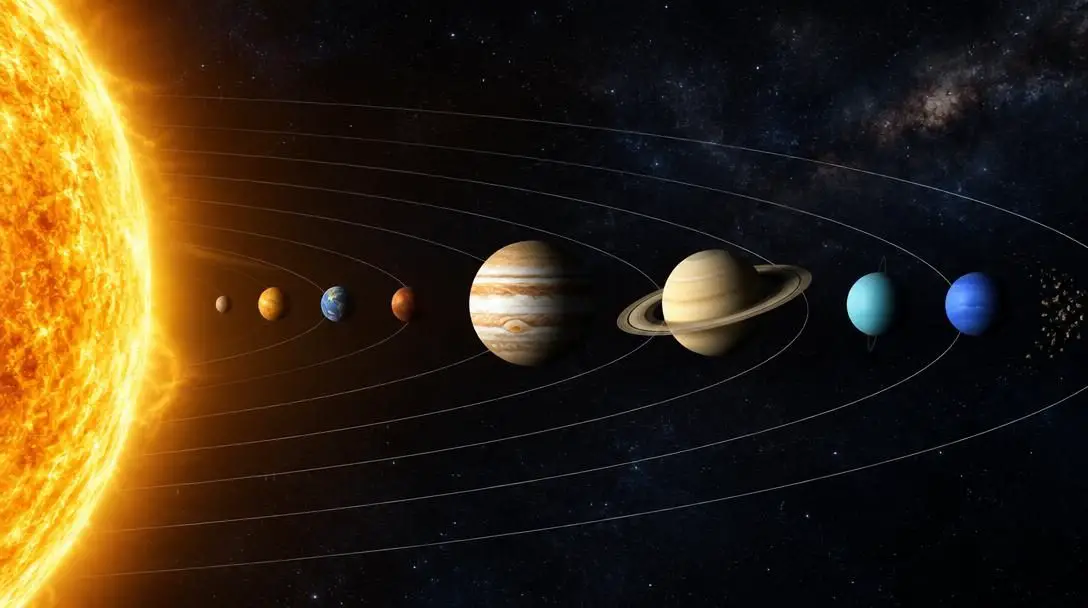
Most people can easily visualize the basic structure of the solar system: a blazing star anchored at the center, with eight familiar planets orbiting in orderly rings. While this textbook illustration serves as an accessible introduction during grade school, it leaves out the astonishing physical complexity, chemical variety, and dynamic scale that modern astrophysics continues to uncover. Our immediate cosmic neighborhood is far from a sterile gallery of static spheres orbiting in silence; it is an active, evolving environment shaped by extreme thermodynamics, atmospheric filtration, and energetic chemical reactions.
Human perception of the universe is inherently skewed by Earth's protective atmosphere. Looking up from the surface, sunlight changes color, cosmic odors are blocked, and vast extraterrestrial storms appear as tiny, motionless dots in an amateur eyepiece. As robotic explorers, orbiting observatories, and crewed expeditions push beyond low Earth orbit, scientific instruments capture the true properties of space. Exploring these counterintuitive realities bridges the gap between elementary models and the physical processes at work across the cosmos.
Key takeaways
- The sun produces every color of visible light simultaneously, making its true celestial hue pure white when viewed outside Earth's atmosphere.
- Pluto is not an isolated anomaly; multiple round bodies such as Ceres, Eris, Haumea, and Makemake share the scientific designation of dwarf planet.
- Astronauts returning from spacewalks consistently report a lingering smell reminiscent of charred barbecue meat and welding fumes clinging to their suits.
- Jupiter's Great Red Spot is not a solid continental landmass, but an atmospheric storm system larger than Earth that has been active for more than 300 years.
- Roughly 40 light-years away, the super-Earth exoplanet 55 Cancri e possesses such high carbon content that its interior is composed largely of diamond.
Five Revelations That Challenge Everyday Views of Space
Careful observation and advanced space exploration consistently upend common assumptions about the universe. From optical illusions generated by our own sky to extreme exotic chemistry on distant worlds, these five phenomena highlight the unexpected nature of planetary science.
The Sun
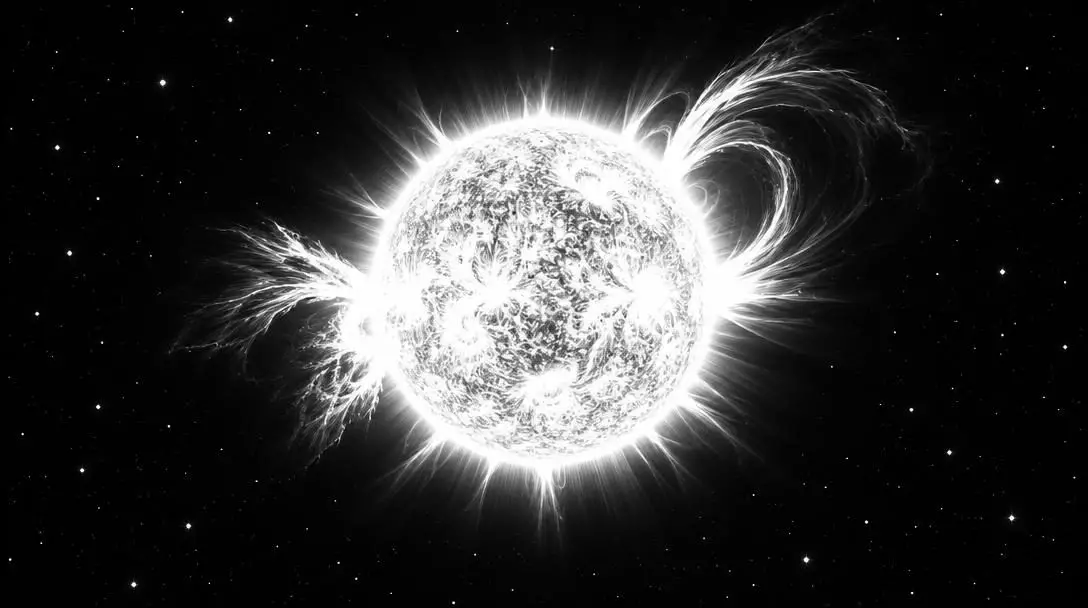
- True color: Pure white
- Apparent color on Earth: Yellow to orange
- Cause of color shift: Atmospheric scattering of blue and violet light
In almost every piece of popular media, children's drawing, and cultural reference, the sun is depicted as a yellow or orange sphere. In reality, the sun emits radiation across the entire visible spectrum. When photons from every visible wavelength—spanning reds, yellows, greens, blues, and violets—are emitted in balance, human vision perceives the combined stream as pure white light. The warm tint seen from the surface is an optical consequence of planetary physics rather than stellar output.
As sunlight strikes the gas molecules that make up Earth's atmosphere, high-frequency, shorter wavelengths of light—specifically blue and violet—are deflected and scattered in every direction. This scattering paints the daytime sky blue while permitting the longer, lower-frequency wavelengths—red, orange, and yellow—to travel directly to an observer's eyes. Outside this atmospheric blanket, astronauts in orbit gaze upon a dazzling white star set against a completely black sky.
Dwarf Planets Beyond Pluto
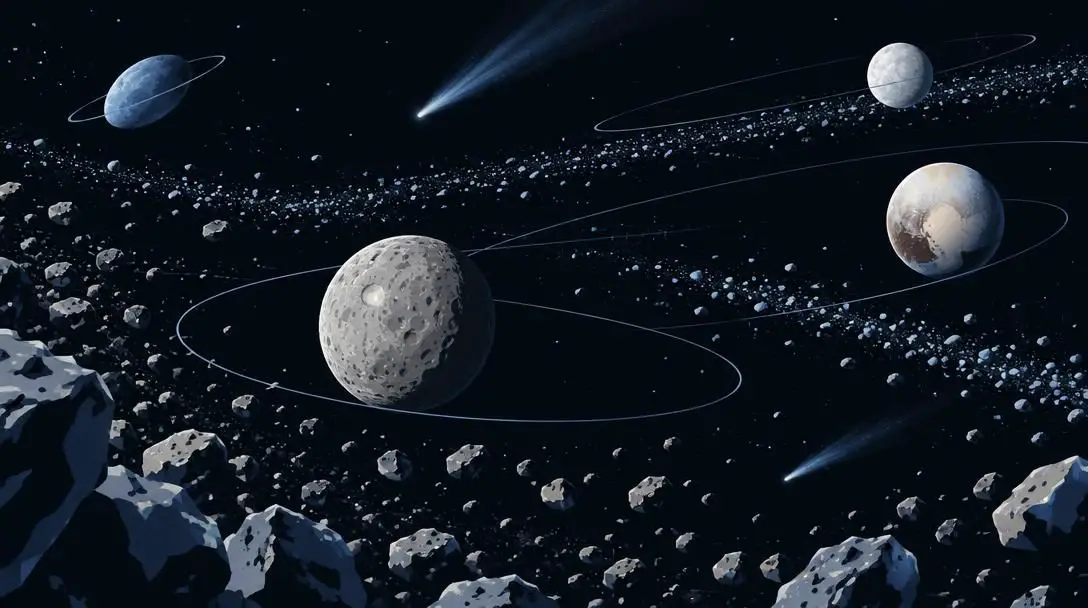
- Recognized members: Ceres, Pluto, Eris, Haumea, Makemake
- Location of Ceres: Main asteroid belt between Mars and Jupiter
- Defining traits: Spherical shape, solar orbit, uncleared orbital neighborhood
When astronomical authorities reclassified Pluto in 2006, public reaction often framed the decision as an arbitrary demotion of a beloved outlier. In truth, the designation of a dwarf planet represents a rigorous scientific standard. Under official planetary criteria, a dwarf planet must orbit the sun and possess enough self-gravity to compress itself into hydrostatic equilibrium—a roughly round shape—while failing to clear its surrounding orbital neighborhood of other debris and minor bodies.
Pluto is merely one member of an expansive club of small worlds. The solar system hosts several other confirmed dwarf planets, including Ceres, which resides in the asteroid belt between Mars and Jupiter, as well as distant trans-Neptunian bodies like Eris, Haumea, and Makemake. Each of these worlds meets the exact physical criteria of roundness while continuing to share its path with neighboring asteroidal or cometary material.
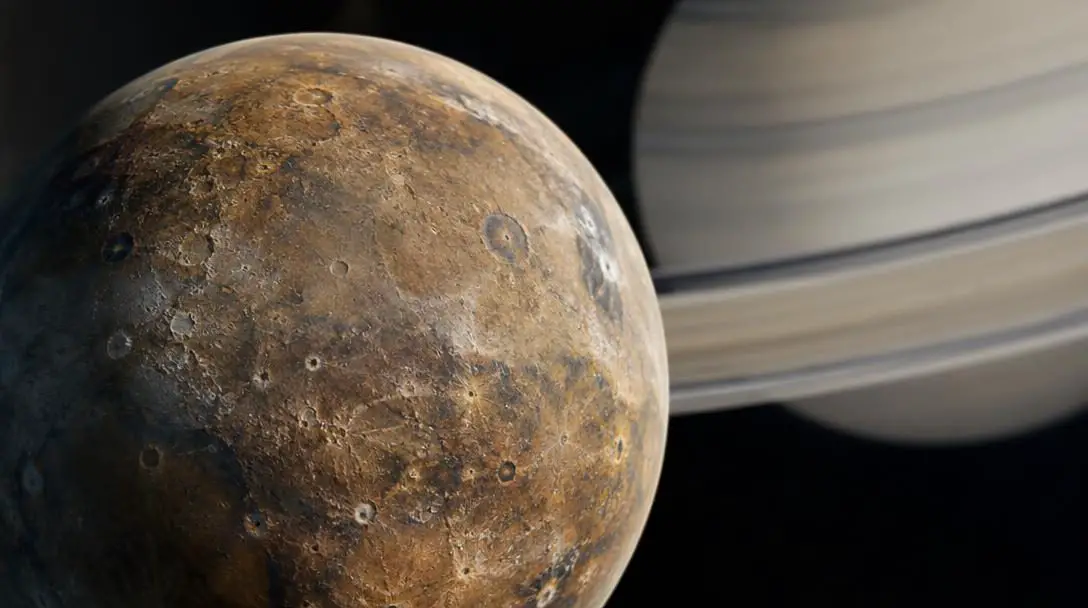
Astronaut Spacewalk Gear

- Reported scent: Charred barbecue meat and metallic welding fumes
- Root cause: Material off-gassing and vacuum chemical breakdown
- Location of detection: Pressurized airlocks following spacewalks
Because outer space is a nearly absolute vacuum containing no air to transport odor molecules to human olfactory receptors, common sense suggests space should be entirely odorless. While an astronaut can never breathe directly in the void, spaceflight provides an indirect sensory experience. Following extravehicular activities, astronauts returning to their spacecraft repeatedly report a striking, distinctive aroma permeating the airlock once pressure is restored.
This pungent scent—described consistently as a mixture of barbecue meat and welding fumes—arises from the harsh conditions of the void itself. When spacesuit fabrics, composite seals, and specialized metals are exposed directly to raw vacuum, the extreme environment causes microscopic degradation and chemical breakdown. Volatile compounds and gaseous residues cling to the suit fabrics and tools, releasing a sharp, acrid odor as soon as the airlock is repressurized.
Jupiter's Great Red Spot
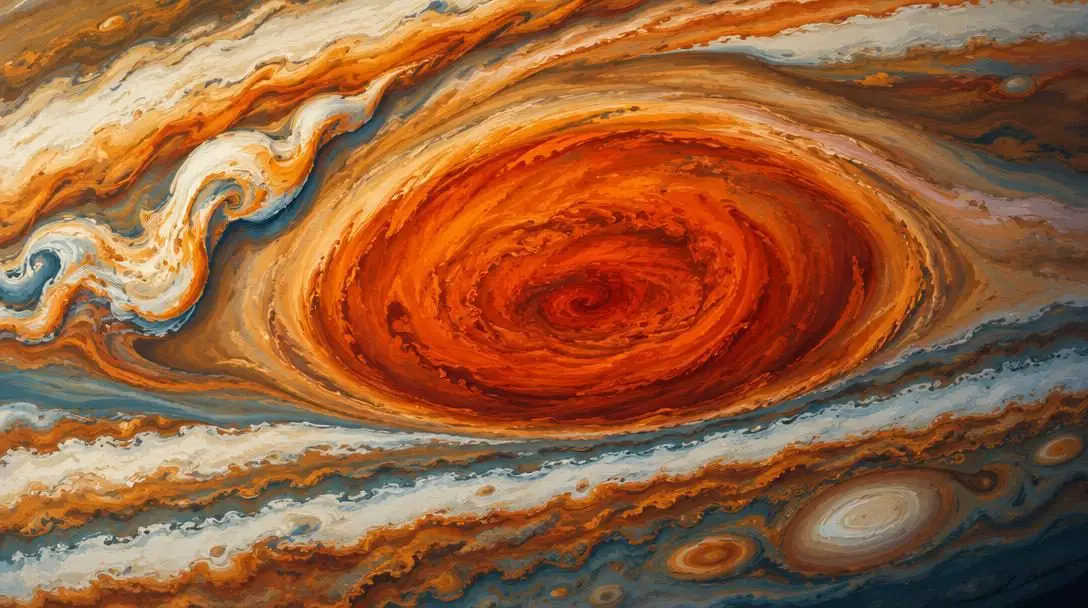
- Phenomenon type: High-pressure anticyclonic atmospheric storm
- Observed lifespan: More than 300 continuous years
- Physical scale: Exceeds the diameter of the entire Earth
Viewed through an amateur telescope, the banded disks of Jupiter present a mesmerizing display of atmospheric physics. Chief among its visual landmarks is the famous Great Red Spot, an oval feature nestled within the southern cloud belts. Popular imagination sometimes treats this spot as a solid landmark or a permanent planetary surface feature, but Jupiter has no solid exterior crust. The Great Red Spot is a colossal, churning atmospheric storm system.
This immense vortex has raged uninterrupted for more than three centuries, sustained by the violent, alternating jet streams of Jupiter's gas-dominated envelope. The scale of the storm is difficult to overstate: its swirling boundaries encompass an area larger than the entire planet Earth. Because of its tremendous size and long-lasting energy, the storm remains one of the few dynamic weather events in the solar system that can be tracked reliably with standard backyard optical equipment.
Jupiter's Great Red Spot is an atmospheric storm larger than our entire planet that has raged uninterrupted for more than three centuries.
Exoplanet 55 Cancri e
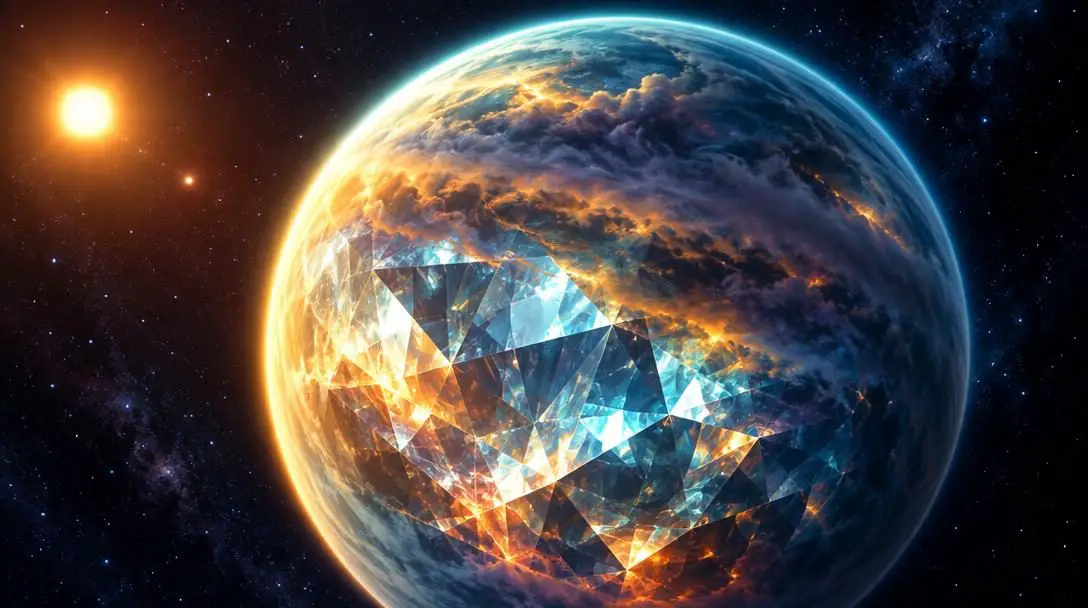
- Distance from Earth: Approximately 40 light-years
- Comparative diameter: Roughly twice the size of Earth
- Key constituent: At least one-third carbon
While our solar system provides countless marvels, venturing into extrasolar space reveals planetary architectures fundamentally different from our local planets. Located roughly 40 light-years away in the constellation Cancer, the exoplanet 55 Cancri e is a super-Earth with roughly twice our planet's physical diameter. Its bulk makeup, however, differs radically from the iron- and silicate-rich mantle of Earth.
Astrophysical observations indicate that carbon makes up at least one-third of the total mass of 55 Cancri e. Under the immense internal temperatures and gravitational crushing forces present within this dense, carbon-rich world, the carbon has converted into its high-pressure crystalline allotrope: diamond. Rather than rock, vast segments of this distant planet's interior are composed entirely of pure diamond material.
At a Glance: Comparing Five Surprising Cosmic Features
To contextualize these discoveries, the table below highlights how their locations, physical characteristics, and observable properties compare.
| Subject | Location | Primary Characteristic | Physical Cause |
|---|---|---|---|
| The Sun | Center of solar system | Pure white optical emission | Balanced radiation across all visible wavelengths |
| Dwarf Planets | Asteroid belt and outer solar system | Round worlds sharing orbital paths | Hydrostatic mass without clearing neighboring debris |
| Spacewalk Gear | Spacecraft airlocks in orbit | Aroma of barbecue and welding fumes | Vacuum breakdown of spacesuit materials |
| Great Red Spot | Jupiter's atmosphere | Storm system larger than Earth | Centuries-old atmospheric vortex in a gas envelope |
| 55 Cancri e | Extrasolar (40 light-years away) | Interior composed largely of diamond | Extreme heat and pressure acting on high carbon mass |
How to Explore These Space Wonders from Home
You do not need access to an orbital observatory to interact with the principles of planetary science. Amateur stargazers and curious observers can investigate several of these phenomena through methodical, safe observation techniques.
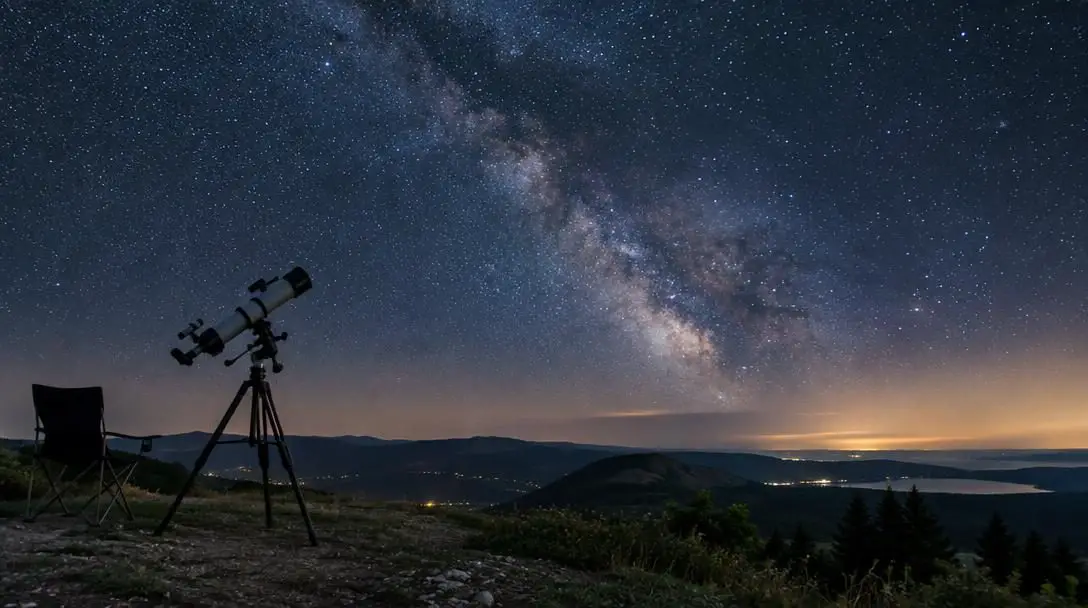
- Observe Jupiter's weather bands: Set up a standard consumer telescope with an aperture of at least four inches on a clear night. Focus on Jupiter to spot its alternating planetary stripes and time your viewing to witness the Great Red Spot traversing the disk.
- Project and separate solar spectra: Rather than viewing the sun directly, set up an enclosed projection box or aim a beam of indirect sunlight through a glass prism onto a sheet of white paper. The resulting rainbow confirms that sunlight contains all visible colors simultaneously.
- Track the positions of Ceres and Pluto: Download a reliable astronomical sky-mapping software or consult monthly ephemeris tables. Track Ceres as it drifts against the background stars of the asteroid belt to appreciate the presence of dwarf planets inside Jupiter's orbit.
- Review astronaut mission logs: Access public archives from space agencies to read first-hand astronaut accounts of extravehicular activities, noting their sensory observations regarding airlock odors and suit conditions.
- Catalog extrasolar discoveries: Explore public exoplanet archives tracking 55 Cancri e and related worlds to examine how mass, radius, and carbon abundance calculations are verified by modern astronomers.
Common Astronomical Misconceptions
Because the human brain naturally projects terrestrial conditions onto the cosmos, misconceptions about planetary science remain widespread. Being aware of these pitfalls sharpens your understanding of how the universe actually works.
- Believing the sun is naturally yellow: Many assume the sun is composed of yellow light because it looks yellow from the ground. Earth's atmosphere scatters the blue and violet light away; in space, the sun is unequivocally white.
- Treating Pluto as the only dwarf planet: It is a mistake to think dwarf planet was an ad-hoc category invented only for Pluto. Bodies like Ceres, Eris, Haumea, and Makemake illustrate that small, spherical, uncleared worlds are common.
- Assuming outer space is entirely scent-free: While vacuum cannot convey scent to a human nose, off-gassing and the chemical breakdown of exposed gear produce unmistakable burnt odors upon returning to pressurized air.
- Assuming the Great Red Spot is a stationary landmass: Some picture Jupiter's spot as a giant continent or impact crater. Jupiter is an enormous gas planet, and the spot is an active, spinning storm that has raged for over three centuries.
- Confusing the solar system with extrasolar territory: Hearing about the diamond composition of 55 Cancri e leads some to believe it circles our own sun. It is an exoplanet situated approximately 40 light-years away.
Unresolved Questions in Planetary Physics
Even as research illuminates these five phenomena, they continue to generate compelling scientific inquiries. On Jupiter, researchers still seek to identify the precise internal energy sources that feed the Great Red Spot, allowing an anticyclonic storm to endure for hundreds of years without exhausting its momentum.
In the outer boundaries of the solar system, discovering the full census of dwarf planets remains an ongoing task. Because objects like Eris and Makemake are so distant, measuring their exact orbital perturbations helps scientists understand how early planetary migrations shifted matter throughout the Kuiper Belt.
Finally, worlds like 55 Cancri e prompt ongoing reassessments of planetary formation models. Determining how a planet acquires a mass that is one-third carbon challenges existing models based on our solar system's silicate-heavy chemistry. Studying these distant worlds expands our understanding of the diverse outcomes possible across planetary systems.
Frequently asked questions
Why does the sun appear yellow if its true light is white?
Earth's atmosphere causes Rayleigh scattering, which deflects shorter wavelengths of light, specifically blue and violet, in all directions. The longer wavelengths—yellow, orange, and red—pass through the air more directly to reach your eyes, giving the sun its familiar golden hue from the ground.
What criteria prevent Pluto and Ceres from being classified as full planets?
While both bodies orbit the sun and have enough mass to form a round shape through hydrostatic equilibrium, neither has cleared its surrounding orbital neighborhood of other debris. Ceres shares its zone with the asteroid belt, while Pluto travels among Kuiper Belt objects.
How can astronauts smell space if a vacuum contains no air?
Astronauts do not smell the vacuum directly during a spacewalk. Instead, the intense conditions of the vacuum cause the materials on the exterior of their suits to break down and off-gas. When they re-enter the pressurized airlock, these lingering volatile compounds become airborne, producing an aroma resembling charred barbecue and welding fumes.
Is Jupiter's Great Red Spot shrinking or slowing down?
Scientific observations show that the Great Red Spot is a dynamic, evolving vortex that has endured for more than 300 years. While its exact dimensions, color intensity, and energy intake fluctuate over time, it remains larger than Earth and continues to dominate Jupiter's southern hemisphere.
Could a diamond planet like 55 Cancri e ever exist in our solar system?
Our solar system formed from a primordial nebula rich in silicates, oxygen, and iron, leading to rocky worlds like Earth and Mars. The super-Earth 55 Cancri e formed in a carbon-rich stellar system, allowing its high interior pressures and temperatures to crystallize carbon into abundant diamond structures.
The bottom line
Examining the true nature of our solar system and the exoplanets beyond reveals a universe far more imaginative than the diagrams in early science textbooks. The real cosmos features white stars disguised by planetary skies, enduring storms that dwarf whole worlds, pungent chemical reactions sparked by the void, and diamond-rich planets orbiting distant stars. As observational tools advance, what we take for granted about space will continue to evolve, replacing simplistic assumptions with the intricate reality of astrophysical science.