5 Surprising Facts About the Universe That Will Blow Your Mind
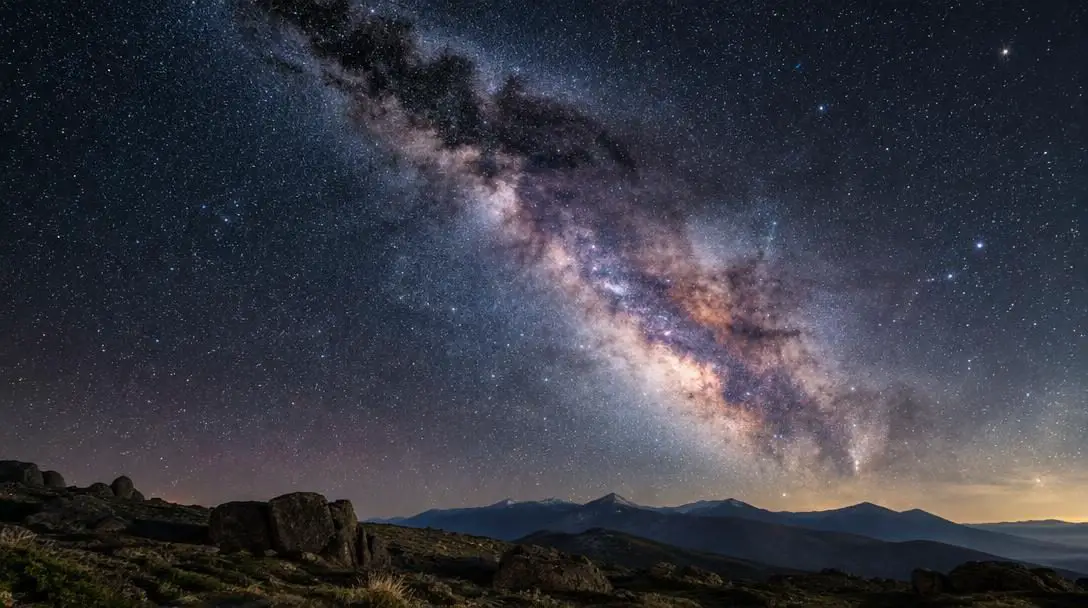
For centuries, stargazers and researchers have looked up at the night sky to decipher the history of creation, the nature of matter, and our place within the grand design. While early observers viewed the heavens as a static and unchanging canopy, modern astrophysics and observational astronomy have revealed an energetic cosmos filled with phenomena that challenge everyday human intuition.
From the counterintuitive truth that empty space is packed with lingering radiation to the discovery that time itself stretches and contracts depending on local gravity, contemporary science continues to overturn long-held assumptions. Examining these foundational breakthroughs reveals how much researchers have uncovered about the timeline of existence, while also highlighting the profound questions that remain unanswered.
Key takeaways
- The expansion of space is continually accelerating, creating a dynamic trajectory that could eventually conclude in a catastrophic Big Rip.
- Planetary systems are so abundant throughout stellar nurseries that planets outnumber stars across the Milky Way.
- Visible matter accounts for only a minute sliver of the cosmos, with mysterious dark matter and dark energy comprising the vast majority.
- Space is not a dead void of absolute zero; it carries a distinct, measurable thermal glow left behind by the early universe.
- Time does not flow at an identical pace everywhere, as gravitational forces and relative motion actively warp the passage of seconds and hours.
Five mind-bending realities of the modern cosmos
Astronomical discoveries over the past century have fundamentally altered the standard model of physics. What once seemed like a quiet, clockwork environment governed by simple gravitational orbits is now recognized as a restless, expanding landscape. Below are five of the most startling facts uncovered by cosmological research.
The universe is expanding faster than we thought
One of the most profound shifts in modern science centers on the rate at which the cosmos grows. For generations, traditional physics held that the mutual gravitational attraction exerted by all the galaxies in existence would gradually slow down the expansion initiated at the beginning of cosmic time. However, precise observational evidence has overturned that expectation, proving that the expansion rate is actively accelerating rather than decelerating.
The prevailing scientific framework for cosmic origins, the Big Bang theory, indicates that the universe began expanding approximately 13.8 billion years ago. While this initial explosive expansion propelled all matter and radiation outward, scientists discovered that the rate of spatial stretching has picked up speed. Rather than coasting, space is being pulled apart at an ever-faster pace. This accelerating trajectory suggests extreme cosmic scenarios for the distant future, including the possibility of a Big Rip, an outcome in which the expansion becomes so violent and overwhelming that it tears apart galaxies, stars, planets, and even fundamental subatomic particles.
There are more planets than stars in the Milky Way
When observing the night sky, it is natural to imagine our galaxy as an endless sea of stars punctuated only occasionally by solitary planets. For much of human history, astronomers had no proof that planets existed outside our immediate solar neighborhood, leading many to suspect that planetary systems might be rare cosmic flukes. Groundbreaking observations have thoroughly upended this view: researchers now know that there are actually more planets in the Milky Way than there are stars.
This immense abundance stems directly from how stellar systems develop. Stars ignite inside massive stellar nurseries surrounded by swirling disks of leftover gas and cosmic dust. Over millions of years, gravity pulls this debris together through aggregation, creating multiple worlds around a single central host. Because a solitary protoplanetary disk routinely yields several rocky worlds, gas giants, or icy bodies, planetary creation outpaces stellar creation. Scientists estimate that billions of worlds populate our home galaxy alone, fundamentally transforming astrobiology and fueling the systematic search for extraterrestrial environments that may support life.
The universe is mostly made up of dark matter and dark energy
Every glowing nebula, blazing star, asteroid, and luminous galaxy visible across the night sky makes up only a minuscule fraction of the physical universe. Everything human beings can see, touch, or detect with conventional optical and radio instruments represents a tiny sliver of reality. The overwhelming bulk of the cosmos is composed of dark matter and dark energy, two invisible components that do not emit, reflect, or absorb light.
Although scientists cannot observe them directly, their cosmic influence is unmistakable:
- Dark matter: This unseen substance provides the gravitational scaffolding necessary for cosmic structures. Its invisible mass generates the gravitational pull required to keep rapidly rotating galaxies from flying apart, while simultaneously drawing early gas clouds into immense cosmic filaments.
- Dark energy: Acting as a repulsive counterweight to gravity on cosmic scales, dark energy is embedded within space itself and drives the accelerating expansion of the entire universe.
Despite decades of rigorous research, the fundamental physical properties of both dark matter and dark energy remain among the greatest unsolved puzzles in modern science.
Everything we can see, touch, or interact with directly represents just a tiny sliver of the actual cosmos.
The universe has a measurable temperature
The vast expanses between galaxies are often characterized as a lifeless, frozen abyss devoid of all thermal activity. In truth, empty space is neither inactive nor sitting at absolute zero; the cosmos possesses a measurable thermal baseline that blankets every corner of the sky. This pervasive warmth is known as cosmic microwave background radiation.
Cosmic microwave background radiation serves as an ancient thermal relic from the earliest epoch of the universe. In the immediate aftermath of the Big Bang, the cosmos existed as an extraordinarily dense, hot, and opaque plasma. As space expanded and cooled over billions of years, the intense electromagnetic radiation trapped within that primordial fog was stretched into the microwave portion of the spectrum. Today, specialized telescopes can detect this faint glow. Mapping its subtle temperature variations provides researchers with invaluable insight into how initial density fluctuations eventually condensed into the massive cosmic web of galaxies observed today.
Time passes differently depending on where you are
Everyday human experience treats time as an absolute, unwavering constant that advances at an identical rhythm everywhere in existence. Yet according to Einstein’s theory of relativity, time passes at varying rates depending on local physical conditions, a reality known as time dilation. Because the speed of light remains constant across all reference frames, space and time warp to accommodate motion and mass.
Gravitational fields exert a profound influence on the passage of time: the closer an observer is to a massive celestial object like a star or planet, the slower time elapses for them relative to an observer stationed farther away in a weaker gravitational field. Similarly, traveling at high velocities causes time to slow down relative to a stationary counterpart. If an astronaut were to embark on a high-speed round-trip journey to a distant star, far less time would pass for the traveler than for the people remaining behind on Earth. This flexibility in temporal progression demonstrates that cosmic time is not a uniform background clock, but a flexible dimension woven into the fabric of spacetime.
At a glance: Key attributes of the five cosmic discoveries
Understanding these distinct astronomical phenomena helps illustrate how the universe operates across microscopic and macroscopic scales. The table below outlines how each discovery functions and why it matters to modern science.
| Cosmic Discovery | Primary Mechanism | Observational Evidence | Scientific Significance |
|---|---|---|---|
| Accelerating Expansion | Dark energy overcoming gravitational pull | Receding distant galaxies | Points to a potential Big Rip scenario |
| Planetary Abundance | Gravitational accretion within protoplanetary disks | Atmospheric and orbital detections | Confirms billions of worlds in the Milky Way |
| Dark Matter Dominance | Invisible mass exerting gravitational attraction | Galactic rotational velocities and structure | Explains how galaxies assemble and stay bound |
| Cosmic Temperature | Stretched primordial radiation from early plasma | Cosmic microwave background radiation | Confirms the cooling history of the Big Bang |
| Gravitational Time Dilation | Warping of spacetime by mass and velocity | Relativistic clock shifts near massive bodies | Proves time is flexible rather than absolute |
How our view of the cosmos shifted
For millennia, human cosmology rested on naked-eye observations of the night sky. Ancient and medieval models largely assumed that the universe was static, finite, and fundamentally anchored around the Earth. Even after early telescopic astronomy proved that planets orbit stars, the cosmos was widely presumed to be eternal and unyielding, with celestial mechanics running like a predictable mechanical clock.
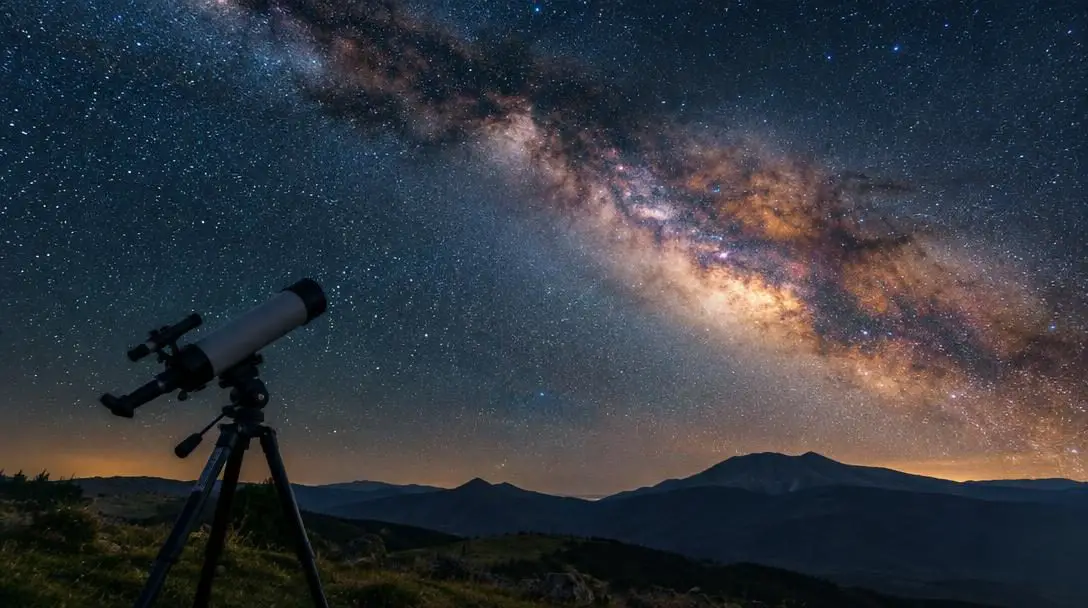
The transformation into our modern understanding required two critical scientific developments: advanced observational equipment capable of detecting non-visible light, and Einstein's relativistic physics. By measuring the physical properties of distant stars and comparing the age of celestial bodies, astronomers dismantled the concept of a static cosmos. Scientists determined that the universe started expanding around 13.8 billion years ago, whereas the Earth formed much later, roughly 4.5 billion years ago. Recognizing that the cosmos existed for more than nine billion years before our planet coalesced made it clear that the universe is dynamic, continuously aging, and governed by evolving physical conditions.
How the mechanisms connect
None of these five astronomical facts exists in isolation. Rather, they are interconnected outcomes governed by foundational physical laws established during the earliest moments of creation.
The sequence began with the initial expansion 13.8 billion years ago. As the superheated plasma expanded and cooled, it produced the faint thermal relic now detected as cosmic microwave background radiation. During this cooling phase, invisible dark matter gathered into dense gravitational networks, creating the physical wells required for ordinary gas to collapse into stars and galaxies.
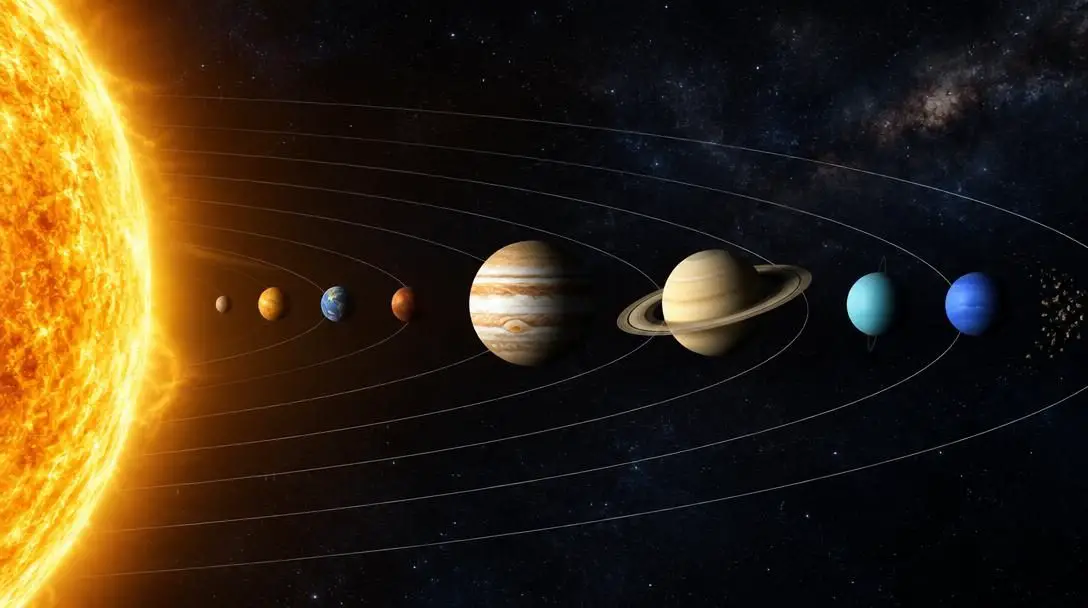
Within these newly formed galaxies, such as the Milky Way, protoplanetary disks of dust and gas orbited young stars. Gravitational aggregation produced multiple planets around these stellar hosts, yielding a galactic landscape where worlds outnumber the stars that anchor them. Meanwhile, across vast intergalactic voids, dark energy began asserting its repulsive influence, driving the accelerated expansion that continues to push galactic clusters apart. Binding all of these events together is the geometry of spacetime, where the mass of stars and planets creates localized gravitational fields that cause time to tick at distinctly different rates throughout the cosmos.
Practical steps for exploring astronomy as a general reader
While concepts like dark energy and gravitational time dilation can seem abstract, anyone can cultivate a meaningful connection to observational astronomy. Engaging directly with the night sky bridges the gap between theoretical physics and personal experience.
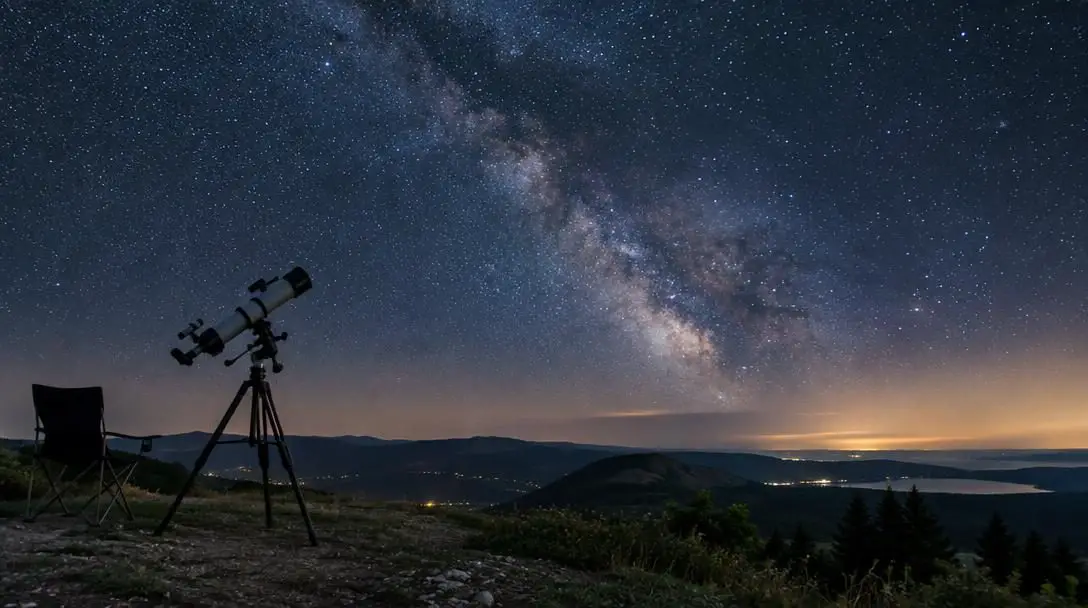
- Begin with naked-eye skywatching: Step outside on clear, moonless nights away from urban light pollution to locate major constellations, track visible planets, and trace the glowing ribbon of the Milky Way.
- Invest in basic optical equipment: Start with quality binoculars or an entry-level amateur telescope to inspect lunar craters, the brighter moons of Jupiter, and nearby stellar clusters before attempting advanced imaging.
- Follow active astronomical discoveries: Monitor research releases from orbital observatories and planetary survey teams to stay current on newly detected exoplanets and atmospheric analyses across the Milky Way.
- Engage with educational outreach programs: Visit local planetariums, university observatories, and amateur astronomy clubs to attend guided viewing nights and seminars exploring dark matter and cosmic expansion.
Common misconceptions to avoid
Because the physical conditions of the universe operate far beyond human intuition, everyday assumptions frequently distort scientific realities. Keeping these key distinctions in mind will help avoid common conceptual errors:
- Equating the age of Earth with the universe: The universe began roughly 13.8 billion years ago, while our solar system and the Earth formed approximately 4.5 billion years ago. Countless cosmic generations of stars lived and died before our planet existed.
- Assuming outer space has zero temperature: Space is not sitting at absolute zero. The lingering cosmic microwave background radiation maintains a detectable thermal signature throughout the void.
- Confusing dark matter with dark energy: While both are invisible and poorly understood, they exert opposing influences. Dark matter pulls matter together gravitationally to build galaxies, whereas dark energy pushes spacetime apart to accelerate expansion.
- Believing time flows identically everywhere: Time is relative rather than universal. Gravitational mass and relative velocity alter the rate at which time passes across different environments.
- Assuming stars are more numerous than planets: Because a single star typically forms alongside a debris disk capable of creating multiple planetary bodies, planets outnumber stars within our galaxy.
Frequently asked questions
What will happen if the universe continues expanding faster?
If the accelerating expansion driven by dark energy continues unchecked, it could eventually lead to a theoretical outcome called the Big Rip. In this scenario, the expansion rate becomes so extreme that it overwhelms the fundamental forces holding matter together, progressively pulling apart galaxy clusters, individual stars, planetary bodies, and ultimately molecular and atomic bonds.
How can planets outnumber stars in the Milky Way?
Planets form from the broad disks of gas and dust that remain in orbit around newly ignited stars. Because a single protoplanetary disk routinely contains enough material to produce several rocky and gaseous worlds, individual stars frequently host multi-planet systems, resulting in billions more planets than stars across the galaxy.
Why is cosmic microwave background radiation so important?
Cosmic microwave background radiation represents the oldest light detectable in the universe, originating from the hot, dense plasma that filled space shortly after the Big Bang. Studying its faint variations confirms that the early universe expanded and cooled, while also revealing the early seeds that later grew into large-scale galaxies.
Does time dilation affect everyday life on Earth?
Time dilation occurs continuously, but its effects at human speeds and in Earth's relatively mild gravitational field are extraordinarily tiny. However, high-precision technologies such as GPS satellites must actively correct their internal clocks for relativistic time shifts to deliver accurate location data on the surface.
What is the difference between dark matter and ordinary matter?
Ordinary matter consists of atoms and particles that interact with the electromagnetic spectrum, meaning it can absorb, reflect, and emit light that telescopes can detect. Dark matter exerts gravitational pull on visible structures, but does not interact with light or other electromagnetic radiation, making it completely invisible to direct observation.
The bottom line
The cosmos is far stranger and more dynamic than human intuition suggests. By peering through specialized telescopes and applying theoretical physics, researchers have revealed a reality where time warps around massive objects, invisible forces govern galactic structures, and billions of planetary worlds drift through our home galaxy. Appreciating that the universe began 13.8 billion years ago—long before the Earth formed roughly 4.5 billion years ago—places human existence into perspective, reminding us that we inhabit an evolving universe whose deepest secrets are still waiting to be unraveled.