5 Things You Need To Know Before You Start Your Own Coral Reef Tank
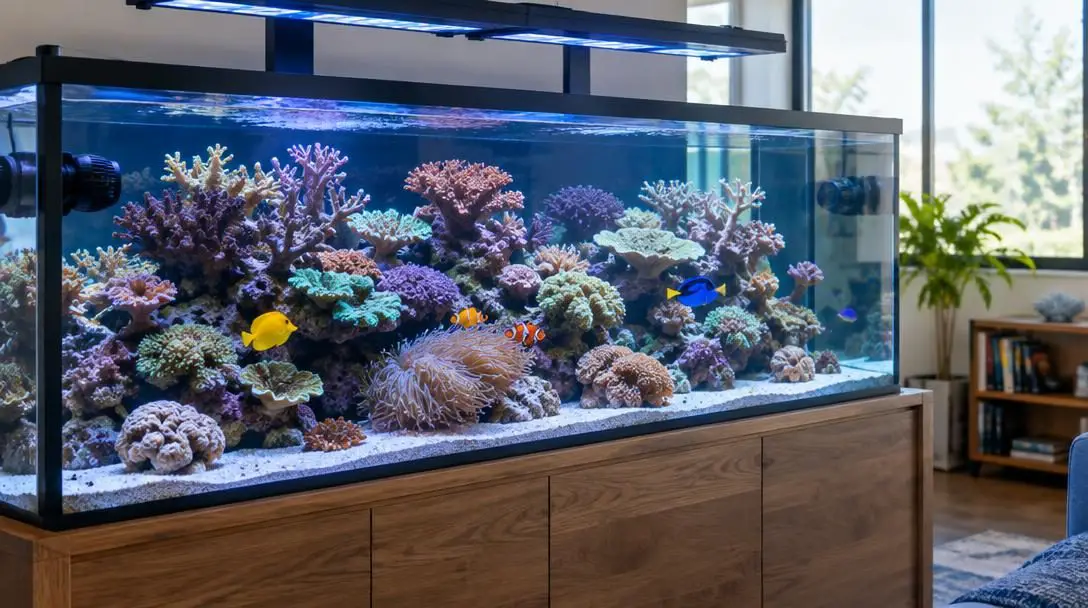
There was a time not so long ago when the idea of keeping a living coral reef inside an everyday home was virtually unimaginable. Natural marine habitats were viewed as fragile, hyper-specialized ecosystems that could never survive the limitations of a living room or den. Today, notable advances in aquatic technology have transformed marine husbandry, making an at-home reef tank not only achievable but remarkably practical for committed hobbyists.
Yet despite these modern conveniences, building a miniature ocean is not a project you can assemble on a whim in an afternoon. Operating a captive reef requires patience, structural preparation, and an understanding of biological equilibrium. It is an undertaking far more sophisticated than keeping a goldfish in a glass bowl, requiring caretakers to orchestrate water flow, chemical balances, microbial colonies, and species dynamics into a stable living habitat.
Key takeaways
- Larger aquariums provide greater chemical stability because higher water volume dilutes sudden shifts in salinity and dissolved compounds.
- Healthy calcification in corals requires maintaining water parameters near 10 dKH alkalinity, 400 ppm calcium, and 1,300 ppm magnesium at a steady 75 to 80 degrees Fahrenheit.
- Multi-stage filtration, protein skimming, and active powerheads work together to remove organic waste and deliver nutrients to stationary corals.
- Live rock formations with caves and overhangs are essential for providing fish with territory, reducing stress, and fostering beneficial biological processes.
- Stocking must happen gradually, prioritizing reef-safe species such as clownfish, gobies, and compatible angelfish or surgeonfish that will not pick at coral tissue.
Five Essential Fundamentals for Every New Reef Keeper
Before purchasing saltwater equipment or bringing home livestock, every prospective aquarist must examine the mechanical, chemical, and biological pillars that uphold a captive marine environment. Overlooking any single facet can trigger a cascade of instability throughout the entire system.
1. Strategic Location and Aquarium Size
Determining the final placement of your aquarium is the foundational step in the planning process. Marine setups are exceptionally heavy, requiring level, sturdy flooring that can safely bear the combined load of dense glass, saltwater, sand, and rockwork. You must also allow ample physical clearance around the perimeter of the tank and stand to accommodate electrical cords, plumbing lines, filter access, and routine bucket changes.
Carefully measuring your chosen floor plan dictates the maximum aquarium footprint you can support. While beginners often assume that smaller tanks are simpler to manage, larger water volume offers superior chemical stability. Greater volumes dilute metabolic waste and accidental overdoses, ensuring that environmental parameters do not fluctuate abruptly. Choosing the largest tank your room and budget can realistically accommodate provides a vital margin of error during your learning curve.
2. Filtration Hardware and Continuous Flow
Maintaining pristine water quality is non-negotiable when cultivating photosynthetic corals alongside active marine animals. Modern reef keepers rely on an array of mechanical, chemical, and biological equipment to trap debris, process fish waste, and aerate the water column.
Novice hobbyists frequently begin with a standard power filter, which hangs directly on the back of the tank to provide convenient mechanical straining and media containment. Advanced installations often incorporate pressurized canister filters for multi-stage cleaning or trickle filters that expose flowing water to oxygen-rich atmospheric air. Alongside your main filter, a protein skimmer is an indispensable device that uses micro-bubbles to physically strip dissolved proteins and organic compounds from the water before they can decompose.
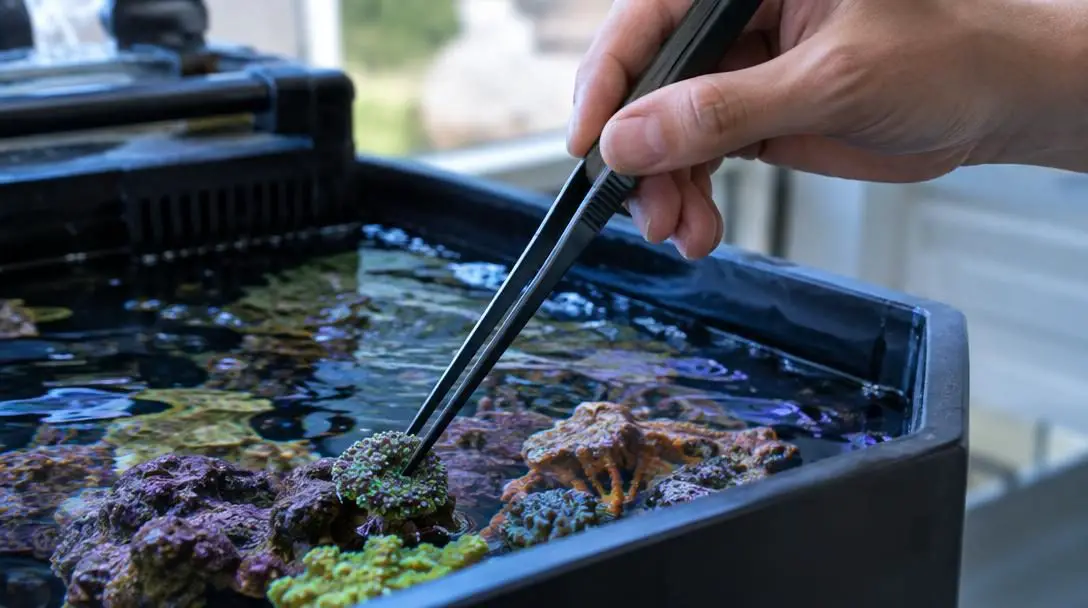
Corals are sessile organisms that cannot move to find food or shed waste. Installing dedicated powerheads guarantees constant, multi-directional circulation, transporting trace nutrients across living polyps while preventing detritus from settling into stagnant dead zones on the tank floor.
3. Water Chemistry and Thermal Stability
Successful reefkeeping depends on continuous water testing and disciplined chemistry management. Unlike resilient freshwater species, marine corals rely on narrow dissolved mineral bands to sustain cellular function and build their rigid skeletal matrix.
Testing kits may seem intimidating initially, but maintaining three core values will ensure your corals thrive: carbonate alkalinity must hover around 10 dKH, dissolved calcium should measure approximately 400 ppm, and magnesium needs to stay near 1,300 ppm. Working in concert, these elements stabilize pH and facilitate steady calcification. Thermal consistency is equally critical; water temperature should remain stable at a constant setting between 75 and 80 degrees Fahrenheit to prevent thermal shock in delicate corals and tropical fish.
| Water Parameter | Recommended Target | Primary Function | Impact on System Health |
|---|---|---|---|
| Carbonate Alkalinity | Around 10 dKH | Buffers water pH and supplies building blocks | Prevents dangerous acid swings and aids calcification |
| Dissolved Calcium | 400 ppm | Direct component of coral skeleton growth | Supports sustained tissue expansion and stony skeleton strength |
| Magnesium Level | 1,300 ppm | Regulates calcium and carbonate precipitation | Maintains chemical equilibrium so minerals remain bioavailable |
| Water Temperature | 75 to 80°F | Provides consistent metabolic climate | Prevents thermal stress, tissue bleaching, and disease susceptibility |
4. Live Rock Architecture and Substrate Foundations
Live rock is far more than an ornamental backdrop; it serves as the primary biological and structural anchor of the entire aquarium. Highly porous rock houses vast surface areas for beneficial biological colonization, helping your system naturally process dissolved metabolic byproducts.
When engineering your rock structure, assemble shapes that create generous caves, overhangs, and swim-through channels. Marine fish establish rigid territories, and distinct species naturally seek specific rock crevices to mark their ground. Ample architectural shelter gives subordinate fish a retreat from aggressive tankmates, drastically lowering chronic stress and offering a safe, darkened refuge to rest once aquarium lighting powers down. Similarly, the substrate chosen for the tank bottom directly impacts overall water quality, acting as a settling bed for beneficial biological activity.
5. Thoughtful Selection of Reef-Safe Fish
The final step in establishing a balanced system is curating a livestock roster that can coexist peacefully with both your corals and each other. The dazzling colors on display at marine shops can easily prompt impulse purchases, but not every vibrant specimen is suitable for an artificial reef community.
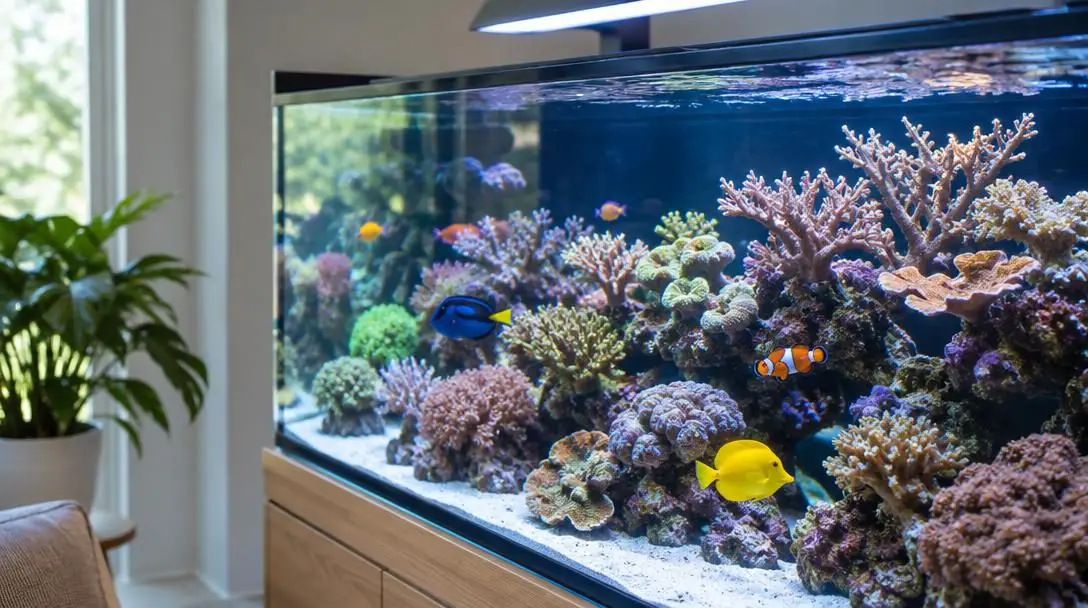
Certain species view fleshy coral polyps as food, while others exhibit hyper-aggressive territorial behavior in confined quarters. Proven candidates for reef environments include peaceful gobies that sift bottom zones, classic clownfish that populate mid-water structures, and carefully selected angelfish and surgeonfish that add kinetic energy to open swim lanes. Combining species with contrasting coloration, feeding habits, and swim depths produces a dynamic, multidimensional display under specialized reef lighting.
A living coral reef functions as a delicate biological engine where water movement, chemical balance, and rock architecture work in complete harmony.
Inside the Captive Ecosystem: How a Closed-Loop Reef Functions
A natural ocean reef benefits from billions of gallons of continuous oceanic currents that endlessly replenish clean water, flush particulate matter, and bring fresh nutrients. By contrast, a home aquarium is a sealed, closed-loop biological engine. Every process occurring inside the glass must be supported by physical equipment and cultivated biological media.
- Nutrient Cycling: Residual food particles and animal excretions introduce organic waste into the system. The porous network within your live rock and substrate houses beneficial cultures that continuously process these compounds into safer forms.
- Mechanical Separation: Power filters, trickle assemblies, and canister media strain physical debris from suspension. Removing free-floating detritus keeps water transparent so your lighting can penetrate deeply to feed photosynthetic corals.
- Organic Extraction: Protein skimmers use microscopic bubbles to attract and trap dissolved waste oils and organic proteins before they rot inside the system, removing strain from mechanical filters.
- Active Circulation: Constant powerhead propulsion drives gas exchange at the water's surface, circulates essential minerals past coral tentacles, and sweeps waste off living tissue.
- Mineral Consumption: Rapidly growing corals extract calcium, carbonate alkalinity, and magnesium continuously, requiring dedicated monitoring and manual replenishment from the aquarist.
Step-by-Step Sequence for Setting Up Your System
Rushing the physical construction or livestock addition of an aquarium invites instability, algae blooms, and animal mortality. Follow this orderly setup workflow to build a resilient marine environment from the ground up:
- Measure and Prepare the Placement Area: Verify that your flooring is structurally level and capable of holding the dense weight of the filled system. Ensure sufficient rear clearance for filter boxes, skimmers, and electrical wiring.
- Assemble and Mount All Hardware: Set the aquarium securely onto its stand. Install your chosen mechanical filter, mount internal powerheads to ensure balanced flow patterns, and install the protein skimmer.
- Arrange Substrate and Live Rock: Spread your substrate evenly across the base of the tank. Carefully stack your live rock to form stable, interlocked arches, caves, and overhangs that provide sheltering zones for fish.
- Fill, Mix, and Balance Water: Add prepared saltwater into the tank and allow heaters to stabilize the water between 75 and 80 degrees Fahrenheit. Test and adjust parameters to read approximately 10 dKH alkalinity, 400 ppm calcium, and 1,300 ppm magnesium.
- Power On and Test Systems: Run all filtration components, powerheads, and protein skimmers. Inspect the entire system for plumbing leaks, confirm steady water movement across the rockwork, and verify that temperature stays uniform.
- Stock Livestock Gradually: Once your water parameters are stable and the habitat has cycled, begin introducing your fish slowly. Introduce hardy foundational species like clownfish or gobies first, allowing your biological filtration to adapt before adding surgeonfish or angelfish.
Preventable Mistakes That Derail Beginner Tanks
Because maintaining a coral ecosystem is vastly more complex than standard freshwater fishkeeping, novice reef keepers often stumble into predictable traps. Avoiding these common mistakes will save time, protect your financial investment, and preserve your livestock:
- Underestimating Space and Access Needs: Squeezing an aquarium into a tight corner makes reaching filter cartridges or conducting siphon cleanings miserable, leading to neglected maintenance habits.
- Neglecting Water Movement: Relying solely on low filter returns creates stagnant dead spots. Without a dedicated powerhead, detritus settles on rock surfaces, suffocating delicate coral tissue.
- Guessing Water Parameters: Visual assessments cannot reveal chemical depletion. Neglecting regular test kits for alkalinity, calcium, and magnesium causes coral skeletal growth to stall abruptly.
- Adding Incompatible or Aggressive Fish: Stocking fish without researching their temperament leads to coral nipping and relentless territorial bullying in the open water column.
- Building Sparse or Unstable Rockwork: Using flat, featureless rocks without swim-through caves forces territorial fish into constant conflict, escalating chronic stress and illness.
Frequently asked questions
Why is a larger aquarium better for beginners than a small tank?
Larger aquariums hold a greater volume of water, which creates a natural dilution buffer. If a chemical shift, equipment malfunction, or waste spike occurs, the change happens far more gradually in a large volume of water, giving you ample time to identify and correct the issue before corals or fish suffer.
What are the most critical chemical parameters to monitor in a reef tank?
You must regularly test carbonate alkalinity, calcium, and magnesium. Keep alkalinity near 10 dKH, calcium around 400 ppm, and magnesium at approximately 1,300 ppm. Sustaining these values alongside a steady water temperature between 75 and 80 degrees Fahrenheit enables corals to construct their stony skeletons.
What role does a protein skimmer play alongside a normal filter?
While mechanical power filters or canister filters trap loose suspended particles, a protein skimmer uses microscopic air bubbles to bind with dissolved organic proteins and oils. It pulls these compounds out of the water column before they can break down into toxic waste, dramatically lightening the burden on your primary filtration.
Why do marine fish require caves and overhangs in the rockwork?
Marine fish are naturally territorial animals that rely on physical boundaries to feel secure. Incorporating caves, arches, and crevices gives fish distinct zones to claim as their own territory, lowers social stress, and provides a darkened, protected spot to sleep when aquarium lights are extinguished.
Which fish species are recommended for a new coral aquarium?
Hardy, reef-safe options such as clownfish and gobies are ideal starting choices because they adapt well and leave coral tissue alone. Once the ecosystem matures and parameters remain stable, compatible surgeonfish and carefully selected reef-safe angelfish can be introduced to add activity and color across different swimming levels.
The bottom line
Caring for an at-home coral reef tank is an exceptionally rewarding endeavor that merges biology, chemistry, and environmental design. What was once deemed impossible for the average hobbyist has become an attainable reality thanks to reliable filtration gear, effective protein skimmers, and precise testing tools. By securing adequate space, engineering generous rock shelters, maintaining strict water chemistry, and choosing compatible fish, you establish a resilient foundation for years of dynamic ocean life right inside your home.