
5 Tips For Improving Your Internet Connection – Without Paying More Per Month

Modern households depend on a reliable internet connection for everything from remote employment and digital classrooms to streaming entertainment and daily communication. When web pages fail to load promptly or video playback constantly pauses to buffer, the immediate reaction is often frustration directed at the internet service provider. Many consumers assume their current subscription package is simply too slow for their household's needs, leading them to consider paying for a higher, more expensive service tier.
Before committing to an inflated monthly bill or signing an inflexible multi-year contract, it is essential to understand that local network bottlenecks are rarely solved by throwing money at higher bandwidth packages. The physical placement of your equipment, the configuration of wireless frequencies, the age of your hardware, and the digital health of individual household devices all dictate your everyday connection speeds. By taking practical steps to optimize your existing home setup, you can eliminate sluggish performance without spending extra money each month.
Key takeaways
- Elevating your wireless router and placing it in a central, unobstructed location significantly improves overall signal dispersion.
- Modems advance rapidly and should be reviewed or updated every two to four years to keep pace with contemporary data demands.
- Assigning high-demand hardware like gaming consoles to the 5 GHz frequency band helps avoid local wireless congestion.
- Exceeding monthly data allowances can trigger severe provider throttling, which mimics hardware or network failure.
- Running regular antimalware scans on all connected computers, tablets, and phones prevents malicious programs from consuming background bandwidth.
How Home Networking Infrastructure Operates
To diagnose and fix performance bottlenecks without recurring expenses, it helps to understand how data moves through your living space. A standard home network relies on two core hardware components: the modem and the wireless router. Although some internet service providers supply a single physical box that merges both units, each piece of hardware fulfills an entirely different operational role.
The modem acts as the digital gateway between your home and your internet service provider's external network. It receives incoming analog signals from outside cables or fiber lines and converts them into digital data that consumer electronics can understand. The wireless router takes that converted digital data and broadcasts it wirelessly throughout your home, or distributes it directly via physical cables to connected equipment such as desktop computers, laptops, gaming consoles, and streaming media players.
Once your router transmits data wirelessly, that connection is subject to the physical properties of radio frequencies. Home Wi-Fi operates over designated radio frequency bands, primarily 2.4 GHz and 5 GHz, which are further divided into individual channels. Much like acoustic sound waves, wireless radio signals lose strength over physical distance and weaken when passing through structural barriers like concrete, drywall, metal beams, and heavy furniture. Signal interference from electronic appliances and neighboring wireless networks can also degrade performance, which is why optimizing your physical environment can produce immediate improvements.
Throwing money at an upgraded subscription plan rarely resolves a sluggish internet connection when local hardware placement and frequency interference are the real culprits.
Five Strategic Steps to Boost Your Home Connection
Rather than accepting slow speeds or jumping into a pricier broadband plan, work through these five strategic adjustments to identify and resolve local network bottlenecks.
Step 1: Move the Router
A widespread misconception among homeowners is that a wireless router can be tucked away anywhere in a residence while still maintaining a flawless signal. Because routers and their associated wiring can look cluttered, people often conceal them inside entertainment centers, place them behind wide-screen televisions, shove them into storage closets, or leave them resting directly on the floor. Hiding the unit in these locations severely dampens signal strength and cuts your usable range in half.
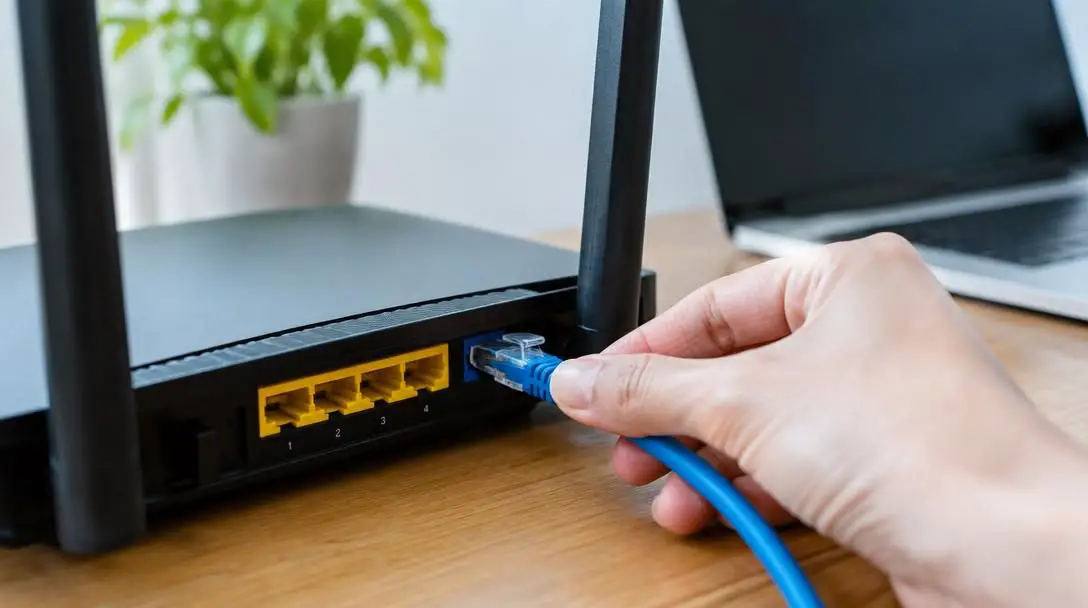
Wireless radio waves naturally broadcast outward and downward. To achieve balanced coverage across every room, place your wireless router in the physical center of your home, elevated as high as possible on a shelf or sturdy furniture piece. If you reside in an apartment, position the unit on an open shelf in your central living room. Ensure the area immediately surrounding the router is clear of clutter, especially other electronic equipment that produces competing electromagnetic fields. Providing the router with an unobstructed line of sight to surrounding rooms ensures wireless signals travel efficiently to your devices.
Step 2: Upgrade the Modem
Many consumers purchase a top-tier modem and assume it will remain adequate indefinitely. However, network hardware evolves rapidly, matching the pace of modern consumer electronics. A modem that was considered high-performance at the time of purchase can easily become outdated within two to four years as internal hardware standards, processing capabilities, and transmission protocols advance.
While manufacturers release newer modems each year with increased download throughput, your existing unit does not become completely unusable overnight. A well-built modem can deliver reliable performance for several years. Nevertheless, if your connection continues to struggle despite environmental fixes, evaluate the age of your equipment. Investing in a modern, up-to-date modem every few years represents a modest, one-time hardware purchase that can eliminate chronic bottlenecks while saving you from recurring, compounding monthly subscription fees.
Step 3: Change Frequencies and Channels
Not all internet traffic within a home carries the same priority or requires identical bandwidth. High-intensity tasks such as online PC or console gaming demand minimal latency and rapid responsiveness to prevent frustrating lag. By contrast, background activities like downloading a podcast or loading a text-based article require far fewer system resources.
Most modern modems and wireless gateways broadcast across two primary frequencies: 2.4 GHz and 5 GHz. Understanding the difference between these two bands allows you to configure your network intelligently:
- 2.4 GHz frequency: Offers extended broadcast range and penetrates dense solid barriers with ease, but operates at noticeably slower data transfer rates and is frequently crowded by other household gadgets.
- 5 GHz frequency: Delivers much faster data transmission rates across shorter distances, making it the ideal selection for bandwidth-hungry hardware situated within close proximity to the broadcaster.
Local congestion can also originate outside your home. In densely populated neighborhoods or apartment complexes, nearby routers broadcasting on the exact same frequency and channel will degrade each other's signal clarity. If you notice persistent slowdowns, access your router's administrative menu to switch crowded devices over to the 5 GHz band or select an alternate, less congested wireless channel.
Step 4: Monitor Data Usage and Throttling
Most residential internet service providers implement strict monthly data caps on their standard subscription packages. These caps specify the precise volume of data your household may upload and download during a single billing cycle before contractual consequences take effect. Depending on your provider's specific terms, exceeding these thresholds triggers one of two penalties:
- Monetary overage charges: Your internet speeds remain identical, but your account is automatically billed for each additional block of gigabytes consumed beyond the cap.
- Network speed throttling: Your provider avoids charging penalty fees but severely restricts your bandwidth for the remainder of the billing cycle, rendering basic streaming and browsing painfully slow.
If your plan enforces throttling, establish a daily or weekly data budget for your household. Monitoring usage ensures you retain adequate high-speed access for essential obligations throughout the month. If your contract relies on overage billing, vigilant tracking protects you from sudden, expensive spikes on your monthly statement.
Step 5: Check for Viruses and Malware
A sluggish internet connection is not always caused by external network infrastructure or wireless hardware. In many cases, the problem resides directly on the device you are using to browse the web. When malicious software, spyware, or background trojans compromise a machine, they frequently hijack the network connection to transmit harvested personal data, broadcast unsolicited spam, or connect to remote command servers.
This parasitic background activity consumes network throughput, creating the illusion that your overall broadband connection has degraded. Modern mobile devices are just as vulnerable to malicious software as traditional computers. To preserve your bandwidth, run regular security scans using dependable antivirus and antimalware software on all household laptops, desktops, tablets, and smartphones. Cleaning compromised devices often restores immediate browsing speed, sparing you the expense of an unneeded plan upgrade.
Comparing Network Bands and Hardware Roles
Balancing coverage, data transmission speeds, and hardware age is essential for getting the most out of your existing internet subscription. The table below illustrates how different network components and frequency bands compare across common attributes.
| Network Component | Primary Function | Coverage Range | Speed Capability | Vulnerability to Interference |
|---|---|---|---|---|
| 2.4 GHz Wireless Band | Long-distance distribution through walls | Broad household range | Moderate throughput | High (appliances and neighboring routers) |
| 5 GHz Wireless Band | High-bandwidth tasks and low latency | Shorter, localized range | Fast transmission rates | Low (fewer overlapping signals) |
| Outdated Modem (2–4+ Years) | Translating ISP signals from external lines | Hardware gateway only | Constrained by older standards | High (struggles with modern multi-device loads) |
Common Pitfalls That Slow Down Home Internet
When attempting to resolve home connectivity problems, users often fall into habits that sabotage their network performance. Avoiding these frequent mistakes will keep your speeds consistent without incurring unexpected expenses:
- Concealing the router inside furniture: Placing hardware inside wooden media consoles, behind large television screens, or in utility closets severely dampens radio waves.
- Clustering electronic devices around the router: Grouping multiple powered electronic devices near the broadcasting antenna creates concentrated electromagnetic interference.
- Skipping routine device hygiene: Failing to periodically scan mobile phones, tablets, and personal computers for malware allows hidden processes to drain available bandwidth.
- Ignoring monthly bandwidth caps: Failing to track household data consumption until after your internet service provider activates severe late-month throttling.
- Holding onto ancient hardware: Expecting a modem older than two to four years to effortlessly manage modern, high-bandwidth household requirements without review.
- Crowding gaming traffic on shared channels: Leaving latency-critical gaming consoles on the same crowded 2.4 GHz frequency used by smart appliances and remote household devices.
- Upgrading subscriptions prematurely: Signing a costly, long-term contract upgrade before investigating whether environmental adjustments or malware scans solve the issue.
A Step-by-Step Optimization Routine
To systematically troubleshoot your network without spending money on an expensive broadband tier, execute these practical steps in sequence:
- Inspect and reposition your router: Survey your home to locate your broadcasting hardware. Relocate the unit to an elevated, centrally located open shelf away from thick walls, metal objects, and floor carpet.
- Scan all endpoints for malicious software: Download and run trustworthy security tools across all desktop computers, laptops, tablets, and smartphones to clear bandwidth-draining malware.
- Reconfigure frequency allocations: Access your router's administrative dashboard, verify that both the 2.4 GHz and 5 GHz bands are active, and move high-bandwidth hardware like gaming consoles to the 5 GHz band.
- Audit wireless channels: Review local airwave congestion and switch your router to an alternate, less crowded wireless channel if neighboring networks are causing interference.
- Review your monthly data billing account: Log into your provider dashboard to determine your current data consumption, verify if data caps apply, and identify whether late-month slowdowns are caused by throttling or overage penalties.
- Evaluate the age of your modem: Check the manufacture date of your modem; if it has been operating for two to four years, research updated replacement models to modernize your baseline hardware.
Frequently asked questions
Why does resetting the modem or router only fix internet speeds temporarily?
A quick power reboot clears out temporary cache memory and resolves minor digital communication errors between the hardware and your provider. However, if your slow speeds stem from physical signal blockage, poor router positioning, channel congestion, or malware draining bandwidth in the background, a restart cannot address those fundamental issues.
How often should a home modem be replaced?
Modems should generally be reviewed or updated every two to four years. While high-quality modems remain functional for multiple years of daily service, rapid advancements in hardware standards mean older units eventually struggle to efficiently process modern transmission rates and multi-device household demands.
Which household devices benefit most from using the 5 GHz frequency band?
Hardware dedicated to high-bandwidth, latency-sensitive tasks benefits most from the 5 GHz band. Online gaming PCs, gaming consoles, and 4K media streaming devices should be assigned to the 5 GHz band whenever they are located reasonably close to the router, as this frequency delivers faster speeds and avoids local radio congestion.
Can malware on a smartphone slow down the rest of the household connection?
Yes. Malicious software on any connected device—including modern mobile phones and tablets—can secretly use your network in the background to transmit harvested data, mine cryptocurrency, or send spam. This continuous background transmission steals network capacity that would otherwise support legitimate household traffic.
What is the difference between data throttling and overage fees?
When you exceed your monthly data allowance, some provider plans maintain your current speeds but charge financial penalties for every additional block of data used. Other plans avoid extra monetary charges altogether but instead throttle your connection, severely restricting your internet speeds for the remainder of the billing cycle.
The Bottom Line
Dealing with a sluggish internet connection does not require signing an expensive, long-term provider contract or accepting higher monthly fees. In many households, broadband bottlenecks are the direct result of poor physical router placement, overlapping frequency interference, outdated modem hardware, or unmonitored data caps. By moving your broadcasting equipment to an elevated central room, segregating high-bandwidth gaming devices onto the 5 GHz band, eliminating hidden malware, and monitoring your monthly consumption, you can restore fast, dependable connectivity while keeping your recurring bills firmly under control.