5 Tips To Help You Achieve More Fluency In Any Foreign Language

Learning a foreign language typically begins with rapid, deeply satisfying momentum. In the entry-level phase, every newly acquired word represents visible progress as you decipher basic written passages, memorize everyday nouns, and piece together simple phrases. Soon, learners step into the conversational tier, gaining the ability to navigate routine social exchanges, construct multi-sentence thoughts, and convey general meaning. Yet for millions of students around the world, this conversational milestone becomes an unintentional resting place rather than a stepping stone.
This persistent standstill—often known as the intermediate plateau—creates a wide gap between basic communicative survival and true linguistic fluency. Moving past this ceiling requires more than simply repeating the study habits that brought you to a conversational level. Breaking through demands intentional shifts in cognitive processing, shedding conversational crutches, integrating multiple sensory inputs, and subjecting your skills to clear diagnostic scrutiny.
Key takeaways
- Progressing beyond conversational survival requires deliberately training your internal monologue to operate in your target language.
- Abandoning repetitive conversational crutches forces you to master fresh vocabulary and varied grammatical structures.
- Pairing spoken audio with matching transcripts synchronizes phonetic understanding with formal syntax.
- Diagnostic proficiency testing reveals specific grammatical and structural errors that unstructured practice obscures.
- Exposing your ears to diverse accents, dialects, and varied media prevents the rigid limitations caused by single, monotone tools.
Strategies to Break Through the Intermediate Plateau
To overcome the intermediate ceiling, learners must move beyond casual memorization and actively adjust how they process foreign speech. The following five foundational strategies directly target the cognitive friction that prevents conversational speakers from achieving full fluency.
| Strategy | Primary Focus | Core Mechanism | Plateau Challenge Overcome |
|---|---|---|---|
| Internal Monologue | Mental output | Bypasses native-language translation | Hesitant, slow speech processing |
| Retiring Familiar Phrases | Lexical variety | Forces active retrieval of new structures | Overreliance on textbook crutches |
| Dual Audio-Text Practice | Sensory pairing | Links connected speech with spelling | Disconnect between reading and listening |
| Proficiency Testing | Diagnostic review | Isolates recurring grammatical errors | Unfocused, directionless study |
| Source Diversification | Ecological exposure | Acclimates ears to regional dialects | Dependency on sanitized, monotone audio |
Think in Your Target Language
Roughly half of all people experience an internal monologue—the ability to hear a silent inner voice running thoughts, plans, and reactions without vocalizing words aloud. In most learners, this voice defaults entirely to their native tongue. However, you can actively train this mental voice to run in your target language. When you switch your inner thoughts to a foreign tongue, you establish a zero-pressure testing ground where you can assemble phrases and detect grammatical missteps before ever speaking aloud. This silent self-correction eliminates the slow, exhausting habit of translating sentences word for word from your native language, enabling authentic conversations to flow much more naturally.
Stop Using the Same Sentences
Conversational speakers often fall into predictable patterns, leaning heavily on a narrow collection of safe, familiar phrases. A classic example is the Spanish student who perpetually relies on basic textbook phrases like asking where the library is located whenever they need to initiate dialogue. While these safe patterns allow you to survive basic interactions, using them as an ongoing crutch stunts your linguistic growth. Pushing past intermediate limits requires actively abandoning predictable sentences and stepping outside your linguistic comfort zone. By experimenting with unfamiliar phrasing and noting down alternative expressions, you discover how native speakers convey nuanced ideas across authentic scenarios.
Use Your Ears and Eyes Simultaneously
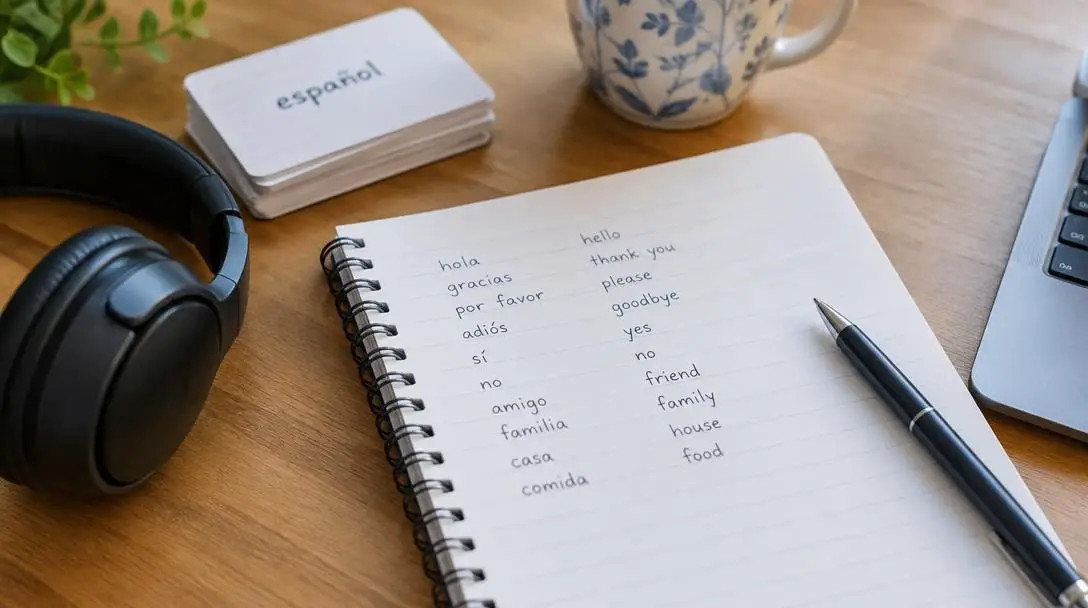
Literacy and verbal aptitude develop along separate tracks if practiced in isolation. Mastering a language's written grammar does not guarantee you can understand rapid native dialogue, and strong conversational listening does not ensure clean reading comprehension. You can bridge this divide by engaging your visual and auditory faculties at the same time. Listen to authentic spoken audio while reading along with an exact, word-for-word transcript in that same language. Tracking the text while hearing native cadence shows you how formal spellings correspond to dropped syllables, liaisons, and intonations. Once this dual processing feels natural, you can gradually set the text aside to listen independently with improved clarity.
Take Proficiency Tests
Language proficiency practice tests are widely accessible for almost every major language worldwide. A frequent reason students stall or abandon their studies is an inability to identify why their communication feels clumsy. Diagnostic tests provide an objective assessment of your practical abilities, pinpointing exact structural blind spots. A standardized test will quickly reveal whether your stumbling blocks stem from confusing verb conjugations, incorrect prepositions, or misplacing syllable emphasis. Pinpointing the precise source of your errors allows you to replace aimless review with targeted, corrective study.
Use Varying Sources
Conventional language instructional courses and educational apps often rely on clean, monotone voice recordings. While clear diction helps beginners grasp fundamental sounds, it presents an artificially uniform model of speech that bears little resemblance to real life. Just as an advanced understanding of English requires comfort with diverse regional accents and cadences, mastering any foreign tongue demands exposure to multiple native voices. Listening to diverse regional accents, regional dialects, and dynamic unscripted video content breaks the sterile perfection of academic materials and prepares your ears for the spontaneous reality of natural speech.
The Cognitive Mechanics of Fluency and Automaticity
To understand why these five habits accelerate progress, it helps to examine how the brain transitions from effortful translation to automatic speech. Intermediate learners often remain trapped in a three-step cycle: receiving an auditory input, mentally translating it into their native language, formulating an answer natively, and translating that answer back into the target tongue. This cognitive bottleneck introduces artificial delays that derail the rhythm of rapid conversation.
Engaging your inner voice creates an active testing ground that builds the rapid mental reflexes required for spontaneous speech.
When you force your inner monologue to operate in the target language, you bypass that translation bridge entirely. Your brain begins associating concepts, emotions, and physical objects directly with foreign vocabulary rather than routing through your primary language. Over time, this rewires your cognitive output, transforming delayed calculation into immediate instinct.
Simultaneously engaging auditory and visual perception addresses the messiness of authentic phonetics. In everyday speech, native speakers rarely enunciate words as discrete units. They blend vowels, elide consonants, and alter pitch to convey mood. Reading an exact transcript while hearing natural speech allows your brain to map phonetic shifts onto known grammatical structures, building robust neural pathways that accelerate comprehension under real-world conditions.

Step-by-Step Implementation for Daily Study
Transitioning from an intermediate plateau to advanced fluency does not require spending hours buried in heavy textbooks. Instead, it requires integrating systematic, high-leverage habits into your existing routine.
- Designate silent thinking windows: Allocate five to ten minutes during routine daily habits—such as your morning commute or cooking dinner—to narrate your environment and plans silently in the target language. If you catch an error, pause and correct the sentence internally before moving on.
- Create a "retired phrases" log: Write down the predictable filler questions, textbook greetings, and repetitive conversational sentences you automatically lean on. Ban them from your upcoming speaking sessions and replace each one with two or three more descriptive, natural alternatives.
- Conduct dual-input listening sessions: Select a foreign-language podcast, news broadcast, or video that provides an accurate transcript in the same language. Follow along visually while listening closely to rhythm and stress. Replay the segment immediately afterward without the text to verify comprehension.
- Complete monthly diagnostic exams: Take an online practice proficiency test under timed, quiet conditions. Document every recurring mistake in verb tense, vocabulary choice, or case agreement, and design your upcoming study sessions around correcting those explicit weak points.
- Diversify your media ecosystem: Audit your study materials and actively introduce media featuring distinct regional dialects, varied speaking tempos, and unscripted discussions to break your reliance on sterile educational recordings.
Common Mistakes That Stall Intermediate Learners
Many diligent students dedicate months or years to study without achieving high-level fluency. Often, the barrier is not a lack of effort, but the unconscious adoption of counterproductive study routines:
- Overusing conversational crutches: Relying indefinitely on a handful of familiar phrases helps you survive basic travel or routine meetups, but it shields your brain from the discomfort required to learn complex sentence structures.
- Isolating literacy from listening: Focusing exclusively on silent reading builds strong analytical comprehension while leaving your ears completely unprepared for rapid native speech. Conversely, conversational immersion without reading limits your grasp of formal syntax.
- Relying on a single monotone tool: Depending solely on one mobile app or instructional course creates a false sense of mastery. Clean, slowed-down instructional audio does not train you for overlapping dialogue, regional slang, or varied cadences.
- Avoiding diagnostic feedback: Shying away from proficiency evaluations out of test anxiety prevents you from gathering objective data on your stumbling blocks, leading to aimless, repetitive practice.
- Failing to practice mental output: Waiting until you are in the middle of a live conversation to begin formulating sentences in a foreign language places intense cognitive pressure on your working memory, causing hesitation and fragmented delivery.
Sustaining Fluency and Long-Term Language Mastery
As these habits help you break through the conversational plateau, your long-term relationship with the language must adapt. Fluency is not an immutable, permanent badge that remains intact without upkeep; without consistent, varied engagement, complex vocabulary fades and processing speed slows.
To sustain advanced proficiency over years, you must establish an environment of effortless maintenance. Incorporate media you genuinely enjoy into your lifestyle, from investigative journalism and long-form podcasts to community cultural groups. Continually balance this broad immersion with the targeted precision demanded by periodic proficiency evaluations. By methodically pairing expansive exposure with diagnostic correction, your command of the language will remain sharp, flexible, and capable of handling any conversational setting.
Frequently asked questions
What is the language learning plateau?
The language learning plateau is an intermediate stage where a student can comfortably handle basic, routine conversations but struggles to advance toward spontaneous, nuanced fluency, often caused by relying on repetitive study habits and conversational crutches.
Can anyone learn to think in a foreign language?
Roughly half of all people naturally possess an internal monologue, which can be trained to switch from a native language to a target language through deliberate daily practice, narrating everyday thoughts and catching grammatical mistakes silently.
Why is reading along with audio better than just listening?
Simultaneously listening to spoken audio while reading an exact transcript connects the visual spelling of words with native pronunciation, intonation, and dropped syllables, training the brain to decode rapid speech far more effectively than listening alone.
How do proficiency tests help improve everyday conversational skills?
Proficiency tests provide objective feedback that highlights exact structural weaknesses—such as confusing specific verb forms or misplacing syllable stress—allowing you to fix persistent errors that informal conversations fail to reveal.
Why should I avoid using only one language learning app or course?
Single instructional courses often rely on standardized, monotone voices with artificial pacing, which fails to prepare your ears for the wide variety of regional accents, colloquial dialects, and natural speaking speeds found in real-world interactions.
The bottom line
Surpassing the conversational plateau is fundamentally an exercise in cognitive reorganization. Moving toward true fluency demands that you deliberately abandon familiar crutches, expose your senses to authentic and unvarnished media, and systematically diagnose recurring weaknesses. By training your internal monologue to operate in your target tongue, synchronizing visual text with spoken audio, and diversifying your sources, you bridge the gap between basic survival speech and effortless, spontaneous mastery.