5 Toughest Newspaper Crosswords In The World
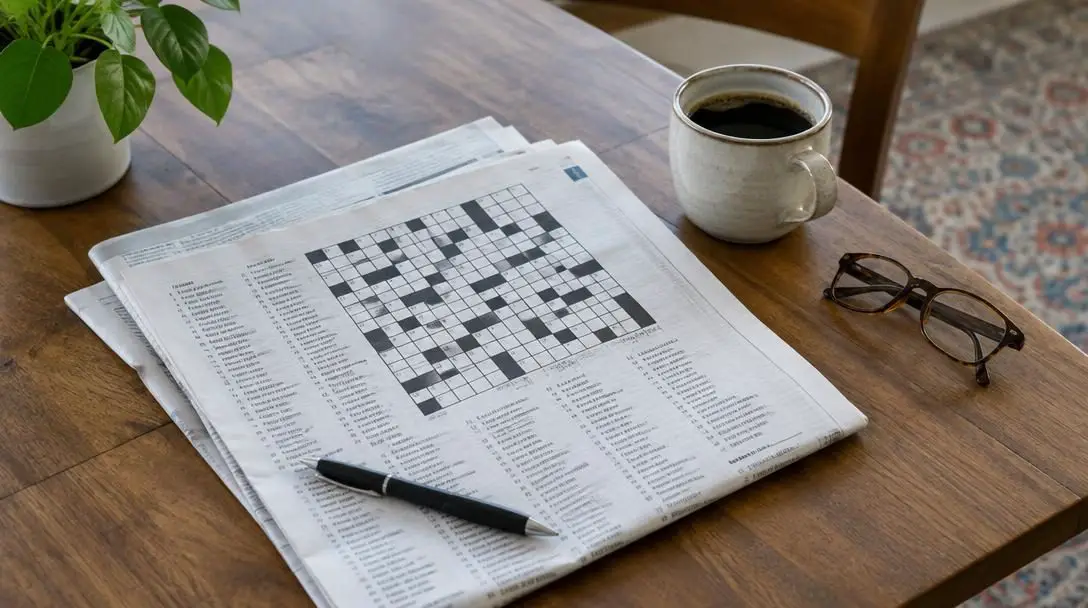
Crossword puzzles have evolved from a modest nineteenth-century print curiosity into an international mental pastime practiced by millions of solvers every day. As major metropolitan broadsheets recognized that dependable daily puzzles fostered lasting subscriber loyalty, newsrooms created dedicated puzzle desks directed by specialist editors. Syndication networks and modern digital puzzle apps have since allowed solvers anywhere in the world to test their vocabulary and logic against premier broadsheets based in London, New York, and Washington, D.C.
Yet crosswords vary drastically in difficulty depending on the publication's house style, grid design, and editorial philosophy. While entry-level grids prioritize direct synonyms, a select group of legacy newspapers cultivates a reputation for unrelenting complexity, obscure references, and devious wordplay. For wordsmiths seeking the ultimate test of lateral thinking, five publications stand out as the most challenging puzzle providers in the world.
Key takeaways
- Elite broadsheet crosswords follow structured difficulty curves, reserving their most demanding grids and cryptic brainteasers for the weekend.
- American-style puzzles rely on fully interlocked symmetrical grids and clever misdirection, while British broadsheets specialize in intricate cryptic wordplay.
- The Guardian holds the top spot as the world's most grueling crossword, while The Washington Post is widely regarded as the most difficult in the United States.
- Building mastery requires deciphering clue grammar, mastering earlier weekday editions, and taking advantage of vast digital puzzle archives.
At a glance: The world's hardest newspaper crosswords
| Newspaper | Headquarters | Crossword Founded | Grid Tradition | Peak Difficulty Day |
|---|---|---|---|---|
| The Wall Street Journal | New York City, USA | 1998 (Daily since 2015) | American fully interlocked | Weekend |
| The Telegraph | London, UK | 1925 | British cryptic | Daily releases |
| The New York Times | New York City, USA | 1942 | American fully interlocked | Saturday |
| The Washington Post | Washington, D.C., USA | 1877 (Paper founded) | American fully interlocked | Weekend |
| The Guardian | London, UK | 1821 (Paper founded) | British cryptic | Daily releases |
The top five toughest newspaper crosswords ranked
Ranked from formidable to truly punishing, these five newspaper puzzles have earned global fame for their refusing-to-compromise editorial standards, deceptive clues, and elite difficulty.
The Wall Street Journal
- Headquarters: New York City, United States
- Puzzle Launch: 1998 (Weekend), 2015 (Daily)
- Crossword Editor: Mike Shenk
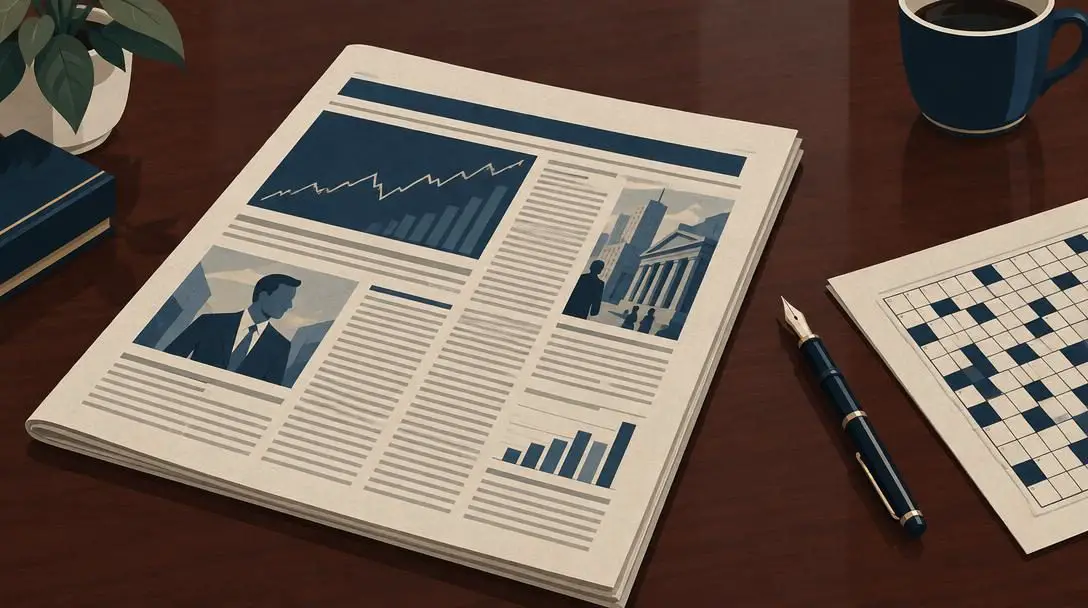
Celebrated globally for its authoritative coverage of markets, finance, and international business, The Wall Street Journal also operates one of the world's most intellectually rigorous crossword desks. The publication first introduced crosswords to its readers in 1998 as a weekend supplement. In response to overwhelming reader enthusiasm, the paper converted the puzzle into a daily feature in 2015. Under the longstanding stewardship of crossword editor Mike Shenk, the puzzle follows an ascending difficulty framework: Monday offers an accessible entry point, while the difficulty ramps up steeply with each passing day. By the time solvers reach the expansive weekend grid, straightforward definitions are replaced by layers of subtle misdirection. The publication also runs specialized crossword contests that challenge players to solve a grid and then uncover an underlying meta-puzzle hidden within the completed answers, testing even champion-level competitors.
The Telegraph
- Headquarters: London, United Kingdom
- Crossword Launch: 1925
- Founder: Arthur B. Sleigh (established 1885 as The Daily Telegraph & Courier)
Tracing its journalistic origins back to 1885, The Telegraph holds a revered place in puzzle history. In 1925, it made history as the very first broadsheet in the United Kingdom to publish a daily crossword puzzle. It broke new ground again by becoming the first British paper to offer a prize for successfully deciphering its grids, establishing an enduring tradition of incentivized competitive solving. Although the paper prints puzzles for multiple proficiencies, veteran solvers focus on its daily releases, which lean heavily into traditional British cryptic style. For solvers determined to master its nuanced wordplay conventions, the paper maintains a colossal digital archive containing more than 17,000 puzzles, representing one of the largest continuous puzzle repositories in existence.
The New York Times
- Headquarters: New York City, United States
- Crossword Launch: 1942
- Key Editor: Will Shortz (appointed 1993)
Boasting a worldwide newsroom staff exceeding 2,000 employees, The New York Times has shaped modern print journalism since its founding in 1851 by Henry Jarvis Raymond and George Jones. Following significant growth after World War II, the broadsheet introduced its formal crossword feature inside the features section in 1942. The puzzle's cultural reach exploded into a mainstream phenomenon in 1993 when Will Shortz assumed the role of crossword editor. Shortz transformed the landscape of puzzle editing by emphasizing cultural literacy, sharp wit, and inventive wordplay over rote dictionary recall. The puzzle follows a strict weekly progression: Monday presents the gentlest challenge of the cycle, while Saturday features a sprawling, theme-less grid packed with deceptive cluing specifically tailored to humble veteran wordsmiths.
The Washington Post
- Headquarters: Washington, D.C., United States
- Paper Founded: December 1877
- Owner: Jeff Bezos
Established in the heart of the United States capital in December 1877, The Washington Post has cultivated a crossword section famous for its uncompromising intellectual rigor. Now owned by Amazon founder Jeff Bezos, the newspaper adheres to the classic American daily difficulty progression, starting with approachable themes early in the week before reaching an intimidating climax in the weekend edition. Over the years, the sheer difficulty of the late-week puzzles has prompted readers and competitive solvers alike to send pleas asking the paper to dumb down its clues. Editorial leaders at the Post have steadfastly dismissed these complaints, choosing instead to preserve an unforgiving standard that has made their puzzle widely recognized as the single most difficult crossword in the United States.
By steadfastly ignoring pleas to soften its clues, The Washington Post cemented its reputation for publishing the most difficult newspaper crossword in the United States.
The Guardian
- Headquarters: London, United Kingdom
- Paper Founded: May 1821 (as The Manchester Guardian)
- Circulation: Exceeding 100,000 print copies plus global digital readership
Holding the distinction of the oldest publication on this list, The Guardian was founded in May 1821 by John Edward Taylor under the title The Manchester Guardian, later rebranding to its current name in 1959. Supported by a robust print circulation exceeding 100,000 copies and a massive worldwide digital presence, the paper publishes what is almost universally acknowledged as the most punishing daily crossword in the world. The paper's daily cryptic puzzles are notorious for their complex layers of linguistic trickery, double meanings, and multi-step anagrams. Despite receiving a continuous stream of reader grievances lamenting the puzzle's impossible difficulty, the puzzle desk has adopted an uncompromising "tough luck" editorial policy, refusing to lower its standards. To honor its international community of solvers, The Guardian routinely hosts dedicated puzzle contests to identify the sharpest minds capable of finishing its most demanding grids.
How elite newspaper crosswords operate
High-level broadsheet crosswords function on fundamentally different rules than standard word games. Understanding how editors construct these mental hurdles is crucial for navigating their complexity.
- Weekly Difficulty Progression: Publications like The New York Times, The Washington Post, and The Wall Street Journal structure their puzzles across an escalating weekly curve. While early-week clues feature direct synonyms, Friday, Saturday, and weekend grids favor lateral thinking, double definitions, and cultural trivia.
- American-Style Grid Symmetry: In American papers, grids adhere to strict rotational symmetry, with every letter checked by two clues. This creates dense letter clusters where a single incorrect guess can derail an entire quadrant of the board.
- British Cryptic Mechanics: British crosswords from The Guardian and The Telegraph use clues that contain two independent parts: a straight definition and an encoded wordplay puzzle (such as an anagram, hidden word, charade, or phonetic pun).
- Meta and Contest Formats: Both The Wall Street Journal and The Guardian frequently deploy contest layers, requiring solvers not only to fill the grid but to extract an elusive hidden password, phrase, or theme from the finished answers.
Step-by-step strategy for solving difficult crosswords
Transitioning from basic word finds to world-class newspaper crosswords demands a disciplined approach. Follow these structured steps to work through demanding broadsheet grids:
- Begin with Early-Week Editions: Build your foundational vocabulary on Monday and Tuesday releases from The New York Times or The Wall Street Journal before attempting weekend editions. This builds familiarity with frequent crossword abbreviations and constructor patterns.
- Scan for Definite Factual Answers: Read through the entire clue list and immediately write down answers you know with absolute certainty, such as proper historical names, geography, or scientific terms. These entries provide anchoring letters for intersecting words.
- Isolate Word Endings and Parts of Speech: Match the grammatical tense and number of the clue. Clues written in the past tense almost always yield past-tense answers (often ending in -ED), while plural clues typically resolve to plurals ending in -S. Dropping these endings onto the grid helps illuminate tough crosses.
- Analyze Clue Punctuation and Cryptic Indicators: In American puzzles, a question mark at the end of a clue signals a pun or non-literal interpretation. In British cryptics, search for indicator words that signal anagrams (words like "mixed," "broken," or "wild") or containers (such as "within" or "holding").
- Study Extensive Historical Archives: Take advantage of back catalogs, such as The Telegraph's archive of more than 17,000 puzzles, to observe constructor styles across decades and build the pattern recognition needed for daily broadsheet releases.
Common solving traps to avoid
Even capable solvers frequently hit dead ends by falling into common traps set by broadsheet editors:
- Reading clues literally: Editors at top-tier publications deliberately exploit homographs—words with identical spelling but different meanings—using words that can serve as either nouns or verbs to lead you down the wrong path.
- Committing unverified guesses to the grid: Writing down a long answer without verifying its intersecting crosses can freeze your progress across an entire quadrant of the puzzle.
- Mismatched national mindsets: Approaching British cryptic puzzles in The Guardian with an American trivia-based solving technique—or tackling The Washington Post as if it were a cryptic puzzle—inevitably leads to frustration.
- Overlooking special theme rules: Complex weekend offerings often feature structural twists like rebus squares (multiple letters inside a single box) or meta-challenges that require deciphering the puzzle's overarching theme before the grid can be completed.
Frequently asked questions
Which newspaper publishes the hardest crossword puzzle in the world?
The Guardian is widely regarded by competitive solvers and puzzle editors as publishing the hardest daily crossword in the world, renowned for its intricate, deeply cryptic style and uncompromising editorial difficulty.
What is the most difficult newspaper crossword in the United States?
The Washington Post is widely considered to have the most difficult crossword puzzle in the United States. Its weekend editions are notoriously rigorous, and the paper has famously ignored reader requests to soften its clues.
Why does The New York Times crossword get harder throughout the week?
The New York Times employs a progressive difficulty model instituted under editor Will Shortz. The puzzles start on Monday with accessible clues and common vocabulary, gradually escalating to Saturday, which features the most challenging, theme-less grid of the week.
How do British cryptic crosswords differ from American crosswords?
American crosswords feature fully interlocked symmetrical grids where every letter is checked by both an across and a down clue, emphasizing direct synonyms, wordplay, and cultural knowledge. British cryptic puzzles, like those in The Guardian and The Telegraph, feature lattice grids with fewer intersections and use clues that function as miniature linguistic riddles containing both a definition and an encoded wordplay mechanism.
What was the first British newspaper to publish a daily crossword puzzle?
The Telegraph became the first newspaper in the United Kingdom to publish a daily crossword puzzle in 1925, and it was also the first publication in the country to award a prize for completing its cryptic grids.
The bottom line
Mastering the world's most demanding newspaper crosswords is a gradual journey that requires mental agility, linguistic deduction, and steady persistence. Whether you are navigating the subtle misdirection of The Washington Post and The New York Times or untangling the cryptic mechanisms of The Guardian and The Telegraph, success comes from consistent practice. By starting with early-week grids, studying clue mechanics, and testing yourself against newspaper puzzle archives and official contests, any dedicated solver can conquer the most punishing grids in print journalism.