5 Ways to Sneak in Exercises Throughout Your Day
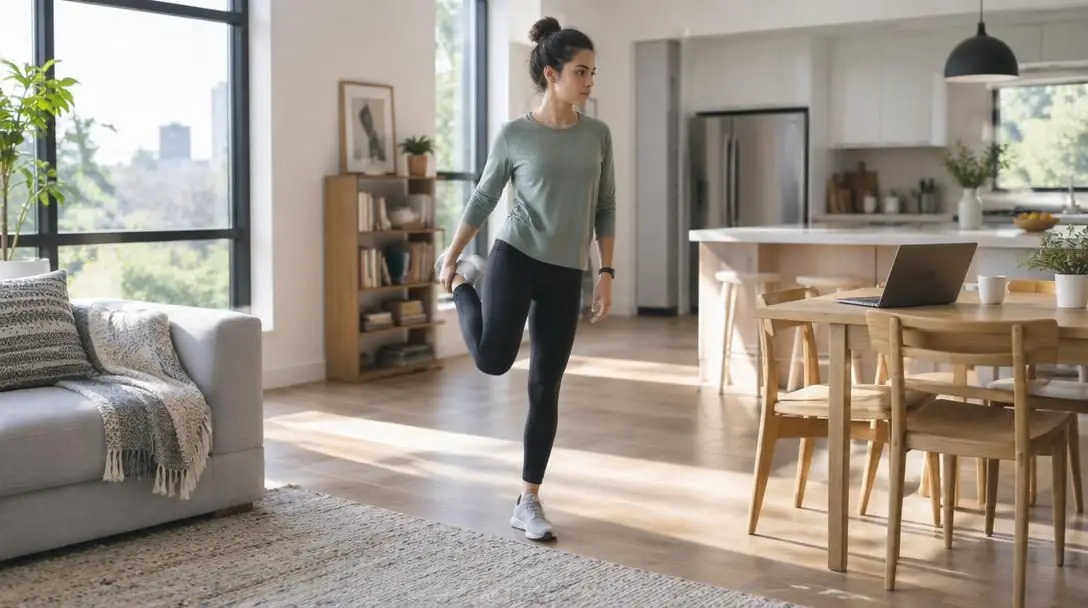
In our modern, high-pressure environments, carving out continuous personal time to maintain physical conditioning often feels impossible. Between the unrelenting demands of professional deadlines, household management duties, and pressing family responsibilities, health priorities frequently slide to the bottom of the daily agenda. Many adults spend their waking hours continuously responding to external obligations, leaving little mental or physical stamina to commute to a fitness studio or dedicate an uninterrupted hour to formal workout routines.
Yet sustaining an active lifestyle remains essential for overall well-being, functional durability, mood regulation, and weight management. The prevailing belief that exercise requires large, dedicated blocks of free time prevents many people from doing anything at all. By learning how to transform everyday occurrences into productive physical opportunities, you can cultivate lasting vitality and steady conditioning without restructuring your entire schedule.
Key takeaways
- Physical fitness does not require continuous hours in a gym; brief, accumulated bouts of movement deliver tangible health benefits.
- Habit pairing allows you to link muscle contractions and joint mobility exercises to routine tasks you already perform daily.
- Common daily windows such as desk hours, commutes, workday breaks, television viewing, and household chores can easily double as conditioning sessions.
- Consistent execution of short movements improves circulation, counteracts sedentary stiffness, and sharpens daytime focus.
How micro-movements and habit pairing transform daily activity
Modern daily life is frequently dominated by prolonged sitting and high cognitive demands. Sedentary habits contribute to sluggish blood flow, postural fatigue, and chronic joint stiffness. When sustained exercise is completely eliminated due to full calendars, physical stamina drops, stress levels climb, and the mental clarity required to manage daily challenges steadily erodes. Rather than waiting for an ideal workout window that rarely arrives, the solution lies in adopting micro-movements—short physical bursts woven into the spaces between routine tasks.
Sneaking exercise into the day relies on the proven behavioral mechanism of habit pairing. Instead of establishing an entirely new time commitment, you attach a specific physical movement to an established anchor habit. Waiting for a transit bus, standing beside an office printer, relaxing during commercial broadcasts, or sweeping a hallway can instantly become cues for physical engagement. By forcing muscles to contract, stretching tight tissues, and elevating heart rate in small increments, these mini-sessions accumulate to improve systemic circulation and maintain baseline functional mobility.
Instead of waiting for the ideal workout window, we can look for brief intervals to move our bodies throughout ordinary routines.
Five everyday settings to build movement into your routine
You can turn mundane moments into productive conditioning opportunities across five common daily environments. The table below illustrates how different contexts, physical movements, and daily triggers connect to create seamless exercise habits.
| Setting | Recommended movements | Primary physical benefit | Daily trigger |
|---|---|---|---|
| Work desk | Desk push-ups, shoulder rolls, seated leg extensions | Upper body strength, joint mobility, circulation | Between typing sessions or during phone calls |
| Daily commute | Active walking or cycling, calf raises, isometric core holds | Lower leg conditioning and abdominal stability | Waiting on platforms or sitting in transit vehicles |
| Workday breaks | Brisk walking, air squats, jumping jacks | Cardiovascular stimulation and mental rejuvenation | Visits to the printer, water station, or rest pauses |
| Television viewing | Full-body stretching, floor push-ups, weightlifting | Muscular endurance and flexibility | Commercial breaks between program segments |
| Household chores | Vacuum lunges, broomstick torso twists, dishtowel curls | Core rotation, balance, and arm engagement | Routine domestic cleaning and surface maintenance |
Exercise at your desk
You do not need a gymnasium or athletic apparel to counteract the detrimental effects of a sedentary office routine. Taking brief interludes directly at your workstation allows you to wake up dormant muscle groups, refresh joint ranges of motion, and interrupt long stretches of static positioning without abandoning ongoing projects.
Several accessible movements require no specialized equipment:
- Desk push-ups: Position yourself facing your desk and lean forward, placing your hands firmly on the desk edge slightly wider than shoulder-width apart. Lower your chest toward the surface in a smooth push-up motion, then press firmly back up until your arms are fully extended.
- Shoulder rolls: Lift your shoulders toward your ears and rotate them backward in a smooth circular arc. This simple action releases muscular tension built up across the upper back, traps, and neck from forward-leaning keyboard work.
- Leg extensions: While seated upright in your chair, straighten one leg directly in front of you until it is parallel to the floor, holding the position for five seconds to engage your quadriceps. Alternate between legs for several repetitions to stimulate blood flow in the lower limbs.
Exercise during your commute
Commuting often consumes a considerable portion of the morning and evening, but it does not have to remain entirely passive. Whether you drive, use public transit, or travel on foot, you can target key postural muscles and build physical effort directly into your travel time.
Consider implementing these commuting practices:
- Active transit: If you reside within a reasonable distance of your workplace or school, consider walking or riding a bicycle rather than relying on motorized transit. This directly converts passive travel time into functional cardiovascular conditioning.
- Calf raises at transit stops: While waiting on a train platform or standing at a bus stop, stand with your feet hip-width apart and rise up onto the balls of your feet, holding briefly at the top before lowering down. This exercises the gastrocnemius and soleus muscles while pumping venous blood back toward the heart.
- Seated core contractions: When riding inside a bus, train, or subway, brace your abdominal muscles firmly as if preparing for an impact. Hold the contraction tightly for ten seconds while maintaining steady breathing, then relax and repeat. This invisible exercise builds midsection stability without attracting outside attention.
Exercise during scheduled breaks
Short workday breaks offer natural moments to reset mental focus and relieve visual fatigue. Rather than remaining seated in the same desk chair to scroll through a secondary mobile screen, using these structured windows for movement promotes systemic circulation and clears mental fog.
Effective break-time movement options include:
- Brisk walking: Step away from your workspace entirely and take a purposeful, brisk walk around your building, through the corridors, or outside in the fresh air to stretch leg muscles and reset your perspective.
- Idle squats: Turn dead time into leg conditioning by performing controlled air squats while waiting for documents to finish at the office printer or while filling your bottle at the water cooler.
- Jumping jacks: When you have access to a private office, stairwell, or quiet break area, perform short sets of jumping jacks during a five-minute interval to elevate your heart rate and produce an invigorating midday energy boost.
Exercise while watching television
Evening media consumption is a frequent default after exhausting work shifts, but leisure time does not require total physical immobility. Television programming offers built-in timing intervals that can be repurposed for physical conditioning without causing you to miss key storylines.
Use television breaks to perform these targeted exercises:
- Commercial break stretching: Use each commercial break to stand up from the sofa and perform full-body mobility work. Stretch your hamstrings, hips, chest, and arms to release tension accumulated throughout the working day.
- Resistance weightlifting: Keep a pair of light dumbbells or resistance bands near your media console. Lift weights for upper-body exercises like bicep curls, lateral raises, or overhead presses during commercial segments.
- Floor push-ups: Drop to the floor when a commercial segment begins and complete as many steady, controlled push-ups as you can manage before the broadcast program resumes.
Exercise while completing household chores
Domestic maintenance requires real physical exertion, making it one of the easiest areas to weave in deliberate conditioning. By turning standard cleaning routines into dynamic physical challenges, you complete essential chores while challenging your balance, flexibility, and strength.
Practical ways to turn chores into exercise include:
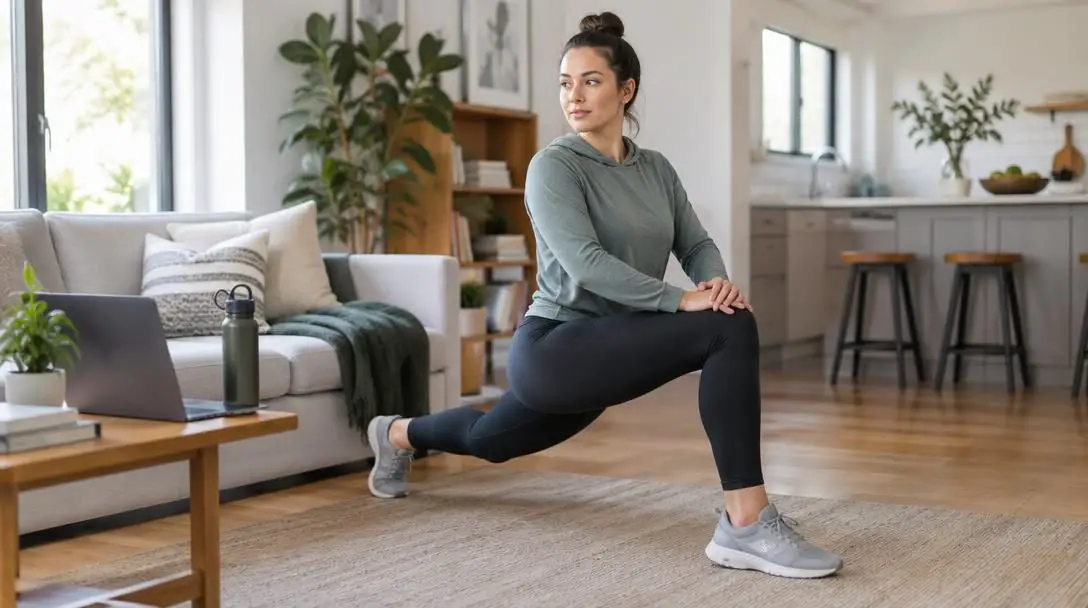
- Vacuum lunges: As you push the vacuum cleaner forward across carpets or hard floors, step into a deep forward lunge. Alternate your leading leg with each forward pass to challenge your quadriceps, glutes, and balance.
- Broomstick torso twists: While sweeping or pausing during cleaning, rest a broomstick horizontally across your upper back and shoulders behind your neck. Rotate your torso smoothly from side to side to mobilize the thoracic spine and engage the oblique muscles.
- Dishtowel arm curls: Use kitchen hand towels or dish towels to perform resisted bicep curls while drying dishes, wiping countertops, or folding laundry, maintaining continuous tension through the movement.
A practical five-step method for building daily activity habits
Incorporating movement throughout your day works best when guided by a systematic implementation process. By establishing structured environmental cues and predefined physical responses, you eliminate the mental friction of deciding when and how to exercise.
- Identify your daily idle periods: Track where you routinely spend time waiting without active tasks. Common periods include waiting for office machinery to print, waiting on transit platforms, standing at the kitchen sink, or waiting through commercial breaks.
- Select specific movements for each space: Pre-assign one exact exercise to each identified window. For instance, decide that waiting at the water cooler always triggers bodyweight squats, while waiting at a bus stop always triggers calf raises. Pre-committing eliminates hesitation.
- Establish practical cues: Use natural environmental transitions as immediate physical triggers. Let the start of a commercial break signal an instant shift to floor push-ups, or let the chime of your break notification prompt a brisk walk away from your desk.
- Start with basic repetitions: Emphasize strict form and controlled cadences over speed. Execute desk push-ups against a sturdy ledge, hold seated leg extensions for five steady seconds, and sustain abdominal contractions for ten seconds without breath-holding.
- Maintain a consistent daily rhythm: Perform your selected micro-movements every single day. Even if you complete only a handful of repetitions during each window, daily consistency establishes permanent habit loops that preserve physical vitality over time.
Common pitfalls that undermine incidental exercise
While sneaking exercises into daily routines is simple in concept, common execution mistakes can derail consistency or lead to physical discomfort. Keeping these frequent errors in mind ensures your efforts remain safe, sustainable, and productive.
- Dismissing short efforts as meaningless: Many people abandon micro-movements because they assume five minutes of jumping jacks or brief sets of calf raises are too minor to produce fitness adaptations. In reality, intermittent muscular contractions lower blood glucose, stimulate circulation, and mitigate the systemic risks of prolonged inactivity.
- Neglecting proper movement technique: Moving quickly during domestic chores or office tasks often leads to sloppy biomechanics. Rushing through vacuum lunges, using poor hand placement during desk push-ups, or wrenching your spine during broomstick twists invites joint strain. Move deliberately and maintain structural alignment.
- Choosing unstable furniture for support: Placing hands on rolling desk chairs, lightweight side tables, or slick countertops for push-ups creates a severe slipping hazard. Always verify that your contact surface is heavy, immobile, and positioned on non-skid flooring.
- Overlooking daytime breaks: Working straight through mandated lunch or rest periods while glued to an office monitor drains cognitive reserves and leaves muscles locked in chronic flexion. Prioritize your breaks for brisk walking, hydration, and lower-body movement.
- Assuming television viewing must be completely inactive: Collapsing passively onto the sofa every evening wastes an optimal opportunity for mobility and light resistance training. Dedicating commercial interludes to movement keeps your metabolism elevated without compromising relaxation.
- Forgetting to breathe during core holds: When performing isometric core contractions during commutes or desk work, many individuals reflexively hold their breath. Holding your breath spikes intra-thoracic pressure; focus on continuous, normal nasal breathing while holding the abdominal contraction.
Evaluating long-term progress and expanding movement routines
After practicing integrated micro-exercises for several weeks, evaluate how your body and mind respond to the increased activity. Most individuals notice a reduction in afternoon energy slumps, diminished lower back stiffness, and improved postural awareness while seated. Recognizing these subtle physical payoffs reinforces your habit loops and proves that fitness does not depend on gym memberships alone.
As these initial exercises become second nature, look for additional opportunities to expand your activity footprint. If vacuum lunges and dishtowel curls feel effortless, explore carrying groceries individually to train grip strength, taking stairs two at a time to build leg power, or increasing your walking commute frequency. By viewing your ordinary surroundings as an active training landscape, you build lasting physical stamina that comfortably coexists with a demanding daily schedule.
Frequently asked questions
Can short bouts of exercise throughout the day really replace a standard workout?
While high-intensity sports training requires specific conditioning, sneaking short bouts of movement into your day effectively breaks up sedentary behavior, burns calories, stimulates blood circulation, and maintains muscular engagement. For busy individuals who cannot dedicate an hour to the gym, accumulating micro-movements is far superior to remaining inactive.
How many repetitions of desk exercises should I perform each day?
Focus on consistency rather than extreme repetition counts. Performing five to ten desk push-ups, several shoulder roll cycles, and alternating five-second leg extensions two or three times throughout an eight-hour workday provides meaningful circulatory relief without causing fatigue or sweating through work clothing.
Will doing core contractions on public transit actually strengthen my abdominal muscles?
Yes. Isometric contractions—such as drawing your navel inward and bracing your abdominal wall for ten seconds at a time—activate the deep transverse abdominis and internal obliques. Practicing these holds repeatedly improves postural support and core endurance without requiring floor crunches.
What should I do if my office does not have a private area for jumping jacks?
If jumping jacks feel impractical or disruptive in your workplace, substitute lower-profile activities. Take a brisk walk down the hallway, use an internal stairwell for a quick ascent, or perform quiet air squats beside the water cooler or in an unoccupied break area.
How do I stay motivated to move when I feel completely exhausted after work?
Lower the barrier to entry by using commercial breaks during evening television viewing for gentle stretching or light mobility work rather than strenuous conditioning. Gentle movement often relieves postural fatigue and mental stress, restoring physical energy rather than depleting it.
The bottom line
Achieving and sustaining physical conditioning does not require sacrificing work commitments, family time, or personal downtime. By pairing targeted micro-movements—such as desk push-ups, transit calf raises, brisk break-time walks, commercial-break push-ups, and chore-based lunges—with the routines you already complete, you seamlessly integrate fitness into your everyday life. Consistency, proper movement mechanics, and creative use of idle moments will protect your long-term mobility, boost daily stamina, and keep your body resilient for years to come.