5 Weird Crossword Tricks You Need To Be Able To Recognise
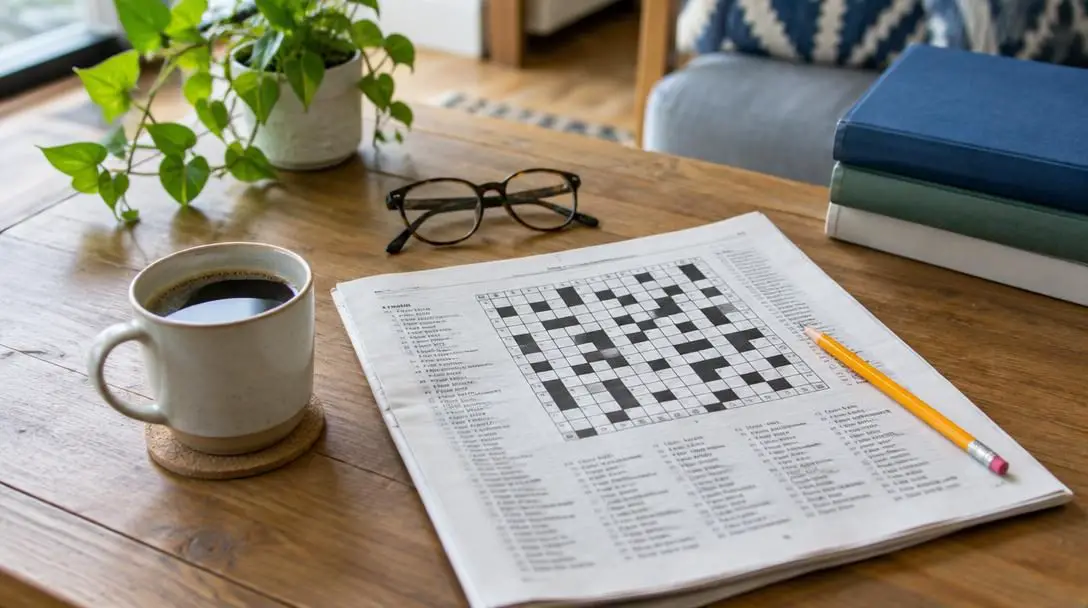
Solving a crossword puzzle is one of the most enduring intellectual pastimes in modern culture. For generations, enthusiasts have turned to the back pages of daily newspapers, specialized puzzle magazines, and digital mobile apps to test their vocabulary, trivia recall, and lateral thinking skills. Beyond killing time that might otherwise be wasted, regular puzzling provides an engaging mental workout that exercises verbal fluency, memory retrieval, and problem-solving flexibility across an interlocking grid of letters.
Despite their broad appeal, crosswords frequently intimidate newcomers who run into dense vocabulary, cryptic wordplay, and seemingly obscure trivia. Many novices mistakenly assume that veteran solvers possess photographic memories or know every archaic definition in the unabridged dictionary. In reality, the true difference between a struggling beginner and an adept solver is a methodical approach to grid construction, an eye for editorial misdirection, and a set of practical solving habits.
Key takeaways
- Crosswords are constructed linguistic puzzles rather than straightforward trivia tests, requiring lateral thinking and pattern recognition.
- Using a pencil instead of a pen prevents tentative guesses from visually locking you into incorrect crossing letters.
- Scanning the entire clue roster to fill only 100 percent certain answers builds an anchored foundation for tougher sections.
- Newspaper puzzle difficulty increases throughout the week, making early-week editions the best training ground for novices.
- Stepping away from an intractable grid allows your subconscious mind to resolve mental blocks without unnecessary frustration.
The Hidden Architecture of Crossword Puzzles
To consistently solve crosswords, one must first recognize the underlying philosophy that governs their creation. A crossword is fundamentally different from an academic quiz. In standard publications, editors and puzzle constructors view their craft as an entertaining battle of wits. The goal is rarely to present impossible trivia; instead, it is to present accessible answers concealed behind creative linguistic disguises, clever phrasing, and clever misdirection.
Furthermore, because crosswords rely on intersecting vertical and horizontal entries, constructors face intense structural constraints. Every letter in an Across answer must simultaneously work as a letter in a Down answer. To make complex grids hold together, constructors frequently rely on compact, vowel-heavy words, common idioms, and recurring letter combinations. When you look at an empty grid, you are looking at an engineered matrix where every entry supports its neighbors. Understanding this structural interdependence transforms the puzzle from an intimidating list of questions into a cooperative logic puzzle.
Crosswords are an engineered system of interlocking logic rather than a straightforward trivia test.
Five Essential Crossword Tricks Every Solver Should Know
By adopting the habits of experienced solvers, you can demystify complex grids and dramatically boost your solving speed. These five practical strategies provide an immediate boost to your puzzle-solving repertoire.
1. Grab a Pencil
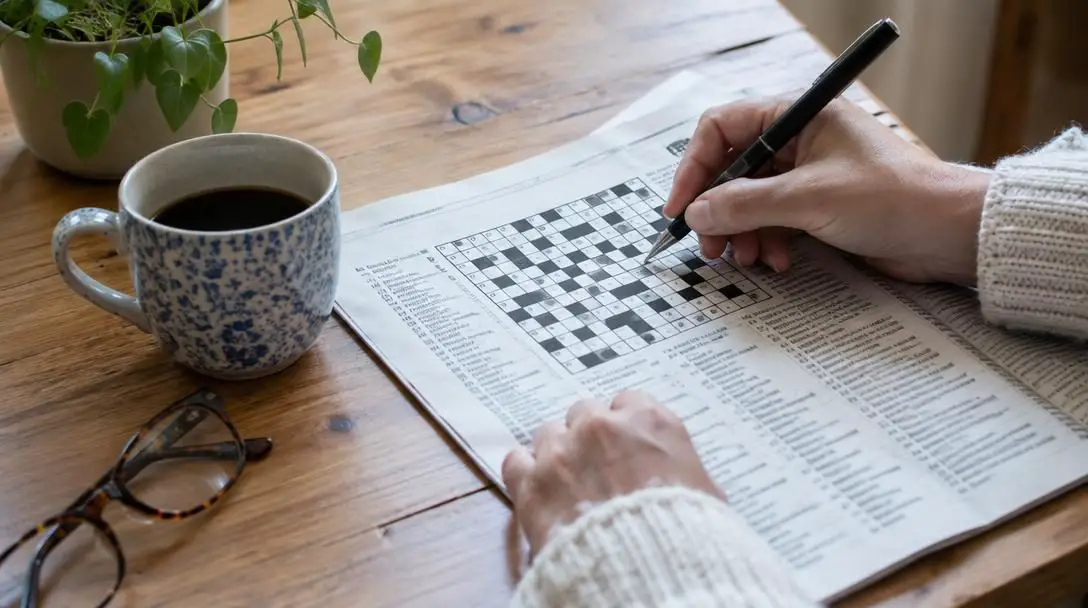
Many solvers are tempted to fill out a grid in ballpoint or gel ink because a completed ink grid looks clean, sharp, and confident. However, early entries in any crossword puzzle are inherently tentative. Writing in dark ink creates an artificial sense of permanence that can actively sabotage your entire effort. When you place a speculative word in dark ink, your eyes continue to register those crossing letters as verified facts, which subsequently leads you to misinterpret every intersecting clue in that quadrant.
Working with a sharp pencil and a dependable eraser lets you test potential solutions with zero commitment. You can lightly pencil in a prospective answer to see how its letters interact with crossing clues. If an intersecting entry reveals that your initial guess was incorrect, you can cleanly wipe the slate without leaving messy cross-outs or confusing smudges. Embracing a pencil removes performance anxiety and reflects the iterative nature of the solving process.
2. Don’t Guess at All (at First)
One of the most effective techniques utilized by world-class solvers is conducting a complete read-through of the entire clue list before writing down a single letter. As you scan both the Across and Down columns, only write down responses that you know with complete, unshakeable certainty. If there is even a sliver of doubt regarding an answer or its exact spelling, leave the corresponding squares completely blank on your initial pass.
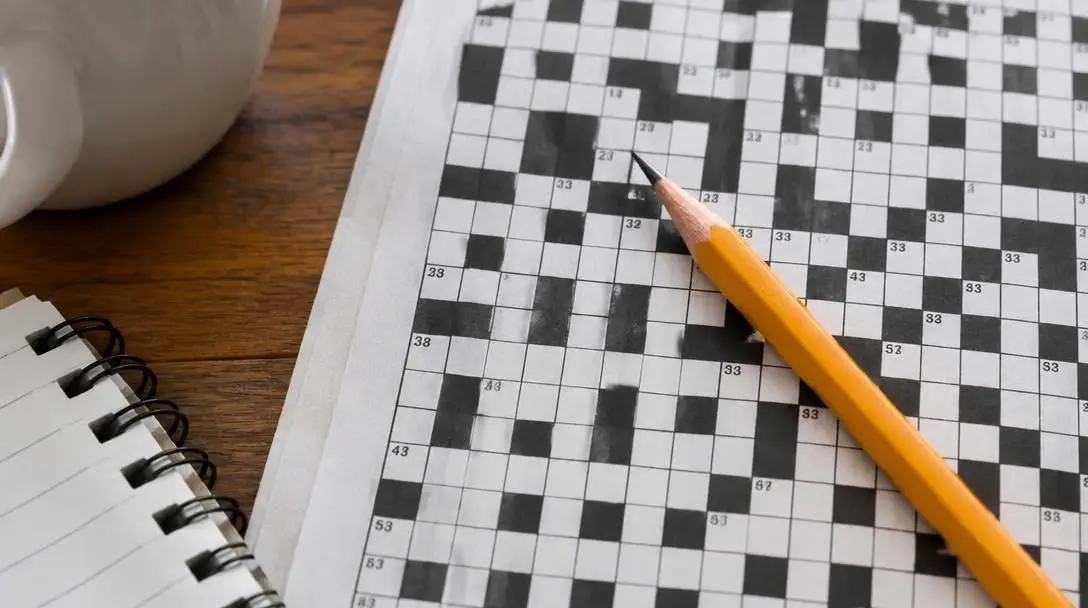
This disciplined restraint prevents early errors from cascading across the board. By cementing only confirmed answers, you establish reliable anchor points across the grid. These guaranteed letters then serve as helpful breadcrumbs that simplify adjacent, more difficult clues. For instance, if an ambiguous clue could yield either pole or poll, jumping to conclusions risks corrupting the intersecting line. Waiting for a confirmed cross to verify whether the fourth square requires an e or an l saves you from unraveling an entire corner later on.
3. Avoid the Weekends
A common mistake among casual solvers is picking up a Sunday paper, getting overwhelmed by the grid, and assuming they lack the intelligence for crossword puzzles. In the newspaper publishing world, crossword difficulty is not random; it follows a deliberate, calibrated progression across the days of the week. Monday editions are engineered to be the easiest, featuring straightforward definitions, accessible vocabulary, and minimal linguistic trickery designed to accommodate busy morning schedules.
As the week unfolds, constructors introduce progressively tighter themes, more obscure general knowledge, and convoluted wordplay. Saturday puzzles represent the pinnacle of difficulty for standard-sized grids, catering to veteran solvers who have ample leisure time to wrestle with demanding clues. Sunday puzzles, while usually matching the intermediate-to-advanced difficulty of a Thursday or Friday, feature an expanded grid size that demands sustained endurance. Beginners should focus on collecting and solving Monday editions until the underlying rhythms and conventions feel effortless.
4. Take a Break
Hitting an impasse on a single clue or a stubborn corner of the grid is an inevitable part of the puzzling experience. When this happens, staring intently at the empty boxes for twenty consecutive minutes rarely yields a breakthrough. Prolonged staring merely locks your brain into a repetitive thought loop, continually serving up the same incorrect associations and deepening your mental block.
The solution recommended by seasoned constructors is simple: set down your pencil and walk away. Stepping away to complete an everyday chore, take a brief walk, or focus on a different task allows your subconscious mind to process the clue in the background. Without the pressure of direct focus, lateral associations continue to fire. When you eventually return to the grid with rested eyes, clues that appeared completely opaque twenty minutes earlier will often resolve themselves almost instantly.
5. Get Punny
If crossword constructors have a shared creative trademark, it is an enduring love of puns and linguistic misdirection. In modern crosswords, a significant proportion of challenging clues are built around double meanings, homophones, figurative language, and humorous turns of phrase. A clue that appears grammatically awkward, nonsensical, or strangely specific at first glance is almost certainly a pun waiting to be untangled.
Developing an active radar for wordplay shifts your problem-solving perspective. Instead of searching your memory for obscure historical figures or scientific terminology, examine the words of the clue for alternative interpretations. Look for words that can operate as both nouns and verbs, idioms interpreted literally, or familiar expressions turned upside down. Once you learn to anticipate the constructor's playful humor, clues that once seemed baffling become some of the most enjoyable entries to crack.
Comparing the Five Solving Strategies
Every trick addresses a distinct aspect of the crossword experience, balancing mechanical execution with mental agility. The following table illustrates how these five core techniques function across different stages of a solve.
| Technique | Primary Focus | Key Benefit | Best Applied When |
|---|---|---|---|
| Grab a Pencil | Tool selection | Enables effortless corrections without visual clutter | Setting up your solving space |
| Don't Guess (at First) | Solving discipline | Prevents cascade errors from speculative entries | Conducting your initial sweep of the grid |
| Avoid the Weekends | Difficulty calibration | Builds core competency without excessive frustration | Selecting practice puzzles as a novice |
| Take a Break | Cognitive management | Clears mental fatigue and engages subconscious processing | Stalling out on a stubborn corner |
| Get Punny | Linguistic analysis | Decodes editorial misdirection and double meanings | Confronting odd or cryptic clue phrasings |
A Step-by-Step Solving Routine for Beginners
Applying these tricks in a haphazard manner will only yield partial results. To maximize your efficiency, integrate them into a repeatable, structured solving routine every time you approach a fresh puzzle.
- Prepare your equipment: Choose a well-lit workspace and equip yourself with a sharp pencil and an effective eraser, leaving pens behind to keep your workspace flexible.
- Select an appropriate day: Start with a Monday or Tuesday publication to ensure the clue style matches your current level of experience.
- Execute a clean first pass: Read through the Across clues sequentially, filling in only those answers you know with absolute certainty, then repeat the exact process for all Down clues.
- Anchor around crossing letters: Return to the clues adjacent to your verified entries. Use the confirmed letters to determine ambiguous spellings, such as distinguishing between homophones like pole and poll.
- Interrogate suspicious phrasing: Examine remaining difficult clues for potential puns, figurative language, or secondary definitions of familiar words.
- Step away when blocked: If progress completely grinds to a halt, set the puzzle aside for thirty minutes to let your subconscious clear the hurdle before returning.
Common Pitfalls That Derail Solvers
Progress in crossword solving is as much about unlearning bad habits as it is about picking up new techniques. Novices routinely stumble into the same set of traps:
- Prideful ink usage: Demanding perfection by solving in pen often ends in an illegible mess of crossed-out letters that obscures valid crosses.
- Overcommitting to speculative guesses: Dropping an unverified five-letter word into an empty corner can render every crossing clue unsolvable until the mistake is discovered.
- Taking every clue literally: Forgetting that editors use humor and misdirection leads solvers to search for non-existent trivia rather than recognizing a basic pun.
- Leaping straight to weekend editions: Jumping into a Saturday or Sunday puzzle without mastering early-week conventions inevitably leads to discouragement and burnout.
- Refusing to rest: Forcing your way through a mental block through sheer stubbornness causes cognitive exhaustion rather than solutions.
Advancing Beyond the Basics
As you gain consistency with early-week grids, you can begin expanding your solving horizons toward mid-week editions. Progressing into Wednesday and Thursday puzzles will introduce you to subtle conventions that constructors use to challenge solvers fairly.
One fundamental rule to internalize is that the clue and its answer must always share the same grammatical form. If a clue is written in the past tense, the answer will invariably be in the past tense. If a clue is plural, its solution will be plural. Similarly, if a clue ends in a question mark, it almost always signals that the constructor is using deliberate wordplay, a pun, or a figurative twist rather than a straightforward definition.
You will also begin to spot crossword-friendly vocabulary—frequently dubbed "crosswordese." These are short, vowel-rich terms, obscure geographic features, or three-letter animal names that constructors rely on to weave complex grids together. Recognizing these recurring puzzle staples allows you to breeze through transitional fill and spend your mental energy cracking the main thematic answers.
Frequently asked questions
Why are Monday crosswords easier than Saturday crosswords?
Newspaper puzzle difficulty follows an intentional, progressive schedule designed by editors. Monday puzzles feature straightforward definitions, widely known cultural references, and minimal wordplay to accommodate quick solving. Saturday puzzles feature deep misdirection, obscure vocabulary, and complex cluing aimed at experienced solvers who have more time to devote to the challenge.
What should I do when two possible spellings fit the same clue?
Avoid guessing blindly when faced with ambiguous spelling choices, such as homophones like pole and poll. Leave the ambiguous letters blank until you solve an intersecting clue that verifies the required letter, protecting the rest of that grid section from erroneous fill.
How does taking a break actually help you solve clues?
Staring at a stubborn clue causes cognitive fixation, reinforcing the exact mental block that prevented you from finding the answer. Walking away allows your subconscious mind to process associations freely in the background, making the correct definition or wordplay apparent when you return with fresh eyes.
Does solving crosswords require an encyclopedic memory?
No. While broad general knowledge is helpful, successful solving relies far more on understanding how clues are constructed, recognizing grammatical agreements, spotting puns, and leveraging crossing letters to logically eliminate incorrect possibilities.
What does a question mark at the end of a crossword clue mean?
A question mark at the end of a clue traditionally signals that the clue involves wordplay, irony, double meanings, or a pun. Solvers should look for a humorous or unconventional interpretation rather than a straightforward factual definition.
The bottom line
Crossword puzzling is an accessible, deeply rewarding pursuit once you look past the intimidating initial impression of an empty grid. By ditching the pen for a pencil, avoiding speculative blind guesses, respecting the weekday difficulty curve, taking tactical breaks, and embracing the constructor's love for puns, you can systematically dismantle even the most stubborn puzzles. With consistent practice and an organized solving routine, what once seemed like an impassable linguistic maze will quickly transform into an engaging, satisfying lifelong hobby.