5 Weird Facts About The History Of Massacheusetts
On February 6, 1788, Massachusetts ratified the United States Constitution to officially enter the Union as the sixth state. While recognized today as an economic and intellectual powerhouse anchored by Boston, the Commonwealth possesses a deep colonial heritage that stretches back well before the American Revolution. That centuries-long timeline fostered a cultural environment where rigid theology, resourceful community design, and creative problem-solving frequently intersected in unexpected ways.
From criminalizing beloved winter holidays to innovating modern athletics and pantry staples, early Massachusetts established precedents that diverge sharply from modern assumptions. Exploring these five historical anomalies offers a revealing look into how regional colonial oddities evolved into institutions, pastimes, and traditions enjoyed across the globe today.
Key takeaways
- Boston Common became America's first municipal green space after opening in 1634, though it functioned for two centuries as utilitarian ground before receiving an official public park designation in the 1830s.
- Puritan authorities outlawed the observance of Christmas during the mid-17th century, fining citizens caught feasting or refusing to work.
- Basketball was born at a Massachusetts YMCA when instructor James Naismith needed an indoor sport to keep students active during harsh winter weather.
- Despite the long ancient history of baked confections, the chocolate chip cookie was invented in 1938 by Ruth Graves Wakefield at the Toll House Inn in Whitman.
- English colonist John Smith named the territory after the Massachuset tribe near Boston, bypassing several other prominent regional tribes including the Wampanoag, Nauset, Nipmuck, and Pocumtuc.
At a glance: Five unusual historical milestones
The timeline of Massachusetts is packed with milestones that fundamentally transformed recreation, cuisine, civil law, and language. The table below outlines how these five bizarre chapters emerged across the Commonwealth's history.
| Milestone | Key date or era | Primary location | Historical significance |
|---|---|---|---|
| Boston Common | Opened 1634 (Park in 1830s) | Boston | First municipal open space, used for executions and grazing before becoming a public park. |
| Christmas prohibition | Mid-17th century | Colonial Massachusetts | Puritan statutes criminalized holiday feasting, merriment, and labor forbearance. |
| Invention of basketball | Late 19th century | YMCA gymnasium | Created by James Naismith as an indoor game for youth escaping freezing outdoor temperatures. |
| Toll House chocolate chip cookie | 1938 | Whitman | Ruth Graves Wakefield invented the modern staple at her historic Toll House Inn restaurant. |
| Naming the Commonwealth | Colonial settlement period | Boston harbor region | John Smith chose the Massachuset tribal name meaning "near the great hill" over neighboring tribes. |
Five surprising chapters from Massachusetts history
While school textbooks often focus strictly on the Boston Tea Party and the Battle of Bunker Hill, everyday life in the Massachusetts colony and subsequent commonwealth produced bizarre social policies and world-changing innovations.
Boston Common
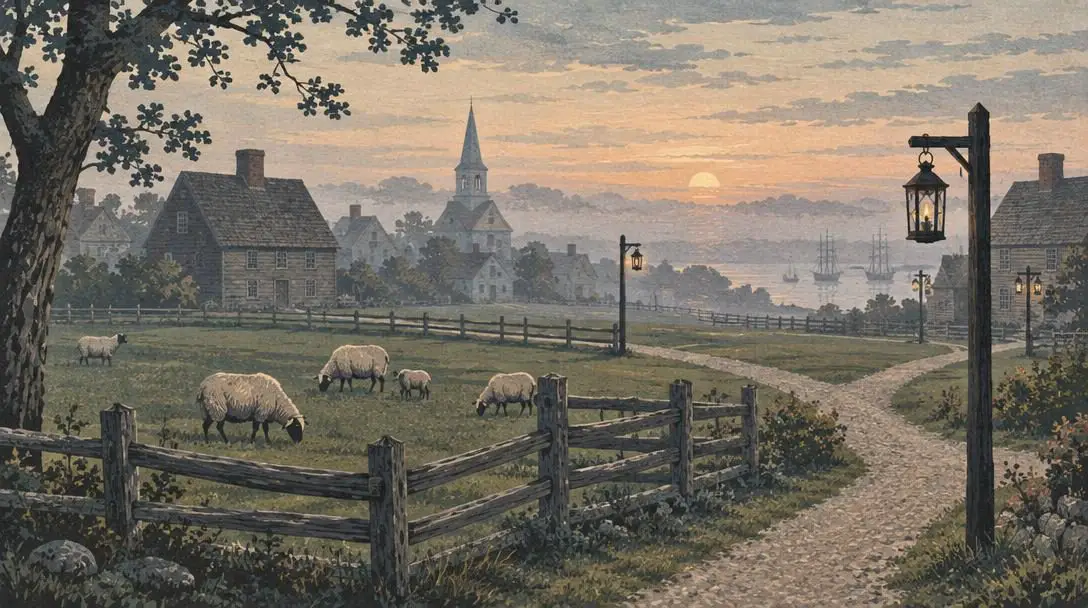
- Year opened: 1634
- Public park status: 1830s
- Total area: 50 acres
- Original uses: Livestock grazing, public executions, and picnics
Today, almost every town across the United States features a designated park where locals can stroll along shaded paths, read beneath manicured trees, and escape urban congestion. In early colonial America, however, the concept of communal parkland set aside strictly for leisure did not exist. That changed with Boston Common, a 50-acre parcel located directly in the heart of downtown Boston that became the nation's earliest municipal open space.
The property experienced a chaotic history of ownership during the early 17th century, changing hands between Puritan and Episcopalian authorities. When it first opened in 1634, it bore little resemblance to modern scenic recreational grounds. For its first two centuries, the Common served as a utilitarian space where local residents grazed cattle, military units conducted training drills, and magistrates carried out public executions. Only during the 1830s did civic leaders formally convert the property into a designated public park, laying the groundwork for municipal green spaces throughout the nation.
The 17th-century Christmas ban
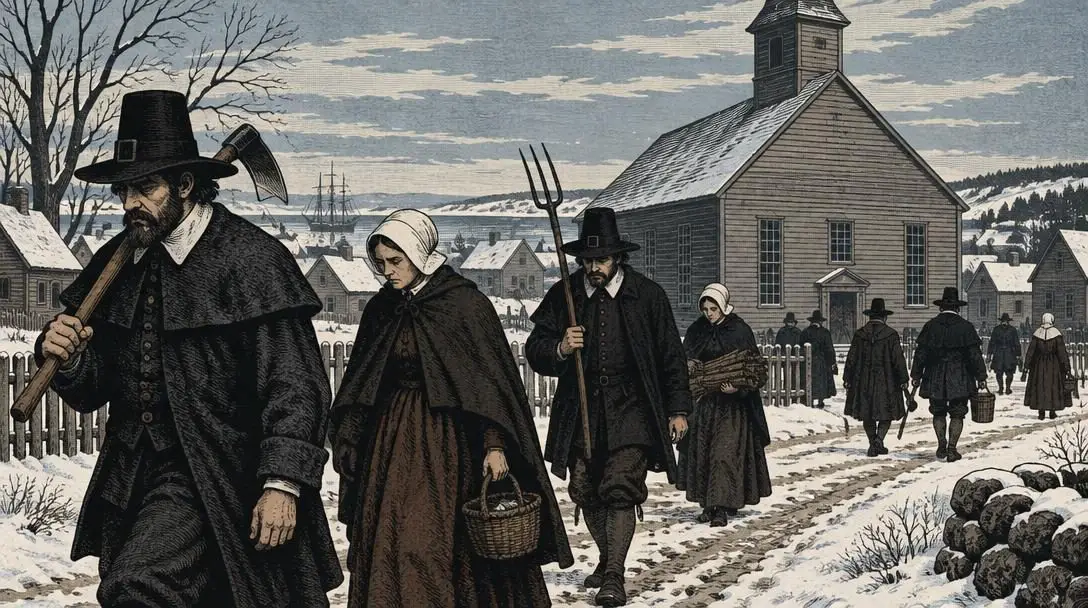
- Era of enforcement: Mid-17th century
- Penalized actions: Feasting, forbearing labor, and holiday revelry
- Historical fine: Five shillings (roughly $50 today)
- Ruling group: Puritan colonial magistrates
Modern holiday traditions in New England feature glowing light displays, downtown evergreen trees, and bustling winter festivals. In early colonial Boston, however, observing Christmas was strictly illegal. The devout Puritan leaders who governed Massachusetts viewed the holiday as an unbiblical practice rooted in pagan customs and disorderly European street carnivals, concluding that the festival was reserved strictly for fools.
To suppress the celebration, colonial lawmakers codified strict penal statutes that levied fines against anyone caught skipping work or enjoying festive meals. The law stated explicitly that whosoever shall be found observing any such day as Christmas or the like, either by forbearing of labor, feasting, or any other way would face an immediate fine. In modern currency, that penalty equaled approximately $50, forcing early residents to treat December 25 as an ordinary, somber workday under the watchful eyes of colonial magistrates.
Puritan lawmakers considered the traditional observance of Christmas an act of public folly subject to mandatory fines.
The YMCA origin of basketball
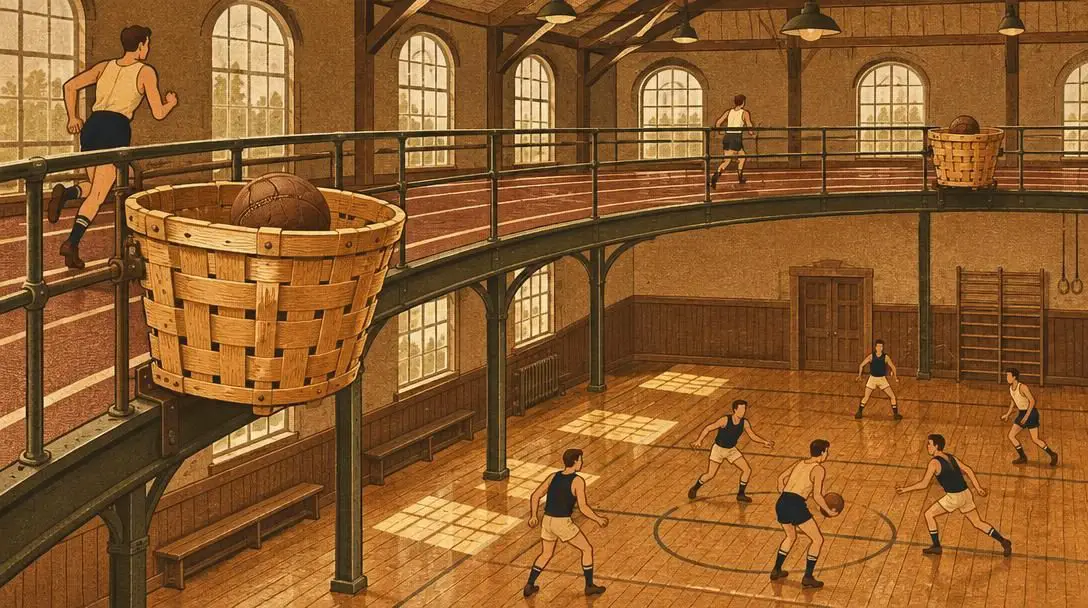
- Inventor: James Naismith
- Origin venue: YMCA gymnasium
- Driving challenge: Freezing winter weather keeping youth indoors
- Legacy links: University of Kansas and the Boston Celtics
Modern sports fans frequently associate basketball's heartland with the collegiate arenas of Kansas or the historic high school gymnasiums of Indiana. Furthermore, professional success often evokes the Boston Celtics, whose historic championship pedigree rivals only the Los Angeles Lakers. Yet basketball was neither designed on Midwestern plains nor developed on outdoor blacktops; it was conceived indoors inside a Massachusetts YMCA gymnasium.
The game was engineered by James Naismith, a Canadian immigrant and physical education instructor who faced a practical dilemma: bitter Massachusetts winter weather made outdoor recreation impossible for restless youths. Tasked with inventing a low-contact indoor sport to channel their energy, Naismith fastened peach baskets to gymnasium balcony railings. The resulting sport spread rapidly, eventually leading Naismith to serve as the inaugural head coach at the University of Kansas while sparking the legendary basketball boom across Indiana.
The Toll House chocolate chip cookie
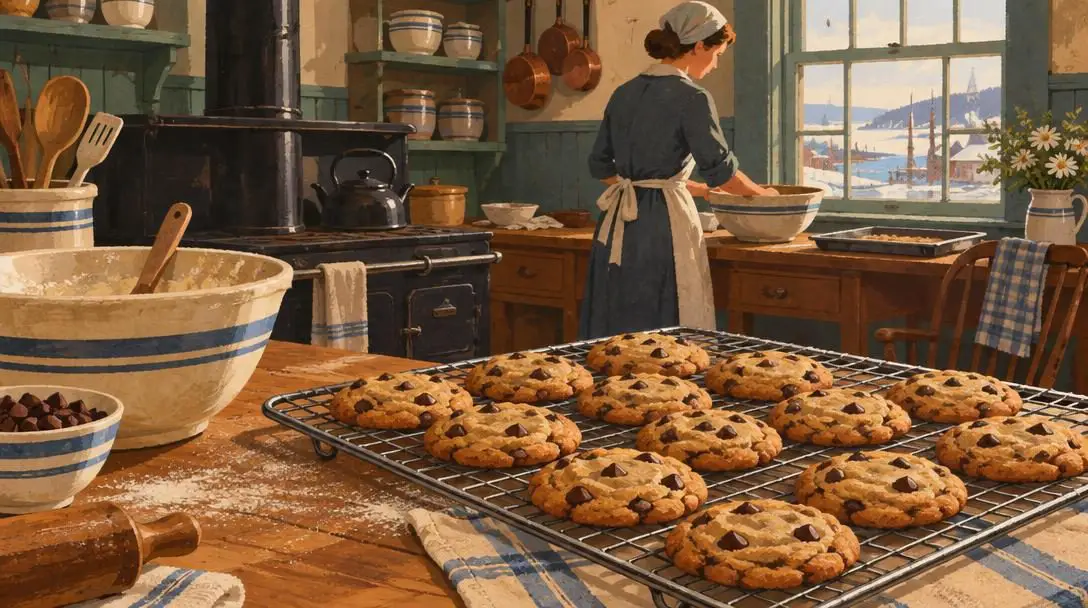
- Year invented: 1938
- Inventor: Ruth Graves Wakefield
- Birthplace: Toll House Inn (Whitman, Massachusetts)
- Preceding cookie history: Ancient Persia (7th century AD)
Baking historians trace the broad origin of sweet cookies back to 7th-century AD Persia, where bakers first incorporated sugar into grain pastes. Because general cookie recipes had circulated around the world for well over a millennium, modern consumers often assume that the classic chocolate chip cookie is an antique recipe passed down through colonial kitchens. However, this ubiquitous American treat was invented relatively recently in 1938.
The inventor was Ruth Graves Wakefield, an accomplished chef and proprietor of the Toll House Inn in Whitman, Massachusetts. Experimenting with dessert concepts for guests dining at her popular roadside inn, Wakefield chopped semi-sweet chocolate into small morsels and folded them into butter-rich cookie dough. Rather than melting evenly into the mixture, the chocolate held its shape. The resulting Toll House cookie became an overnight sensation, driving the inn's name into international commercial fame and transforming home baking across the world.
The Massachuset tribe and the state's name
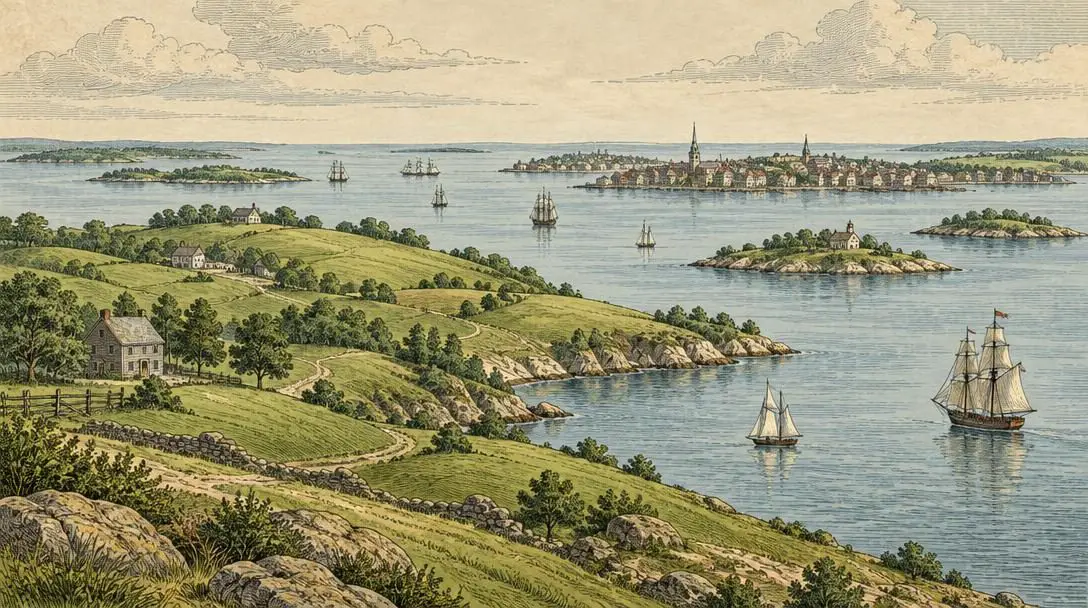
- English naming agent: John Smith
- Chosen namesake: The Massachuset tribe
- Name meaning: "Near the great hill"
- Neighboring native tribes: Nauset, Wampanoag, Nipmuck, and Pocumtuc
When English explorer and colonist John Smith mapped the coastline of New England, he selected the term that ultimately christened both the territory and the future commonwealth. Drawing directly from the Indigenous Algonquin language, the word translated roughly into English as "near the great hill." However, the Massachuset people were far from the only Indigenous society residing in the region.
The ancestral territories of the Nauset, Wampanoag, Nipmuck, and Pocumtuc tribes spanned extensive tracts across southeastern New England, the central interior, and the fertile river valleys to the west. The Massachuset tribe received the honor of providing the state's namesake primarily because their settlements occupied the immediate coastal geography surrounding Boston Harbor—the strategic epicenter where European colonists concentrated their trade, governance, and early urban development.
How colonial dynamics shaped Massachusetts culture
The odd developments that define Massachusetts history did not occur in isolation. Instead, they stemmed from a unique combination of religious ideology, demographic density, and regional environmental challenges that characterized life in the early American colonies.
Puritan authorities governed with a strong sense of theological mission. Because they viewed community behavior as a direct reflection of spiritual purity, early colonial administrators wielded civil law to control personal conduct, work habits, and holiday leisure. This strict oversight explains why spontaneous celebrations like Christmas were outlawed through financial penalties. At the same time, the harsh New England climate presented severe physical constraints, dictating when crops could be harvested, how livestock had to be sheltered, and what children could do during long winter freezes.
As the Massachusetts colony expanded and eventually entered the Union on February 6, 1788, these intense local dynamics shifted toward commercial enterprise and civic organization. The communal mindset that once policed holiday recreation was gradually redirected into establishing permanent civic infrastructure, such as dedicated parks and athletic organizations. Similarly, the entrepreneurial spirit that thrived along maritime trading routes laid the groundwork for suburban hospitality businesses like the Toll House Inn to turn local domestic arts into global brands.
Step-by-step: How to explore the state's eccentric history
For historians, travelers, and curious students, investigating the idiosyncratic history of the Commonwealth requires moving past surface-level folklore. Here is a practical, sequential process for exploring these historical milestones firsthand:
- Walk the historic boundaries of Boston Common: Begin at the central downtown hub to examine how the original 50-acre footprint functions today. Look past the modern promenades to consider how early settlers utilized the open ground for grazing, military muster, and judicial punishment prior to the 1830s.
- Review colonial court transcripts and municipal decrees: Examine historical records documenting the strict laws passed by 17th-century Puritan lawmakers. Reading the exact language that levied five-shilling penalties for holiday revelry illustrates the rigid social structure of the Massachusetts Bay Colony.
- Trace the architectural lineage of indoor gymnasiums: Explore the history of the early YMCA movement in Massachusetts. Reviewing how cold winter conditions forced instructors like James Naismith to devise indoor ball games helps connect athletic history with regional climate challenges.
- Examine the original Toll House Inn baking records: Trace the 1938 dessert innovation from Ruth Graves Wakefield's restaurant in Whitman. Compare her original published recipe with modern industrial versions to see how local culinary experimentation evolved into a household staple.
- Map the ancestral territories of New England's Indigenous nations: Use geographic resources to overlay the tribal regions of the Massachuset, Wampanoag, Nauset, Nipmuck, and Pocumtuc peoples. Visualizing their historical territories illustrates why coastal proximity to Boston led John Smith to prioritize one name over others.
Mistakes to avoid when studying Massachusetts history
Historical research often suffers from retroactive assumptions, where modern standards and hindsight distort how past events actually unfolded. When examining the unusual facts of early Massachusetts, avoid these common analytical pitfalls:
- Assuming holidays were universally cherished: Modern observers often imagine that colonial Americans shared our festive holiday spirit. In reality, early Massachusetts authorities viewed Christmas as a disruptive, foolish spectacle and criminalized its observance.
- Treating historic commons as ornamental parks: Do not assume that early public land was preserved for leisure or aesthetic beauty. Boston Common was a rugged, working landscape utilized for executions and livestock management for nearly two centuries before becoming a recreational park.
- Crediting athletic epicenters with sports origins: It is easy to assume that basketball originated in states famous for high school or collegiate dynasties, such as Indiana or Kansas. Historical documentation confirms it originated strictly as an indoor solution at a Massachusetts YMCA.
- Overlooking Indigenous cultural diversity: Observers frequently assume a state name represents the sole native group of that geographic region. Massachusetts was home to diverse tribes—including the Nauset, Wampanoag, Nipmuck, and Pocumtuc—whose histories are equally significant.
- Conflating early baking with modern chocolate recipes: While grain wafers and ancient Persian pastries existed long ago, modern chocolate chip cookies did not exist until Ruth Graves Wakefield's kitchen experiments in 1938.
Frequently asked questions
Why did the Puritans ban the celebration of Christmas in Massachusetts?
Puritan religious authorities believed Christmas lacked biblical justification and encouraged immoral behavior, gluttony, and public disorder. During the 17th century, they established laws fining any citizen caught feasting, refusing to work, or participating in seasonal revelry.
Was Boston Common always intended to be a public city park?
No. When Boston Common opened in 1634, it functioned as shared municipal land used for military drills, livestock grazing, and public executions. It was not designated as a recreational public park until the 1830s.
How did cold weather lead to the invention of basketball in Massachusetts?
During harsh Massachusetts winters, physical education students at the YMCA were unable to play outdoor field games. Instructor James Naismith created basketball indoors using peach baskets to provide a safe, active game that could be played inside a gym.
Where was the original chocolate chip cookie invented?
The chocolate chip cookie was invented in 1938 by Ruth Graves Wakefield at the Toll House Inn, an acclaimed dining establishment located in Whitman, Massachusetts.
What does the name Massachusetts mean, and who selected it?
The name was chosen by English colonist John Smith and derives from the Massachuset tribe, translating roughly to "near the great hill." Smith chose the name because the tribe lived near the central coastal area of modern-day Boston.
The bottom line
The history of Massachusetts illustrates how localized municipal solutions, religious dogmatism, and regional resourcefulness helped construct the cultural landscape of the United States. Rather than developing along a predictable timeline, the Commonwealth's heritage is defined by fascinating contradictions: a society that banned Christmas festivities also nurtured world-famous dessert innovations; a colony that utilized its public square for executions eventually created the template for modern American city parks; and a region plagued by freezing winter storms birthed a beloved indoor sport played across the world.
Examining these five weird historical milestones reveals that the foundations of modern American culture were rarely intentional from the start. Instead, they were the product of everyday people—from Indigenous tribes along Boston Harbor to YMCA instructors and roadside innkeepers—responding to their environment and leaving a lasting legacy in the process.