
Building Responsibility: How To Motivate Kids To Do Household Chores
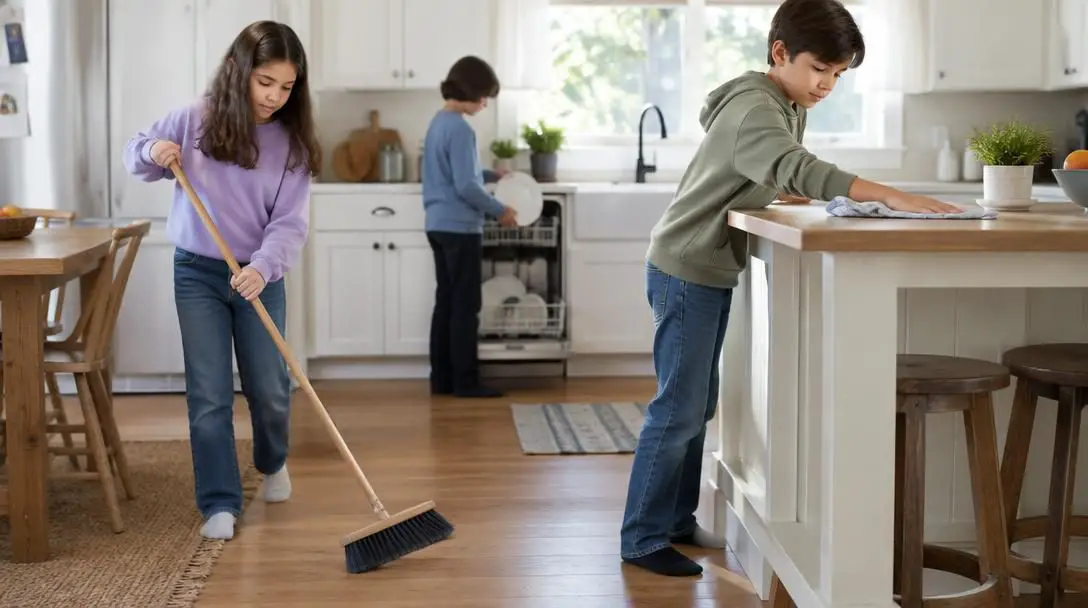
Maintaining a home is an unending cycle of washing, sweeping, folding, wiping, and tidying that can easily overwhelm parents who attempt to handle every task alone. When one or two adults carry the entire weight of domestic upkeep, exhaustion, resentment, and chronic stress inevitably follow. It is only natural to look to children to shoulder a fair portion of these daily duties, yet asking them to pitch in frequently triggers friction, stalling, tears, or direct defiance.
Getting children to participate in domestic routines does not have to turn into an exhausting battle of wills. By approaching chores not as an authoritarian mandate, but as an intentional vehicle for building life skills, connection, and accountability, parents can establish a predictable, cooperative household rhythm. Transforming daily maintenance into a calm, reliable routine requires structured expectations, collaborative teamwork, and thoughtful encouragement.
Key takeaways
- Involving children in domestic duties teaches essential life skills, fosters empathy, and cultivates a tangible sense of shared belonging.
- Partnering with children on tasks such as folding clothes or washing dishes removes feelings of isolation and transforms work into bonding time.
- Posting a visible, consistent schedule in a high-traffic location like the refrigerator reduces friction by turning ambiguous requests into clear expectations.
- Incentives such as sticker charts, screen time exchanges, or allowances for going above and beyond provide useful stepping stones toward internal discipline.
- Focusing praise on effort rather than adult standards of perfection protects a child's confidence and keeps them willing to learn.
Why household chores matter for childhood development
A household operates at its best when regarded as a cooperative community where every resident contributes to the shared environment. In many households, chore systems falter because tasks are introduced impulsively during moments of adult frustration. When a parent suddenly stops a leisure activity to demand that a room be cleaned immediately, the child rarely perceives the chore as a constructive responsibility; instead, they interpret it as an unwelcome disruption or an arbitrary punishment.
Engaging children in consistent domestic responsibilities yields benefits that go far beyond lightening the physical workload of parents. Regular household participation acts as a primary training ground for personal accountability and self-reliance. When children take responsibility for their immediate environment, they begin to understand the real-world labor required to sustain a comfortable home. This understanding cultivates genuine empathy for others and provides young people with an authentic sense of significance, proving that their presence and efforts tangibly impact the family unit.
Working side by side transforms a mundane household chore into a collaborative moment of connection and casual conversation.
Core strategies to motivate kids without nagging
Because children do not possess an inherent enthusiasm for domestic labor, relying on spontaneous desire or repeated nagging rarely produces long-term cooperation. Successful motivation rests on two foundational pillars: relational connection and transparent structure. When duties feel lonely, punitive, or boundless, enthusiasm evaporates. Conversely, when children understand exact expectations and feel supported throughout the process, their willingness to contribute rises significantly.
Do it with them
Children frequently experience simple chores as insurmountable obstacles when forced to tackle them in isolation. Removing that sense of isolation can immediately reshape their attitude toward the job. Joining your child creates an atmosphere of mutual cooperation rather than top-down enforcement. For instance, you might put away clean garments the moment your child finishes folding them, turning laundry into an efficient two-person assembly line. Similarly, you can dry plates and bowls while your child washes them at the sink. This side-by-side arrangement converts routine housework into an unhurried window for conversation, laughter, and casual check-ins about their day.
Make a schedule
Uncertainty breeds resistance. When responsibilities are sprung on children without warning, conflict is almost inevitable. Establishing a steady chore schedule removes the element of surprise and provides predictable boundaries. While families can organize their routines in numerous ways, unwavering consistency is the single most important factor for success. Drafting a comprehensive weekly chore schedule allows children to see precisely which responsibilities fall on which days. By mounting the schedule in an unmistakable, high-traffic location—such as on the kitchen refrigerator or on their bedroom door—you create an objective guide that eliminates the need for constant verbal prompting.
Consider incentives
External rewards can serve as an effective motivational bridge while children are gradually building internal self-discipline and habitual responsibility. Deciding whether to attach monetary compensation to domestic work is a personal decision that varies from home to home. Some parents prefer not to pay an allowance for everyday chores, choosing instead to allow kids to trade completed tasks for earned screen time or special family outings. This method creates a clear connection between digital privileges and real-world duties.
If you prefer to offer financial compensation, consider reserving an allowance strictly for duties that go above and beyond baseline expectations. Under this model, children complete everyday upkeep—such as clearing their personal items or making their beds—as standard contributing members of the household, while earning money exclusively for optional, heavier tasks. For younger children who cannot yet grasp the concept of money, visual systems like sticker charts provide immediate gratification. After earning a predetermined number of stickers, they can redeem them for an agreed-upon privilege or outing.
| Incentive Model | Ideal Age Group | Reward Currency | Primary Benefit |
|---|---|---|---|
| Sticker Charts | Toddlers and early elementary | Visual stickers leading to a special activity | Provides instant visual progress and gamifies simple habits |
| Privilege Exchange | Elementary through middle school | Screen time access or dedicated outings | Directly links daily digital entertainment to real-world tasks |
| Above-and-Beyond Allowance | Upper elementary through teens | Discretionary spending money for optional tasks | Protects basic family responsibilities while teaching personal finance |
Compliment your kids
Adult standards of cleanliness are refined through decades of repetition, whereas children are still mastering manual dexterity and spatial awareness. Expecting pristine execution right out of the gate can easily crush a young person's enthusiasm and cause them to shut down. Praising effort and persistence must always take precedence over demanding perfection.
When minor, easily correctable mistakes occur—such as a clean shirt hung up or folded inside out—gently show your child how to fix it on the spot without expressing disappointment. For more complex duties, such as cutting the lawn in a uniform pattern, take mental note of the gap in technique. When the chore comes around again the following week, offer a friendly demonstration of the proper pattern while highlighting how diligently they worked the previous time. This constructive approach protects their self-esteem and makes them far more receptive to your guidance.

How to set up a sustainable family chore system
Moving away from chaotic, last-minute demands toward a reliable family system is most successful when tackled methodically. Following an intentional setup process ensures that both parents and children share identical expectations from day one.
- Compile a master list of household responsibilities: Walk through your living space and catalog every recurring job required to keep the home functional, from daily kitchen cleanup to weekly lawn mowing.
- Assign duties based on developmental readiness: Match chores to each child's current fine motor skills and maturity level. Early learners can wipe baseboards, sort colored clothes, or track stickers, while older kids can manage dishwashing, yard care, and laundry.
- Design a clear visual schedule: Determine the weekly cadence of each chore. Lay out the exact days and times tasks must be tackled so expectations remain predictable and transparent.
- Display the schedule in a central location: Mount the finished document or sticker chart on the refrigerator door or the child's bedroom entrance to serve as an objective reminder.
- Establish agreeable incentives: Discuss the reward framework openly. Settle on whether the system uses sticker milestones, screen time exchanges, or financial compensation for optional labor, and allow children to pitch creative rewards.
- Model each task collaboratively: Never assign a chore without walking through it first. Work alongside your child, showing them how you fold garments, scrape plates, or sweep corners before asking them to perform the task independently.
- Inspect with encouragement and feedback: Evaluate the finished work with a supportive lens. Acknowledge hard work immediately, address minor adjustments with kindness, and earmark complex corrections for your next joint session.
Common pitfalls that derail chore routines
Even well-constructed chore plans can unravel if parents fall into predictable behavioral traps. Keeping your family's routine healthy requires steering clear of several common missteps:
- Demanding immediate, flawless execution: Expecting children to fold clothes with retail precision or sweep floors without missing a single crumb creates unnecessary tension and discourages ongoing participation.
- Correcting their work in front of them: Step-by-step redoing of a chore right after a child steps away communicates that their effort was inadequate, eliminating any intrinsic motivation to attempt the task in the future.
- Weaponizing chores as punishment: Assigning domestic tasks exclusively as a disciplinary consequence causes children to link home maintenance with shame and guilt rather than pride and cooperation.
- Failing to maintain schedule consistency: A chart posted on a wall quickly loses its authority if caregivers fail to track progress, overlook neglected duties, or neglect to provide agreed-upon incentives.
- Isolating children during overwhelming tasks: Leaving a young child alone in a messy room with instructions to clean it completely can trigger emotional paralysis; presence and collaborative guidance prevent overwhelm.
Adapting responsibilities as children grow
As children develop greater coordination, stamina, and autonomy, your household chore system should evolve alongside them. A framework that functions smoothly for a seven-year-old will inevitably feel restrictive or outdated to a young teenager. Regularly assessing how the system is operating gives families an opportunity to adjust responsibilities without conflict.
When a child demonstrates complete independence in folding laundry or managing the dishwasher, you can gradually phase out those duties in favor of higher-level life skills, such as basic meal preparation or deeper household maintenance. Incentive structures require similar updates. A visual sticker chart that captivates an early elementary student will lose its effectiveness as they mature, signaling that it is time to pivot toward earned personal freedoms, flexible screen time privileges, or opportunities to earn spending money by completing advanced projects around the property. Open, ongoing conversations preserve the spirit of teamwork across every developmental milestone.
Frequently asked questions
Should children be paid an allowance for doing standard chores?
Families approach allowances differently, and both paid and unpaid philosophies can work. Many caregivers prefer not to pay for baseline duties, viewing basic chores as an expected contribution to the home. Instead, an effective compromise is offering an allowance strictly for extra tasks that go above and beyond everyday household expectations, or using non-monetary incentives like screen time exchanges.
What should I do if my child does a chore poorly?
Always praise the effort they invested before addressing any errors. If a mistake is quick and simple—like a shirt put away inside out—gently show them how to correct it without criticism. If the issue involves a broader skill, such as cutting the grass in an irregular pattern, wait until the chore comes around again to demonstrate the proper technique collaboratively.
How can I motivate a child who refuses to start their chores?
Resistance often stems from feeling isolated or overwhelmed. Offer to tackle the chore together, splitting the responsibilities so the job feels manageable. Additionally, ensure the task is clearly listed on a predictable, visible schedule so the expectation does not come as a surprise interruption to their day.
Where is the most effective place to post a chore chart?
The best locations are prominent, high-traffic areas that family members pass regularly. The refrigerator door and the exterior of a child's bedroom door are both excellent spots that keep expectations visible, serving as neutral reminders that cut down on the need for verbal nagging.
Is it effective to assign chores as a consequence for bad behavior?
No, chores should not be used exclusively as disciplinary punishment. Tying chores to misbehavior teaches children to view domestic upkeep as a negative, punitive burden rather than an essential, empowering life skill and a shared family responsibility.
The bottom line
Motivating children to take an active role in maintaining the home is an investment in their long-term independence and character. When parents move away from sporadic, high-stress chore assignments and embrace consistent schedules, collaborative teamwork, and constructive praise, resistance begins to subside. By treating household upkeep as a shared journey rather than a solitary chore, you build a cleaner home and a more cohesive, capable family.