Busted: 5 Myths About The Constitution
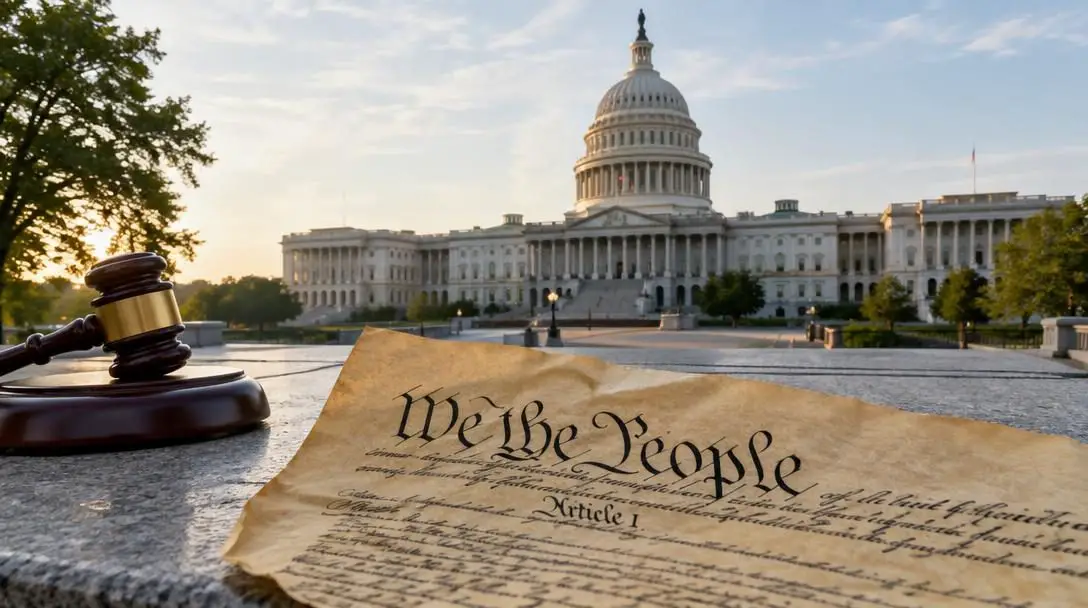
In terms of foundational historical documents, few texts hold as much enduring significance as the Constitution of the United States. Drafted during the sweltering Philadelphia summer of 1787 and formally ratified the following year, the document created the legal framework for a fledgling republic and established the enduring balance of power among federal branches. Today, it remains the supreme law of the land, providing vital institutional checks and individual protections that guide modern American civic life.
Yet despite its immense authority, widespread misconceptions about the text have circulated for generations. Because the complete charter is rarely read in its entirety from preamble to closing endorsements, folklore, classroom summaries, and political slogans often replace the historical reality. Examining the convention records, draft manuscripts, and delegate rosters reveals that several of the most common public assumptions about the Constitution are actually persistent myths.
Key takeaways
- The United States Constitution makes no direct mention of God, maintaining religious neutrality to protect freedom of conscience.
- The official working copy of the Constitution was penned on animal parchment rather than hemp paper.
- While Congress maintains the constitutional authority to declare war, the president retains executive power as Commander in Chief to deploy troops into armed conflicts.
- Founding figures Thomas Jefferson and John Adams did not sign the Constitution because both were serving on overseas diplomatic assignments in 1787.
- The protections for speech, religion, and assembly were originally drafted as the third proposed amendment rather than the first.
At a glance: Constitutional myths versus historical facts
| Subject | Common misconception | Documented historical reality |
|---|---|---|
| Divine reference | The Constitution explicitly invokes God | Contains no mention of God; uses only the standard legal dating phrase “The Year of Our Lord” added after approval |
| Document material | The framers used durable hemp paper | The formal charter was inscribed on parchment prepared from animal skins |
| War powers | Presidents cannot commit forces without Congress declaring war | Presidents deploy military forces under Commander in Chief authority without formal declarations |
| Key signatories | Thomas Jefferson and John Adams signed the charter | Neither founder was present; Jefferson was in Paris and Adams was in London |
| First Amendment | Free expression was drafted as the premier right | It was the third proposed change, elevated after the original first two failed initial ratification |
Five widespread myths about the United States Constitution
Myth: The Constitution directly mentions God
A frequent assumption among modern readers is that the text of the Constitution contains overt spiritual declarations or references to a higher power. This belief commonly arises because another celebrated national charter, the Declaration of Independence, explicitly invokes the “Laws of Nature and of Nature’s God.” Furthermore, many early state constitutions openly incorporated religious terminology and theological references into their preambles and oaths of office.
The federal Constitution, by contrast, makes no mention of God. The delegates in Philadelphia deliberately drafted the text to remain religiously neutral for its era, ensuring that national civic authority would remain distinct from ecclesiastical governance while guaranteeing freedom of religion for all citizens. While the closing ratification clause features the conventional calendar phrasing “The Year of Our Lord,” this conventional dating formula was inserted after the original draft had been negotiated and approved, rather than functioning as an intentional theological assertion within the legal articles.
Myth: The Constitution was written on hemp paper
Because industrial hemp was a widely cultivated and popular agricultural resource in eighteenth-century North America, a persistent legend claims that the national charter was inscribed on hemp paper. In modern debates, this story is frequently cited to point out perceived historical irony regarding later federal prohibitions on cannabis and industrial hemp cultivation.
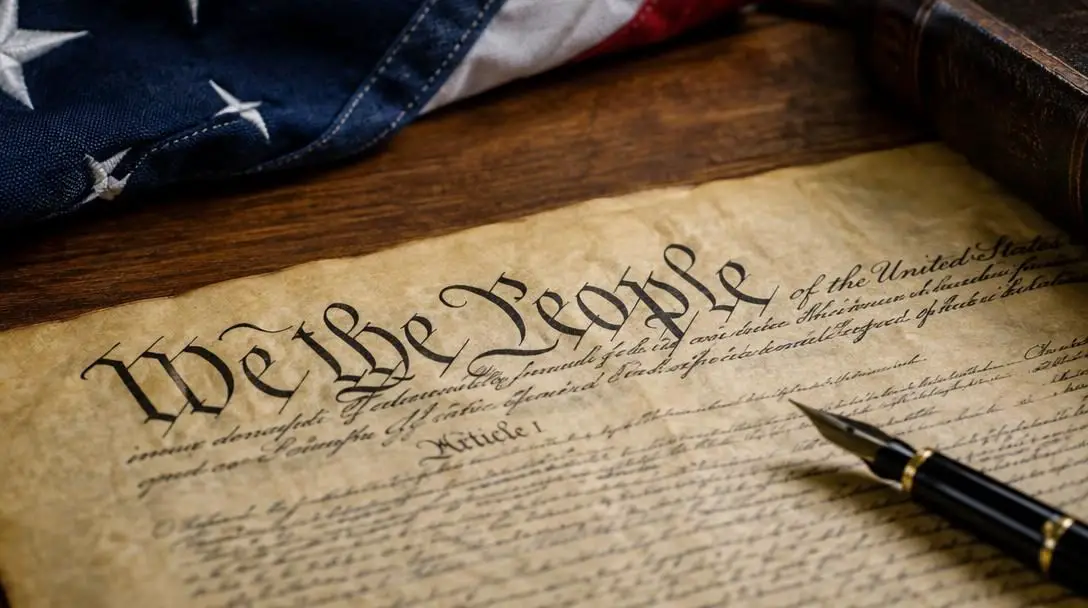
Historical conservation records confirm that the official United States Constitution was never written on hemp paper. Instead, calligraphers used parchment, an extremely durable medium produced through the rigorous scraping, cleaning, and stretching of animal skins, typically from sheep or goats. The primary display copies of both the Declaration of Independence and the Bill of Rights were likewise inscribed on animal parchment to ensure they survived centuries of handling and environmental exposure.
Myth: The president cannot engage in conflict without Congress declaring war
When contentious foreign policy crises arise, citizens often assume that the executive branch has no constitutional authority to direct armed forces into combat operations without an explicit, formal declaration of war from Capitol Hill. Under this interpretation, military engagement would remain legally impossible until both legislative chambers cast an official vote authorizing warfare.
In practice, the constitutional distribution of power divides military governance between two branches. Article I reserves the power to formally declare war for Congress, but Article II designates the president as the Commander in Chief of the military. This executive designation empowers the commander in chief to order troop deployments, manage defensive actions, and initiate foreign armed conflicts at their discretion. A clear modern illustration occurred during the Iraq War between 2003 and 2011: President George W. Bush deployed military forces overseas for an extensive, multi-year conflict that the public recognized as war, yet Congress never issued an official constitutional declaration of war.
The operational authority of the commander in chief permits extensive troop deployments and prolonged combat missions without an official legislative declaration of war.
Myth: Thomas Jefferson and John Adams signed the Constitution
Because John Adams and Thomas Jefferson stand among the most prominent American founders, many readers take it for granted that their signatures grace the closing page of the Constitution alongside their fellow statesmen. Both figures were instrumental in the push for American independence in 1776, and their central role in creating the republic makes their absence from the constitutional roster surprising to many.
Neither man signed the Constitution because both were overseas on diplomatic duties throughout the Constitutional Convention of 1787. Jefferson was stationed abroad in Paris representing American interests in France, while Adams was in London serving as the nation’s minister to Great Britain. Out of the 55 delegates who gathered in Philadelphia to debate the new government, only 39 delegates added their names to the final document. Among those who did complete the signing was Benjamin Franklin, who took part in the final endorsement at 81 years of age.
Myth: Protections for speech, religion, and assembly were always the First Amendment
The First Amendment holds an iconic place in American law and cultural awareness, protecting core freedoms of speech, press, assembly, religion, and the right to petition the government. Because these rights seem paramount to an open society, many assume the founders deliberately positioned them as their top priority when drafting the Bill of Rights.
When the first package of constitutional modifications was sent to the states, these rights were originally listed as the third amendment. The original first proposal concerned legislative apportionment, establishing a ratio of one federal representative for every 30,000 citizens, setting a minimum of 100 representatives and a cap of 200 until expanded by law. When that measure failed to secure enough state ratifications, the original second proposal—which restricted mid-term Congressional pay adjustments—was bumped up, only to stall as well during the founding period. Consequently, the third proposal advanced up the list to become the First Amendment we recognize today, while the pay amendment waited centuries before being reconsidered and ratified.
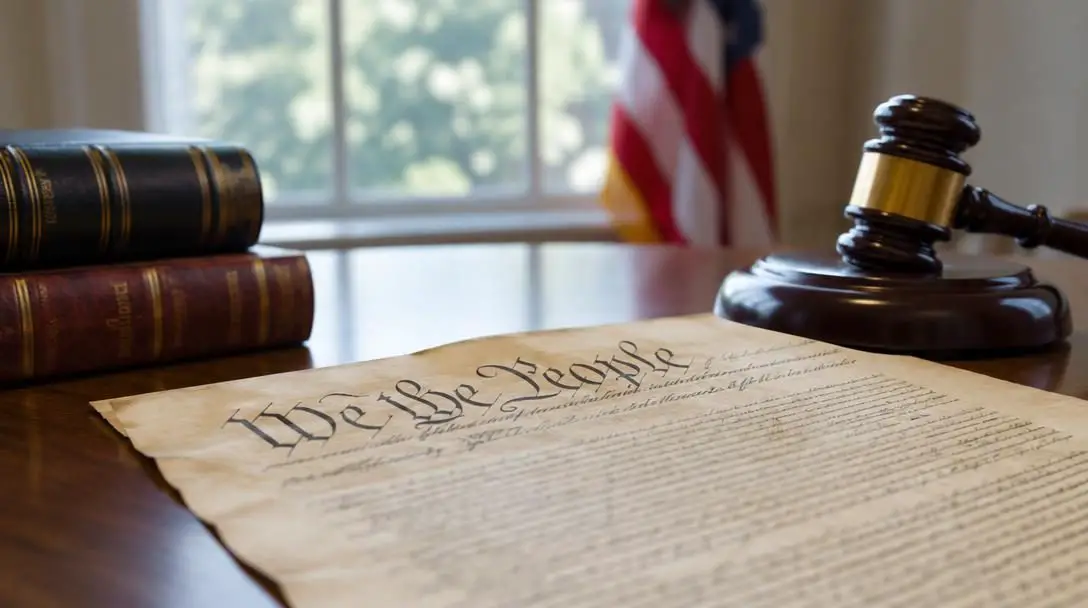
How constitutional structure and ratification work
To grasp why these misunderstandings continue to thrive, it helps to examine how the framers built the operating architecture of the charter during their deliberations in 1787. The delegates were tasked with designing a structural blueprint for governance rather than drafting a philosophical or moral manifesto. This practical focus led them to organize power into three separate and complementary divisions:
- The legislative structure: Outlined in Article I, this framework grants Congress the exclusive prerogative to enact laws, manage public finances, approve formal declarations of conflict, and vote on potential constitutional alterations.
- The executive structure: Set forth in Article II, this system establishes the presidency and invests the office with operational command over the armed forces, allowing immediate tactical maneuvers without legislative pre-approval.
- The amendment structure: Regulated by Article V, this mechanism enforces strict voting thresholds across state legislatures, ensuring that proposed changes face comprehensive scrutiny before joining the supreme law.
Because the convention delegates intended to construct functional machinery for federal administration rather than compose an inspirational treatise, they avoided spiritual declarations that might cause regional dispute or exclude non-conforming citizens. The mechanical nature of the text also required durable materials, prompting the choice of parchment to preserve the original articles across centuries.
Practical steps for verifying constitutional claims
Evaluating assertions about the founding documents requires separating folklore from documented history. Researchers and curious citizens can systematically examine historical statements using a repeatable sequence of checks.
- Consult the original primary source: Check the actual transcript of the Constitution to confirm whether contested terminology, such as religious phrases, appears anywhere within the seven articles.
- Distinguish between separate founding texts: Keep the distinct language and purposes of the Declaration of Independence, individual state charters, and the federal Constitution clearly separated.
- Cross-reference delegate participation records: Verify convention rosters against the 39 final signatories to account for diplomatic absences, such as delegations stationed in London or Paris.
- Trace the chronological path of amendments: Examine the initial sequence of proposals submitted to early state legislatures to track how unratified articles altered final amendment numbering.
- Compare executive actions against congressional votes: Review historical military deployments against legislative journals to observe how Commander in Chief authority operates alongside formal declarations of war.
Common historical mistakes readers make
Misunderstandings surrounding the nation’s founding laws frequently emerge from easy-to-make assumptions about historical conditions and document preservation. Avoiding these standard missteps helps keep civic discussions grounded in documented evidence:
- Conflating foundational charters: Blending the spiritual preamble of the Declaration of Independence with the functional legal mechanisms of the Constitution leads to erroneous claims about divine language in the federal framework.
- Presuming universal founding attendance: Imagining that every celebrated Revolutionary figure was in Philadelphia during the convention overlooks the international diplomatic posts held by key leaders.
- Assuming uniform colonial materials: Generalizing the broad agricultural use of plant fibers like hemp obscures the specialized use of animal parchment for permanent legal manuscripts.
- Equating combat deployment with declared war: Overlooking presidential authority under the Commander in Chief clause leads observers to believe every large-scale conflict requires an enacted congressional declaration.
- Viewing the Bill of Rights as an unedited draft: Treating the ratified amendments as an unaltered document obscures the original structural numbering and the legislative compromise behind early proposals.
Frequently asked questions
Does the Constitution mention a higher power anywhere in the text?
The original seven articles of the Constitution contain no direct reference to God. The only related phrase is the standard clerical calendar convention “The Year of Our Lord,” which was added alongside the date of signing rather than as a theological statement within the law.
Why wasn't the Constitution written on hemp paper?
Official records of permanent importance were traditionally inscribed on animal parchment, created from scraped and stretched sheep or goat skins. Parchment offered superior longevity and physical durability compared to eighteenth-century plant-based papers.
How can a president fight a war without a congressional declaration?
The Constitution divides war powers by giving Congress the sole authority to formally declare war, while naming the president as Commander in Chief. This command role allows presidents to order military operations and deploy troops abroad without requiring an official declaration from the legislature.
Why did Thomas Jefferson and John Adams not sign the Constitution?
Both founders were living abroad on diplomatic service during the 1787 Constitutional Convention. Thomas Jefferson served as the United States minister to France in Paris, while John Adams represented the country as minister to Great Britain in London.
What was the original First Amendment intended to cover?
The initial first amendment proposed in 1789 regulated the apportionment of the House of Representatives based on population growth. When it failed to win ratification from enough states, the third amendment on the list—protecting speech, religion, and assembly—became the First Amendment.
The bottom line
The United States Constitution is a carefully calibrated structural document designed to organize power, balance branches of government, and protect essential liberties. When evaluated through direct historical evidence rather than popular folklore, many longstanding beliefs—from references to deity and hemp pages to universal founder signatures—fall away. Reviewing the text itself illuminates the true legal mechanics that have sustained the nation’s foundational charter across centuries.