Can Crosswords Make You Smarter?

Crossword puzzles have remained among the most popular and enduring games in the world, with an estimated 50 million people across the globe solving them on a daily basis. From morning commuters bent over newsprint to digital subscribers tapping screens, these intricate grids demand an extensive vocabulary, sustained focus, and considerable patience. Because cracking a tough puzzle feels like a serious workout for the mind, solvers often wonder whether dedicating time to the craft can make an individual demonstrably smarter.
Historically associated with academics, voracious readers, and language lovers, the crossword has long enjoyed a reputation as premier cognitive fuel. Legendary entertainer Carol Burnett famously highlighted her daily habit, remarking, "I do the New York Times crossword puzzle every morning to keep the old grey matter ticking." Yet modern neuroscientists and cognitive psychologists have pushed beyond anecdotal enthusiasm to investigate whether this daily mental exercise translates into higher general intelligence, superior problem-solving acumen, or meaningful protection against age-related cognitive decline.
Key takeaways
- Crosswords engage all five primary components evaluated in formal intelligence quotient (IQ) testing, with pronounced benefits for working memory and processing speed.
- Nationally ranked crossword and Scrabble players demonstrate cognitive proficiencies comparable to students scoring over 700 on verbal and quantitative SAT sections.
- While word games cannot outright prevent or cure dementia, regular mental challenges build cognitive reserve that helps the brain withstand physiological damage.
- Research shows an incremental relationship between puzzle frequency and cognitive performance, with daily solvers displaying measurably younger brain ages.
- A daily commitment of approximately one hour toward crosswords and mentally strenuous pastimes offers the greatest protective benefit for long-term brain health.
How Crosswords Stimulate Core Dimensions of Intelligence
To understand whether solving crosswords can elevate intellect, researchers examine how intelligence is defined and measured. Formal assessments of an Intelligence Quotient (IQ) analyze five distinct cognitive domains: verbal comprehension, visual-spatial processing, fluid reasoning, working memory, and processing speed. Solving a crossword puzzle is uniquely demanding because it activates all five of these faculties in tandem rather than isolating a single mental process.
When approaching a clue, your brain initiates a rapid sequence of cognitive tasks. You must parse subtle linguistic indicators, query long-term memory for obscure facts or synonyms, hold potential answer configurations in working memory, and cross-reference those letters against intersecting down or across entries. This coordinated mental activity stimulates neural pathways, improving the efficiency with which your brain retrieves stored information and evaluates spatial constraints.
| Cognitive Domain | Role in Crossword Solving | Primary Mental Benefit |
|---|---|---|
| Verbal Comprehension | Decoding vocabulary, synonyms, idioms, and subtle linguistic clues | Expands lexicon and sharpens semantic recall |
| Visual-Spatial Processing | Navigating intersecting rows and columns across the grid | Improves spatial orientation and pattern recognition |
| Fluid Reasoning | Deciphering wordplay, puns, anagrams, and novel clue structures | Strengthens lateral thinking and deductive logic |
| Working Memory | Holding tentative letter combinations while evaluating crossing words | Increases short-term information retention capacity |
| Processing Speed | Quickly scanning clues, assessing options, and entering solutions | Accelerates cognitive retrieval and decision-making |
Studies show that working memory and processing speed exhibit the most noticeable enhancements through puzzle solving. The brain functions much like physical muscle tissue: when subjected to regular, structured demands, it adapts by streamlining neural communication. While crosswords may not alter your innate genetic baseline, they maximize your functional capacity within these vital cognitive categories.
Engaging with an intricate word grid demands the simultaneous activation of memory, reasoning, and spatial analysis, providing a complete workout across every pillar of measurable intellect.
Cognitive Benchmarks: Elite Solvers vs. Academic Achievers
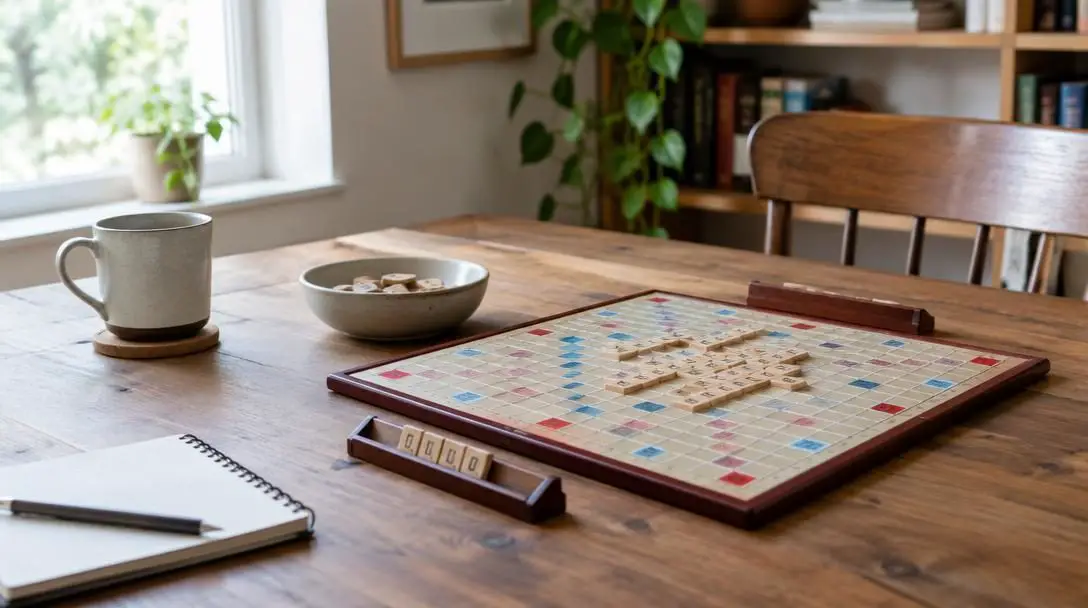
Scientific interest in word games has led researchers to study elite practitioners to measure how high-level puzzle solving correlates with broader academic ability. One study evaluated individuals who were nationally ranked in competitive crosswords and Scrabble, comparing their cognitive function directly against elite college students who had scored 700 or higher on both the verbal and quantitative portions of the SAT.
The comparative data revealed that top-tier crossword solvers matched the intellectual rigor of top-scoring college students. While there was no overwhelming performance gap between the two cohorts, the crossword competitors achieved the highest overall scores in cognitive ability. Their reading comprehension, vocabulary retention, and written reasoning capabilities aligned with students earning admission into elite Ivy League institutions like Harvard and Yale.
Crosswords, Brain Age, and Neurological Resilience
A significant portion of the global crossword-solving population belongs to older demographics. As life expectancy has increased, scientists have focused intently on whether word games can delay or reverse age-related cognitive decline. Although early hypotheses hoped that daily puzzles might provide an outright shield against neurodegenerative disorders, clinical findings present a more nuanced, realistic perspective.
James Pickett of the United Kingdom Alzheimer’s Society clarified the exact mechanism through which puzzles support brain health, explaining: "Although playing 'brain games'…may not prevent dementia, it has been shown that regularly challenging yourself mentally seems to build up the brain’s ability to cope with (the) disease." Rather than preventing physical pathology, mentally demanding tasks help build cognitive reserve. This resilience allows individuals to maintain functional independence and mental clarity far longer, even if underlying physiological changes occur.
Building on these findings, Keith Wesnes, Professor of Cognitive Neuroscience at the University of Exeter Medical School, directed extensive research exploring the precise correlation between word puzzles and cognitive acuity across thousands of participants. Professor Wesnes reported clear, quantifiable outcomes:
"We found direct relationships between the frequency of word puzzle use and the speed and accuracy of performance on nine cognitive tasks assessing a range of aspects of function including attention, reasoning, and memory."
Professor Wesnes further elaborated on the cumulative value of maintaining the practice: "Performance was consistently better in those who reported engaging in puzzles, and generally improved incrementally with the frequency of puzzle use." His research demonstrated that participants who solved word puzzles daily achieved cognitive scores typical of individuals significantly younger than their biological age, highlighting word puzzles as an effective tool for sustaining mental sharpness across the lifespan.
These findings were reinforced by research conducted by Tiffany Hughes and Chung-Chou Chang, who analyzed the interplay between lifestyle activities and late-life mental acuity. In their published research, they stated: "A lower risk of dementia was found for a greater number of activities and for a high compared with low weekly time commitment." Their work specifically evaluated crosswords as part of a structured mental regimen, concluding that dedicating approximately one hour per day to challenging cognitive activities provides a measurable protective effect against late-life cognitive decline.

Practical Steps for Building a Daily Crossword Routine
Establishing a rewarding crossword practice requires a structured strategy to avoid cognitive burnout and build sustainable mental momentum. By treating puzzles as progressive mental training, solvers can steadily improve their working memory, verbal fluency, and processing speed.
- Assess current skill levels: Start with early-week puzzles (such as Monday or Tuesday editions in major syndicates) before tackling complex weekend grids. Establishing an early baseline prevents frustration while developing a familiarity with standard clue architecture.
- Establish a dedicated time window: Reserve a specific, uninterrupted thirty-minute block each day—such as during morning coffee or an afternoon break—to solve without digital distractions or background noise.
- Work across intersecting clues: Avoid solving down a single sequential list. Jump between across and down clues to place critical intersecting letters, which unlocks elusive words and activates visual-spatial problem-solving.
- Target an hour of daily activity: Align your habit with the recommendations of researchers Tiffany Hughes and Chung-Chou Chang by spending up to an hour each day across crosswords and complementary mentally demanding pastimes.
- Maintain consistency over speed: Emphasize methodical accuracy, patience, and deliberate vocabulary recall over racing against a timer. Processing speed improves naturally once semantic retrieval patterns are firmly established.
Common Mistakes to Avoid
Both novice solvers and experienced enthusiasts often fall into counterproductive habits that diminish the cognitive benefits of puzzle solving. Avoiding these common errors ensures your brain remains actively challenged:
- Relying immediately on answer keys: Looking up solutions the moment you encounter resistance eliminates the mental strain necessary for building new neural pathways and exercising fluid reasoning.
- Fixating on a single clue: Staring endlessly at one elusive square creates mental fatigue. Move to another quadrant of the grid to allow subconscious processing to work on the stalled clue in the background.
- Ignoring puzzle themes and conventions: Overlooking subtle clue markers—such as question marks denoting puns, abbreviations signaling shortened answers, or matching verb tenses—makes solving needlessly difficult.
- Assuming absolute immunity from disease: Believing that puzzles guarantee total protection against dementia is an unrealistic expectation; crosswords are a tool for cognitive reserve, not an impenetrable biological cure.
- Confining your effort to familiar word lists: Sticking exclusively to simple puzzles that require minimal thought turns solving into an automatic habit rather than a stimulating cognitive exercise.
Designing a Well-Rounded Mental Fitness Regimen
While crosswords offer exceptional practice for verbal comprehension, lexical retrieval, and working memory, true intellectual fitness benefits from diverse cognitive stimulation. Solving word puzzles should serve as one component of a broader, multi-faceted approach to brain health.
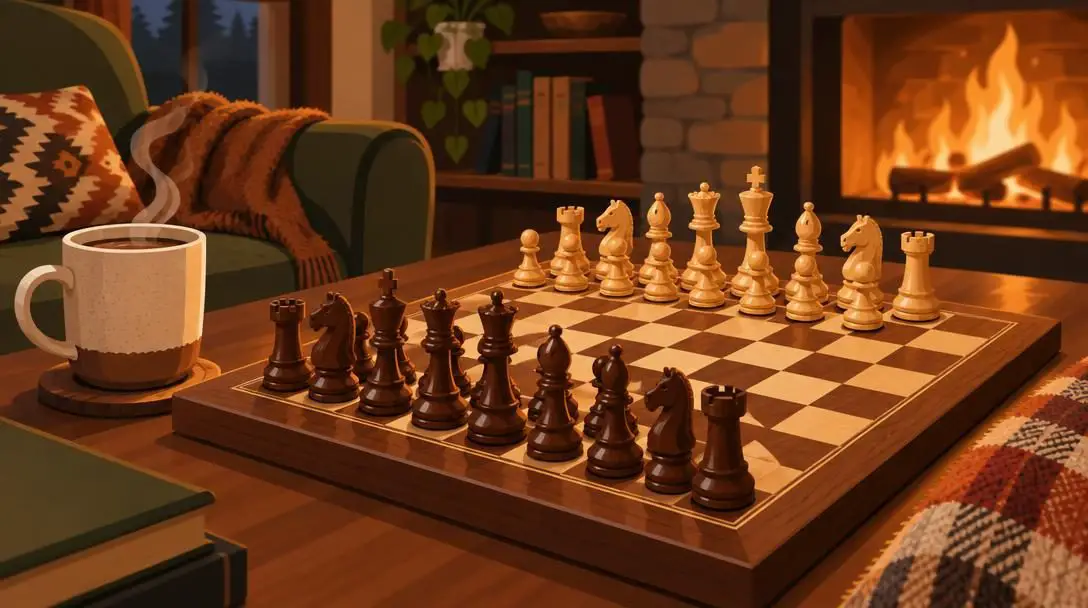
To maximize cognitive agility, pair word puzzles with activities that exercise alternate regions of the brain. Numerical puzzles like Sudoku challenge quantitative reasoning and strict logical deduction, while strategy games like chess demand deep forward planning and visual-spatial forecasting. Furthermore, robust scientific consensus underscores that intellectual pastimes produce the best outcomes when supported by regular physical exercise, balanced nutrition, quality sleep, and meaningful social engagement.
Frequently asked questions
Can crosswords permanently increase your general IQ?
Crosswords engage all five core components evaluated in IQ tests, particularly strengthening working memory, semantic retrieval, and processing speed. While they optimize your cognitive performance and expand your functional knowledge base, they do not fundamentally rewrite your baseline genetic intelligence.
Do daily crossword puzzles prevent Alzheimer's disease or dementia?
Crosswords cannot prevent or cure neurodegenerative diseases. However, as noted by James Pickett of the UK Alzheimer's Society, regularly challenging your brain builds cognitive reserve, which helps the brain better withstand physiological damage and delay functional decline.
How much time should I spend on crosswords each day for cognitive benefits?
Research by Tiffany Hughes and Chung-Chou Chang suggests that committing approximately one hour per day to mentally strenuous activities, including crosswords, provides a noticeable protective effect against late-life cognitive decline.
Are top crossword solvers as cognitively capable as elite college students?
Yes. Studies comparing nationally ranked crossword and Scrabble competitors to college students scoring over 700 on their verbal and math SATs revealed that elite word puzzle players achieved the highest overall cognitive scores, matching the linguistic proficiencies expected at Ivy League institutions.
Does doing word puzzles make your brain function at a younger age?
Research led by Professor Keith Wesnes at the University of Exeter Medical School showed that individuals who regularly engage with word puzzles perform significantly better on tasks assessing memory, reasoning, and attention, displaying cognitive speeds and accuracy equivalent to a younger biological age.
The Bottom Line
While solving a daily crossword puzzle will not instantly transform you into an all-around genius, the cognitive benefits of this historic pastime are substantial and scientifically grounded. By requiring the simultaneous coordination of verbal comprehension, visual-spatial reasoning, working memory, fluid logic, and processing speed, crosswords provide an exceptionally thorough mental workout.
For lifelong learners and older adults, regular engagement with challenging word grids builds vital cognitive reserve, promotes mental agility, and helps maintain a younger functional brain age. When integrated into a balanced lifestyle that incorporates physical wellness and varied cognitive pursuits, tackling the daily crossword is one of the most enjoyable and productive ways to keep the mind sharp, resilient, and continuously engaged.