Can Word Collect make you smarter?
Many people look for accessible ways to sharpen their minds, but conventional mental exercises like rote memorization and repetitive academic drills often feel like dull chores. Because staying motivated is one of the hardest parts of self-improvement, turning cognitive training into an entertaining daily habit has become a major goal for casual learners and puzzle fans alike.
Mobile developers have stepped into this space by combining classic word puzzles with modern video game mechanics. Word Collect, a popular free smartphone application, promises players an enjoyable way to exercise their vocabulary and train their brains straight from their pockets. However, whether spending hours connecting scrambled letters actually translates into meaningful cognitive improvement requires a closer look at the underlying science of brain training.
Key takeaways
- Word Collect uses gamification mechanics across more than 1,200 levels to keep vocabulary building entertaining and habit-forming.
- Neuropsychologists emphasize that cognitive benefits require active mental effort rather than playing through puzzles on autopilot.
- Research on word-game experts shows that specialized puzzle skills rarely transfer to broader, unrelated real-world tasks or general IQ.
- Approaching the game deliberately—by visualizing answers mentally and looking up new words—yields far more value than guessing through trial and error.
- Digital word games function best as an engaging leisure activity paired with broader lifestyle habits like physical exercise and reading.
What Is Word Collect and How Does It Work?
Word Collect is a mobile puzzle game built around a simple anagram mechanic. At the start of each round, players receive a circular tray of scrambled letters. By swiping their fingers across the screen to connect letters in the correct sequence, players spell out valid English words. When a correct word is formed, it flies into an empty crossword-style grid at the top of the screen.
To keep players coming back, the app incorporates a steep progression curve spread across over 1200 levels. In early stages, players might only need to find three-letter or four-letter words from a small pool of characters. As levels advance, the letter trays expand, the grid slots multiply, and the required vocabulary becomes increasingly obscure. Completing levels earns virtual currency and points, reinforcing a steady sense of achievement.
Most players find the combination of escalating difficulty and accessible controls highly satisfying. The tactile feedback of swiping letters combined with celebratory visual effects turns what could otherwise be a dry spelling drill into an engaging pastime.
The Science of Brain Training: Gamification and Problem-Solving
To evaluate whether Word Collect can make someone smarter, it is helpful to look at the psychological mechanics driving the experience. The app relies heavily on gamification, which is the practice of integrating game design elements—such as points, milestone rewards, and progressive levels—into non-game activities. E-learning platforms frequently employ these elements because they transform repetitive educational tasks into rewarding experiences.
Research confirms that gamified structures can produce measurable learning benefits. According to a study published in Smart Learning Environments, learners who engaged with gamification concepts demonstrated a significant improvement in the quality of their submitted solutions. By wrapping vocabulary practice in reward loops, Word Collect encourages users to spend more time practicing letter patterns than they ever would with static flashcards.
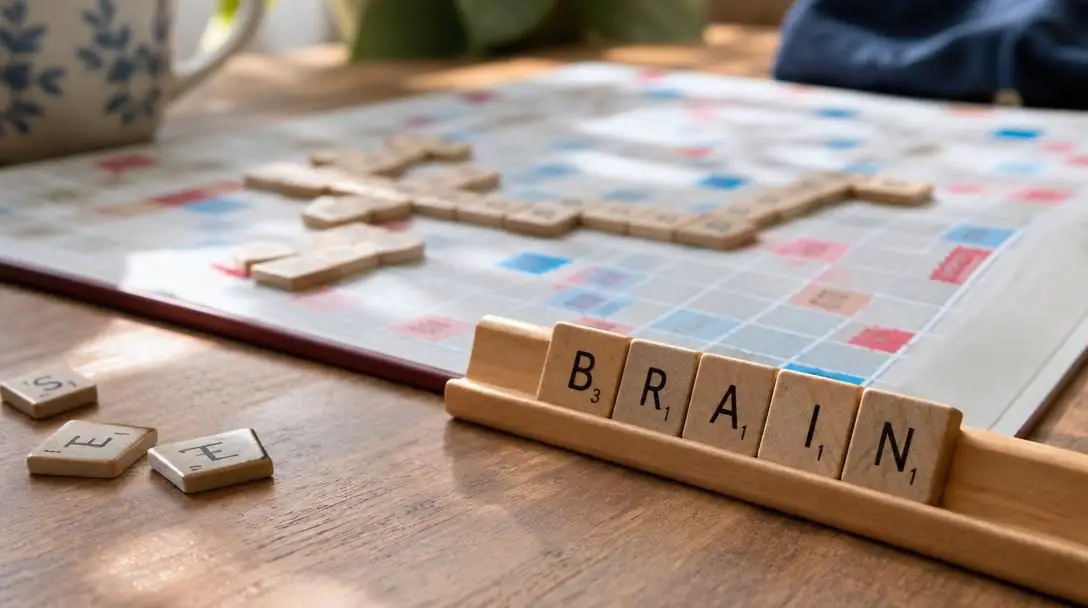
Beyond gamification, the app relies on active problem-solving. Working through an anagram forces the brain to retrieve linguistic rules, analyze orthographic patterns, and hold possible letter combinations in working memory. Keeping neural pathways engaged through deliberate mental challenges helps maintain cognitive agility.
According to Jessica Caldwell, Ph.D., a neuropsychologist for Cleveland Clinic, the genuine value of any puzzle game depends directly on its cognitive demand. She explains that when players genuinely enjoy word games that present a real challenge—requiring them to stop, concentrate, and plan their moves rather than running on autopilot—the activity serves a positive purpose in supporting lifelong brain health. Because Word Collect continually scales its difficulty across hundreds of stages, it regularly forces players out of passive play.
Does Word Game Mastery Transfer to General Intelligence?
While Word Collect provides an engaging mental workout, determining whether it raises general intelligence requires looking at the concept of cognitive transfer. In psychology, "near transfer" refers to getting better at tasks identical or very similar to the game being played, while "far transfer" describes improvements in unrelated mental abilities, such as spatial reasoning, emotional regulation, or overall IQ.
Scientific investigations into word puzzles suggest that far transfer is exceptionally rare. Penny Pexman, a professor of psychology at the University of Calgary, conducted research examining the brains of competitive Scrabble players. Her team found that while experienced players could recognize words far faster than non-players—particularly when words appeared in vertical orientations—these cognitive advantages did not transfer to non-Scrabble-related cognitive tasks.
Mastering letter puzzles sharpens your ability to spot anagrams within that specific format, but it does not automatically boost broader, everyday intelligence.
This finding suggests that Word Collect will make players remarkably proficient at solving mobile anagram puzzles and identifying specific word fragments under time constraints. However, that heightened efficiency does not necessarily mean a player will experience improvements in financial planning, critical reasoning, or general memory retention outside the application.
How to Maximize Cognitive Value from Word Collect
If you enjoy Word Collect and want to get the greatest cognitive benefit out of your screen time, playing intentionally is essential. Passive tapping yields little mental stimulation, but treating each level as a deliberate mental exercise turns the game into a constructive workout.
- Seek out the cognitive challenge: Resist the urge to stay in comfortable early stages. Push forward until you encounter levels that force you off autopilot and require genuine concentration, aligning with Dr. Caldwell's advice on brain health.
- Solve puzzles mentally before swiping: Instead of rapidly dragging your finger through every possible letter pairing, look at the screen and construct words entirely in your head. Visualizing letter arrangements exercises your working memory far more effectively than trial-and-error guessing.
- Look up definitions for unfamiliar terms: When you reveal an obscure word by chance or unlock bonus words, take a brief moment to look up their definitions. Attaching real semantic meaning to letter combinations transforms mechanical anagramming into true vocabulary development.
- Establish a short, consistent routine: Set aside a focused ten- to fifteen-minute block each day to tackle a few challenging levels. Consistent, short bursts of mental effort provide regular stimulation without causing eye strain or mental fatigue.
- Leverage the progression milestones for motivation: Track your progression through the game's reward systems. Use points and level completions to maintain a consistent habit rather than binging through dozens of stages in a single sitting.
Common Mistakes That Erode Cognitive Benefits
Many mobile puzzle players fall into habits that reduce the educational value of their gaming sessions. Recognizing these pitfalls helps you keep your screen time productive and enjoyable.
- Relying on brute force: Swiping every conceivable letter combination without thinking removes the problem-solving component entirely, transforming a mental workout into mindless mechanical movement.
- Overusing in-game hints: Leaning heavily on revealed letters whenever you feel stuck deprives your brain of the productive struggle needed to build stronger pattern-recognition skills.
- Coasting through difficulty plateaus: If a tier of levels feels effortless and you can solve them while watching television, you are no longer receiving the cognitive resistance necessary to support brain fitness.
- Expecting a universal IQ increase: Expecting puzzle games to radically alter your baseline intelligence leads to disappointment; the app should be viewed as an engaging language exercise rather than an intellectual miracle.
- Treating the app as a complete mental wellness routine: Focusing entirely on mobile word games while ignoring other aspects of brain health creates a narrow, unbalanced approach to cognitive care.
Comparing Cognitive Activities for Brain Health
Word games provide a specific type of mental engagement, but they represent only one category of intellectual leisure. Evaluating Word Collect alongside traditional learning methods illustrates how different activities stimulate the brain.
| Activity | Primary Cognitive Focus | Gamification Level | Skill Transferability | Barrier to Entry |
|---|---|---|---|---|
| Word Collect | Letter pattern recognition, working memory | High (points, levels, streaks) | Low (mostly task-specific) | Very low (mobile app) |
| Reading Literature | Comprehension, empathy, broad vocabulary | Low (self-directed) | Moderate to high | Low to moderate |
| Learning a New Language | Grammar, auditory processing, total recall | Moderate (app-dependent) | High (communication skills) | High (requires study) |
| Cardiovascular Exercise | Neuroplasticity, blood flow, mood regulation | Low to moderate | High (overall brain health) | Moderate (physical effort) |
A Balanced Approach to Cognitive Wellness
To maintain mental sharpness throughout life, digital brain games must fit within a broader, multidimensional lifestyle. Relying solely on a smartphone puzzle to protect cognitive function overlooks the foundational pillars of brain health.
Cardiovascular exercise, for instance, promotes cerebral blood flow and stimulates neuroplasticity in ways no digital puzzle can match. Similarly, prioritizing quality sleep gives the brain essential time to consolidate memories and clear metabolic waste. Combining daily physical activity, proper nutrition, and active social interaction creates the physiological foundation your brain needs to thrive.
Personal enjoyment also plays a decisive role. If you find Word Collect relaxing and genuinely fun, the game offers a healthy alternative to passive social media browsing. However, if the escalating difficulty turns into a source of frustration, shifting toward other mentally stimulating hobbies—like playing an instrument, studying a second language, or gardening—can yield comparable or superior mental engagement.
Frequently asked questions
Does playing Word Collect increase your IQ?
There is no scientific evidence showing that playing Word Collect or similar word games increases general intelligence (IQ). Studies on word puzzle experts indicate that skills developed inside a game do not transfer to unrelated, general cognitive tasks.
How many levels are in Word Collect?
Word Collect features over 1,200 levels, each offering escalating difficulty and requiring a progressively broader vocabulary to solve.
How can I make Word Collect more effective for my brain?
To maximize cognitive engagement, solve the anagrams mentally before swiping, push past easy levels into stages that challenge you, look up definitions for unfamiliar words, and avoid relying on in-game hints or random guessing.
Does gamification really help with learning?
Yes. Research published in Smart Learning Environments found that learners engaging with gamification concepts showed significant improvements in solution quality, though studies also note gamification often impacts introverts more positively than extroverts.
Is Word Collect enough to maintain lifelong brain health?
No. While it provides focused linguistic stimulation, comprehensive brain health requires a balanced routine that includes cardiovascular exercise, adequate sleep, balanced nutrition, and varied intellectual activities.
The bottom line
Word Collect is a well-designed, entertaining mobile game that excels at making vocabulary drills feel rewarding. Its extensive library of over 1,200 levels and gamified structure provide steady cognitive stimulation that keeps your mind active during downtime.
While the game will not transform your general intelligence or make you universally smarter in everyday life, it serves as a valuable tool for exercising working memory and pattern recognition. As long as you play deliberately, avoid mindless autopilot swiping, and pair the app with a healthy lifestyle, Word Collect represents an engaging and worthwhile mental workout.