Crossword Puzzle Therapy: How Solving Puzzles Can Help Alleviate Stress and Anxiety

For more than a century, crossword puzzles have served as a comforting fixture of daily life. Traditionally tucked inside morning newspapers, printed magazines, and dedicated puzzle books, these black-and-white grids were long treated merely as pleasant diversions or quiet mental exercise to enjoy alongside a morning coffee. In recent years, however, clinicians, researchers, and everyday solvers have recognized that crosswords provide far more than a casual pastime. Working through a puzzle can deliver meaningful therapeutic support, emerging as an effective, accessible outlet for easing stress and managing symptoms of anxiety.
When chronic stress and anxiety take hold, the mind often traps itself in repetitive, unproductive loops of worry. Rumination fixates on past regrets or catastrophic forecasts about the future, leaving the nervous system on continuous high alert. Crossword puzzle therapy disrupts this spiral by introducing a predictable, governed environment. Each clue offers an objective, bite-sized challenge with a verifiable answer, providing solvers with a structured space to calm racing thoughts, regain emotional stability, and re-establish a sense of agency.
Key takeaways
- Crossword puzzle therapy interrupts anxiety-inducing thought loops by redirecting mental energy toward structured, present-moment problem-solving.
- Solving puzzles activates core cognitive processes—such as pattern recognition, language retrieval, and concentration—that help relieve symptoms of stress and depression.
- The practice fosters self-efficacy and confidence through low-stakes challenges, making it especially effective for reducing test anxiety in students.
- Treating puzzles as a mindful, screen-free ritual rather than a timed competition protects the calming benefits of the activity.
The Core Therapeutic Mechanisms of Crossword Puzzles
The calming influence of crossword puzzles is not accidental; it stems from how the human brain processes structured tasks under emotional pressure. When individuals experience acute anxiety, cognitive bandwidth is monopolized by subjective, unresolved fears. Crossword puzzles demand active participation from regions of the brain responsible for language, logic, and working memory, effectively drawing cognitive resources away from unproductive rumination.
Crossword puzzles replace the infinite loop of unstructured anxiety with a finite grid where every problem has a definitive solution.
Healthy Cognitive Distraction
One of the primary benefits of solving crossword puzzles is immediate cognitive distraction. Everyday stress often intensifies because the brain continues to scan for perceived threats even when no immediate action can be taken. Working on a puzzle requires sustained attentional shifting. Because the mind must read the clue, decipher wordplay, and search its internal lexicon, it cannot comfortably sustain catastrophic narratives at the same time. This deliberate redirection of focus breaks the momentum of intrusive thoughts, providing the nervous system with a much-needed period of relief.
Active Mindfulness and Grounding
While traditional mindfulness practices like seated meditation can sometimes feel challenging for people with active anxiety, crosswords offer an active, tactile form of mindfulness. Mindfulness centers on remaining fully anchored in the present moment without judgment. In crossword therapy, the solver is entirely absorbed by the immediate mechanics: counting empty squares, verifying intersecting letters, and testing phonetic ideas. By focusing exclusively on the grid in front of them, solvers let go of concerns regarding the past or future, entering a grounded state of flow that soothes emotional volatility.
Cognitive Engagement and Brain Health
Beyond momentary calm, working through crossword puzzles exercises essential executive functions. Crosswords require intense concentration, meticulous attention to detail, and flexible deductive reasoning. These cognitive exercises are critical for maintaining mental agility and have been shown to help lessen the intensity of both anxiety and depressive symptoms. When the brain is actively engaged in pattern recognition and lexical retrieval, it operates in an analytical mode that counteracts the emotional paralysis often caused by chronic stress.
Accomplishment and Self-Efficacy
Anxiety frequently undermines a person's sense of competence, leaving them feeling overwhelmed by life's complexities. Crossword puzzles provide a safe training ground for rebuilding self-efficacy—the belief in one's ability to navigate challenges. Each filled square and solved word serves as tangible evidence of problem-solving ability. Completing an entire grid delivers a concrete sense of pride and closure, restoring personal confidence and reinforcing the realization that obstacles can be broken down into manageable pieces.
Who Benefits: Crossword Therapy Across Age Groups
Although crosswords are often associated with older adults looking to maintain cognitive health, the therapeutic rewards extend across all generations. Children, teenagers, and working adults encounter distinct pressures, and structured puzzling offers benefits tailored to each developmental stage.
| Demographic | Primary Stressors Addressed | Key Therapeutic Advantage |
|---|---|---|
| Children & Adolescents | Academic pressures, social dynamics, sensory overload | Builds emotional resilience and normalizes being temporarily stuck |
| Students | Test anxiety, performance pressure, exam dread | Offers low-stakes inquiry that prepares the brain for rigorous testing |
| Working Adults | Workplace burnout, digital fatigue, daily multitasking | Creates a screen-free buffer between professional duties and home life |
| Older Adults | Cognitive decline worries, isolation, unstructured time | Maintains executive function while offering a satisfying daily routine |
For students in particular, crossword puzzles serve as a powerful intervention for test anxiety. Formal examinations generate intense stress because students fear the consequences of failure. Crossword puzzles mimic the question-and-answer format of academic tests, requiring memory retrieval and analytical deduction, but without grades or penalties. By working through puzzles in a low-stakes environment, students learn to tolerate the discomfort of encountering a clue they do not immediately know. They discover that being stuck simply means they need to gather additional context clues, cultivating academic confidence and emotional stamina.
How to Practice Crossword Puzzle Therapy
To use crossword puzzles as an intentional self-care practice, solvers should focus on creating a restorative experience rather than treating the grid as a competitive speed drill. Following a systematic approach helps maximize the stress-relieving properties of each session.
- Select an appropriate difficulty level: Choose a puzzle that offers an enjoyable challenge without causing genuine frustration. If your primary goal is stress relief, attempting an overly punishing grid can trigger the same irritation you are trying to escape. Build confidence with gentle or moderate puzzles before advancing.
- Establish a calm, dedicated environment: Find a quiet, well-lit space away from the noise of televisions and household traffic. Put your smartphone on silent or place it in another room to prevent notification dings from shattering your concentration.
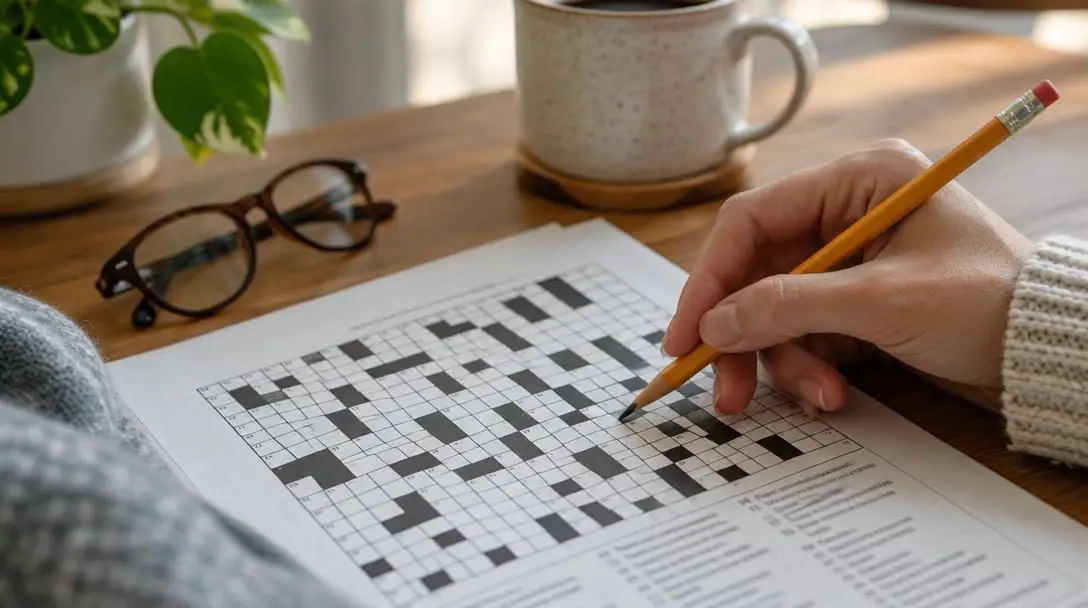
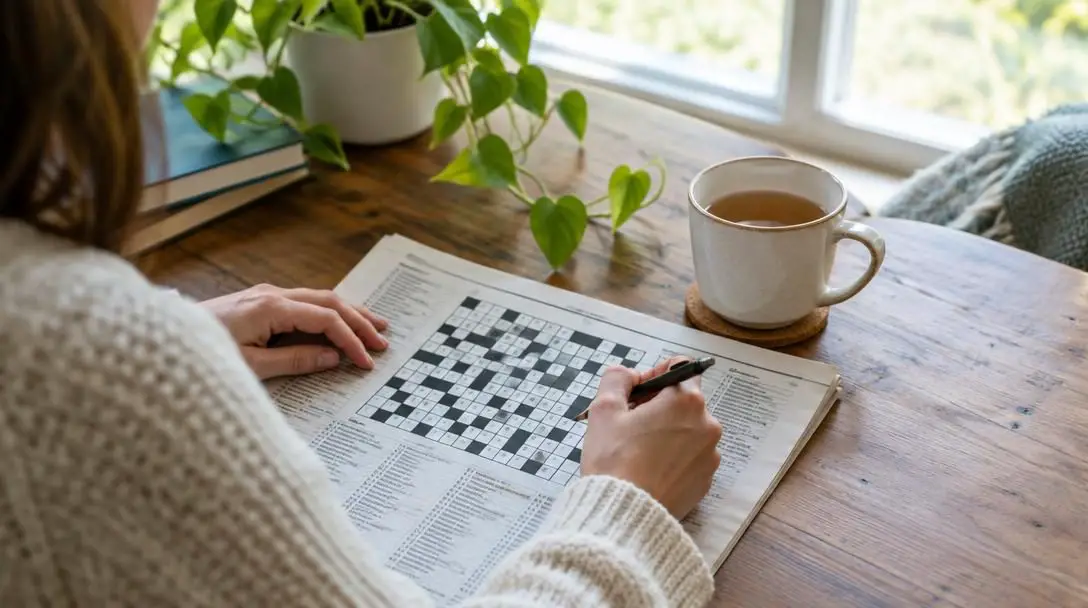
- Switch to tactile, physical media: Whenever possible, opt for printed puzzle books, newspapers, or printed sheets alongside an ordinary pencil. Physical paper provides a welcome sensory contrast to the glaring screens that dominate modern work and social life, grounding your awareness in the physical world.
- Embrace the process over the outcome: Release any expectation of solving the grid quickly or flawlessly. Give yourself permission to dwell on a clever clue, appreciate interesting wordplay, and enjoy the physical act of writing letters into the boxes.
- Use crossing clues to unlock mental blocks: When an across clue feels unsolvable, methodically work on the intersecting down clues. This practice trains your brain in lateral thinking, demonstrating that persistent difficulties can be resolved simply by altering your vantage point.
- Establish a consistent, low-pressure time boundary: Dedicate ten to twenty minutes to solving during transition points in your day—such as during a quiet morning ritual, midway through a lunch break, or directly after finishing work—to act as an emotional decompression chamber.
Common Mistakes That Undermine Puzzle Therapy
While puzzling can be profoundly restorative, certain approaches can turn a therapeutic activity into another source of performance anxiety. Protecting the soothing nature of the habit requires avoiding several common traps:
- Treating the puzzle as an IQ test: Believing that your performance on a crossword measures your intelligence or vocabulary turns self-care into an evaluation. Remember that crosswords rely heavily on specific conventions and cultural trivia that are learned through exposure, not innate worth.
- Refusing to check answers when stalled: While sitting with a challenge can build patience, remaining stubbornly stuck on a single intersection for extended periods invites irritation. Looking up a single clue or checking a letter to regain momentum is entirely acceptable and keeps the activity enjoyable.
- Racing against a clock: Digital apps often emphasize speed-running, streaks, and timed metrics. For therapeutic purposes, a ticking clock elevates heart rates and triggers adrenaline, directly opposing the relaxation response.
- Attempting complex puzzles during acute fatigue: Working on late-week newspaper grids or dense cryptic puzzles requires significant mental stamina. When you are already emotionally or physically depleted, choose easier, more accessible grids to avoid feeling overwhelmed.
- Relying on crosswords as a total substitute for clinical care: While puzzle therapy is an excellent self-regulation tool, it cannot replace professional guidance for severe clinical depression or generalized anxiety disorders.
Integrating Puzzles into a Broader Wellness Routine
Crossword puzzle therapy delivers the most profound results when integrated thoughtfully into a wider mental health regimen. Because puzzle-solving functions as an anchor for attention, it pairs seamlessly with other restorative habits.
Consider combining a fifteen-minute puzzle session with sensory-calming rituals. Sipping an herbal tea, practicing deliberate diaphragmatic breathing, or doing gentle shoulder rolls before sitting down with a grid signals to your autonomic nervous system that the work day is finished. For individuals who find traditional mindfulness or breathing exercises frustrating because their minds wander back to worries, a crossword puzzle acts as an active meditation. The printed grid becomes an external focal point that occupies the analytical mind, allowing underlying somatic tension to gradually dissolve.
Frequently asked questions
Can crossword puzzles replace therapy or medication for anxiety?
No. Crossword puzzle therapy is a self-care strategy and complementary coping mechanism, not a substitute for formal psychiatric evaluation, psychotherapy, or prescribed medication. It is an accessible daily tool for managing everyday tension and mild-to-moderate anxiety, but severe or chronic conditions require guidance from licensed mental health professionals.
Is it better to solve crosswords on paper or on a mobile app?
While digital apps are convenient, paper puzzles are generally superior for stress relief. Physical books and newsprint eliminate blue-light exposure, pop-up notifications, and the unconscious urge to switch to social media, providing a quiet, tactile experience that fosters deeper mindfulness.
What should I do if a crossword puzzle makes me feel frustrated?
If you encounter rising frustration, lower the stakes immediately. Grant yourself permission to look up an elusive answer, switch to the intersecting clues, or set the puzzle aside altogether. You can also transition to an easier puzzle format, such as a Monday edition or a themed mini-puzzle, until your mental energy returns.
How much time should I spend on crossword therapy each day?
A focused session of ten to twenty minutes is usually sufficient to interrupt stressful thought loops and engage the relaxation response. The goal is consistency and quality of presence rather than marathon solving sessions that could cause mental fatigue or eye strain.
Are crosswords effective for helping children manage stress?
Yes. Age-appropriate crossword puzzles can help children and adolescents decompress from academic and social pressures. Puzzles are particularly helpful for students suffering from test anxiety, as they offer practice in low-stakes problem-solving and demonstrate that being temporarily stuck on a question is a normal part of learning.
The bottom line
In a world characterized by sensory overload and persistent uncertainty, finding simple, restorative self-care practices is essential. Crossword puzzle therapy transforms a humble daily pastime into an intentional mental health ally. By engaging the brain's problem-solving faculties, fostering mindful concentration, and providing an attainable sense of closure, solving crosswords offers a reliable refuge from cyclical anxiety. The next time everyday worries begin to mount, setting aside your digital devices and picking up a pencil may be the exact mental reset you need.