Cryptic Crossword Puzzles: A Beginner’s Guide to Solving the Toughest Clues
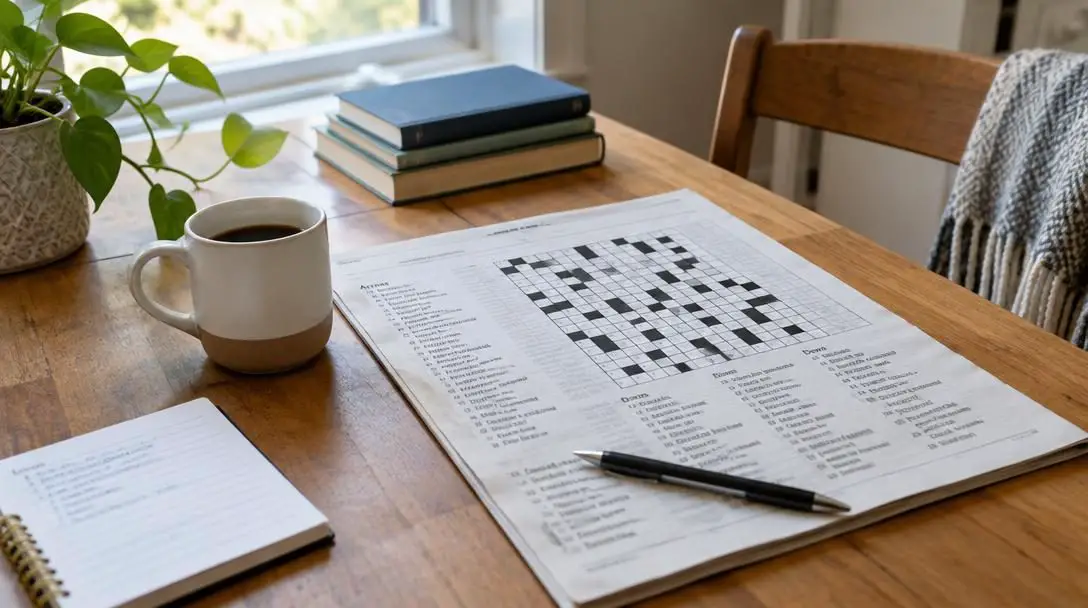
Cryptic crossword puzzles represent one of the most mentally stimulating branches of puzzle gaming, designed specifically to challenge intellectual agility and refine problem-solving skills. Unlike standard, quick, or definitional crosswords—where clues function as direct factual inquiries or simple synonym matches—a cryptic clue operates as a miniature riddle wrapped in deliberate misdirection. For newcomers, looking at a cryptic grid for the first time can be an intimidating and thoroughly baffling experience. The clues frequently resemble nonsensical sentences, disjointed narratives, or odd linguistic accidents that appear impossible to parse through conventional puzzle-solving strategies.
The primary hurdle for beginners is that cryptic clues are engineered to deceive solvers through their surface reading. The surface reading refers to the literal sense the sentence makes when read naturally from left to right. Solvers who approach these puzzles using traditional crossword logic quickly find themselves stranded, because the surface story has virtually nothing to do with the actual solution. Instead, cryptic clues rely heavily on puns, wordplay, and obscure meanings. Becoming a proficient solver requires developing a new way of reading: peering through the surface illusion to inspect the mechanical scaffolding hidden inside each word. Despite their reputation as the toughest clues in word gaming, cryptic crosswords follow a rigorous set of rules and conventions that anyone can learn.
Key takeaways
- Cryptic clues almost always consist of two independent components: a definition and a mechanical subsidiary indication.
- The literal narrative of a clue, known as the surface reading, is crafted intentionally to mislead solvers and disguise the wordplay.
- Indicator words such as "mixed up" act as signposts that signal what specific type of letter manipulation or phonetic trick is required.
- A methodical solving approach that tests clue boundaries, checks grammar, and utilizes a puzzle notebook demystifies even the most complex clues.
The Anatomy of a Cryptic Clue
At its core, a cryptic clue is essentially a formula disguised as an ordinary sentence. Rather than providing only one route to the answer, a standard cryptic clue provides two independent paths to the exact same word or phrase: a definition and a subsidiary indication. When solved correctly, both halves confirm each other. The subsidiary indication gives you the mechanical recipe to build or locate the answer, while the definition confirms that the resulting letters create a word with the correct meaning.
Rather than giving you only one route to the answer, a cryptic clue actually gives you two independent paths to the exact same word or phrase.
The definition is the straightforward half of the clue, although the puzzle creator—often referred to as the setter—takes great care to disguise it within the sentence. In the vast majority of cases, the definition sits at the very beginning or the very end of the clue. However, solvers must remain vigilant because setters will occasionally place the definition directly within the clue itself. The definition functions much like a standard crossword clue, pointing toward the meaning of the answer, though it frequently exploits an unusual synonym or a less common usage of the term.
The remaining portion of the clue is the subsidiary indication, which supplies a hint about the wordplay involved. This is the mechanical instruction manual of the clue. It tells you how to manipulate the letters found in the sentence—whether by rearranging them, sounding them out phonetically, or plucking them from adjacent words—to produce the solution.
Core Types of Wordplay
The subsidiary indication can take many forms, but setters rely on several established types of wordplay to construct their clues. Recognizing the mechanical signposts for each category is the most effective way to unlock the puzzle grid.
Anagrams
In an anagram clue, a specified collection of letters within the clue must be rearranged to form the target solution. To make this fair to the solver, the clue provides both the raw letters needed and an indicator signaling that a rearrangement must take place. Words or phrases such as "mixed up," "broken," "confused," or "rebuilt" often serve as these anagram indicators. When solvers identify an anagram indicator, they count the letters of nearby words to see which combination matches the required answer length.
Homophones
Homophone clues rely on words that sound identical to other words when spoken aloud, even if they are spelled differently and carry distinct definitions. In these clues, the subsidiary indication includes a phonetic indicator alerting the solver that the solution must be heard rather than read literally. Setters use auditory signals such as "on the radio," "aloud," "reportedly," or "we hear" to indicate that the solver should substitute a word with its sounding twin.
Hidden Answers
Sometimes the solution is sitting right in front of the solver, directly printed inside the text of the clue itself. In a hidden answer clue, the target word is concealed across the boundaries of adjacent words. For example, in a clue like "Cracked corn is good for these birds," the target answer is physically embedded across the consecutive phrase "cracked corn is good." Setters use indicators such as "contained," "held by," or "inside" to hint that letters must be plucked directly from the sentence.
Double Definitions
In a double definition clue, the setter skips mechanical letter manipulation entirely. Instead of using anagrams, sound-alikes, or hidden letter strings, the clue simply provides two separate definitions for the same target word. These two definitions typically draw on completely different meanings, contexts, or grammatical word types. A single target word might be defined once as an active verb and once as a common noun, forcing the solver to find the singular word that bridges both concepts.
Puns and Obscure Meanings
Setters frequently exploit secondary, archaic, or specialized definitions of everyday words to keep solvers off balance. A punning clue relies on humorous or unexpected wordplay that turns normal definitions on their head. By leaning into obscure definitions that appear outside standard modern conversational use, the setter ensures that even a straightforward definition sounds like an abstract mystery when read casually.
| Wordplay Type | Primary Mechanism | Identifying Characteristics |
|---|---|---|
| Anagrams | Rearranging a specified pool of letters into a new word | Accompanied by movement or disorder indicators like "mixed up" |
| Homophones | Finding words that sound identical to the target answer | Auditory indicators referencing listening, speech, or broadcasting |
| Hidden Answers | Spelling the answer across the boundaries of adjacent words | Container indicators hinting that letters are tucked inside |
| Double Definitions | Pairing two distinct meanings of the exact same word | Features two separate definition phrases with no letter manipulation |
| Puns and Obscure Meanings | Leveraging secondary, archaic, or humorous word usages | Deceptive phrasing that plays on unusual semantic definitions |
Practical Steps to Solving Cryptic Clues
Tackling a cryptic crossword without a clear system can quickly lead to frustration. By approaching each clue with a structured, step-by-step methodology, solvers can systematically strip away the surface deception and isolate the underlying mechanics.
- Scan for the definition: Examine the very start and the very end of the clue, as these are the most common positions for the definition. Read each end independently from the rest of the sentence and determine whether either word or phrase could act as a standalone definition for an answer matching the clue's letter count. Remember that on rare occasions, the definition can be hidden within the clue itself.
- Identify the subsidiary indication: Once you have a working hypothesis for where the definition sits, look at the remaining portion of the clue. This remaining text contains the subsidiary indication that explains the wordplay. Search through these words for known indicator words that instruct you to perform an operation like anagramming or locating a hidden word.
- Analyze word types and forms: Evaluate the grammatical role of every word in the clue, looking closely at nouns, verbs, adjectives, and adverbs. Consider whether the surface reading is intentionally disguising a word's true grammatical form. A word that looks like a static noun in the surface story might actually function as an active imperative verb signaling an anagram, such as "mixed up."
- Look for repeated words and letter patterns: Inspect the clue to see if any word is repeated or appears in multiple sections. Repeated words or unusual letter pairings can signal that you are dealing with a hidden answer or a double definition. When searching for hidden words, read across the spaces between words to spot letter strings matching the required answer length.
- Consult dictionaries and dedicated resources: When encountering unfamiliar terms, abbreviations, or puns, make use of reference materials. Many dedicated online resources, solver communities, and dictionaries specialize in cryptic crosswords and can help you decode unfamiliar conventions and expand your understanding of cryptic language.
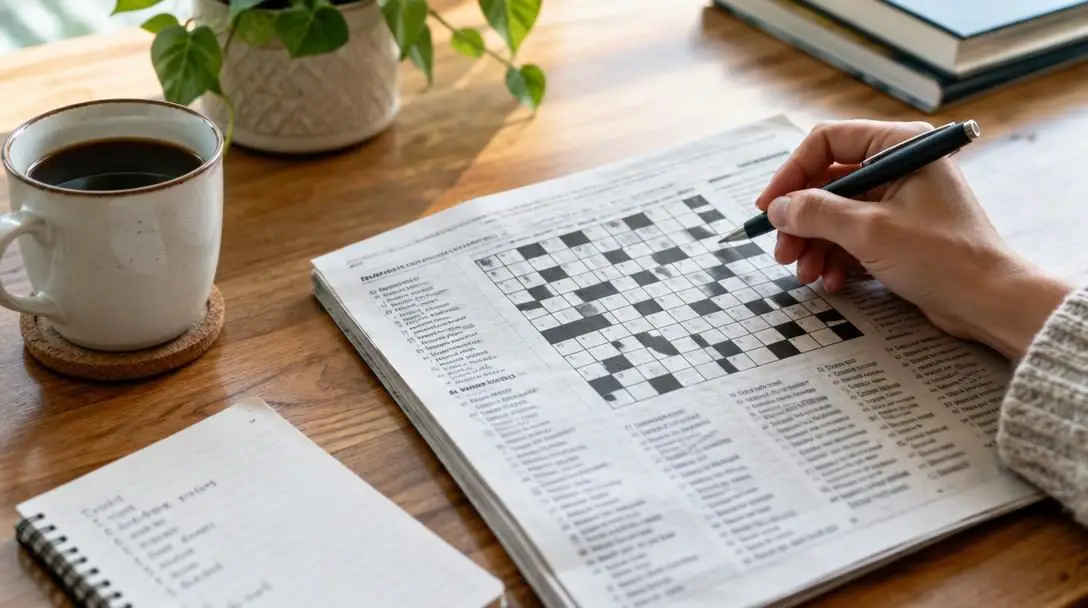
- Maintain a puzzle notebook: Keep a dedicated notebook beside your puzzle grid. Use it to record unfamiliar indicators, clever wordplay techniques, and obscure synonyms you encounter. Over time, this notebook becomes a personalized reference manual that trains your eye to spot similar clue constructions in future puzzles.
- Take breaks to clear your mind: Cryptic crosswords are mentally demanding. If you find yourself staring at an unsolved clue for several minutes without making progress, step away from the grid. Taking a brief break allows your mind to reset, and returning with a fresh perspective often makes an obscure clue immediately obvious.
Common Mistakes to Avoid
Because cryptic clues are explicitly designed to deceive, beginners frequently stumble into the same predictable traps. Recognizing these common pitfalls helps solvers navigate grids more efficiently and prevents unnecessary headaches.
- Reading the clue literally: The most pervasive error is taking the surface reading at face value. The setter crafts an evocative sentence specifically to draw your attention away from the mechanical wordplay. Whenever you catch yourself imagining the literal narrative of the clue, pause and break the sentence into mechanical components.
- Ignoring word types and grammar: Beginners often overlook the immense flexibility of English grammar. Assuming that a word functions strictly as a noun because of its role in the sentence narrative can cause you to miss an anagram indicator or an alternate obscure meaning.
- Overlooking hidden answers: Many solvers jump straight to testing complicated anagrams or phonetic puns without first checking if the answer is simply resting in plain sight. Always check adjacent words in the clue to ensure the answer is not already spelled out across their letter boundaries.
- Neglecting indicator words: Every mechanical manipulation in a cryptic crossword requires a justification. Assuming an anagram exists without locating an indicator like "mixed up" usually means you are guessing rather than solving methodically. True cryptic solving relies on strict deduction.
- Pushing through mental fatigue: Staring endlessly at a grid while mentally exhausted leads to cognitive tunneling, where you repeat the same incorrect interpretations over and over. Stepping away for a short rest breaks this cycle and restores mental clarity.
Advancing Your Solving Skills
As you grow more adept at dissecting the anatomy of a cryptic clue, there are clear steps you can take to deepen your mastery. First, continue expanding your familiarity with the specialized vocabulary of cryptic crosswords. By exploring dedicated puzzle websites and reference dictionaries, you will broaden your mental catalog of wordplay indicators. Solvers quickly learn that setters use an extensive range of subtle signals to indicate reversals, deletions, homophones, and letter assemblies.
Second, make regular use of the puzzle notebook you establish during your initial practice. Reviewing past entries reinforces the indicator words and wordplay formulas you have already decoded. Solvers quickly discover that while every clue presents a unique surface narrative, the structural architecture behind cryptic clues repeats continuously across different puzzle setters and publications.
Finally, commit to regular, patient practice. Tackling a few clues each day transforms an intimidating mental trial into an entertaining exercise in lateral thinking. Approaching each puzzle as a friendly battle of wits against the setter sharpens deduction skills and provides hours of satisfying intellectual discovery.
Frequently asked questions
Where is the definition usually located in a cryptic crossword clue?
In the vast majority of cryptic clues, the definition is located at the very beginning or the very end of the clue sentence. However, solvers must stay alert because setters will occasionally hide the definition within the interior of the clue.
How does a hidden answer clue work?
A hidden answer clue conceals the target solution directly inside the text of the clue itself, running across the boundaries of consecutive words. For example, the clue phrase "cracked corn is good" can directly hide the target letters of the answer across its words.
What is an anagram indicator?
An anagram indicator is a word or phrase within the subsidiary indication that signals that a nearby set of letters must be rearranged. Common examples include words implying disorder or movement, such as "mixed up," "broken," or "confused."
What should I do when I get completely stuck on a clue?
When stuck, step away from the puzzle for a few minutes to clear your mind and prevent mental fatigue. In addition, consult dictionaries or dedicated online crossword resources to verify unfamiliar wordplay conventions, indicator words, or obscure definitions.
Why does a cryptic clue contain two separate parts?
A cryptic clue contains both a definition and a subsidiary indication to provide two independent paths to the exact same answer. The wordplay gives you the recipe to build or find the letters, while the definition confirms that the assembled word carries the intended meaning.
The bottom line
Cryptic crosswords may seem impenetrable at first glance, but they are governed by fair, consistent rules. The setter's goal is not to create an impossible task, but to present an engaging riddle where the surface reading provides clever misdirection while the underlying structure provides all the clues necessary for a logical solution. By learning to separate the definition from the subsidiary indication, recognizing indicator words, and maintaining a patient, methodical solving routine, anyone can unlock the mechanics of these puzzles and enjoy one of the most rewarding mental challenges in the world of word games.