
Easy and Nutritious: 5 Homemade Baby Food Recipes for First-Time Parents
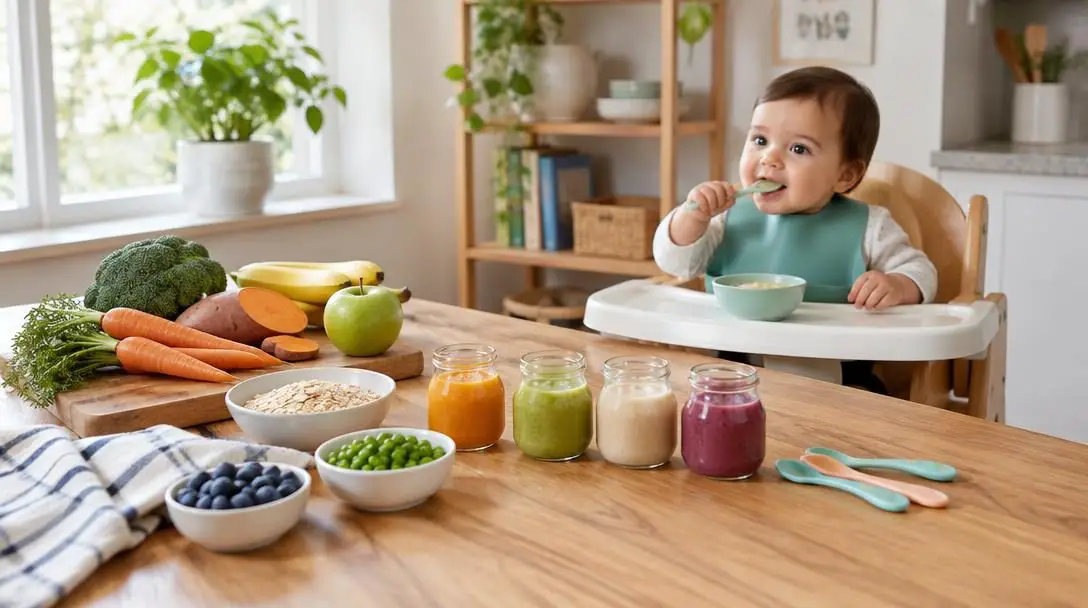
Introducing solid foods marks a major milestone in your infant's development, but navigating commercial baby food options can quickly become overwhelming for first-time parents. Between parsing long ingredient labels, managing specialty packaging, and paying premium grocery store prices, finding simple, wholesome nutrition often feels more complicated than it should be.
Making your own baby food at home provides complete transparency over what enters your child's bowl while establishing wholesome eating habits from the very first spoonful. Using basic kitchen tools and everyday produce, you can craft balanced, nutrient-dense purees and mashes that are fresh, cost-effective, and entirely free of artificial additives, preservatives, or added sugars.
Key takeaways
- Preparing baby food at home gives parents total control over ingredient quality and eliminates unnecessary commercial preservatives, fillers, and added sugars.
- Gentle preparation methods like steaming and careful liquid management allow you to easily tailor puree textures to your child's developmental stage.
- Simple combinations of fruits, vegetables, whole grains, and dairy offer balanced nutrition, ranging from healthy fats to dietary fiber and plant-based protein.
- Proper kitchen hygiene, gradual liquid addition, and strict adherence to refrigerator storage limits keep homemade meals safe and fresh.
The Benefits of Making Baby Food in Your Own Kitchen
As infants grow and develop, their nutritional needs evolve rapidly. Grocery aisles offer endless jars and pouches, but relying solely on commercial options often leaves parents guessing about processing methods, ingredient quality, and shelf-life stabilizers. When you take charge of food preparation at home, you eliminate those uncertainties entirely.
Cooking at home allows you to bypass the preservatives, artificial additives, and unnecessary sugars commonly found in heavily processed jarred foods. Instead, you work directly with whole fruits, vegetables, grains, and dairy products. This approach also yields significant financial savings: purchasing everyday produce like sweet potatoes, apples, carrots, and bananas costs a fraction of pre-packaged single-serve jars, and the entire household can share the very same grocery staples.
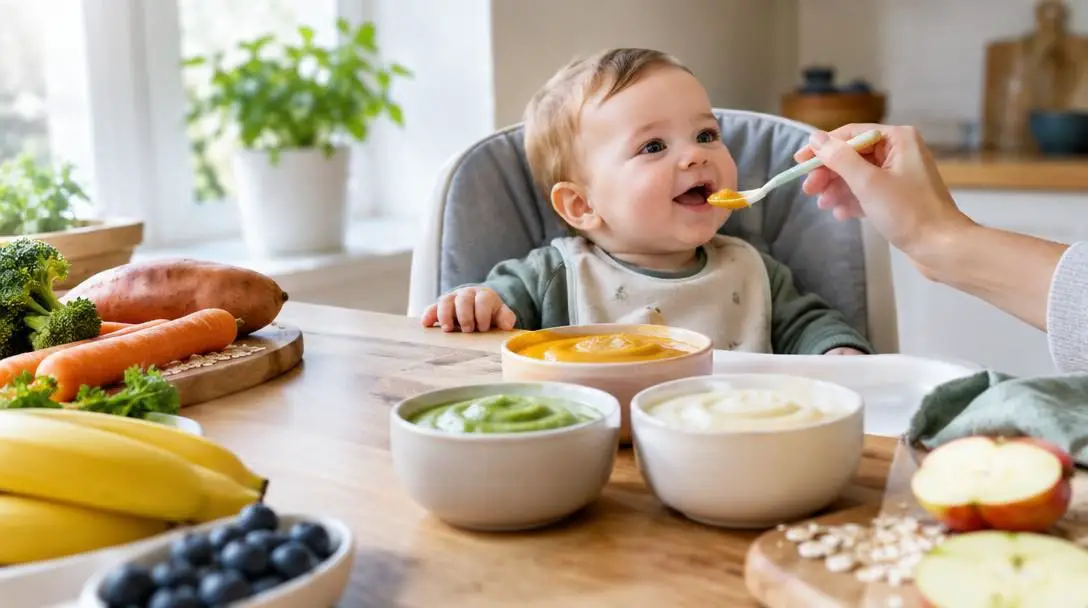
Making baby food at home gives parents complete control over every single ingredient, ensuring meals are fresh, cost-effective, and free of additives.
Beyond cost and purity, home preparation builds the foundation for healthy, diverse eating habits early in life. Commercial baby foods are frequently heat-treated at extreme temperatures to ensure prolonged shelf stability, which can dull natural flavors and alter vivid colors. By preparing meals fresh, you expose your infant to the authentic tastes, natural aromas, and vibrant hues of real food, setting the stage for adventurous and flexible eating as they transition to the family table.
How Making Homemade Baby Food Works
The fundamentals of preparing homemade infant food rest on three simple pillars: gentle cooking methods, mechanical processing, and liquid management. Mastering how these elements work together will help you cook with confidence and efficiency.
Gentle heat, such as steaming or boiling, softens firm produce by breaking down tough cellular walls and raw plant fibers. Steaming is an outstanding technique because it relies on circulating steam to tenderize dense root vegetables and crisp orchard fruits without submerging them in water, helping retain delicate, water-soluble vitamins. Boiling directly on the stovetop is equally dependable, particularly for firm vegetables and whole grains that need thorough softening to blend evenly.
Mechanical processing transforms softened ingredients into an age-appropriate consistency. Depending on the food's natural density, you can use high-speed blenders, standard food processors, or simple manual tools like a fork or potato masher. Dense, cooked vegetables blend best in an electric appliance to yield a silky, clump-free puree, whereas soft, ripe items like avocados and bananas mash effortlessly in a basic bowl.
Managing liquids is what ultimately determines the meal's texture. Adding a controlled splash of water helps blender blades circulate ingredients smoothly while letting you calibrate the final thickness. Beginners who are just learning the mechanics of swallowing benefit from thinner, silkier purees, while older babies can comfortably handle thicker, heartier mashes.
At a Glance: 5 Wholesome Recipes Compared
Each of the following five recipes balances distinct flavor profiles, preparation techniques, and nutritional advantages. Use this reference table to compare yields, macronutrients, and storage windows at a glance.
| Recipe Name | Yield | Calories | Protein | Fiber | Fridge Storage |
|---|---|---|---|---|---|
| Sweet Potato and Apple Puree | Approx. 8 oz | About 110 | 1 g | 3 g | Up to 3 days |
| Banana and Avocado Mash | Approx. 6 oz | About 175 | 2 g | 6 g | Up to 2 days |
| Butternut Squash and Carrot Puree | Approx. 12 oz | About 90 | 1 g | 5 g | Up to 3 days |
| Green Peas and Brown Rice | Approx. 8 oz | About 120 | 4 g | 5 g | Up to 3 days |
| Blueberry and Yogurt Puree | Approx. 6 oz | About 90 | 3 g | 1 g | Up to 2 days |
5 Easy and Nutritious Homemade Baby Food Recipes
These five beginner-friendly recipes balance sweet and savory profiles using wholesome produce, hearty whole grains, and nutrient-rich dairy. Each recipe is designed to be approachable, quick to prepare, and gentle on an infant's digestive system.
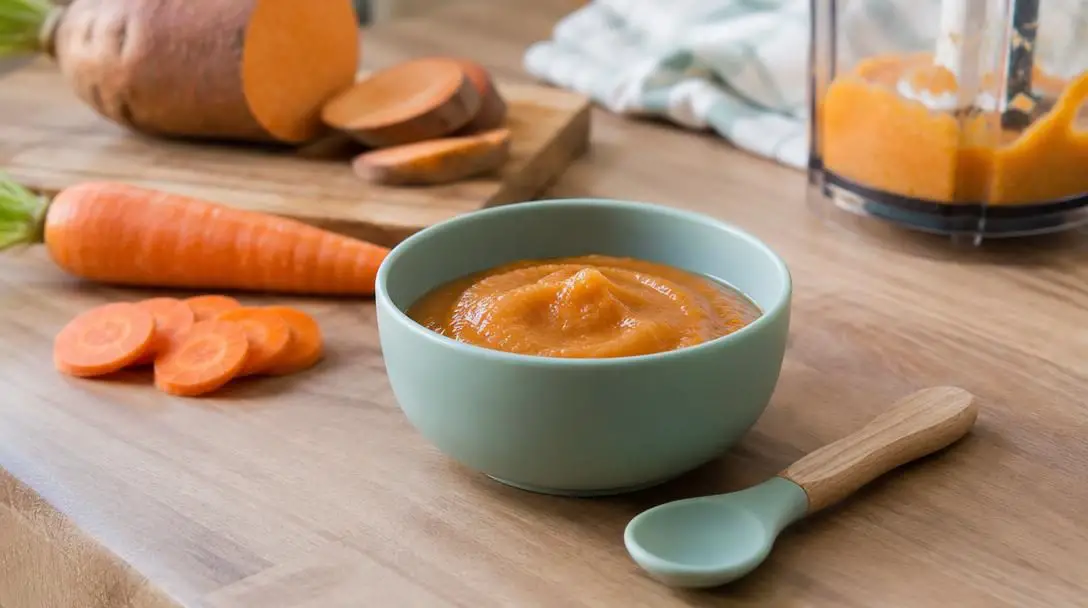
Sweet Potato and Apple Puree
- Yield: Approximately 8 ounces
- Calories: About 110
- Protein: 1 gram
- Fiber: 3 grams
- Storage Limit: Up to 3 days in refrigerator
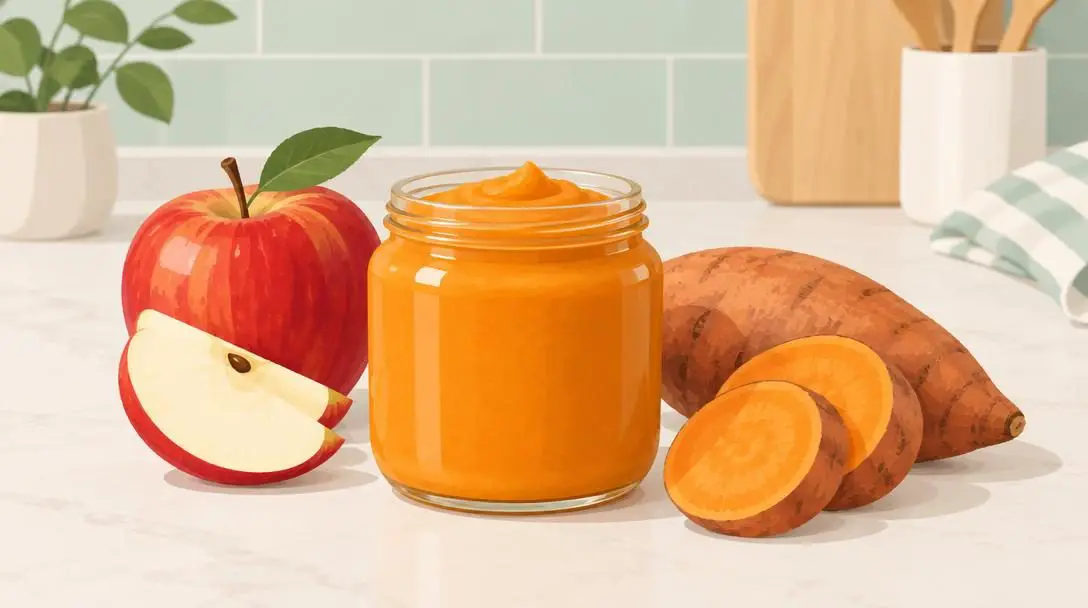
Sweet potatoes serve as an exceptional source of vitamins A and C, while apples contribute dietary fiber and protective antioxidants. Pairing them creates a sweet and savory puree that appeals readily to infant palates. The natural sugars in the apple soften the earthy depth of the sweet potato, yielding an extraordinarily smooth texture when processed.
Ingredients:
- 1 sweet potato, peeled and diced
- 1 apple, peeled and diced
- Water
Preparation: Steam or boil the diced sweet potato and apple until completely soft and tender when pierced with a fork. Transfer the cooked ingredients to a blender or food processor, add a small splash of water, and puree until completely smooth. Portion into clean, airtight containers and refrigerate for up to three days.
Banana and Avocado Mash
- Yield: Approximately 6 ounces
- Calories: About 175
- Protein: 2 grams
- Fiber: 6 grams
- Storage Limit: Up to 2 days in refrigerator
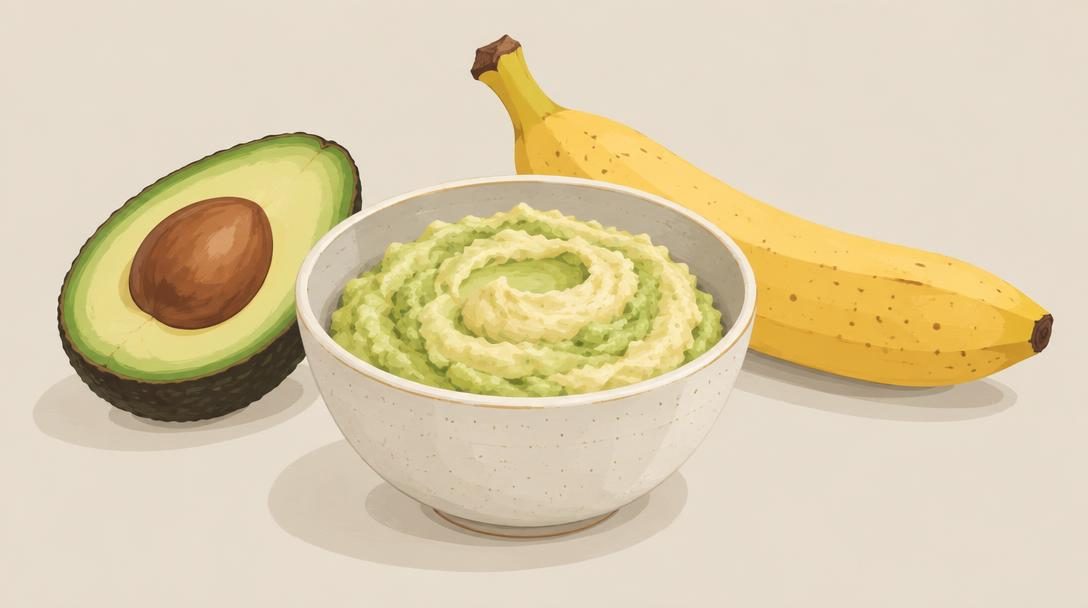
Bananas supply substantial potassium and dietary fiber, while avocados provide healthy fats alongside vitamins C and K. Because neither ingredient requires cooking, this recipe offers the quickest path to a nutrient-dense meal. The natural creaminess of the ripe avocado blends seamlessly with the familiar sweetness of banana, introducing essential fats that support infant development without requiring any heating appliances.
Ingredients:
- 1 ripe banana, mashed
- 1 ripe avocado, mashed
- Water (optional)
Preparation: Place the peeled banana and avocado into a small bowl and thoroughly mash them together using a fork. If a looser texture is desired, stir in a gentle splash of water. Serve immediately or store in an airtight container in the refrigerator for up to two days.
Butternut Squash and Carrot Puree
- Yield: Approximately 12 ounces
- Calories: About 90
- Protein: 1 gram
- Fiber: 5 grams
- Storage Limit: Up to 3 days in refrigerator
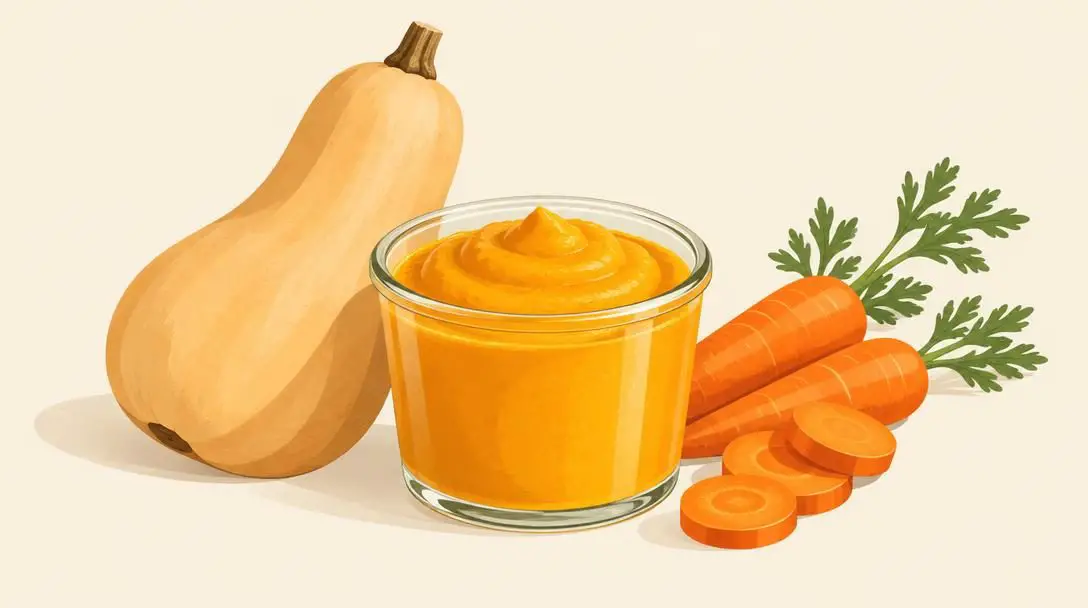
Butternut squash delivers generous amounts of vitamins A and C, and carrots offer a concentrated source of fiber and beneficial antioxidants. This vibrant orange puree provides a gentle, earthy sweetness that infants commonly accept with enthusiasm. The combination produces a generous batch that stores well for multi-day meal planning.
Ingredients:
- 1 cup butternut squash, peeled and diced
- 1 cup carrots, peeled and diced
- Water
Preparation: Steam or boil the squash and carrot cubes until they are tender and easily pierced. Transfer both vegetables to a blender or food processor, incorporate a splash of water, and process until silky and uniform. Divide into small glass jars or containers and store in the refrigerator for up to three days.
Green Peas and Brown Rice
- Yield: Approximately 8 ounces
- Calories: About 120
- Protein: 4 grams
- Fiber: 5 grams
- Storage Limit: Up to 3 days in refrigerator
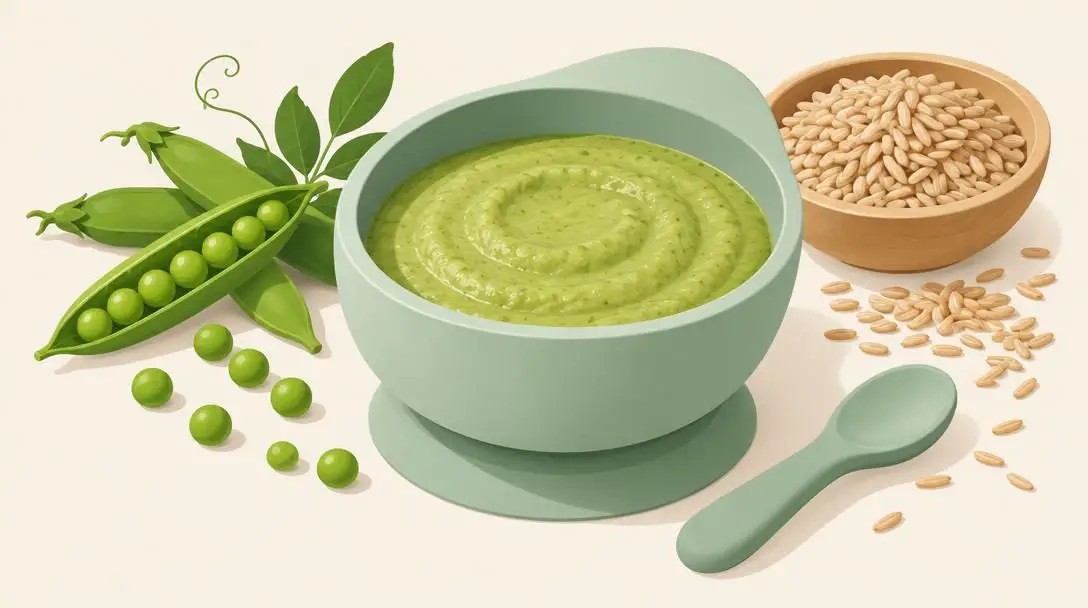
Green peas are an excellent plant-based source of protein, dietary fiber, and vitamins A and C, while cooked brown rice contributes complex carbohydrates and sustained energy. Blending a wholesome legume with an unrefined grain provides an earthy, savory flavor profile, helping expand your baby's palate beyond sweet fruit-forward combinations.
Ingredients:
- 1 cup green peas, fresh or frozen
- 1/2 cup cooked brown rice
- Water
Preparation: Cook the green peas according to package instructions until tender. Place the cooked peas and brown rice together into a food processor or blender. Add a splash of water and blend thoroughly until completely smooth, taking care to break down all pea skins and rice grains. Keep refrigerated in small airtight containers for up to three days.
Blueberry and Yogurt Puree
- Yield: Approximately 6 ounces
- Calories: About 90
- Protein: 3 grams
- Fiber: 1 gram
- Storage Limit: Up to 2 days in refrigerator
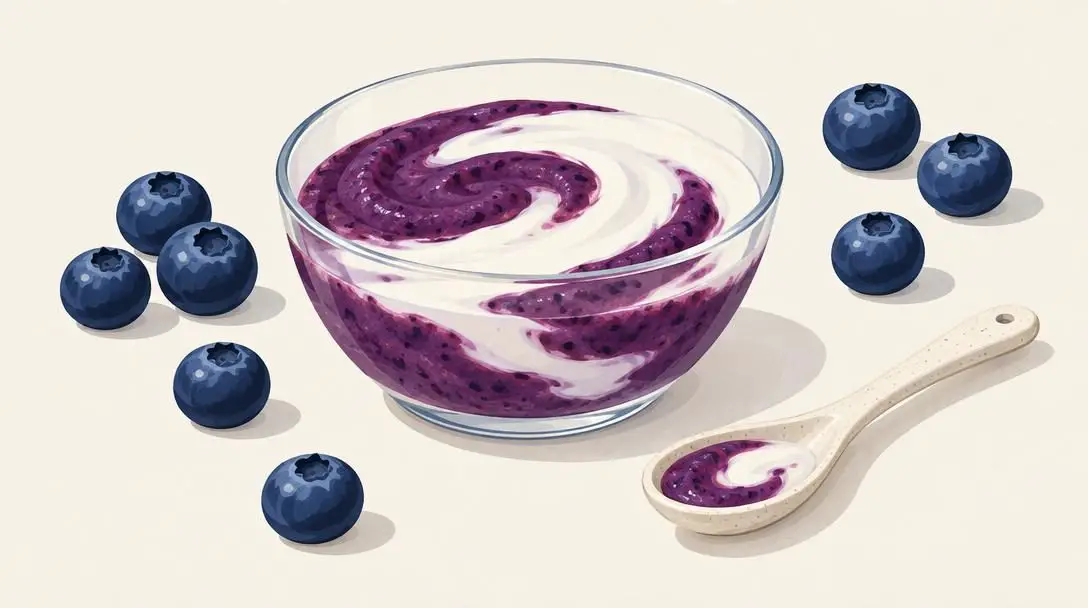
Blueberries are packed with potent antioxidants, and plain yogurt offers high-quality protein and bone-building calcium. This sweet and tangy blend requires no cooking whatsoever, making it a quick, wholesome breakfast or snack. The tanginess of the yogurt balances the rich berry flavor, creating a creamy texture babies love.
Ingredients:
- 1/2 cup fresh or frozen blueberries
- 1/2 cup plain yogurt
Preparation: Place the blueberries and plain yogurt directly into a blender or food processor. Puree until smooth and evenly blended. Serve right away or store in an airtight container in the refrigerator for up to two days.
Practical Steps for First-Time Parents
Making infant food for the first time can feel intimidating when balanced alongside feedings, naps, and household routines. Adhering to a standardized kitchen process keeps preparation sanitary, rapid, and stress-free.
- Prepare a clean workspace: Wash your hands thoroughly with soap and warm water. Ensure all cutting boards, chef's knives, vegetable peelers, blender bowls, and storage containers are fully sanitized and dried before starting.
- Chop ingredients into small, uniform pieces: When prepping firm produce like sweet potatoes, apples, squash, or carrots, cut them into small, even cubes. Uniform sizes cook through at an identical rate, preventing stray hard chunks that disrupt a smooth blend.
- Test for tenderness before blending: Do not rush the cooking phase. Insert the tines of a fork into the steaming or boiling produce; it should slide straight through with zero resistance. Under-cooked produce will not puree evenly.
- Add liquid gradually: Start with a modest splash of water when you begin processing. Pulse the machine, evaluate the thickness, and add additional liquid only as necessary. Thinning a thick puree is effortless, but fixing a watery puree is difficult.
- Cool before storing: Let warm purees cool down to room temperature before sealing lids onto storage containers. Sealing hot food traps steam and condensation, which degrades texture and alters moisture ratios.
- Label storage containers: Use small glass jars or food-safe storage tubs and write the preparation date clearly on the lid. Clear dating prevents confusion regarding refrigerator freshness windows.
- Serve small portions separately: Never feed your baby directly out of the primary storage jar. Spoon a modest serving into a separate infant bowl. Discarding any uneaten food from the bowl prevents digestive enzymes and oral bacteria from your baby's spoon from spoiling the master batch.
Common Mistakes to Avoid
Even seasoned home cooks encounter unexpected hurdles when transitioning to infant purees. Keeping these practical pitfalls in mind will save you time and frustration:
- Overlooking storage time limits: Homemade meals lack chemical preservatives. Stored purees made with sweet potato, apple, squash, carrots, peas, and brown rice must be consumed within three days, while fresh mashes containing banana and avocado or yogurt blends must be used within two days.
- Using unripened fruit for no-cook recipes: When making the banana and avocado mash, confirm both ingredients yield gently to pressure. Hard, underripe avocados and firm bananas are difficult to mash by hand and yield unpalatable, lumpy consistencies.
- Under-pureeing fibrous ingredients: Produce with outer skins, such as green peas and blueberries, as well as dense grains like brown rice, require extended processing time. Blend long enough to completely pulverize skins and husks into a uniform paste.
- Adding too much water too early: Pouring excessive liquid into your blender before turning it on can quickly leave you with a thin, soupy broth. Add liquid in small, controlled splashes until the blades catch and circulate smoothly.
- Discarding separated purees: Natural ingredient separations can occur after a day or two in the refrigerator. This separation does not indicate spoilage; simply stir the mixture thoroughly with a clean spoon to restore its uniform consistency.
Expanding Palates: Texture Progression and Next Steps
Once your infant demonstrates comfort with these foundational recipes, you can begin expanding their feeding experience. Transitioning through various textures and flavor pairings supports oral motor development and prepares young children for independent self-feeding.
As swallowing skills develop, gradually adjust your mechanical processing. You can reduce blending durations to leave subtle texture or transition from electric pureeing to manual fork mashing. Introducing slightly thicker, lumpier textures teaches infants how to move food around the mouth with their tongue and activate chewing muscles long before all their teeth emerge.
You can also explore creative pairings inspired by your family's regular meals. Combining sweet fruits with earthy vegetables, or blending complex grains with tender legumes, broadens flavor acceptance. To build confidence, you can also transition toward batch-cooking favorite staples: steaming larger quantities of squash, carrots, or sweet potatoes and portioning them ahead of time keeps your weekday routine simple and stress-free.
Frequently asked questions
How long can homemade baby food be safely stored in the refrigerator?
Purees prepared with cooked produce and grains, such as sweet potato, apple, butternut squash, carrots, peas, and brown rice, can be stored in an airtight container for up to three days. Fresh, uncooked mixtures like banana and avocado mash or blueberry and yogurt puree should be consumed within two days.
Why is steaming preferred over boiling for certain vegetables?
Steaming softens raw plant fibers using moist, circulating vapor without submerging the food entirely in water. This gentle heat tenderizes dense produce while preserving delicate, water-soluble vitamins that might otherwise leach into boiling water.
What should I do if my puree looks separated after a day in the fridge?
Natural separation is completely normal in homemade baby food because it contains no commercial binders, emulsifiers, or stabilizers. Simply give the puree a vigorous stir with a clean spoon before feeding to redistribute the liquid evenly.
Do I need an expensive baby food maker to make these recipes?
No specialized appliances are necessary. You can easily prepare these recipes using standard kitchen tools, such as a regular stovetop pot for steaming or boiling, a standard blender or food processor, and a simple fork or potato masher for soft ingredients.
Why shouldn't I feed my baby straight from the storage container?
Feeding directly from the main jar transfers saliva and oral bacteria from the spoon into the remaining food. These enzymes and bacteria can break down the puree and accelerate spoilage, ruining what is left in the container.
The Bottom Line
Preparing baby food at home does not require professional culinary training or expensive equipment. By leaning on basic grocery staples, gentle cooking techniques, and straightforward pureeing tools, you can nourish your growing child with complete confidence in every ingredient you serve. These foundational recipes offer a practical, budget-conscious, and joyful entry into homemade infant meals, paving the way for a lifetime of wholesome eating habits.