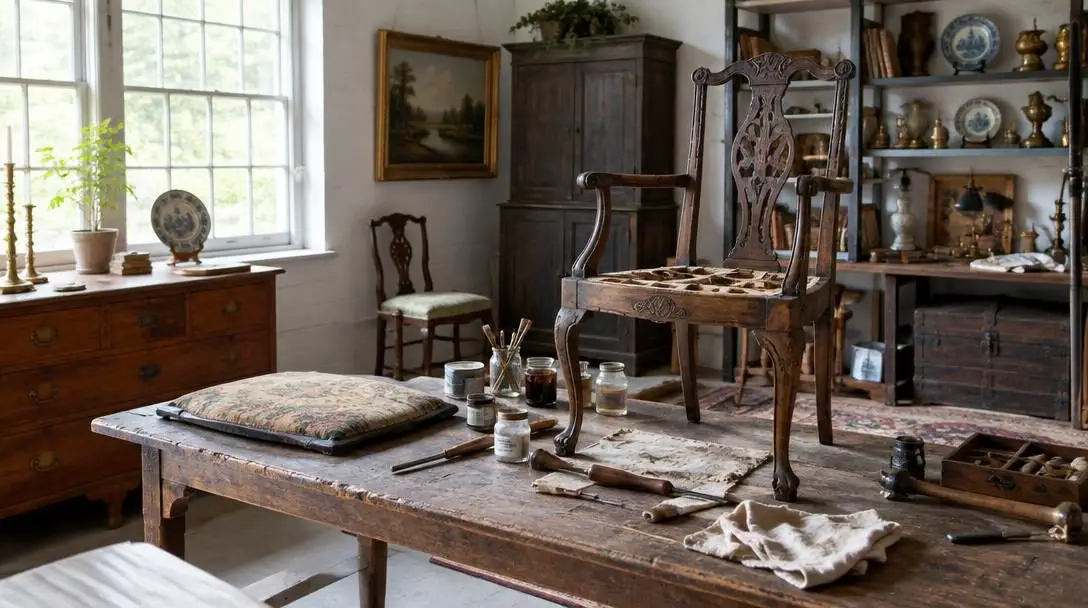
Embracing Eclectic Design Style – Revisiting Classics
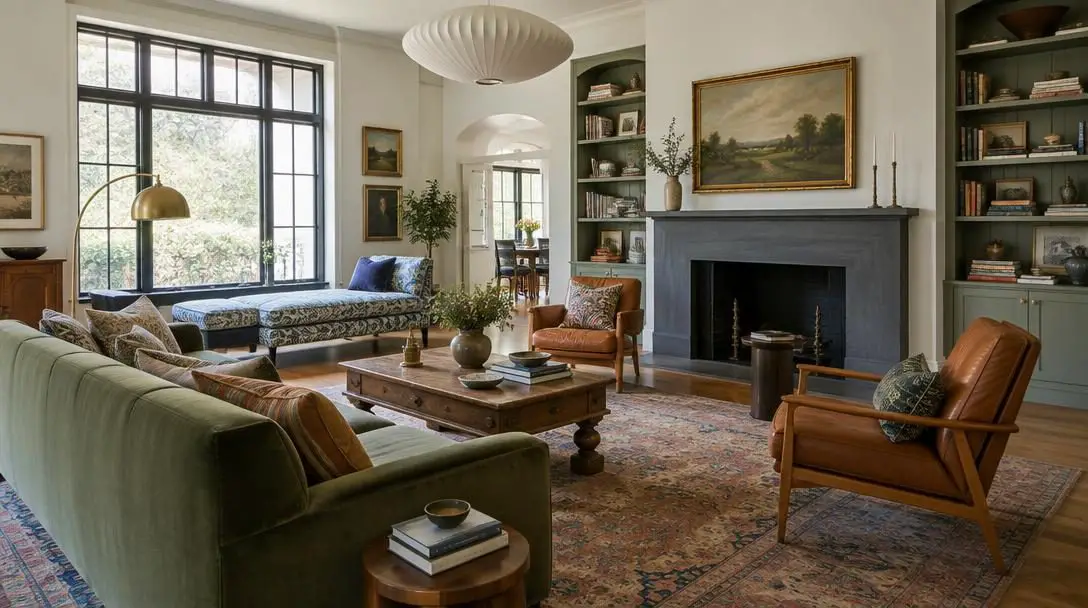
The eclectic design style remains one of the most enduring and celebrated approaches to interior decorating. Rather than confining a room to the strict aesthetic rules of a single era or trend, eclecticism invites an unexpected dialogue between varied periods, silhouettes, textures, and color palettes. It transforms living spaces from rigid, predictable showroom settings into deeply personal environments that reflect the stories, travels, and sensibilities of the people who inhabit them.
Historically, interior design was dominated by uniform conventions where matching suites of furniture and period-accurate decor reigned supreme. The emergence of eclectic design broke down these historical boundaries, opening the door for vintage treasures to sit alongside contemporary innovations. By understanding how to balance visual tension with overall cohesion, anyone can master this layered aesthetic while honoring timeless design traditions.
Key takeaways
- Eclectic style centers on personal expression by harmoniously combining furnishings, textures, and decorative objects from distinct historical eras.
- Visual contrast drives the energy of an eclectic room, while careful balance in scale, proportion, and weight keeps the space cohesive.
- Artwork and layered accessories function as vital connective tissue, bridging contrasting colors and contrasting design philosophies.
- Thoughtful editing prevents an eclectic room from crossing the line from curated layering into disorganized visual clutter.
The Evolution of Eclectic Design
For generations, standard decorating practices were governed by strict rules. Conventional homes featured furniture from a single manufacturer or era, sharing matching woods, identical carved motifs, and uniform upholstery fabrics. While this approach created visual order, it often produced spaces that felt formulaic, stiff, and detached from individual character.
The rise of eclectic design challenged this status quo. As global travel expanded and architectural awareness deepened, collectors and homeowners began integrating family heirlooms, architectural salvage, and overseas discoveries into their domestic spaces. Instead of concealing an inherited antique because it failed to match a mid-century or modern scheme, design enthusiasts deliberately placed these contrasting objects together.
Today, eclecticism is recognized as a sophisticated design philosophy rooted in deliberate curation. It removes the arbitrary separation between the past and the present. A homeowner is just as free to showcase an ancient carved chest as they are to display an angular, minimalist coffee table, allowing history and modern utility to coexist seamlessly under one roof.
The Mechanics of Harmonizing Contrast
The defining trait of the eclectic look is deliberate contrast. However, contrast alone does not guarantee a successful room. Without harmony, a space quickly becomes chaotic. Achieving successful harmony requires balancing visual weight, texture, and structural geometry across the entire room.
Contrast is the engine of the eclectic look, but harmony is what holds the entire room together.
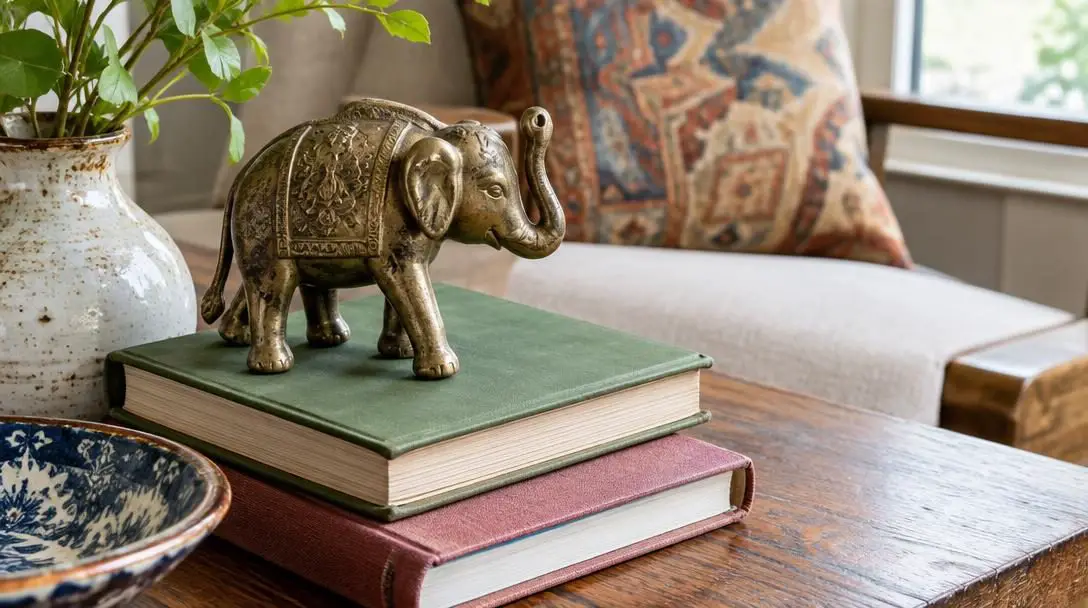
Visual weight plays a critical role in how our eyes interpret a living area. For instance, pairing a heavy, voluminous velvet sofa with dainty glass lamps produces an immediate sense of equilibrium. The sofa anchors the room with tactile depth and mass, while the transparency and delicacy of the glass lamps introduce lightness, preventing the seating area from appearing overly dense or visually suffocating.
Similarly, high-contrast surface combinations can enliven a space without creating visual discord. Installing a vibrant, intricately patterned floral wallpaper behind clean, stark white furnishings generates a compelling visual counterpoint. The elaborate pattern provides narrative warmth and complexity, while the crisp white furniture provides breathing room, ensuring the eye has a place to rest.
Balancing Design Elements Across the Room
To successfully combine opposing styles, it helps to understand how contrasting textures, materials, and eras interact with one another. When opposing characteristics meet, they emphasize the best qualities of each individual piece.
| Focal Component | Contrasting Element | Visual Impact |
|---|---|---|
| Voluminous velvet sofa | Dainty glass lamps | Balances dense tactile weight with open, light-refracting transparency |
| Bright floral wallpaper | Stark white furniture | Combines rich, complex pattern with crisp, modern geometric relief |
| Rough-hewn natural wood | Polished industrial metal | Creates dynamic tactile tension between warm organic grain and cool sleekness |
| Ancient carved chest | Minimalist contemporary art | Anchors historic craftsmanship alongside clean, expressive modernism |
Tactile variation is another essential component of eclectic balance. Combining rough-hewn natural wood finishes with polished industrial metals creates an engaging sensory contrast. Introducing varied textiles—such as plush woven rugs beneath smooth modern seating—ensures that the room feels physically inviting, layered, and comfortable rather than aloof.
Step-by-Step Guide to Curating an Eclectic Room
Because eclecticism offers boundless creative freedom, approaching a room without a plan can quickly lead to indecision. Following a sequential process helps maintain focus and ensures that every piece earns its place within the broader composition.
- Establish a core foundation: Begin with neutral base components, such as a subtle wall color, an anchoring area rug, or primary large-scale seating. A grounded backdrop provides a steady canvas for the more expressive elements to follow.
- Select a statement classic: Choose a prominent centerpiece to serve as the room's anchor. This could be an ancient wooden chest, an ornate gilded mirror, or a sculpted mid-century lounge chair that commands attention.
- Layer in contrasting eras: Introduce pieces that stand in stylistic opposition to your centerpiece. If your statement item is historically ornate, counterbalance it with clean-lined side tables, simple shelving, or contemporary architectural lighting.
- Vary scales and proportions: Balance heights and silhouettes throughout the room. Mix low-profile sofas with tall bookcases, and juxtapose broad, heavy furnishings with slender, airy accent pieces.
- Introduce tactile textures: Build warmth by incorporating diverse materials. Juxtapose rough woods with sleek metals, and layer upholstery using velvet, woven wool, linen, and silk.
- Incorporate playful patterns and colors: Use vibrant accents to energize the space. Introduce graphic pillows, patterned throws, or high-contrast wall coverings to break up monochromatic blocks.
- Curate art and personal collections: Assemble framed works, photography, and decorative sculptures across walls and tabletops, providing the finishing personal stamp that completes the narrative.
The Bridge: Artwork and Curated Accessories
In a room composed of items spanning different decades or centuries, artwork and decorative accessories act as the connective tissue. They unify diverse forms, soften hard architectural lines, and introduce an overarching rhythm that ties disparate furniture pieces together.
A gallery wall is an ideal venue for celebrating eclectic principles. Homeowners are not restricted to identical frame profiles or a single artistic genre. An antique oil portrait can hang comfortably beside a modern graphic screen print, an architectural sketch, or a small three-dimensional wall sculpture. This variety enriches the vertical planes of the room, preventing the walls from feeling like a detached afterthought.
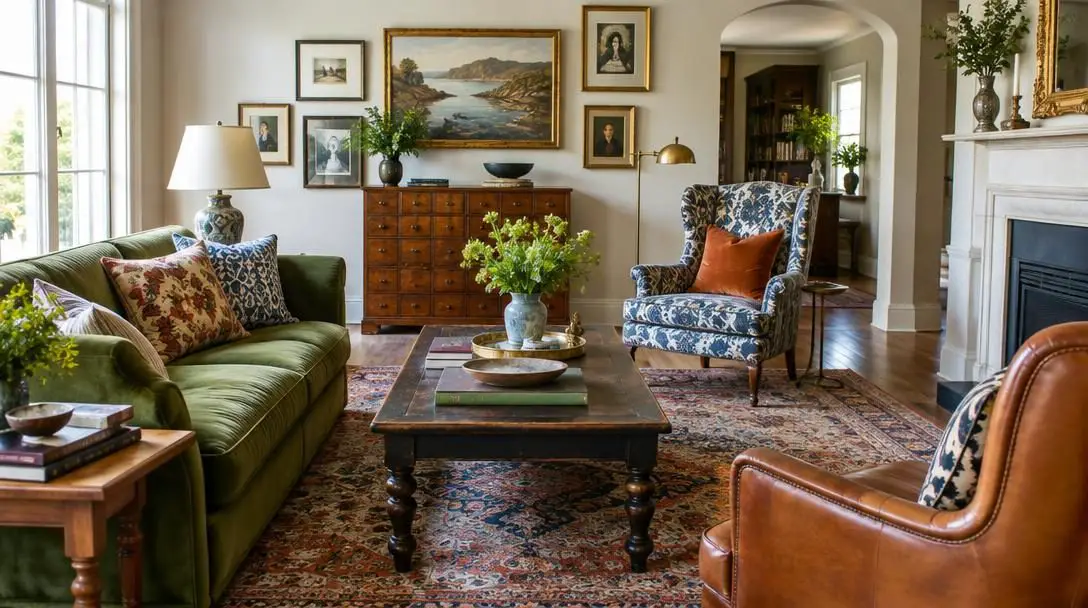
Beyond wall decor, smaller tabletop objects play a crucial structural role. Ceramic vases, woven baskets, marble trays, and collected curiosities allow decorators to distribute accent colors and textures across the room. If a vintage wooden chest sits in one corner, repeating its warm amber tones through a wooden decorative bowl or a picture frame across the room ensures the antique feels integrated rather than marooned.
Frequent Pitfalls in Eclectic Decorating
The freedom of eclecticism is sometimes misinterpreted as an absence of rules. However, without intentional composition, a room can rapidly lose its charm and functionality. Recognizing common decorating errors helps preserve clarity and visual balance.
- Confusing eclecticism with clutter: An eclectic space requires negative space. Piling too many contrasting objects into a room without adequate breathing room leads to visual exhaustion rather than curated warmth.
- Neglecting visual balance: Grouping all heavy, dark, or traditional items on one side of a room while placing all light, minimalist pieces on the other creates a lopsided environment. Contrasting elements should be distributed evenly throughout the space.
- Over-matching items: Purchasing entire collections with uniform woods, matching hardware, and identical upholstery runs counter to the spirit of eclecticism, yielding a flat, showroom-style appearance.
- Ignoring scale and proportion: Placing an undersized, lightweight chair beside a monolithic, heavy timber coffee table creates awkward spatial tension. Every piece must relate comfortably in scale to its neighbors.
- Lacking a cohesive bridge: Assembling completely unrelated furnishings without a common thread—such as a recurring accent hue, shared metal finish, or unifying motif—results in a disjointed rather than harmonious interior.
Sustaining and Evolving an Eclectic Home
One of the greatest virtues of eclectic design is its adaptability over time. Rigid interior styles often require an entire room makeover if a single element is replaced or damaged. In contrast, an eclectic room serves as a living canvas that effortlessly absorbs new finds, gifts, and seasonal updates.
As you encounter unique items at flea markets, auctions, or during travels, an eclectic framework welcomes them. Introducing a newly acquired mid-century armchair might simply require shifting a side table or swapping a lamp to establish a fresh visual dialogue. Furthermore, rotating textiles and smaller accessories with the seasons—such as swapping heavy velvet cushions for light linens in the spring—allows you to re-energize the room without disturbing its foundational balance.
Frequently asked questions
What is the difference between eclectic design and cluttered decorating?
Eclectic design is deliberate and curated, relying on thoughtful relationships between scale, color, and texture with plenty of negative space. Clutter occurs when items are added without intention, scale awareness, or visual breathing room, creating an overwhelming and disorganized environment.
Can I use modern furniture in a room with historic antiques?
Yes. Mixing modern furniture with historical antiques is one of the hallmarks of eclectic decorating. A sleek contemporary table paired with an antique carved chest creates a dynamic contrast that highlights the distinctive beauty of both pieces.
How do I choose a color palette for an eclectic space?
A practical approach is to start with a neutral foundation on larger elements like walls or primary sofas, and then introduce a cohesive secondary palette of two or three accent colors through artwork, textiles, and accessories to tie the diverse furnishings together.
Are matching furniture sets ever appropriate in eclectic design?
Generally, matching suites from a single collection should be avoided. The goal of eclectic design is to create a collected, multi-layered look over time. If you own a matching set, try splitting the pieces up across different rooms and pairing them with contrasting items.
How does artwork help unify an eclectic living room?
Artwork serves as a visual bridge that connects disparate colors, eras, and textures. By blending varied frame styles and genres—such as antique portraits alongside modern graphic prints—art ties contrasting furnishings into a unified visual statement.
The bottom line
Embracing an eclectic design style is an invitation to celebrate your individuality through home decor. By liberating yourself from rigid period restrictions and showroom conventions, you can fearlessly combine ancient heirlooms with modern classics. The secret lies in balancing contrast with harmony: pairing light accents with heavy upholstery, weaving recurring colors across diverse furnishings, and leaving room for the space to evolve as your personal story unfolds.