Foreclosure & The Property Market in the Philippines: 5 Essential Tips
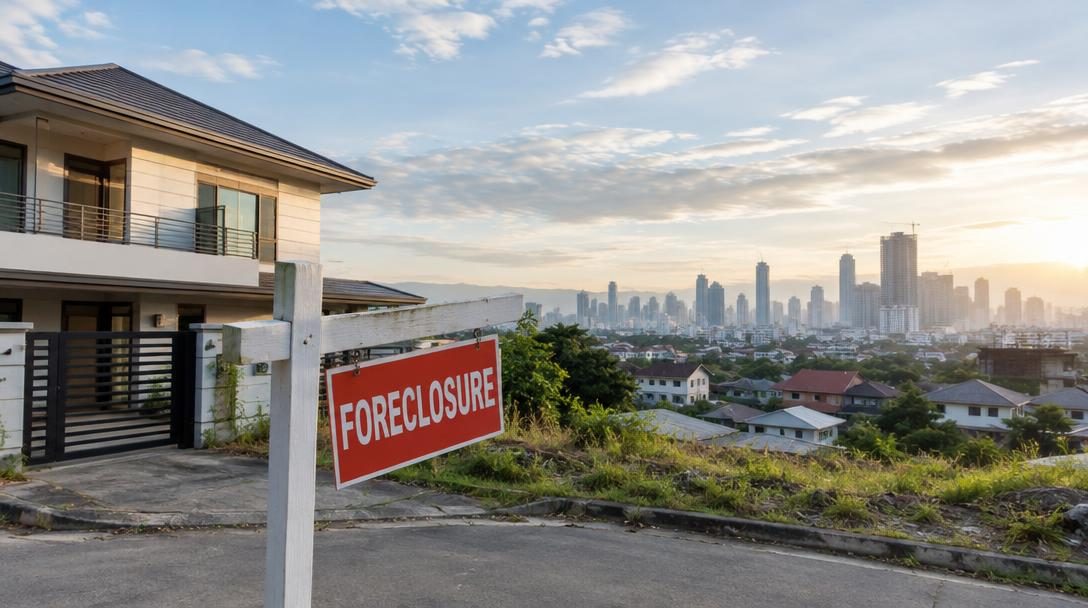
Foreclosed properties represent a compelling entry point into Philippine real estate, offering prospective homeowners and property investors the chance to purchase residential and commercial assets at indicative prices well below standard market listings. When borrowers default on mortgage loans, lending institutions initiate judicial or extrajudicial foreclosure proceedings to reclaim legal title, ultimately categorizing these properties as Real and Other Properties Acquired (ROPA) or non-performing assets. These assets are then offered to the public through competitive open floor auctions or sealed bidding processes.
However, acquiring real estate through foreclosure requires navigating structural, administrative, and legal hurdles that do not exist in conventional property sales. Because properties are universally sold on an "as-is, where-is" basis, buyers absorb all deferred maintenance, structural defects, and statutory obligations tied to the real estate. Navigating this marketplace successfully demands disciplined due diligence, clear cash planning, and a firm grasp of local market valuations across the Philippine archipelago.
Key takeaways
- Foreclosed assets in the Philippines are sold strictly on an "as-is, where-is" basis, meaning buyers inherit all existing physical defects and deferred repairs.
- Acquiring institutions require buyers to hold 10 to 20 percent of the purchase price in liquid cash for immediate bid bonds and auction deposits.
- Total acquisition budgets must account for statutory closing expenses, including documentary stamps tax, local transfer taxes, registration fees, and notarial charges.
- Pre-auction research into recent comparable sales is critical for setting a strict maximum bid ceiling that prevents emotional overpayment during open bidding.
- Regularly tracking disposal catalogs from commercial banks, SPAV asset firms, the SSS, and the NHA expands access to viable real estate opportunities.
Understanding the Foreclosure Ecosystem in the Philippines
The journey of a foreclosed property begins when a debtor fails to meet scheduled loan repayments, prompting the issuing financial institution to issue formal notices of default. If the loan remains unresolved, lenders proceed with legal action. In the Philippines, this occurs through either extrajudicial foreclosure—governed by contractual mortgage clauses permitting sale through a notary public or sheriff—or judicial foreclosure filed through the court system. Once legal proceedings conclude and title is consolidated in favor of the lender, the property transforms into a Real and Other Properties Acquired (ROPA) asset.
To recover locked capital, institutional lenders compile these acquired properties into published disposal catalogs. These assets are then made available to individual buyers, property developers, and institutional investors through scheduled public bidding events and negotiated asset sales across the country.
One defining reality of foreclosures is that you often do not know exactly what you are buying until the transaction is finalized.
Institutional Sources of Foreclosed Properties
Property seekers in the Philippines can source foreclosed inventories from multiple institutional bodies. Each institution operates its own public auction calendar, minimum bidding requirements, and documentation pathways:
Commercial Banks
Private commercial banks across the Philippines manage extensive portfolios of acquired residential, commercial, and industrial properties. Their inventories range from high-density urban condominiums in central business hubs to suburban subdivisions. Commercial banks publish updated ROPA catalogs on their official banking portals and conduct scheduled sealed-bid auctions or public bidding floors on a recurring quarterly or monthly schedule.
Special Purpose Asset Vehicles (SPAV Companies)

Special Purpose Asset Vehicles are dedicated asset management corporations established to acquire non-performing loans and non-performing real estate assets from financial institutions. These specialized firms purchase distressed portfolios in bulk and dispose of individual parcels, standalone homes, and developmental land holdings through public listings, asset management portals, and private negotiated sales.
Social Security System (SSS)

The Social Security System is a state-managed social insurance program that periodically forecloses on residential properties due to defaulted member housing loans. The SSS publishes notices of public auction detailing floor areas, minimum bid prices, and the consolidation status of titles for properties spread across urban centers and regional provinces.
National Housing Authority (NHA)

The National Housing Authority is the government agency mandated to provide socialized and affordable housing developments for lower- and middle-income families. When assigned beneficiaries default on their housing amortizations or forfeit rights, the NHA reacquires the housing units and offers them to qualified prospective buyers through structured bidding and disposition programs.
Seven Core Rules for Navigating Foreclosure Sales
Purchasing foreclosed real estate requires strategic calculation and deliberate preparation. Prospective bidders should integrate seven fundamental practices into their purchasing approach:
Rule 1: Secure Pre-Approved Financing Early
Because auction events move quickly once bidding begins, relying on tentative financing arrangements poses substantial financial risk. Prospective buyers should engage lenders well before attending an auction floor to obtain formal loan pre-approvals that confirm actual borrowing capacities. Bidders must explicitly inform the financing bank that loan proceeds will fund a foreclosed property purchase, as certain financial institutions maintain bespoke underwriting criteria, specific property checklists, or specialized credit programs explicitly designed for acquired assets.
Rule 2: Keep 10 to 20 Percent Liquid Cash on Hand
A loan pre-approval alone is insufficient to participate in public auctions. Organizers mandate upfront financial commitments, requiring participants to submit bid bonds or ready earnest downpayments before a bid is registered or immediately after the hammer falls. Buyers must maintain at least 10 to 20 percent of the target purchase price in liquid funds to ensure full compliance with auction requirements without forfeiting their winning bid due to settlement delays.
Rule 3: Maintain Dedicated Renovation Reserves
Unlike conventional property transactions, foreclosure buyers rarely gain access to the interior of a property before bidding takes place. In many situations, homes remain locked, inaccessible to the public, or occupied by previous tenants during the marketing period. Bidders must assume that the interior requires extensive refurbishment, deep cleaning, or structural remediation. Maintaining a dedicated cash reserve separate from the purchase capital ensures that unanticipated restoration costs do not overwhelm the investment.
Rule 4: Account for Government Taxes and Legal Fees
The winning bid price represents only a baseline financial expenditure. Legally consolidating and transferring real estate ownership in the Philippines triggers mandatory transactional taxes and statutory fees that the purchaser must clear. Missing these budgetary line items can halt the registration process and prevent the issuance of a clean title in the buyer's name.
Rule 5: Evaluate Long-Term Location and Infrastructure Potential
Foreclosed assets appear across broad geographies, ranging from established residential subdivisions in Metro Manila to expanding suburban locations in Cavite, Bulacan, and Rizal, as well as emerging regional municipalities. An evaluation of location must align with your investment horizon. When assessing properties for capital appreciation or rental income, investigate surrounding arterial road networks, mass transit corridors, and planned municipal infrastructure projects that drive future property values upward.
Rule 6: Study Comparable Sales to Set a Strict Maximum Bid
Open bidding environments generate heightened emotional pressure, which can provoke bidding wars that push asset prices far above true market value. To counteract emotional decision-making, buyers must conduct thorough comparative market research (comps) of nearby properties recently sold or listed in the same neighborhood. This comparative data establishes an objective pricing ceiling, giving the buyer an unyielding boundary beyond which they must walk away.
Rule 7: Build Experience Across Multiple Public Auctions
Mastering the foreclosure market requires observation, patience, and repeated exposure. Regularly attending public bidding sessions—even as a non-bidding observer—familiarizes participants with institutional procedures, terminology, bidding rhythms, and competitive behaviors. By routinely reviewing auction announcements released by commercial banks, SPAV management firms, the SSS, and the NHA, buyers train themselves to identify undervalued opportunities quickly.
Mandatory Transactional Costs and Closing Fees
Completing a foreclosed property transaction requires settling several non-negotiable statutory fees, registry dues, and administrative charges. The following breakdown illustrates the primary transactional expenses encountered during property conveyance:
| Fee or Tax Type | Collecting Entity | Administrative Purpose |
|---|---|---|
| Documentary Stamps Tax | Bureau of Internal Revenue (BIR) | Mandatory excise tax levied on the execution of deeds and legal sales instruments. |
| Local Transfer Tax | City or Municipal Treasurer's Office | Municipal fee charged for transferring real property ownership within the local jurisdiction. |
| Registration Fees | Registry of Deeds | Statutory recording fee paid to update the title registry and issue the new title. |
| Notarial Fees | Commissioned Notary Public | Legal acknowledgment charge for executing deed of sale documents and related affidavits. |
| Homeowner's Association Dues | HOA or Condominium Corporation | Outstanding arrears or maintenance fees assessed against subdivision homes or condominium units. |
Step-by-Step Purchasing Guide for Foreclosures
Navigating the administrative pathway of purchasing a foreclosed property requires executing steps in a defined, disciplined sequence to safeguard capital and ensure clear ownership rights:
- Gather Property Catalogs: Access published ROPA inventories and auction bulletins distributed by commercial banks, SPAV firms, the Social Security System, and the National Housing Authority.
- Perform Preliminary Screening: Filter asset inventories by target municipality—such as Metro Manila, Cavite, Bulacan, or Rizal—aligning choices with budget limits, floor area, and property type.
- Conduct an External Site Inspection: Travel to the neighborhood in person to review the exterior of the structure, street drainage, proximity to transit routes, and local neighborhood conditions.
- Verify the Legal Title: Examine lender disclosures to determine whether the title is already consolidated under the selling institution's name and verify whether the property is vacant or occupied.
- Determine Valuation Using Local Comps: Research recent transaction records and active asking prices of similar properties in the immediate vicinity to determine fair market value.
- Calculate Your Maximum Bid Ceiling: Formulate an absolute bid ceiling by deducting anticipated renovation costs, transfer taxes, documentary stamps, and registration charges from your market valuation.
- Secure Financial Pre-Approval: Finalize mortgage arrangements with your financing institution, confirm approval for a foreclosed property purchase, and place 10 to 20 percent liquid cash into an accessible account.
- Register and Participate in the Auction: Submit bidder registration documents along with mandatory bid bonds or earnest downpayments, adhering strictly to your pre-calculated bidding cap.
- Complete Closing Requirements: Remit the remaining balance within the lender's designated closing window, fulfill all legal documentation, settle municipal and BIR tax liabilities, and register the consolidated title.
Common Mistakes to Avoid
Navigating acquired asset sales without adequate preparation exposes buyers to significant financial friction. Prospective bidders should guard against several frequent missteps:
- Underestimating Restoration Expenses: Presuming that a locked or inaccessible home requires only minor cosmetic cleaning is a major risk. Substantial plumbing, roof, or structural repairs can quickly derail an underfunded project.
- Ignoring Secondary Closing Taxes: Focusing solely on the winning hammer price while neglecting documentary stamps tax, local transfer taxes, notarial charges, and registry costs leaves buyers with sudden funding deficits during title conveyance.
- Engaging in Emotional Bidding: Allowing competitive energy on an open auction floor to drive bids above pre-set limits eliminates the pricing discount that justified purchasing a foreclosure initially.
- Disregarding Unpaid Association Fees: Acquiring townhouses or condominium units without auditing historical homeowner's association accounts can leave buyers responsible for substantial back-dues.
- Failing to Evaluate the Surrounding Area: Purchasing a discounted asset in a neighborhood that lacks public transportation, convenient road connections, or municipal growth prospects significantly limits rental income and long-term resale potential.
Frequently asked questions
What does "as-is, where-is" mean when buying a foreclosed home?
It means the buyer purchases the property in its current physical and legal condition. The selling institution makes no guarantees, provides no warranties, and will not perform repairs or deep cleaning to address existing structural damage, wear and tear, or deferred maintenance.
How much liquid cash do I need to enter a Philippine foreclosure auction?
Auction participants generally need at least 10 to 20 percent of the property's purchase price in liquid cash. This capital covers mandatory bid bonds required to register for bidding and initial downpayments due upon bid acceptance.
Which institutions sell foreclosed real estate in the Philippines?
Foreclosed assets are primarily disposed of by private commercial banks, Special Purpose Asset Vehicles (SPAV companies), the Social Security System (SSS), and the National Housing Authority (NHA).
Can I inspect the interior of a foreclosed house before bidding?
In most instances, interior inspections are not permitted prior to the auction because the property remains locked, inaccessible, or occupied. Buyers must perform external neighborhood inspections and maintain dedicated cash reserves for interior repairs.
What taxes and fees must be paid after winning a foreclosed property?
Buyers must settle notarial fees, Registry of Deeds registration charges, local transfer taxes payable to the city or municipal treasurer, and documentary stamps tax collected by the Bureau of Internal Revenue (BIR), in addition to any unpaid homeowner's association assessments.
The Bottom Line
Investing in foreclosed real estate across the Philippines offers a reliable mechanism for building property equity and acquiring assets below conventional market pricing. However, achieving favorable returns requires treating each prospective purchase as a rigorous financial and legal audit. Success demands disciplined preliminary screening, strict financial limits to counter auction-day emotions, and dedicated cash reserves to cover statutory taxes and interior repairs. By systematically examining institutional catalogs, verifying title standing, and factoring in all closing expenses, buyers can navigate the ROPA market with confidence and secure valuable property holdings.