How to Appreciate Classical Music: A Brief Guide To Popular Composers And Their Masterpieces
Classical music is frequently perceived as an exclusive art form reserved for scholars, connoisseurs, or elite concertgoers. Many people hesitate to delve into the repertoire because they assume that appreciating orchestral, chamber, or solo keyboard pieces requires years of formal conservatory training, fluency in complex musical theory, and familiarity with rigid social conventions. Yet this centuries-old tradition was never designed to be locked away in lecture halls or restricted to academic analysis.
At its heart, classical music is a universal language that cuts across centuries, geographies, and cultural divides. Orchestral and vocal masterpieces were composed to mirror raw human emotion, celebrate historical milestones, spin gripping theatrical narratives, and investigate the infinite possibilities of acoustic sound. By releasing the mistaken assumption that one must dissect a score to enjoy it, newcomers can open themselves up to some of the most moving, enduring works in human history.
Key takeaways
- Classical music is an accessible emotional art form designed for all listeners, not an exclusive tradition requiring formal musical theory.
- Familiarity with foundational masters like Bach, Mozart, Beethoven, Chopin, and Tchaikovsky provides an approachable doorway into centuries of repertoire.
- Listening actively to core auditory elements—melody, harmony, rhythm, and timbre—transforms passive hearing into a deeply engaging experience.
- Engaging regularly with classical compositions delivers measurable physical and psychological benefits, including reduced stress and improved sleep patterns.
- Moving past common mistakes, such as expecting immediate hooks or treating symphonies solely as background audio, unlocks lasting musical appreciation.
Essential Composers and Their Masterpieces
The vast universe of classical compositions is anchored by visionary creators whose artistic breakthroughs shaped Western musical history. Becoming acquainted with these core composers offers an immediate, dependable road map for anyone beginning their listening journey.
| Composer | Origin | Era | Primary Focus | Signature Masterpiece |
|---|---|---|---|---|
| Johann Sebastian Bach | Germany | Baroque | Counterpoint & sacred polyphony | The Brandenburg Concertos |
| Wolfgang Amadeus Mozart | Austria | Classical | Symphonic, operatic, & choral balance | Don Giovanni |
| Ludwig van Beethoven | Germany | Classical / Romantic transition | Symphonies & piano sonatas | The Ninth Symphony |
| Frederic Chopin | Poland | Romantic | Solo piano expression & lyricism | The Nocturnes |
| Pyotr Ilyich Tchaikovsky | Russia | Romantic | Orchestral storytelling & ballet | Swan Lake |
Wolfgang Amadeus Mozart
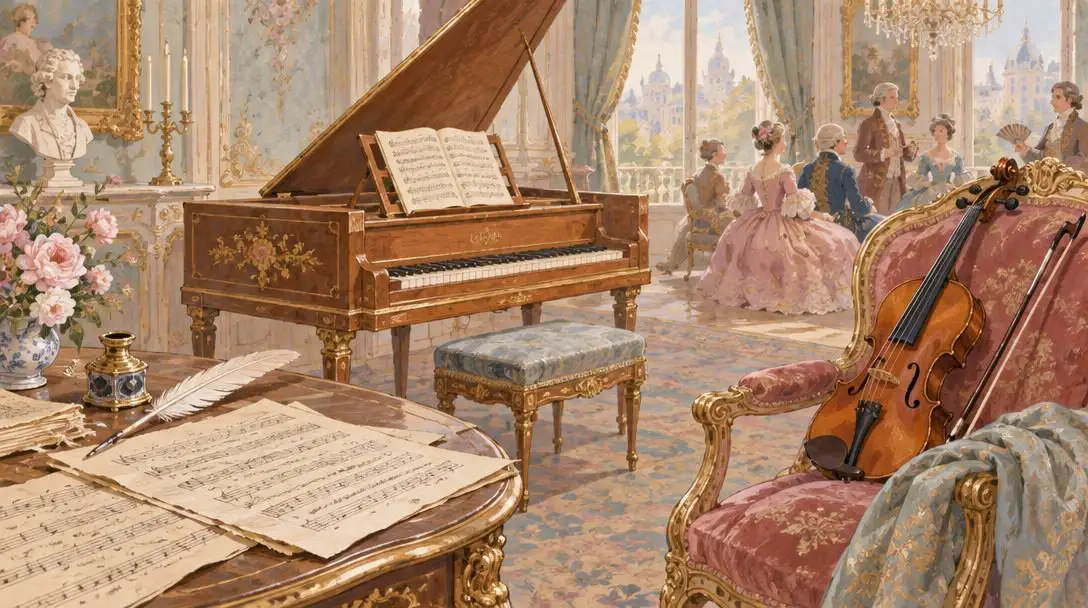
- Birth year: 1756
- Birthplace: Austria
- Milestone: Composed his first symphony at age eight
- Key works: Don Giovanni, Symphony No. 40 in G minor, Requiem Mass in D minor
Wolfgang Amadeus Mozart stands among the most celebrated figures in Western musical history. A child prodigy whose gifts manifested in early childhood, Mozart developed a compositional voice marked by extraordinary melodic inventive power, transparency, and structural poise. His music balances effortless grace with surprising emotional complexity. In the dramatic opera Don Giovanni, he wove psychological drama and vocal theatricality together, while his Symphony No. 40 in G minor captured an urgent, melancholic energy. His final, unfinished masterpiece, the solemn Requiem Mass in D minor, reveals the profound spiritual depth he could command even as his own life neared its conclusion.
Ludwig van Beethoven
- Birthplace: Germany
- Historical role: Bridged the Classical and Romantic styles
- Primary contributions: Symphony and sonata development
- Key works: Moonlight Sonata, The Ninth Symphony, The Emperor Piano Concerto
Ludwig van Beethoven revolutionized the course of Western instrumental music. By taking the balanced architectural forms established by his predecessors and expanding them to unprecedented scales, Beethoven turned the symphony and sonata into vehicles for intense, personal drama. His works reflect heroic struggles, triumph, and revolutionary vigor. The delicate and brooding Moonlight Sonata showcases his command of intimate keyboard expression, whereas The Emperor Piano Concerto exudes nobility, virtuosity, and expansive orchestral coloration. His monumental Ninth Symphony shattered conventions by incorporating vocal soloists and a massive chorus in its final movement, creating an enduring statement of human brotherhood.
Johann Sebastian Bach
- Birth year: 1685
- Birthplace: Germany
- Musical era: Baroque
- Key works: The Brandenburg Concertos, The Goldberg Variations, St. Matthew Passion, St. John Passion
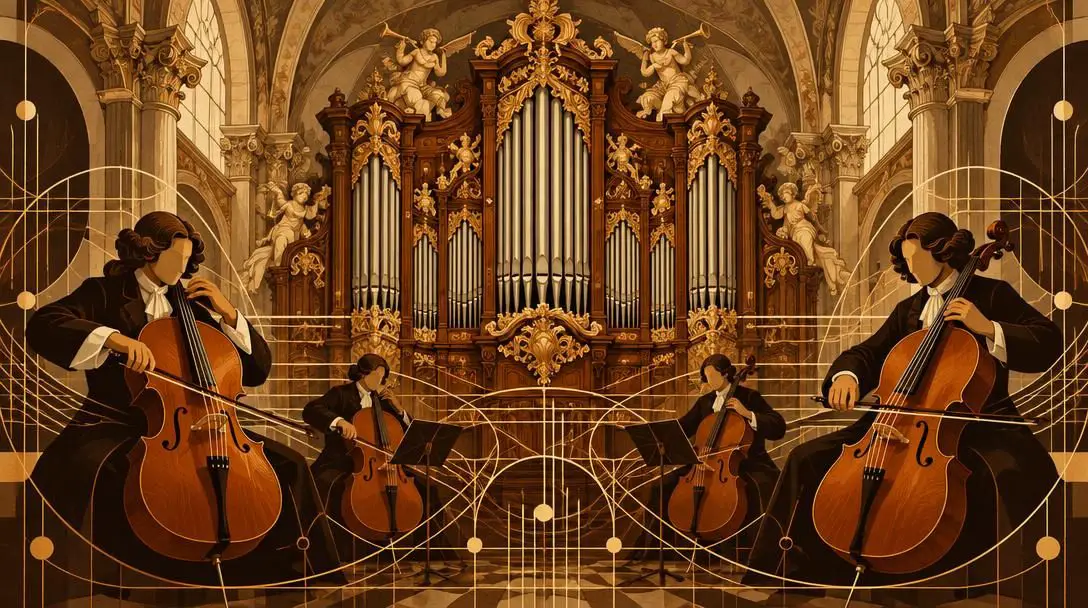
Regarded as a foundational pillar of Western classical music, Johann Sebastian Bach achieved unmatched perfection in the art of counterpoint, harmony, and melodic design. Bach possessed an uncanny ability to intertwine separate, independent melodic strands into a unified, harmonious whole, creating complex acoustic architecture that feels both mathematically precise and profoundly spiritual. His instrumental ingenuity is clear across The Brandenburg Concertos, which explore vibrant instrumental pairings, and The Goldberg Variations, a keyboard tour de force built on an opening theme and thirty intricate variations. In his large-scale choral compositions, such as the St. Matthew Passion and St. John Passion, Bach combined sacred narrative, dramatic choral movements, and deeply expressive arias.
Pyotr Ilyich Tchaikovsky

- Birth year: 1840
- Birthplace: Russia
- Hallmark qualities: Soaring melodies and dramatic orchestration
- Key works: The 1812 Overture, Piano Concerto No. 1, Swan Lake ballet
Pyotr Ilyich Tchaikovsky brought vivid narrative power and heartfelt emotional resonance to orchestral music. Passionate about theatrical storytelling, he excelled at composing for the stage and the concert hall alike, deploying rich instrumental textures and unmistakable, soaring melodies. His sweeping ballet score for Swan Lake proved that dance accompaniment could possess the dramatic weight and melodic richness of a full-scale symphony. The thunderous energy of The 1812 Overture illustrates his flair for grand historical spectacle, while his Piano Concerto No. 1 remains one of the most recognizable and passionate concertos in the classical keyboard repertoire.
Frederic Chopin
- Birth year: 1810
- Birthplace: Poland
- Core instrument: Piano
- Key works: The Minute Waltz, The Nocturnes, The Revolutionary Etude
Unlike many contemporaries who wrote expansive scores for full orchestras, Frederic Chopin focused almost entirely on the solo piano, redefining what the instrument could achieve. His works pair technical sophistication with lyrical, singing beauty inspired by vocal phrasing. Chopin infused his piano miniatures with poetic sensitivity, emotional intimacy, and Polish folk elements. The shimmering elegance of The Minute Waltz exhibits his sparkling keyboard brilliance, while his celebrated Nocturnes provide quiet, contemplative explorations of nighttime moods. In stark contrast, The Revolutionary Etude unleashes blistering technical passages and fiery intensity, illustrating the astonishing expressive range he drew from eighty-eight keys.
Classical music was created to be felt rather than analyzed by a select few.
Understanding the Historical Eras and Auditory Elements
Classical music is not a single, unchanging style; it spans several hundred years of evolving artistic philosophies. Recognizing the fundamental eras helps you place each work in context and appreciate its distinct aesthetic qualities:
- The Baroque Era: Dominated by intricate counterpoint, elaborate harmonic structures, and ornate embellishments, this period is brilliantly represented by Johann Sebastian Bach.
- The Classical Era: Emphasizing clarity, proportion, structural restraint, and balanced phrasing, this era reached its peak through the masterpieces of Wolfgang Amadeus Mozart.
- The Romantic Era: Prioritizing unrestrained emotional expression, dramatic storytelling, personal individualism, and enlarged orchestras, this vibrant period found expression through Ludwig van Beethoven, Pyotr Ilyich Tchaikovsky, and Frederic Chopin.
- The Modern Era: Driven by artistic experimentation, this period challenged conventional harmonic guidelines, integrated complex rhythms, and investigated unusual acoustic textures.
Regardless of the historical period in which a piece was composed, every classical work is woven from four essential auditory elements:
- Melody: The central, recognizable musical line or recurring theme that guides the listener's ear through the piece.
- Harmony: The supportive chords and underlying sound layers played alongside or behind the melody, creating feelings of tension, sorrow, comfort, or resolution.
- Rhythm: The steady pulse, tempo markings, and accent patterns that propel the music forward and define its physical momentum.
- Timbre: The distinctive voice or sonic color of an instrument, allowing you to tell the warm, woody resonance of a cello from the sharp, sparkling brilliance of a trumpet.
Documented Physical and Mental Health Benefits
Immersing yourself in classical music provides benefits that reach well beyond aesthetic pleasure. Because classical works often contrast dynamic, intricate arrangements with peaceful, lyrical phrases, regular listening supports both physical calm and mental clarity.
Studies show that listening to classical compositions can lower blood pressure, reduce everyday anxiety, and ease depressive feelings. The structured cadences and soothing tempos found in slower movements stimulate relaxation responses, slowing rapid breathing and relieving bodily tension. Furthermore, classical listening has been shown to boost cognitive performance, enhance mood, and improve sleeping patterns. Integrating a few minutes of classical music into your daily routine offers a simple, restorative sanctuary from everyday mental fatigue.
How to Build Your Classical Listening Skills
Cultivating a genuine appreciation for classical repertoire is an ongoing journey that rewards patience and deliberate attention. Rather than hoping an emotional connection happens by accident, follow this practical step-by-step approach to train your ear.
- Practice active listening: Set aside dedicated sessions to focus exclusively on the audio without distraction. Put away handheld devices, close your eyes, and resist the temptation to treat the piece as background wallpaper. Focus your attention on how the melody, harmony, rhythm, and timbre interact.
- Begin with accessible masterworks: Start your exploration with pieces celebrated for memorable hooks and unmistakable lyrical themes. Works such as Chopin's Nocturnes, Mozart's Symphony No. 40 in G minor, or Tchaikovsky's Swan Lake ballet offer welcoming melodies that establish comfortable foundations for new listeners.
- Trace the chronological evolution: Select one piece from each significant era—such as a movement from Bach's Brandenburg Concertos (Baroque), Mozart's Symphony No. 40 (Classical), and Beethoven's Ninth Symphony (Romantic). Listening chronologically reveals how acoustic scale, emotional intensity, and orchestral colors grew through the centuries.
- Form your own emotional connection: Recognize that classical music is inherently open to subjective interpretation. Instead of fretting over whether you grasp the composer's formal intentions, pay attention to the specific moods, memories, or feelings the passages evoke within you.
- Attend live concert performances: Nothing matches the physical resonance of sitting in a concert hall while talented instrumentalists perform unamplified music. Seeing the synchronized bowings of the violin section and feeling the percussion shake the room provides an exhilarating perspective that recordings cannot duplicate.
Common Listening Mistakes to Avoid
Navigating unfamiliar territory can sometimes lead to misunderstandings that dampen enthusiasm. Avoid these frequent pitfalls to keep your musical exploration rewarding:
- Treating the music solely as ambient noise: While gentle piano pieces make relaxing background audio for reading, relying entirely on passive hearing prevents you from appreciating intricate counterpoint, delicate harmonic shifts, and unexpected orchestrations.
- Expecting instant gratification: Modern pop songs frequently deliver a catchy hook within thirty seconds. Classical symphonies, concertos, and sonatas take time to state, develop, and transform their themes, requiring listeners to exercise patient attention.
- Believing music theory is required: You do not need to read sheet music, decipher complex key signatures, or identify sonata-allegro form to be moved by Beethoven's Emperor Piano Concerto or Mozart's Don Giovanni. Visceral, emotional engagement is entirely valid.
- Assuming all classical works sound alike: Lumping centuries of creative output under a single umbrella is a major error. If you find the mathematical symmetry of Bach's Goldberg Variations overly structured, you might fall in love with the dramatic orchestral fire of Tchaikovsky's 1812 Overture or the stormy passion of Chopin's Revolutionary Etude.
- Letting concert hall etiquette intimidate you: Beginners often avoid live symphonic concerts out of fear of clapping between movements or wearing the wrong clothes. Modern concert halls welcome newcomers, and the primary objective is simply to enjoy the communal experience of live artistry.
Deepening Your Musical Exploration
Once you feel comfortable recognizing major composers and eras, several avenues can help you expand your musical perspective and build an even deeper connection to the canon:
Start by exploring distinct formats within the repertoire. If large orchestral forces feel overwhelming, shift toward the nuanced intimacy of solo keyboard works, such as Chopin's sparkling Minute Waltz. If you love drama and storytelling, turn toward Mozart's theatrical operas. If you crave epic structural grandeur, dive into Beethoven's symphonies, or turn to the sacred gravitas of Bach's choral passions like the St. Matthew Passion and St. John Passion.
Next, make a point to support local ensembles. Beyond major metropolitan philharmonics, search out regional civic symphonies, collegiate music departments, and local chamber music societies. Smaller venues let you sit close to the performers, giving you a detailed view of string fingerings, breathing techniques, and instrumental nuance.
Finally, practice comparing different interpretations of the same work. Because composers preserve their music as written scores, performers have significant freedom in interpreting tempo, dynamics, and expressive phrasing. Listening to two different soloists perform Beethoven's Moonlight Sonata, or comparing two conductors leading Mozart's Requiem Mass in D minor, reveals how distinct artistic choices alter the emotional character of a single composition.
Frequently asked questions
Do I need to study music theory to appreciate classical music?
No. You do not need to know formal musical theory or read sheet music to connect with classical compositions. The music was created to evoke human emotion and convey compelling narratives that anyone can appreciate through attentive listening.
What is the difference between active and passive listening?
Passive listening treats music as background noise while you focus on chores, work, or driving. Active listening involves dedicating your full attention to the sound without multitasking, focusing consciously on melodies, harmonic changes, rhythms, and instrument timbres.
Which piece should a complete beginner start with?
Accessible works with strong melodic lines are ideal starting points. Recommended options include Frederic Chopin's lyrical Nocturnes, Wolfgang Amadeus Mozart's dramatic Symphony No. 40 in G minor, or Pyotr Ilyich Tchaikovsky's expressive Swan Lake ballet suite.
Why do different recordings of the same piece sound different?
Classical composers write their works in musical scores, leaving details like exact tempo, expressive inflection, and instrumental balance open to interpretation. Conductors and soloists bring their own artistic perspectives to the page, resulting in unique performances.
How does listening to classical music improve physical wellness?
Listening to classical music has been documented to reduce anxiety, lower elevated blood pressure, relieve stress, and improve sleep patterns. The calming tempos and structured harmonies encourage physical relaxation and mental focus.
The bottom line
Classical music is not an intimidating relic of the past, but an active, vibrant artistic landscape designed for anyone seeking emotional depth, intellectual stimulation, and sonic beauty. By looking past outdated stereotypes, embracing active listening, and exploring the diverse styles of masters like Bach, Mozart, Beethoven, Tchaikovsky, and Chopin, you open the door to a lifelong source of joy, reflection, and inspiration.