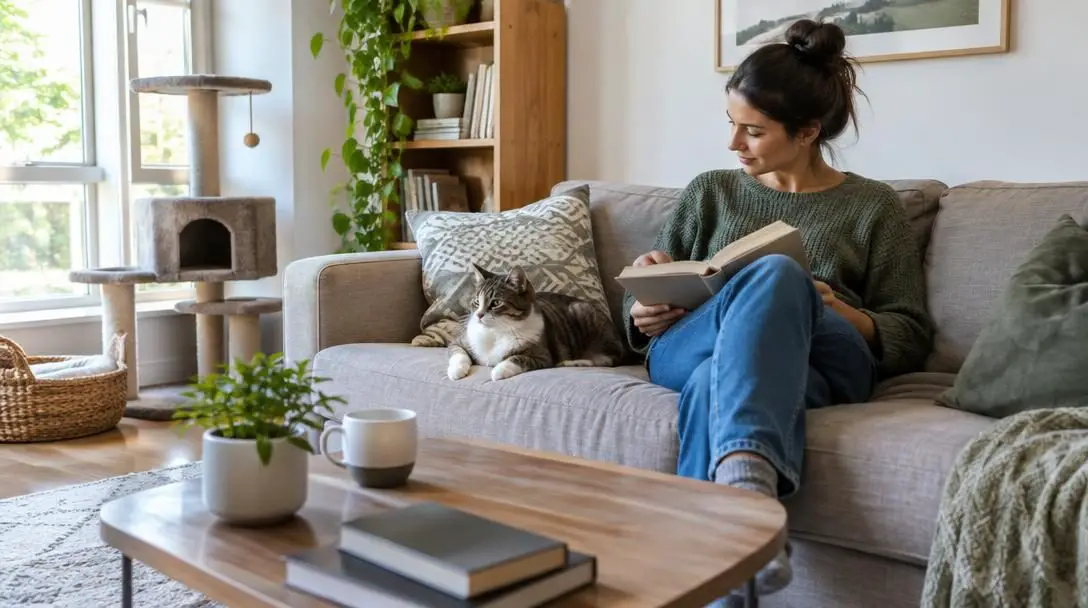
How To Help Your Cat Be Happy
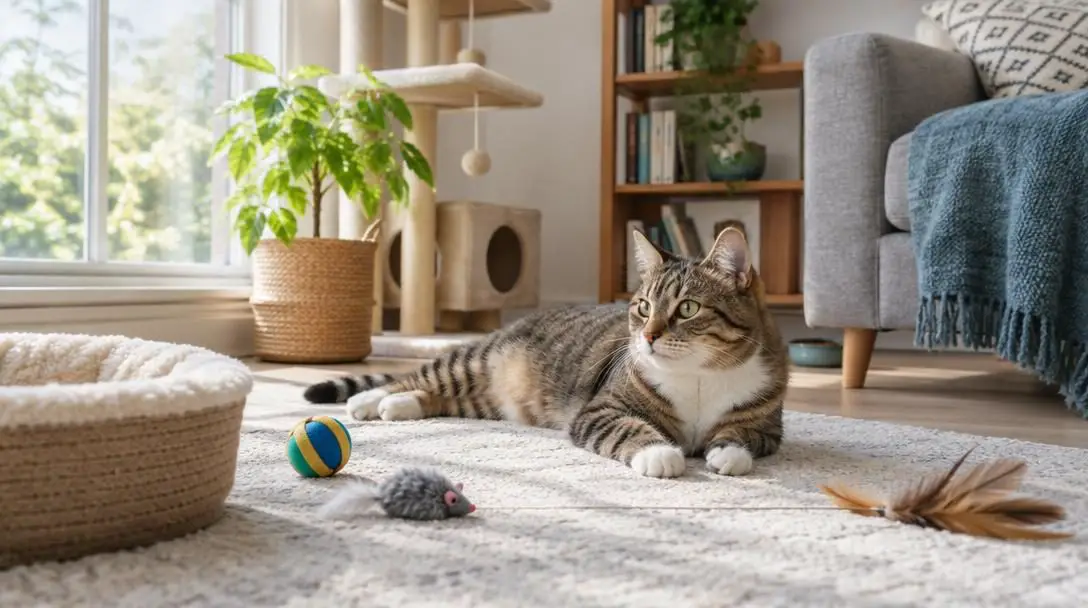
Domestic cats have shared homes and hearths with human companions for centuries, yet their subtle cues and independent tendencies often make them appear mysterious. Because feline body language is far more nuanced than that of dogs, many pet parents struggle to determine whether their pets are genuinely content or merely bored and understimulated. Even though cats frequently seem less outwardly sociable than pack animals, they still crave active interaction, mental engagement, and thoughtful companionship from their owners.
True feline well-being depends on satisfying a cat's fundamental biological, territorial, and emotional drives. In natural and outdoor settings, a feline's daily cycle revolves around hunting prey, surveying territory from high vantage points, grooming, and resting in secure hideaways. While living strictly indoors protects domestic cats from vehicular traffic, predators, and severe weather, it also demands deliberate effort from pet parents to supply regular exercise, mental variety, and reliable hygiene.
Key takeaways
- Daily interactive play fulfills innate hunting instincts, burns physical energy, and strengthens the emotional bond between cats and their guardians.
- Providing an individual, pristine litterbox for every cat in the household prevents chronic stress and resolves common house-soiling problems.
- Safe outdoor catios and elevated window perches satisfy a cat's visual curiosity and territorial instincts without exposing them to exterior hazards.
- Parasite prevention is essential year-round even for indoor pets, as fleas frequently enter living spaces on human shoes and clothing.
- Veterinary microchipping offers vital peace of mind and significantly improves the odds of a safe reunion if an indoor cat accidentally slips outside.
How Feline Well-Being and Psychology Work
Understanding feline satisfaction begins with recognizing how a cat perceives its living environment. Domestic cats are both predators and prey, meaning their psychology is heavily wired around territorial safety, routine, and stimulation. When a home environment caters to their natural behaviors—such as stalking prey, maintaining impeccable bathroom hygiene, watching local wildlife, and perching up high—cats experience significantly reduced stress levels and show greater overall affection toward their owners.
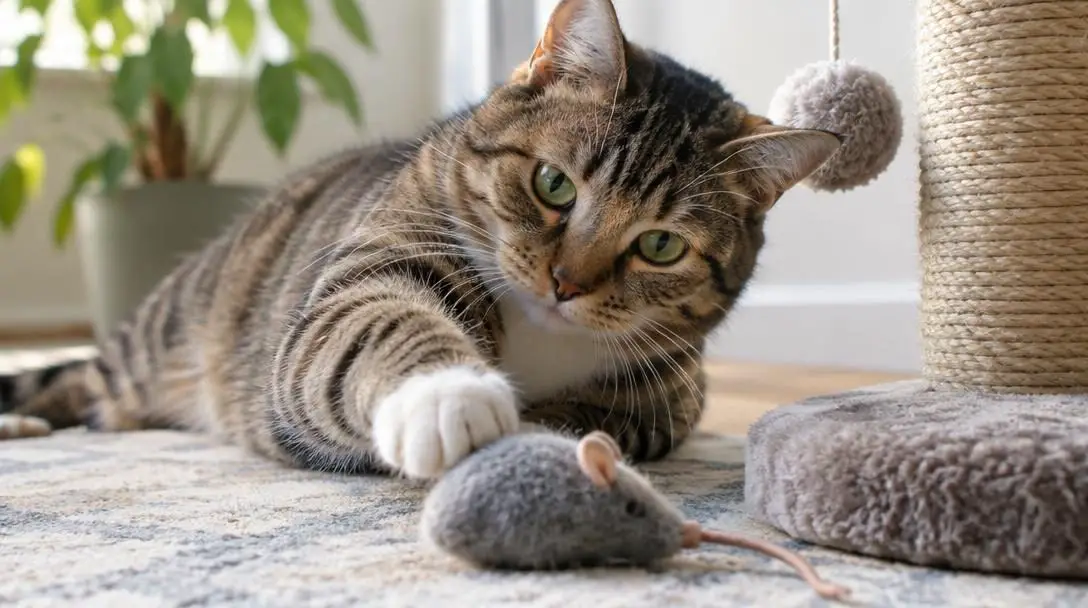
Physical play acts as an artificial hunt. When a cat stalks a toy, accelerates into a sprint, and pounces, its nervous system experiences the complete predatory sequence. This activity triggers the release of stress-relieving neurochemicals, regulates body weight, and prevents destructive habits born of sheer boredom. Because cats of all ages love to play, interactive games serve as the primary exercise outlet for indoor animals.
Cats thrive when their environments cater to their natural instincts: chasing prey, maintaining clean habits, and viewing their surroundings from an elevated vantage point.
Territorial cleanliness and visual stimulation are equally influential. Cats experience the world through scent, texture, and sight. When their litter facilities are neglected, they interpret the soiled area as insecure and repulsive, which triggers severe anxiety and avoidance behaviors. Conversely, offering them access to sunlight, outdoor sights, and comfortable vantage points satisfies their inquisitive nature, creating a balanced lifestyle where physical security meets sensory delight.
Core Strategies to Keep Your Cat Content and Healthy
Creating an enriching environment does not require complicated equipment, but it does require consistency. Focusing on six practical areas of daily care will drastically improve your cat's quality of life and deepen your mutual connection.
Play With Your Cat Every Day
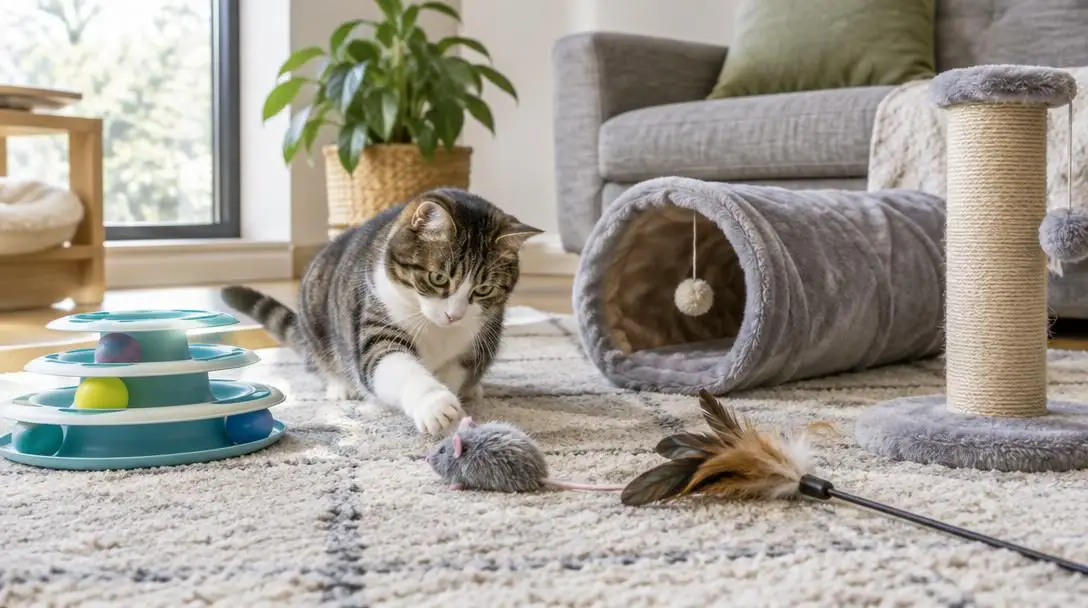
Interactive play is an indispensable daily responsibility for every cat owner. Rather than expecting a cat to amuse itself with static toys left lying on the rug, owners must step in to simulate the unpredictable movements of real prey.
- Schedule dedicated daily sessions: Set aside focused time each day to actively manipulate teaser wands, feather lures, or rolling balls.
- Vary your play patterns: Alter how you move the toys to imitate scurrying mice, fluttering birds, or erratic insects, which keeps your cat mentally sharp.
- Rotate toy collections: Switch out toys on a routine basis so your cat does not grow indifferent to familiar objects. Putting a few toys away for a week makes them feel brand new when reintroduced.
- Store string toys safely: Put away feather wands, ribbons, and any playthings featuring strings as soon as the session ends. When left unsupervised, strings can wrap around limbs or be accidentally ingested, presenting serious hazards.
Keep a Clean Litterbox
Hygiene is paramount to feline satisfaction. Cats have sensitive olfactory senses and an innate drive to bury their waste in clean substrate. Neglecting the litter area is one of the quickest ways to cause lasting behavioral and emotional distress in a pet.
- Scoop daily: The average litterbox must be scooped at least once every single day to remain acceptable to a cat's standards.
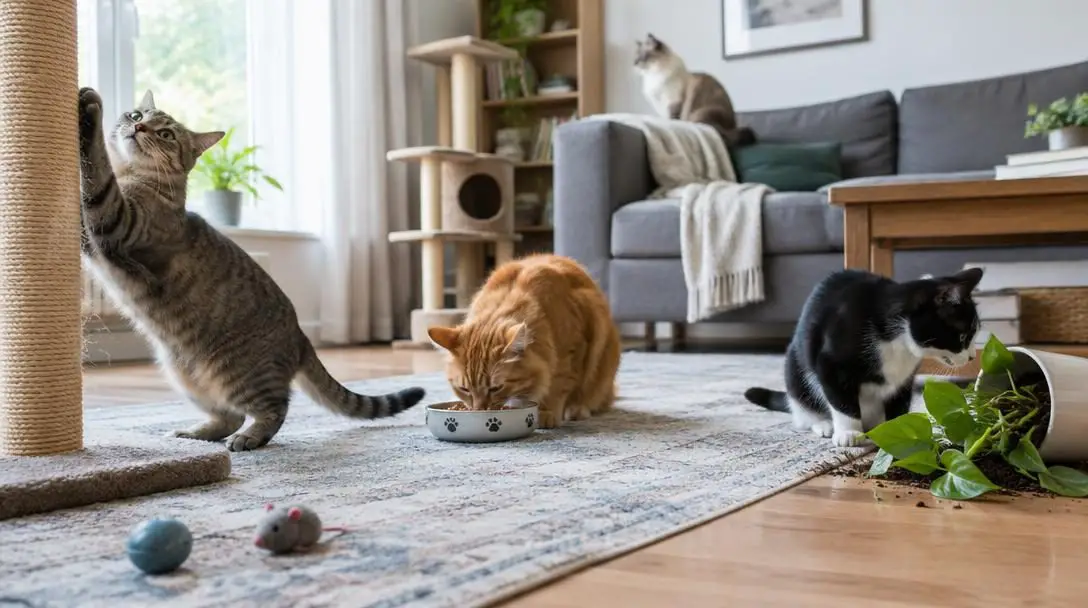
- Provide adequate facilities: In multi-cat households, ensure there is an individual litterbox for each cat. Cats are territorial and strongly dislike sharing their bathroom facilities with other animals.
- Diagnose house-soiling quickly: If a cat begins eliminating on your bed, rug, or favorite armchair, immediately inspect the state and availability of the litterbox before assuming the behavior is spiteful.
Provide Your Cat With a Catio
A catio—an enclosed outdoor cat patio—provides the perfect bridge between indoor safety and outdoor sensory stimulation. These enclosures offer a controlled environment where pets can enjoy the natural world without exposing themselves or local wildlife to harm.
- Adapt to your living space: Catios range from simple, screened backyard enclosures to intricate structures attached directly to a home's exterior.
- Window units for compact homes: If you live in an apartment or condominium lacking private yard space, choose a detachable catio that secures directly inside an open window frame.
- Protect native ecosystems: A catio lets your cat enjoy fresh breezes and investigate outdoor scents while preventing them from hunting songbirds or wandering into traffic.
Provide a Sunny Perch Near a Window
Cats spend a large portion of their daylight hours resting, but they prefer resting spots that double as observation posts. Incorporating vertical territory next to clear windows provides constant entertainment.
- Take advantage of natural light: Set up a comfortable, cushioned spot elevated on a sturdy post in an area where the sun pours through the glass, giving your pet an ideal space to bask.
- Install multi-level cat trees: Elaborate cat trees or wall condos combine climbing paths, resting platforms, and scratching surfaces into a single functional footprint.
- Maximize outdoor viewing: Position perches where your cat can watch bird feeders, moving leaves, and street activity. This passive entertainment keeps indoor cats mentally stimulated while you are away.
Don't Forget Flea Treatment
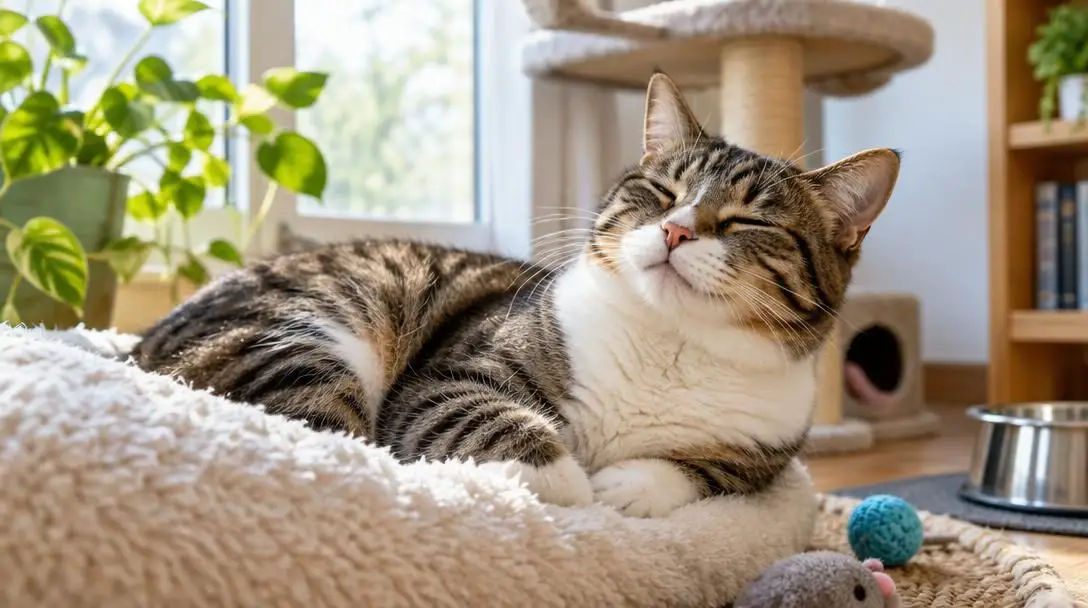
Physical comfort is directly tied to mental tranquility. A cat suffering from persistent itching and irritation cannot achieve true relaxation, no matter how many toys or perches it possesses.
- Maintain year-round treatment: Administer veterinarian-recommended flea prevention twelve months a year, even if your cat spends its entire life inside.
- Recognize transmission pathways: Many owners mistakenly believe that indoor pets are immune to parasites. Fleas easily hitchhike into homes on human clothing, socks, and shoes.
- Eliminate chronic discomfort: Continuous scratching, skin sensitivity, and flea bite allergic reactions cause chronic irritability and distress that undermine your cat's happiness.
Have Your Cat Microchipped
Unplanned escapes happen in an instant through a propped door, an unlatched window screen, or a visitor's mistake. The sudden disorientation of becoming lost is terrifying for a domesticated animal and devastating for an owner.
- Implant a microchip: Ask your veterinarian to place a permanent microchip beneath your cat's skin during a routine wellness checkup.
- Keep contact details current: A microchip is only as effective as the data attached to it. Update your telephone numbers and home address in the national pet registry whenever you move or switch contact details.
- Secure your peace of mind: A registered microchip provides reliable identification that animal shelters and veterinary clinics can scan, vastly increasing the likelihood of a happy reunion.
Comparing Enrichment and Health Essentials
Every element of feline care serves a distinct purpose in your cat's physical and mental landscape. The table below outlines how each core intervention directly addresses common welfare risks in the home.
| Care Element | Primary Focus | Recommended Frequency | Indoor Risk Addressed |
|---|---|---|---|
| Interactive Play | Mental and physical stimulation | Daily sessions | Boredom, obesity, and pent-up predatory drive |
| Litterbox Sanitation | Territorial hygiene | Scooped at least once daily | House-soiling, stress, and behavioral avoidance |
| Outdoor Catio | Sensory exploration | Continuous or seasonal access | Restlessness, wildlife predation, and wandering |
| Sunny Window Perch | Rest and passive observation | Permanent installation | Understimulation and lack of vertical territory |
| Flea Preventative | Dermatological and physical health | Year-round schedule | Chronic itching, allergic discomfort, and parasites |
| Microchip Registry | Permanent identification | Updated upon moving or changing numbers | Permanent loss and displacement after an escape |
Common Mistakes Cat Owners Make
Even well-intentioned pet owners frequently misunderstand the subtle lifestyle requirements of their companions. Avoiding these widespread misconceptions helps establish a calm, stable household:
- Assuming indoor cats are entirely self-sufficient: Believing that cats do not require companionship or structured play because they do not need outdoor walks leads to chronic understimulation and obesity.
- Neglecting daily litter maintenance: Postponing litterbox cleaning or forcing multiple cats to share a single facility forces animals to search for alternate elimination sites, such as carpets or bedding.
- Leaving string toys accessible: Leaving feather wands, ribbons, or yarn out on floors creates an immediate risk of accidental choking, entanglement, or gastrointestinal blockages.
- Skipping preventative parasite care: Halting flea treatments under the assumption that indoor cats are untouchable exposes animals to severe itching from pests carried in on human attire.
- Relying entirely on closed doors: Trusting that a pet will never bolt out of an entryway leads guardians to skip microchipping, leaving them vulnerable to permanent separation.
- Overlooking vertical space: Confining a cat's life entirely to floor level deprives them of the elevated vantages they require to feel safe, confident, and observant.
How to Audit and Upgrade Your Cat's Daily Routine
If you want to enhance your cat's living environment, implement these progressive adjustments to align your daily habits with your pet's biological drives:
- Establish a daily play schedule: Carve out dedicated morning or evening play sessions using interactive toys like wands and balls, rotating the selection regularly to sustain high interest.
- Secure all hazardous string toys: Inspect your home for loose strings, threads, or wand toys, and stow them safely inside cabinets or latched drawers whenever unsupervised.
- Audit and expand your litterbox setup: Count the number of cats in your home and verify that each feline has its own designated box, committing to a strict habit of scooping each box at least once per day.
- Evaluate vertical and exterior views: Position a cushioned perch or multi-tier cat tree beside a sun-drenched window, ensuring your pet has an unobstructed view of local birds and outdoor activity.
- Explore outdoor catio possibilities: Determine whether your property can accommodate a standalone screened backyard enclosure or a compact, detachable window-frame catio for apartment living.
- Review parasite control and microchip records: Verify that your pet is enrolled in a year-round flea prevention plan, and log in to your microchip registry account to confirm your address and phone number are up to date.
Frequently asked questions
Why do indoor cats need interactive play if they have toys on the floor?
Static toys left lying on the floor do not move on their own and quickly lose their appeal. Interactive play led by an owner replicates the dynamic movements of live prey, which engages a cat's predatory instincts, burns physical energy, and provides essential emotional bonding.
How many litterboxes should I have in a home with multiple cats?
You should provide an individual litterbox for each cat in the house. Cats are naturally territorial, sensitive to scent, and dislike sharing bathroom locations with other felines, making dedicated facilities essential to prevent house-soiling issues.
Can indoor-only cats really get fleas?
Yes, indoor cats can easily contract fleas. These parasites frequently hitchhike into living areas on human clothing, socks, and shoes, meaning that keeping your cat strictly indoors does not guarantee immunity from infestations.
What is a catio, and how does it help my cat?
A catio is a secure outdoor enclosure, ranging from a large screened backyard patio to a small detachable window-box structure. It gives cats safe access to fresh air, warm sunlight, and outdoor sights without the risks of wandering off, getting lost, or harming wild birds.
Is microchipping necessary if my cat never goes outdoors?
Microchipping is vital even for indoor pets because accidental escapes can happen through open doors or damaged window screens. If an indoor cat slips outside and becomes lost, an updated microchip provides the most reliable way for shelters and veterinarians to return the pet home safely.
The Bottom Line
Feline happiness is neither mysterious nor unattainable; it is the natural result of meeting a cat's instinctual, environmental, and medical needs. By integrating interactive playtime into your daily calendar, maintaining spotless bathroom facilities, and offering safe vantage points like catios and window trees, you transform an ordinary home into a stimulating sanctuary. When paired with vigilant year-round flea prevention and an updated microchip, these intentional habits provide your feline companion with a long, safe, and deeply satisfying life.