
How To Improve Your Memory: 6 Secrets Revealed

The ability to remember is one of the most vital skills we possess, serving as the essential foundation for how we learn, interact with others, and navigate our daily lives. Whether you are managing household schedules, preparing a critical business presentation, studying for an exam, or keeping track of social obligations, mental recall shapes every interaction. When lapses in memory occur, they can cause significant frustration, disrupt professional efficiency, and generate needless stress.
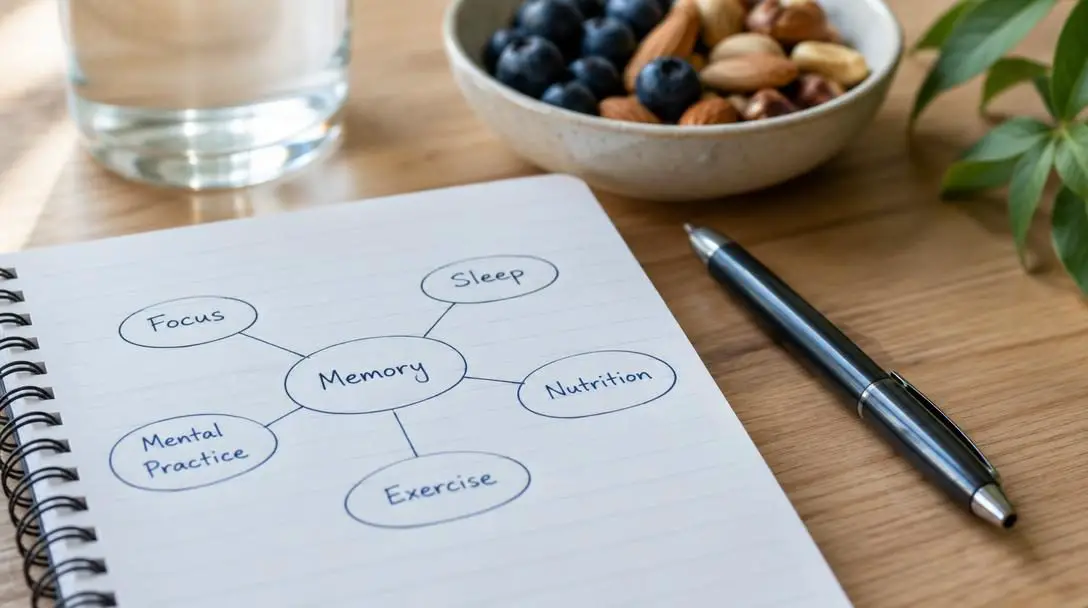
Enhancing your cognitive retention does not require an overwhelming lifestyle overhaul. Because memory is deeply intertwined with overall physiological and psychological well-being, small and deliberate adjustments to daily routines can yield noticeable improvements in mental clarity. By understanding how the brain absorbs, consolidates, and retrieves information, anyone can take actionable measures to optimize brain performance.
Key takeaways
- Targeting seven to eight hours of nightly rest is crucial because both sleep deprivation and oversleeping disrupt memory consolidation.
- Engaging in 30 minutes of moderate exercise on most days relieves stress and improves sleep quality, directly supporting cognitive recall.
- A diet rich in antioxidants, healthy fats, and vitamins—found in foods like salmon, blueberries, and avocados—provides essential brain nourishment.
- Cognitive tools such as mnemonic acronyms and breath-centered mindfulness meditation significantly improve focus and make data retrieval easier under pressure.
Understanding How the Brain Processes and Stores Information
Memory is far from an isolated mental function operating on autopilot. Instead, it relies on a complex biological loop consisting of three core phases: encoding new stimuli, storing that data in neural networks, and retrieving it when needed. Each phase demands substantial metabolic energy, steady neurological resources, and a mental environment free from persistent physical strain.
Modern daily life often presents serious obstacles to these neurological processes. Chronic stress, irregular sleep patterns, sedentary habits, and poor dietary choices place the brain under unnecessary duress. When fatigued or malnourished, the brain loses its capacity to filter essential information from background distraction. Recognizing that your cognitive abilities depend directly on your physical well-being is the essential first step toward strengthening your recall.
When you sleep, your brain works behind the scenes to store information and consolidate memories into long-term storage.
Six Core Strategies to Boost Memory and Recall
Rather than relying on vague mental exercises, you can substantially improve your retention by adopting six evidence-based strategies that nourish brain tissue, regulate stress, and structure the way you process complex ideas.
Adequate Sleep
One of the most powerful steps you can take for your memory is securing consistent, high-quality sleep. During sleep, your brain actively processes the experiences of the day, organizing raw information and transferring it into stable, long-term storage. Without sufficient rest, concentration declines rapidly, making it difficult to absorb new facts or recall existing knowledge. However, sleeping excessively can be just as damaging to memory performance as sleep deprivation. For optimal cognitive health, adults should aim for exactly seven to eight hours of sleep each night.
Regular Physical Exercise
Physical movement provides profound neurological benefits alongside its bodily perks. Committing to regular physical workouts helps lower persistent stress levels, which are notorious for interfering with mental retrieval. Furthermore, consistent activity directly enhances the depth and quality of your nightly sleep, reinforcing the restorative periods your brain needs for memory consolidation. Aiming for 30 minutes of moderate exercise on most days of the week keeps both physical systems and cognitive faculties functioning efficiently.
Nutrient-Dense Diet
The foods you eat serve as direct fuel for mental processing. Diets high in refined, unhealthy foods slow down neural response times and dull mental clarity. Conversely, eating meals packed with antioxidants, healthy fats, and essential vitamins supplies the structural components needed to protect brain tissue and maintain cognitive function. Superfoods known for supporting memory include blueberries, salmon, avocados, nuts, and seeds. Integrating these whole foods into everyday meals establishes a solid nutritional defense against mental fatigue.
Targeted Dietary Supplements
When combined with healthy eating habits, certain dietary supplements can offer targeted support for mental acuity and brain health. Key options recognized for aiding memory include omega-3 fatty acids, vitamin B12, and ginkgo biloba. While these compounds can help optimize cognitive processes, they should never serve as a quick fix for a poor diet. It is also imperative to speak with a physician prior to introducing any new supplement, as active ingredients can interact negatively with prescription medications.
Mnemonic Devices
Mnemonic devices are structured cognitive shortcuts designed to make complex information far easier to store and retrieve. One of the most common and effective mnemonic formats is the acronym, which creates a memorable word out of the initial letters of a list. A prime example is the acronym HOMES, which allows individuals to effortlessly recall the five Great Lakes: Huron, Ontario, Michigan, Erie, and Superior. Mnemonic devices are exceptionally useful when studying for academic tests or preparing presentations where details must be delivered without notes.
Mindfulness Meditation
Mindfulness is a focused form of meditation that trains the brain to remain anchored in the present moment. The practice requires you to sit quietly, bring your conscious attention to your breathing, and gently redirect your mind whenever thoughts begin to wander. By calming the nervous system and reducing the impact of background mental noise, mindfulness sharpens daily concentration. This heightened focus clears away distractions, making it substantially easier to record details and access them later.

At a Glance: Comparing the Six Memory Strategies
Each of the six memory-enhancing strategies addresses a specific physiological or cognitive aspect of information processing. The table below outlines how these techniques function together to protect and improve mental retention.
| Strategy | Primary Mechanism | Target Action or Example | Primary Cognitive Benefit |
|---|---|---|---|
| Adequate Sleep | Long-term consolidation | 7 to 8 hours per night | Prevents memory fatigue and organizes daily data |
| Regular Exercise | Stress reduction and sleep support | 30 minutes of moderate activity most days | Sharpens focus and lowers recall-inhibiting stress |
| Nutrient-Dense Diet | Tissue nourishment and protection | Blueberries, salmon, avocados, nuts, seeds | Supplies antioxidants, healthy fats, and vitamins |
| Targeted Supplements | Targeted biological support | Omega-3 fatty acids, B12, ginkgo biloba | Aids cognitive processes alongside a balanced diet |
| Mnemonic Devices | Logical data organization | Acronyms such as HOMES for the Great Lakes | Facilitates effortless recall under pressure |
| Mindfulness Meditation | Attention control and mental calm | Breath-focused stillness | Eliminates distractions and sharpens concentration |
How to Put These Memory Habits into Practice
Adopting better cognitive practices does not require changing everything in a single day. Instead, you can systematically incorporate each approach into your routine using the following structured steps:
- Establish a consistent sleep window: Set a strict bedtime and wake-up schedule that guarantees between seven and eight hours of sleep every night, steering clear of both sleep deficits and oversleeping.
- Schedule 30 minutes of daily movement: Reserve time on most days of the week for moderate cardiovascular activities such as brisk walking, cycling, or light jogging to relieve stress and prepare your body for deep rest.
- Stock your kitchen with brain-friendly foods: Plan weekly grocery lists around whole ingredients known to bolster cognition, adding blueberries to morning routines, preparing salmon for dinner, and snacking on nuts, seeds, and avocados.
- Consult your doctor regarding supplementation: Schedule an appointment with a medical professional to review whether omega-3 fatty acids, vitamin B12, or ginkgo biloba are suitable for your health profile and safe alongside your current prescriptions.
- Construct custom acronyms for study material: Whenever you need to retain a series of facts, take the first letter of each item and assemble them into a catchy word or phrase, similar to using HOMES for the Great Lakes.
- Set aside time for daily breathwork: Spend several uninterrupted minutes each day practicing mindfulness by focusing entirely on the rhythm of your breath and returning to center whenever your attention wanders.
Common Memory Pitfalls to Avoid
While working to sharpen recall, many people fall into habits that unintentionally impair cognitive function. Watch out for these common errors:
- Oversleeping on weekends: Attempting to compensate for weekday sleep deficits by staying in bed excessively disrupts your biological rhythm and harms mental focus just as much as sleep deprivation.
- Relying on supplements instead of real food: Taking omega-3 fatty acids, vitamin B12, or ginkgo biloba will not compensate for a diet dominated by unhealthy foods lacking essential vitamins and healthy fats.
- Starting supplements without medical consultation: Overlooking professional medical guidance can expose you to harmful interactions between over-the-counter supplements and existing medications.
- Working out erratically: Sporadic, high-intensity workouts once or twice a month fail to offer the steady stress reduction and sleep improvements provided by 30 minutes of moderate exercise on most days.
- Relying solely on rote repetition: Repeating facts endlessly without organizational frameworks causes mental fatigue; structured mnemonic tools like acronyms make encoding far more reliable.
- Ignoring mental stillness: Allowing thoughts to race without practicing mindfulness leaves your nervous system vulnerable to stress, directly undermining memory retrieval.
Frequently asked questions
How many hours of sleep are best for cognitive retention?
To keep memory and concentration operating at their peak, you should aim for seven to eight hours of sleep each night. Sleeping less than this inhibits your brain's ability to consolidate information, while oversleeping produces similar negative effects on recall.
Why is oversleeping harmful to memory?
Oversleeping disrupts the body's natural balance and has been shown to produce the exact same negative effects on focus, alertness, and retention as sleep deprivation. Maintaining a steady seven to eight hours is ideal.
Which foods provide the best nutritional support for memory?
Foods rich in healthy fats, antioxidants, and vitamins offer superior support for brain function. Key examples highlighted for cognitive improvement include blueberries, salmon, avocados, nuts, and seeds.
How do mnemonic acronyms help you remember lists?
Acronyms take the first letter of multiple items and combine them into a single, easily remembered word, such as HOMES for the Great Lakes (Huron, Ontario, Michigan, Erie, and Superior). This structure provides an organized retrieval pathway under pressure.
Can dietary supplements replace a brain-healthy diet?
No. Supplements such as omega-3 fatty acids, vitamin B12, and ginkgo biloba are designed to work in conjunction with a healthy diet, not as a replacement for nutrient-dense whole foods. Always speak to a physician before starting supplements.
The Bottom Line
Enhancing your memory is not an unattainable goal, nor does it require extraordinary effort. Rather, long-term cognitive health is the direct byproduct of consistent, supportive lifestyle choices. By securing seven to eight hours of restful sleep, exercising moderately for 30 minutes on most days, eating nutrient-rich foods like salmon and blueberries, and discussing supplements with your doctor, you establish an optimal physical foundation for brain function.
Pairing those physical habits with active cognitive strategies—such as constructing mnemonic acronyms for complex lists and practicing breath-focused mindfulness to quiet mental clutter—provides a complete system for mental sharpness. Implement these adjustments progressively, monitor your daily clarity, and enjoy the lasting benefits of a stronger, more resilient memory.