
How to Increase Your Credit Score

A three-digit credit score holds disproportionate power over everyday financial health. Whether someone is seeking approval for an apartment lease, purchasing a car, securing a mortgage, or trying to qualify for a credit card with favorable terms, this concise number serves as an instantaneous snapshot of financial dependability. A high rating unlocks substantial long-term savings, while a poor rating can close doors before conversations with lenders even begin.
Understanding how credit reporting agencies compile financial history into a single score is the first step toward taking control of personal finances. By actively managing account balances, automating recurring obligations, and regularly auditing credit files across all reporting agencies, consumers can steadily rebuild their profiles and secure the most advantageous rates available.
Key takeaways
- Credit scores span from 300 to 850, with top-tier scores securing the lowest interest rates and easiest terms, while scores between 300 and 579 face widespread denial from creditors.
- Paying bills on time or before their scheduled due date is the single most effective action for raising and maintaining a credit score.
- Federal law guarantees access to one free annual credit report from each of the three major bureaus: Equifax, Experian, and TransUnion.
- Rotating credit report reviews every four months provides continuous, year-round oversight across all reporting repositories without added expense.
- Submitting written dispute letters to reporting bureaus forces a mandatory investigation to remove or update inaccurate negative remarks.
Decoding the Credit Score Scale: From 300 to 850
Credit scores condense years of borrowing and repayment activities into a standardized three-digit scale ranging from an absolute floor of 300 to an industry ceiling of 850. Lenders interpret these numbers as probability benchmarks: the higher the score, the lower the perceived risk that a borrower will default on their financial obligations.
Individuals whose scores hover near the 850 maximum receive what the industry terms the red carpet treatment. Financial institutions compete for these prime borrowers, extending offers that feature the lowest available interest rates, waived fees, generous credit limits, the easiest payment schedules, and minimal borrowing restrictions. Over a lifetime of vehicle financing and homeownership, reaching these upper brackets can translate into tens of thousands of dollars saved on cumulative interest charges.
Conversely, scores residing in the lower tier—specifically ranging from 579 down to the 300 baseline—direct consumers toward the financial equivalent of a service exit. In this range, mainstream lenders routinely decline loan or card applications outright. When approvals do occur, they typically carry punishing terms, including exorbitant interest charges, mandatory security deposits, and rigid repayment conditions. Understanding where a score sits along this spectrum is essential for planning any major financial transition.
| Score Range | Lender Perception | Market Consequences | Borrowing Terms |
|---|---|---|---|
| Near 850 | Exceptionally low risk | Red carpet access, competitive offers from top lenders | Lowest interest rates, flexible schedules, minimal restrictions |
| Intermediate Range | Moderate risk | Standard access, broad lender options | Standard market interest rates, routine documentation requirements |
| 300 to 579 | Substantial risk | Frequent application denials, restricted financial access | Punitive interest rates, strict payment terms, required deposits |
Credit Scores Versus Credit Reports: The Transcript Behind the Grade
While the credit score attracts headline attention, it is merely the numerical summary of an underlying source document: the credit report. If the score is compared to an academic grade point average, the credit report represents the full transcript detailing every course, term, and evaluation that generated the grade. Creditors rely on this exhaustive document to analyze borrowing patterns, historical debt loads, and past payment discipline.
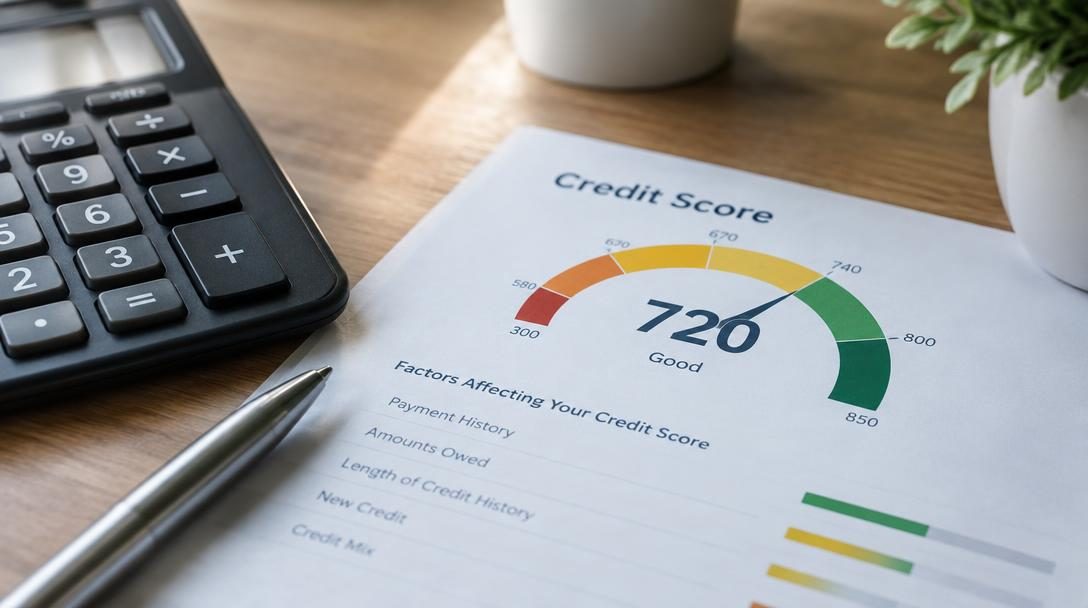
A standard credit report compiles extensive data divided into several distinct reporting categories:
- Personal identification: Full legal names, aliases, Social Security numbers, current and previous residential addresses, telephone numbers, and dates of birth.
- Credit account histories: Comprehensive timelines of open and closed accounts, including revolving credit lines, retail cards, student loans, automobile financing, and mortgages.
- Account balance details: Current outstanding balances on every active trade line alongside historical limits and repayment compliance.
- Collection records: Accounts transferred or sold to third-party collection agencies due to significant past-due balances.
- Public records: Legally recorded financial events, such as bankruptcies, property foreclosures, tax liens, and civil judgments.
Accessing Free Scores and Monitoring Credit Files
Tracking credit health has become substantially easier through online services and regulatory consumer protections. Consumers no longer need to pay recurring subscription fees or expose their banking credentials simply to keep tabs on their standing.
Digital monitoring platforms such as Credit Karma allow individuals to view scores and report summaries without cost. Registering on such platforms requires only standard identifying information, a usercode, and a secure password; no credit card number is required. Services of this type draw scoring data directly from two of the three primary bureaus, Equifax and TransUnion. Additionally, numerous credit card issuers and banking institutions now provide complimentary monthly score updates on account statements or mobile banking dashboards as an integrated account feature.
To conduct a thorough evaluation, however, consumers should access their official reports from all three primary nationwide bureaus: Equifax, TransUnion, and Experian. Federal law mandates that each consumer is entitled to one free credit report from each bureau annually. Rather than pulling all three files simultaneously, an effective strategy involves ordering a report from one bureau every four months. This staggered method creates continuous, year-round oversight, making it easier to identify sudden reporting inconsistencies or fraudulent activities without spending money.
By staggering free annual report requests across Equifax, TransUnion, and Experian every four months, consumers maintain continuous visibility over their complete credit profile.
Six Proven Steps to Increase Your Credit Score
Raising a credit score requires consistent execution of deliberate financial behaviors. Lenders evaluate specific patterns in debt management, and adhering to proven practices steadily restores credibility with credit scoring models.

- Establish a spotless record of on-time payments: Paying every bill on or before its due date is the single most effective way to raise a credit score. Payment history carries more weight than any other metric in standard scoring formulas. Setting up automated recurring drafts through bank accounts guarantees that busy schedules or travel do not cause an accidental delinquency.
- Aggressively pay down existing balances: Carrying substantial debt across credit cards and revolving lines signals financial strain. Reducing outstanding balances proves to lenders that an individual possesses sufficient cash flow to handle new obligations, immediately making creditors more willing to extend future borrowing limits.
- Consolidate multiple balances onto a single card: Juggling divergent due dates, interest calculations, and minimum payment requirements can easily lead to administrative errors. Transferring high-interest balances onto a single card—especially one featuring an introductory period of zero or promotional interest—allows borrowers to allocate all available payments directly toward reducing the principal debt rather than battling finance charges.
- Limit the pace of new credit applications: Each time an individual submits a formal application for a credit card, personal loan, or financing plan, the potential lender initiates a hard inquiry. A hard inquiry temporarily dings a credit score. Applying for multiple accounts within a compressed timeframe compounds these penalties, projecting desperation or financial distress.
- Cultivate a balanced credit mix: Lenders prefer to see that a borrower can handle multiple structures of debt simultaneously. A healthy credit portfolio includes a blend of revolving credit (such as standard credit cards) and installment credit (such as an auto loan, student loan, or mortgage). This structural diversity demonstrates versatility in debt management.
- Formally dispute reporting errors in writing: Inaccuracies on a credit report can artificially depress a score for years. When an error, inaccurate balance, or outdated public record is discovered, consumers should immediately submit a formal dispute letter to the credit bureau. By law, reporting agencies must investigate disputed items and issue a written resolution detailing whether the entry has been corrected or permanently expunged.
Common Missteps That Drag Down Your Rating
While proactive habits build credit scores up, common financial oversights can quickly undo years of discipline. Awareness of these common pitfalls helps protect personal ratings from preventable damage.
- Missing scheduled payment deadlines: Relying on memory rather than calendar alerts or automated banking features exposes consumers to late fees and severe derogatory marks that linger on credit files.
- Monitoring only one bureau: Assuming all three agencies share identical data is an expensive error. Because Equifax, TransUnion, and Experian operate independently, an erroneous collection mark or misreported balance may appear on Experian while remaining absent on Equifax and TransUnion.
- Clustering multiple credit applications: Applying for several lines of credit in rapid succession generates a flurry of hard inquiries that signal immediate risk to underwriting models.
- Failing to dispute clerical errors: Unchecked reporting errors, misattributed collections, or lingering records of discharged debts suppress scores until formally challenged in writing.
- Carrying lingering high balances across multiple cards: Allowing revolving debt to float month after month drains capital through interest charges and demonstrates poor debt management to merchants.
- Over-relying on a single account category: Depending entirely on one credit card limits the depth of a credit profile, failing to show competence with structured installment loans.
Establishing a Long-Term Credit Maintenance Routine
A credit score is never permanently fixed; it operates as an ongoing reflection of active financial habits, adjusting up or down as balances fluctuate, accounts age, and inquiries register. Preserving high-tier credit requires establishing permanent organizational habits rather than temporary fixes.
Start by constructing a dedicated credit maintenance calendar. Schedule reminders every four months to pull an official file from Equifax, TransUnion, and Experian on a rotating basis. During these reviews, check every trade line to verify that closed accounts are correctly noted, zero-balance payoffs are accurately reported, and no unauthorized personal identification data or unfamiliar inquiries have been logged.
Next, evaluate revolving debt levels at the end of each quarter. If payments have become scattered across diverse store cards or banking lines, investigate whether a consolidated balance transfer offering a zero-interest promotional term provides a faster exit from debt. Finally, when anticipating a major purchase—such as a mortgage or vehicle financing—institute an application freeze for six to twelve months beforehand. Keeping hard inquiries off the record during this period ensures that lenders evaluate your profile at its highest potential standing.
Frequently asked questions
How much can a hard inquiry affect a credit score?
A hard inquiry occurs whenever a financial institution reviews an applicant's credit file to make a lending decision. While a single hard inquiry typically results in a small, temporary ding to a score, submitting several credit applications in a short span causes inquiries to accumulate, signaling risk to lenders and suppressing the score further.
Do free monitoring sites require a credit card to sign up?
No. Services such as Credit Karma allow users to create an account using a usercode, password, and personal identifying details without entering a credit card number. These platforms provide free access to scores and report summaries from Equifax and TransUnion.
How does staggering free annual credit reports work?
Federal law entitles consumers to one free report every twelve months from each of the three major credit bureaus: Equifax, Experian, and TransUnion. By requesting a report from one bureau every four months, consumers can monitor their financial standing continuously throughout the year without paying for subscription monitoring services.
What must a credit bureau do when an error is disputed?
When a consumer submits a dispute in writing detailing an inaccuracy on their credit report, the bureau is legally required to conduct an investigation. Once the inquiry concludes, the bureau must report back in writing explaining its findings, which include updating inaccurate information or removing invalid remarks entirely.
Why does a diverse credit mix help raise a score?
Lenders look favorably on borrowers who demonstrate competence across different types of borrowing structures. Managing both revolving debt, such as credit cards, and installment loans, such as auto financing or mortgages, proves that a consumer can handle varied repayment terms and balance requirements responsibly.
The bottom line
A credit score is the single most influential metric determining personal borrowing power, interest rates, and loan terms. Shifting from the bottom tier of 300 to 579 toward the top bracket near 850 requires steady discipline, but the financial dividends are enormous. By paying every balance on time, automating payments, eliminating revolving balances through strategic consolidation, and checking reports across Equifax, TransUnion, and Experian on a structured rotation, any consumer can steadily climb the rating ladder and command the best terms the financial industry has to offer.