How To Maintain Your Retro Computer: 5 Tips for Longevity
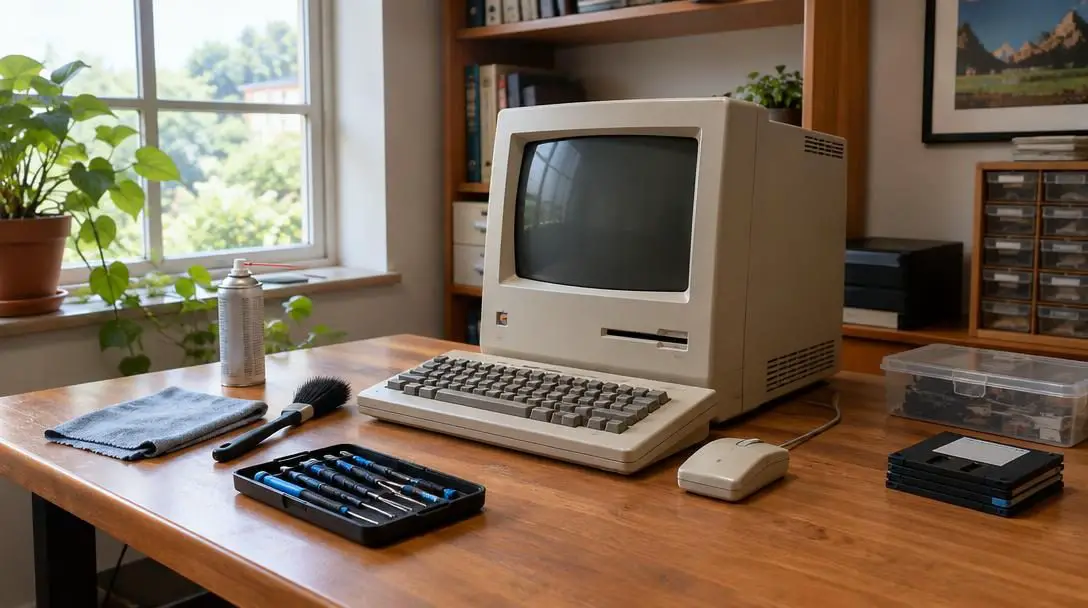
Vintage computing offers an authentic, tactile connection to technological history, pairing mechanical keystrokes and distinct CRT displays with early digital design. For active collectors and casual hobbyists alike, maintaining an operational machine provides deep satisfaction, keeping historical artifacts functional as the global supply of working vintage electronics steadily declines over time.
Operating legacy computer hardware requires far more care than managing modern devices. Modern computers are essentially maintenance-free appliances designed to run reliably in standard home environments before being replaced every few years. In contrast, older personal computers rely on discrete logic chips, mechanical drives, and aging support circuits that were never engineered to last indefinitely without active maintenance. Learning how to control environmental threats and protect sensitive hardware ensures your vintage system remains operational for years to come.
Key takeaways
- Prolonged exposure to ultraviolet light accelerates the breakdown of vintage plastics, causing irreversible discoloration and structural brittleness.
- Dust accumulation creates a thermal blanket over sensitive chips and risks creating bad connections on the motherboard.
- Unfiltered power surges can destroy delicate legacy circuitry even when the computer's front power switch is turned off.
- Maintaining relative indoor humidity between 50% and 60% prevents metal traces and expansion slots from corroding.
- Stockpiling essential spare components like motherboards, graphics cards, and hard drives protects against sudden hardware failure.
The Science of Vintage Hardware Degradation
Keeping an older computer running smoothly requires an understanding of how time and environmental exposure affect legacy materials. Unlike modern surface-mount devices that operate on low voltages with robust internal protections, vintage computers are vulnerable to five primary points of failure: ultraviolet radiation, dust infiltration, electrical spikes, excess ambient moisture, and mechanical wear.
Many vintage computer towers, monitors, and keyboards were molded from plastics treated with chemical flame retardants. When these flame retardants and polymer chains are exposed to ultraviolet (UV) light, chemical reactions take place within the casing. Over time, original beige or light gray plastics turn an uneven yellow or brown while becoming increasingly brittle and prone to cracking under minor stress.
Internal components face immediate danger from airborne particulate matter. Dust does not simply look neglected; it acts as an insulating thermal blanket across discrete silicon chips, trapping heat inside the chassis and elevating operating temperatures. Furthermore, because dust attracts moisture and can contain microscopic conductive particles, heavy buildup can cause bad connections on the motherboard or trigger catastrophic electrical faults across component leads.
Dust acts as an insulating blanket over chips and passive components, keeping heat trapped inside the computer chassis.
Power irregularities are another silent hazard. Vintage power supply units and early integrated circuits lack the advanced overvoltage safeguards standard in modern electronics. When a utility surge travels down the wire, an electrical transient can jump straight to delicate logic boards. Even if your computer is powered down, remaining physically wired to an unprotected wall outlet leaves its internal hardware vulnerable to incoming spikes.
Finally, atmospheric moisture and unavoidable component wear threaten system longevity. High ambient moisture condenses onto cold metal traces, corroding solder joints, tarnishing expansion card contacts, and oxidizing mechanical switches. Simultaneously, physical components undergo inevitable degradation: mechanical hard drives lose internal lubrication, magnetic platters wear down, and motherboard traces endure thermal stress during operation.
Five Core Maintenance Tips for Vintage Hardware
Protecting an aging computer demands consistent environmental control paired with good hardware habits. Implementing these five maintenance strategies will safeguard your equipment against premature failure.
1. Avoid Too Much Natural Light
To prevent plastic degradation and discoloration, position your retro computer well away from natural light sources. Ordinary daylight contains ultraviolet rays that break down the molecular bonds in computer cases, keyboards, and monitor bezels. Storing your machine far from large windows is the most effective defense. If your display area or workspace features large windows that admit daylight, hang protective curtains or shades to block direct sun exposure and preserve the original coloration and structural integrity of the plastic casing.
2. Take Control of Dust
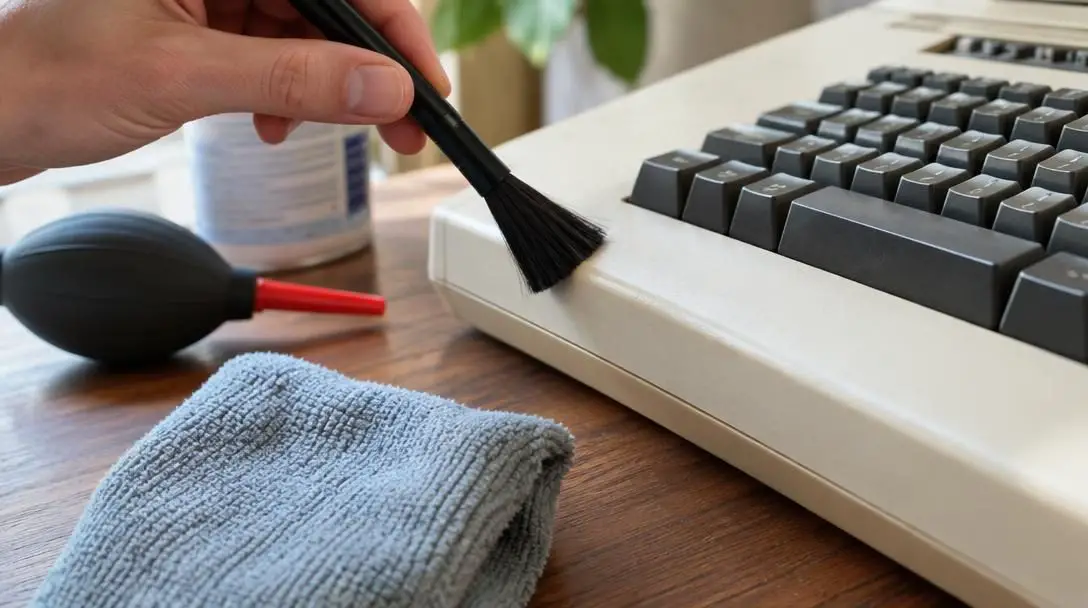
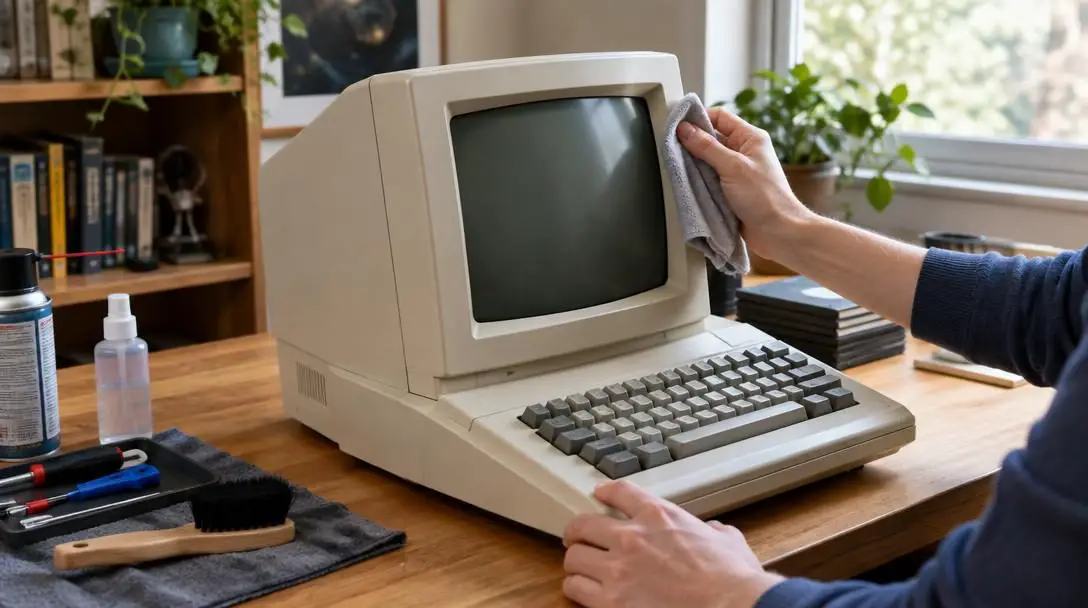
Diligent cleaning prevents dust from settling on vulnerable circuit traces and air vents. Because dust buildup can cause bad motherboard connections or system-wide failure, you must control particulates in the surrounding space. Beyond regularly dusting the desk and wiping down the outer computer chassis, install a high-efficiency air filter in the room. An active filtration system captures airborne particles before they enter cooling vents and settle into internal slots.
3. Protect Against Power Surges
Electrical spikes from grid fluctuations or household appliances can destroy sensitive, out-of-production silicon in an instant. Protecting your system requires clean power isolation: either plug the computer into a dedicated surge protector or unplug the power cable entirely when the system is not in use. Simply toggling the power switch on the front or back of the computer tower does not isolate it from the wall, leaving the internal power supply and motherboard exposed to sudden line spikes.
4. Be Mindful of Humidity
Moisture is an aggressive enemy of vintage electronics. To prevent atmospheric water from corroding solder joints, tarnishing card slots, and oxidizing delicate circuit traces, monitor your room's atmospheric levels and ensure that relative indoor humidity does not exceed 50% to 60%. If your local climate experiences elevated moisture levels, run a dehumidifier in your home. At minimum, operate a portable dehumidifier in the room where your retro hardware is displayed and operated.
5. Stock Up on Backup Parts
Because replacement parts for legacy systems are no longer manufactured, sourcing components after a breakdown can lead to long delays and expensive searches. Cultivating a personal cache of critical spares ensures you can resolve unexpected hardware failures immediately. Essential items to stockpile include:
- A compatible backup motherboard that matches your system architecture.
- A spare graphics card to preserve reliable video output.
- A tested, functioning mechanical hard drive ready to swap in if the primary drive crashes.
- Matching peripheral cards, cables, and architecture-specific hardware components.
Comparing Environmental Hazards and Protective Measures
The table below summarizes the key environmental threats to vintage computer systems, their specific hardware risks, and the recommended preventative actions.
| Environmental Threat | Vulnerable Components | Primary Risk to Hardware | Recommended Countermeasure |
|---|---|---|---|
| Direct Sunlight (UV) | Cases, bezels, keyboards | Yellowing and brittle plastic degradation | Install window shades; position away from windows |
| Dust Accumulation | Motherboards, cooling ports, chips | Trapped heat and bad board connections | Wipe down room surfaces; run high-efficiency air filters |
| Electrical Surges | Power supplies, logic chips | Immediate silicon destruction from voltage spikes | Connect to surge protectors; unplug when not in use |
| Excess Humidity | Circuit traces, expansion slots | Oxidation, contact corrosion, signal loss | Maintain 50% to 60% relative humidity with a dehumidifier |
| Mechanical Wear | Hard drives, moving components | Lubrication failure and platter breakdown | Stockpile spare hard drives and compatible parts |
Practical Steps for Safe Operation and Setup
Establishing a safe operating environment requires organizing your preservation workflow into an initial setup phase followed by recurring maintenance habits.
- Evaluate the room layout to find a location well away from windows that receive direct sunlight, or install window shades and curtains before assembling the computer desk.
- Place an independent humidity meter near the computer setup to track relative indoor humidity levels continuously.
- Install a dehumidifier if local climate conditions push room moisture levels above the recommended 50% to 60% range.
- Set up a high-efficiency air filter in the immediate area to capture airborne debris before it settles onto system vents.
- Connect the computer tower, display, and powered accessories directly into a dedicated surge protector rather than an unconditioned wall receptacle.
Once your workspace is arranged, integrate the following habits into your regular computing routine:
- Wipe down desk surfaces and dusting zones around the hardware frequently to minimize ambient debris.
- Inspect internal expansion cards and the motherboard periodically to verify that settled dust is not creating bad electrical connections.
- Shut down the system cleanly and disconnect the main power plug or switch off the surge protector after every session.
- Catalog internal hardware specifications so you know the exact model numbers of the motherboard, graphics card, and storage drives needed for your backup inventory.
Common Preservation Mistakes to Avoid
Well-meaning enthusiasts often subject rare electronics to unintended hazards through common oversights. Watch out for these operational pitfalls:
- Leaving hardware plugged in while unmonitored: Relying solely on the computer chassis power switch leaves internal circuitry vulnerable to utility surges traveling down the neutral and hot wires.
- Setting up displays in direct sunlight: While natural light highlights vintage aesthetics, daylight rapidly degrades structural plastics and accelerates yellowing.
- Ignoring room humidity: Operating equipment in rooms without humidity controls leads to silent, progressive corrosion along motherboard traces and expansion bus pins.
- Allowing dust to accumulate: Waiting for visible layers of dust to gather on cases means fine particulate matter has already filtered into sensitive mechanical drives and passive board components.
- Waiting for hardware to fail before sourcing parts: Delaying spare-part purchases forces you to scour competitive online listings and wait for shipping while your system sits inoperable.
Frequently asked questions
Why do vintage computer cases turn yellow over time?
Many legacy plastics contain chemical flame retardants and polymer chains that react when exposed to ultraviolet radiation from sunlight. This chemical reaction breaks down the plastic's structural integrity and alters its pigment, turning neutral beige or light gray housings yellow or brown.
Is turning off the power switch enough to protect against power surges?
No. Toggling the power switch on the front or rear of a vintage chassis does not isolate the internal electronics from the wall outlet. An electrical transient can still jump into sensitive power circuits and motherboards unless the machine is plugged into a surge protector or unplugged entirely.
What is the recommended indoor humidity level for retro computers?
You should maintain relative indoor humidity levels between 50% and 60%. Humidity levels above this range cause moisture condensation, leading to contact corrosion, oxidized circuit traces, and bad connections on system expansion boards.
How does ordinary dust cause electrical and physical hardware failures?
Dust acts as an insulating blanket that traps heat directly against processing chips and passive components. In addition, because airborne dust can attract moisture and carry conductive particles, settled debris can bridge contacts and create bad connections on the motherboard.
Which spare components are most important to stockpile?
Because legacy components are no longer commercially produced, you should prioritize keeping a compatible backup motherboard, a spare graphics card, and a functioning mechanical hard drive on hand, alongside general parts that match your machine's system architecture.
The bottom line
Preserving a retro computer requires a shift from passive ownership to active hardware stewardship. Because vintage electronics lack modern safeguards and rely on materials that naturally deteriorate, their operational lifespan depends directly on how well you manage their environment. By eliminating ultraviolet light exposure, running air filters to control dust, isolating equipment from electrical surges, managing indoor humidity levels, and maintaining a supply of critical replacement components, you can protect your historical hardware and keep your vintage computer running reliably for years to come.