How To Make Money With Online Sweepstakes

Sweepstakes have long served as promotional powerhouses for brands and advertisers seeking public attention. In decades past, participating demanded real physical effort: hopeful entrants tracked down paper forms, wrote out contact information by hand, affixed postage stamps, and mailed entries through the postal service. Back then, legendary corporate campaigns even built their fame by showing up on doorsteps across the country to hand over oversized checks to startled homeowners. Today, that entire landscape has migrated online, turning what was once a slow, manual chore into an activity accessible in a matter of a few clicks.
Millions of dollars in cash and merchandise are awarded annually through digital marketing budgets. Online drawings span a spectrum from seven-figure jackpots that draw millions of entrants to smaller promotional contests offering modest sums and everyday goods. While anyone can submit an occasional entry on a whim, turning digital giveaways into a rewarding hobby requires an understanding of how sponsoring brands operate, where the mathematical odds work in your favor, and how to protect your time and personal data.
Key takeaways
- Targeting smaller, low-profile contests yields substantially better mathematical odds than pursuing elusive million-dollar jackpots.
- High-effort entry requirements—such as daily photo challenges—weed out casual participants and leave a much smaller pool of finalists.
- Operating through a dedicated contest email address prevents winning notifications from vanishing into personal spam filters.
- Focusing on pure cash and liquid consumer goods like motor vehicles or fitness equipment ensures your prizes translate into real-world value.
- Using a structured daily workflow with a tracking notebook keeps entries organized and ensures claim deadlines are never missed.
How modern digital sweepstakes operate
At their foundation, online sweepstakes are customer acquisition campaigns. Sponsoring companies launch them to elevate brand awareness, compile contact lists, showcase new product launches, or generate viral traction across digital channels. The basic premise—submit your information for a random shot at a prize—remains simple, but the mechanics differ depending on the sponsor's underlying marketing goals.
The standard model revolves around straightforward data collection. A participant navigates to a promotional landing page, submits basic personal information such as their name and email address, and is granted an entry. Because these standard forms require almost zero time or energy, they attract staggering volumes of entrants. When marketing materials advertise grand prizes reaching or exceeding $1 million, participant numbers soar into the stratosphere, leaving individual entrants with microscopic odds of hearing their names drawn.
To combat form fatigue and foster genuine customer connections, many brands favor active engagement campaigns. Rather than collecting a single email address, these promotions require prolonged participation, such as posting a specific picture every day depicting a designated object or completing an assigned task over several weeks. These demands act as a natural filter: casual entrants drop out as the days go by, leaving dedicated participants in a much smaller final drawing pool.
Social media platforms like Twitter and Facebook form another pillar of the modern giveaway environment. On Twitter, companies frequently organize quick-turnaround promotions where entering requires nothing more than retweeting a post and including a brand mention. These social contests offer immediate promotional visibility for brands, and while individual prize values are often smaller, the speed of entry allows participants to submit entries in seconds.
Five core strategies to maximize sweepstakes wins
Winning on a regular basis requires shifting away from passive luck in massive national sweepstakes. Applying a methodical approach helps you target contests with favorable odds, organize your incoming messages, and focus on rewards that carry tangible value.
Focus on high volume and smaller contests
The most fundamental rule of promotional drawings is that you cannot win if you do not enter. Unless a prize patrol happens to knock directly on your front door, submitting an entry is mandatory. Novice participants often commit all their available time to colossal sweepstakes offering seven-figure payouts. However, these giant pools draw millions of competitors, reducing your mathematical odds to nearly zero.
By contrast, giveaways with smaller, modest prizes draw far less public interest. Lower participation numbers directly improve your statistical chances of being drawn. Experienced sweepstakes hobbyists rarely build their earnings on a single, life-changing jackpot; they accumulate value by consistently winning top prizes across dozens of lower-profile drawings. Because digital forms take only moments to complete, submitting entries to numerous smaller contests generates steady cumulative returns over time.
Complete high-effort and creative entry requirements
Single-click entry forms are fast, but their ease is an obstacle: because submitting takes seconds, everyone enters. If you want to bypass the crowds, seek out contests with high barriers to entry. Brands frequently run multi-step campaigns to foster sustained engagement, attaching valuable rewards to incentivize participants.
These contests may ask participants to complete daily tasks, such as capturing and publishing a photo of a specific item, sharing a personal story, or documenting a routine over an extended promotional window. Many people enter on day one but abandon the campaign before the finish line. If you maintain the personal discipline to satisfy every single requirement through the final day, your competition shrinks dramatically, leaving you among a select few finalists competing for the grand prize.
Create and maintain a dedicated email address
Casually entering giveaways using your personal or business email address is a recipe for missed opportunities. Primary email providers use aggressive automated spam filters that regularly divert promotional correspondence, verification forms, and winning notifications straight into junk folders, where they sit unread until claim deadlines lapse.
Setting up a dedicated email address solely for sweepstakes, contests, and giveaways resolves this issue. A separate inbox keeps your primary accounts free from marketing newsletters, creates a single hub for tracking submissions, and makes monitoring your spam folder safe and efficient. Alongside this email account, maintain a dedicated notebook or digital logbook listing the contest sponsor, entry date, prize description, and projected drawing schedule.
Target cash prizes or high-value resale items
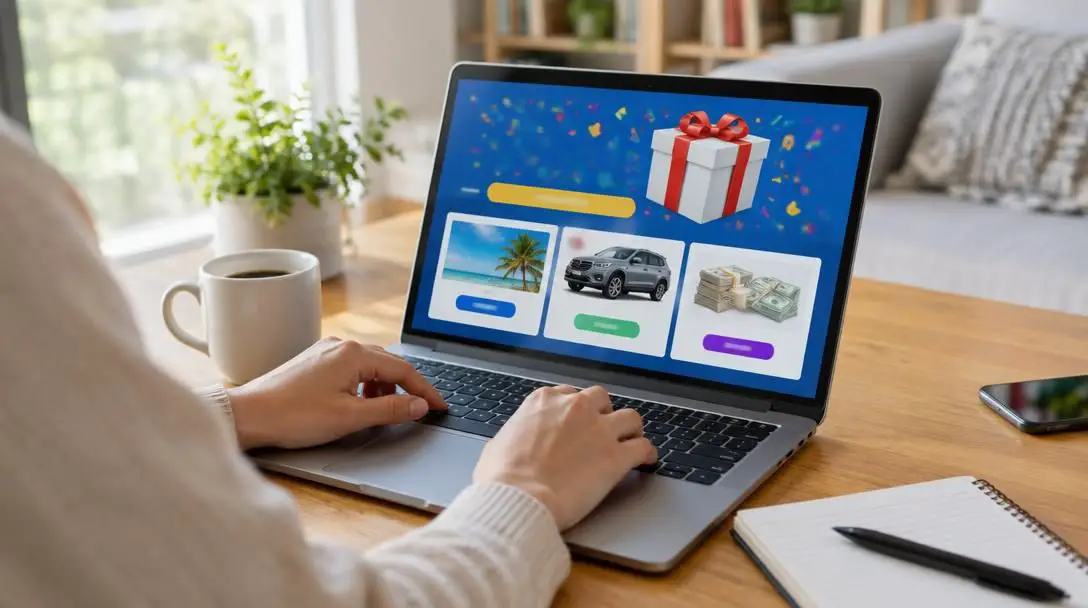
Securing a prize delivers little satisfaction if the merchandise has no personal utility and cannot be liquidated for cash. Piling up niche promotional novelties or odd branded merchandise merely clutters your home without providing any financial benefit. If your goal is making money, you should prioritize pure cash rewards that offer absolute flexibility and purchasing power.
When cash drawings are not an option, focus on high-demand, high-value consumer merchandise that maintains strong resale value on secondary marketplaces. Focus your efforts on items such as:
- Automobiles and various motor vehicles
- Home fitness equipment, including treadmills and exercise bikes
- Name-brand sporting equipment, especially premium golf clubs
- Widely recognized consumer goods that can be resold brand new in the box
Unopened consumer products from reputable brands are straightforward to liquidate. Always keep the core rule of resale in mind: if an item is so strange or hyper-specific that you have no use for it, prospective buyers on the open market will likely feel the same way.
Utilize multiple social media accounts
Social networks have evolved into one of the most prolific engines for commercial giveaways. Platforms like Twitter and Facebook host endless promotional campaigns designed to generate rapid sharing. Entering a Twitter contest often takes no more effort than retweeting a promotional message and tagging the sponsoring company.
To widen your statistical footprint across these social networks, establish several accounts connected to different email addresses so you can participate whenever new opportunities appear. When using multiple profiles, always adhere strictly to the sponsor's published rules and platform terms of service. Having multiple active accounts at your disposal ensures you can quickly engage with drawings across different platforms and maximize your visibility across daily promotional cycles.
Experienced sweepstakes hobbyists rarely build their earnings on a single, life-changing jackpot; they accumulate value by consistently winning top prizes across dozens of lower-profile drawings.
Comparing sweepstakes entry methods
Different sweepstakes formats present distinct trade-offs between the time required to enter, the volume of competing entries, and the likelihood of taking home a prize. Understanding these dynamics helps you allocate your daily entry window efficiently.
| Entry format | Time investment | Competition level | Primary prize profile |
|---|---|---|---|
| Standard web form | Minimal (a few clicks) | Extremely high | Large cash jackpots, cars, or modest gift cards |
| Social media retweet/share | Very fast (under one minute) | Moderate to high | Branded merchandise, small cash sums, tech accessories |
| Daily photo/action challenge | High (ongoing daily effort) | Low (high dropout rate) | High-value consumer goods, premium gear, large cash prizes |
| Regional or local giveaway | Minimal to moderate | Very low | Event tickets, fitness gear, local store vouchers |
A step-by-step practical entry routine
Transforming sweepstakes participation into an efficient, organized pursuit requires a consistent daily habit. Without a planned routine, entering drawings can quickly become disorganized or eat up too much of your personal schedule.
- Establish your dedicated accounts: Create a dedicated email account reserved exclusively for contest entries. Set up corresponding social media profiles on platforms like Twitter and Facebook, pairing each with a distinct email address so you are prepared to participate across networks.
- Prepare your tracking system: Open a physical notebook or digital spreadsheet. Set up columns to record the contest sponsor, prize description, entry deadline, entry frequency (such as single entry or daily submission), and the date you entered.
- Identify low-competition opportunities: Search for regional drawings, promotions from small or mid-sized brands, and contests requiring creative or multi-day tasks. Filter your targets to favor drawings offering pure cash or high-resale items like motor vehicles, treadmills, exercise bikes, and golf clubs.
- Execute entries during a set window: Set aside a dedicated block of time each day. Spend this focused window cycling through daily social media retweets, posting required daily challenge photos, and filling out standard digital entry forms.
- Log every submission: Record each completed entry into your tracking log immediately. For recurring drawings that require daily submissions—such as daily photo challenges—mark them clearly on your daily checklist so you do not break the entry streak.
- Check inboxes and spam folders: Open your contest-specific email account once or twice every day. Review the main inbox, and always perform a manual inspection of your spam folder to catch any misdirected winner notifications before claim deadlines expire.
Common sweepstakes mistakes to avoid
Many entrants spend months submitting forms without seeing any meaningful return, simply because they fall into common tactical errors. Avoiding these pitfalls keeps your participation productive and organized.
- Ignoring smaller drawings: Pouring all your energy into seven-figure jackpots is the single most common mistake. While winning $1 million is an exciting daydream, astronomical participant numbers make it statistically unlikely. Skipping smaller drawings means missing the contests where you hold the greatest realistic shot at winning.
- Using a cluttered personal email: Relying on an everyday personal or business account leads to missed notifications. Strong automated filters regularly drop legitimate winner notifications into junk folders, leaving them unnoticed until the claim window expires.
- Abandoning multi-step contests: Starting a daily photo challenge or ongoing contest series is only worthwhile if you carry it through to the end. Quitting halfway through wastes all of your previous days of effort and completely removes you from the final drawing.
- Entering for items with no utility or resale appeal: Submitting entries for niche novelty items or obscure promotional trinkets wastes time and clutters your home. If a prize holds no personal use and cannot be resold brand new in the box, skip the drawing.
- Failing to read the official rules: Every promotional contest features legal guidelines outlining geographic eligibility, age limits, entry frequencies, and required hashtags or mentions. Overlooking a minor condition can invalidate what would have otherwise been a winning entry.
Frequently asked questions
Do I have to pay taxes on sweepstakes winnings?
Yes. In most jurisdictions, prizes won through sweepstakes and promotional contests are considered taxable income based on their fair market value. Cash awards are taxed directly, while merchandise such as cars, exercise bikes, or golf clubs must be reported according to the retail value declared by the sponsor. Setting aside funds for tax obligations is an essential step when claiming large prizes.
Why should I avoid using my primary email address?
Using your main email address exposes you to heavy marketing follow-ups and aggressive automated spam filtering. Important winner notifications, identity verification forms, and prize claims frequently get caught in spam filters. A dedicated contest email keeps your main inbox tidy and ensures you never overlook a time-sensitive prize notice.
Are smaller sweepstakes worth entering if the prizes are modest?
Yes. Smaller sweepstakes draw far fewer participants, resulting in significantly higher odds of winning. Experienced hobbyists build considerable cumulative value by regularly winning smaller cash amounts and popular merchandise across multiple drawings, rather than pinning their hopes entirely on million-dollar jackpots.
What are the best non-cash prizes to target for resale?
The easiest non-cash prizes to liquidate are items with steady consumer demand that can be sold brand new in the box. High-value targets include motor vehicles, home fitness gear like treadmills and exercise bikes, brand-name golf clubs, and widely recognized electronics. Niche promotional novelties with no broader market appeal should be skipped.
How much time should I dedicate to entering sweepstakes daily?
A focused daily window of 20 to 45 minutes is generally enough to run through a structured routine. During this time, you can complete daily social media actions, post any required challenge photos, log entries in your notebook, and inspect your dedicated inbox and spam folder for winning alerts.
The bottom line
Entering online sweepstakes can be far more than an idle pastime if you approach it with the right mindset and systems. While corporate promotional budgets continue to distribute millions of dollars in prizes each year, casual entrants who only enter giant, one-click national drawings rarely see results. By shifting your attention toward lower-competition drawings, seeing high-effort photo challenges through to completion, and focusing strictly on liquid rewards like cash, vehicles, and name-brand sporting goods, you tilt the numbers in your favor.
Pairing strategic contest selection with practical operational habits—maintaining a dedicated email inbox, using a daily tracking notebook, and reviewing spam folders for prize alerts—ensures that your time is spent effectively. With consistency and a disciplined routine, online sweepstakes can serve as an enjoyable, reliable way to claim valuable prizes and supplement your finances.