
How To Make The Most Of Your Wordle Guesses

For puzzle enthusiasts across the globe, midnight signals the arrival of a beloved daily ritual: launching a fresh grid of Wordle to unravel another five-letter mystery. While the thrill of uncovering the hidden word brings an undeniable spark to the evening, reaching that elusive victory is not always effortless. Exhausting five turns with only a single stray letter to show for your efforts can turn an entertaining brainteaser into an exercise in pure exasperation.
Wordle may appear straightforward, but securing a reliable winning streak requires far more than guessing random five-letter words on impulse. Each turn yields essential data that either unlocks the puzzle or squanders an opportunity. By adopting an analytical mindset and understanding letter frequencies, position mechanics, and structural word patterns, you can reliably solve the puzzle within four guesses instead of scrambling to survive round six.
Key takeaways
- Treat early guesses as reconnaissance missions by testing high-frequency letters and avoiding duplicate characters.
- Use proven letter combinations inspired by classic word games, centering your first guesses on common consonants like R, S, T, L, and N alongside vowels like A and E.
- Keep an eye out for sneaky word patterns, including answers that begin with vowels or end in common consonant blends such as "-ch".
- Take advantage of Wordle's untimed format to step away, reflect, and avoid careless blunders like reusing gray letters or repeating yellow tiles in the same position.
Understanding Wordle game mechanics
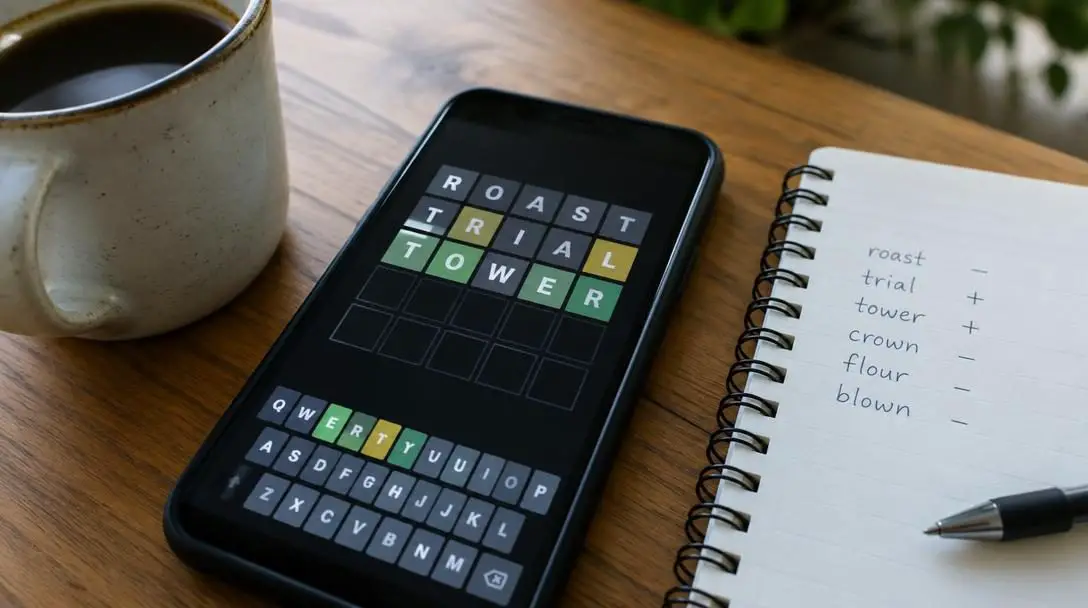
Wordle challenges players to deduce an unknown five-letter word in six attempts or fewer. Success hinges on how effectively you interpret the colored tiles returned after submitting a valid five-letter entry. These visual markers provide explicit clues regarding which letters belong in the solution and where they reside:
- Green tiles: The chosen letter is in the target word and is positioned in the exact correct slot.
- Yellow tiles: The chosen letter belongs in the secret word, but it currently sits in the incorrect position.
- Gray or darkened tiles: The chosen letter does not appear anywhere in the target word.
Because you have only six rows on the board, every entry must function as an information-gathering tool. Identifying which letters are entirely absent from the mystery word is just as valuable as confirming which ones are present. Every gray tile eliminates a character from consideration, shrinking the pool of viable English words and guiding your subsequent choices toward an accurate conclusion.
Essential strategies for maximizing every guess
Approaching Wordle systematically transforms the grid from a guessing game into a structured process of deduction. Integrating proven linguistic techniques into your routine makes finding the target word much faster and more predictable.
The Wheel of Fortune rule
Fans of the long-running television game show Wheel of Fortune know that contestants in the final bonus round are automatically granted a specific set of foundational letters: R, S, T, L, N, and E. These specific characters represent some of the most frequent letters found in the English language. Bringing that exact principle to Wordle provides an immediate statistical advantage.
Opening words built around these high-probability letters maximize your chances of striking green or yellow tiles on turn one. A traditional choice like stern tests four of these prime consonants along with the most prevalent vowel in the language. If playing the same word every morning feels monotonous, you can incorporate the letter A, which serves as another high-frequency vowel. Words like stare, rates, and learn test the classic consonant cluster while simultaneously checking for the presence of both A and E. If an opener reveals that neither A nor E is on the board, that discovery alone instantly eliminates an enormous percentage of possible solutions.
Vowels at the start
Every standard Wordle solution features at least one vowel, even if that vowel happens to be a versatile Y. The central challenge lies in identifying which vowels are present and determining where they appear in the sequence. While many players naturally begin words with consonants, opening with a vowel can dismantle tricky traps early in the game.
Wordle frequently features answers that lead with an A or an E, which can derail a player's rhythm if they expect a conventional consonant prefix. Words like award or eagle can be notoriously difficult to crack because they not only begin with a vowel, but also repeat that same vowel later in the word. If your tactical focus on turn one is to uncover the vowel landscape immediately, consider opening with audio. This targeted guess tests four distinct vowels in a single stroke, clarifying the board's phonetic foundation before you commit to consonant-heavy deductions.
Eliminating double letters on opening turns
Unless your goal is an all-or-nothing gamble on guess one, you should never submit a word featuring duplicate letters on your first turn. The opening phase of Wordle is dedicated strictly to reconnaissance: mapping out which letters exist on the board and which ones do not.
When you enter a word that contains duplicate characters—such as double Es, double Os, or double Ls—and that letter turns out to be absent, you have wasted a slot. That duplicate space could have held a completely fresh consonant or vowel, denying you an additional piece of crucial data. Reserve double-letter hypotheses for your third or fourth attempts, once the field of single letters has been properly explored.
The primary objective of the early game is reconnaissance: finding out what is and is not on the board.
Capitalizing on C and H
Two of the most frequently neglected letters in daily play are C and H. Because neither letter belongs to the standard bonus-round set from television and neither is a vowel, players regularly overlook them during their opening deductions. However, C is the tenth most frequently used letter in the English language, making it far more common than many casual solvers assume.
Furthermore, C and H frequently pair together in everyday spelling conventions. Keeping an eye out for words ending in the -ch consonant combination can quickly salvage a difficult round. Words like watch, beach, and mulch illustrate how cleanly these letters anchor the end of a word. If your initial consonants are running dry late in a match, checking whether a C, an H, or both can fit your open slots can rapidly unlock the remaining mystery.

Pacing your play
Impatience is one of the most common causes of a broken Wordle streak. Many players fall into the trap of entering the first word that comes to mind and immediately pressing the enter key without carefully scanning the board. Moving too quickly leads to careless blunders, such as placing a yellow letter back into the very spot where it has already failed.
Wordle does not feature a ticking clock or penalize you for taking time to think. While you do not need to spend hours deliberating over every letter, you have a complete 24-hour cycle before the next word arrives. Stepping away from the screen allows your subconscious mind to process difficult letter arrangements, enabling you to spot solutions that were invisible during a rushed session.
Evaluating popular opening words
Choosing an opening word requires balancing vowel identification with consonant filtering. The following comparison highlights several top-tier opening candidates based on their letter configurations and primary strategic goals:
| Opening Word | Vowels Tested | Key Consonants Tested | Primary Tactical Purpose |
|---|---|---|---|
| stern | E | S, T, R, N | Maximizes classic high-frequency bonus-round consonants. |
| stare | A, E | S, T, R | Balances top consonants with the two most common vowels. |
| learn | A, E | L, R, N | Checks liquid consonants and high-probability vowels together. |
| rates | A, E | R, T, S | Targets common verb/noun endings and plural structures. |
| audio | A, U, I, O | D | Discovers or eliminates four major vowels in one turn. |
A step-by-step framework for solving in four turns
To consistently reach the correct solution by round four, players can adopt a dependable routine from the opening move to the final deduction:
- Deploy an information-rich opener: Start your board with a five-letter word consisting entirely of unique characters. Choose a consonant-driven probe like stern, learn, stare, or rates, or check the vowel landscape using audio. Ensure no letters are duplicated on this initial entry.
- Evaluate the tile feedback: Review the colors assigned to your first entry. Register which letters turned gray to ensure you never type them again. Identify all yellow letters and remember that they must be shifted into entirely different column positions on your next attempt.
- Design a targeted second guess: Build your second word to test unplayed common letters while testing new positions for any yellow letters. If your initial guess did not reveal core vowels, use this turn to test remaining vowels (including Y) alongside versatile consonants such as C and H.
- Identify structural patterns on turn three: By the third round, multiple letters will be confirmed or ruled out. Look for common linguistic arrangements, such as words ending in -ch (like beach or watch), and stay alert to the possibility that the word begins with an A or an E.
- Finalize the solution on turn four: Combine all confirmed placements, test open positions with remaining high-probability letters, and verify that your proposed word respects every previously revealed clue before you submit your answer.
Frequent Wordle mistakes to avoid
Even experienced word puzzle solvers stumble into habits that erode their chances of winning. Steering clear of these routine errors will instantly elevate your daily performance:
- Testing rare consonants too early: Starting a round with fringe letters like Q, Z, or X wastes an entry if they fail to appear, teaching you very little about the broader board.
- Reusing confirmed gray letters: Accidentally typing letters that have already been eliminated burns space that should be used to test unexplored possibilities.
- Placing yellow letters in the exact same spot: When Wordle highlights a tile in yellow, it confirms the letter is present but in the wrong slot. Typing it in the same column provides no new positional insight.
- Using duplicate letters on your first turn: Playing duplicate letters on row one restricts your initial reach, leaving you with feedback on only three or four unique characters instead of five.
- Forgetting words that lead with vowels: Assuming that words always begin with a consonant causes players to miss tricky solutions like eagle or award.
- Hitting enter on impulse: Rushing to submit the first valid word you think of without checking it against all prior clues is the fastest way to drop an avoidable loss.
Frequently asked questions
What is the best type of word to use for your first guess?
An optimal opening word features five distinct letters with no duplicates, focusing either on high-frequency consonants and common vowels (like stare, rates, or stern) or sweeping for vowels with an opener like audio.
Why should I avoid using words with double letters right away?
Using duplicate letters on your first turn limits your reconnaissance capacity. If that repeated letter is absent from the target word, you forfeit an opportunity to test an entirely different letter, learning less about the board overall.
How can I tell if a word starts with a vowel?
If your early consonant guesses return mostly gray tiles while vowels like A or E turn yellow in middle or ending positions, test those vowels at the very front of your next word to catch patterns like award or eagle.
What should I do if my first two guesses return mostly gray tiles?
Take advantage of the extensive process of elimination. Step back and assemble a third guess using neglected high-utility letters like C and H, alternative vowels, or liquid consonants to reset your trajectory.
Is there any penalty for taking a long time between guesses?
Wordle has no timer. You have 24 hours between puzzles, so taking breaks to reconsider your board between turns is completely acceptable and often prevents careless mistakes.
The bottom line
Wordle is fundamentally a game of information management. While luck occasionally produces a thrilling two-guess win, long-term consistency relies on disciplined opening plays, careful letter tracking, and thoughtful deduction. By sticking to high-frequency letters, avoiding early duplicates, remembering versatile combinations like C and H, and utilizing the untimed nature of the game, you can turn a perilous sixth-guess scramble into a predictable four-turn victory.