Intersections Between Superheroes and Political Ideologies
Superheroes have captivated readers and audiences for generations, moving far beyond colorful adventures to become deep cultural touchstones. From Superman and Wonder Woman to Batman and Spider-Man, these fictional icons serve as imaginative conduits through which society explores fundamental dilemmas of governance, justice, and ethics. Far from being mere escapist entertainment, costumed vigilantes inevitably operate as reflections of real-world political ideologies, embodying everything from traditional self-reliance to progressive community action and radical anti-statism.
Historically, graphic literature has functioned as a cultural mirror. By placing extraordinary individuals in direct confrontation with social crises, comic books naturally confront the boundaries of the social contract. When masked figures operate outside standard statutory procedures, their stories address foundational questions: Should individuals trust municipal institutions? Is private enterprise superior to bureaucratic intervention? And how should a society balance individual liberty with collective welfare? Exploring superheroes through distinct philosophical lenses reveals the multifaceted depth driving these enduring cultural figures.
Key takeaways
- Superhero narratives actively mirror societal debates over authority, the social contract, and the legitimacy of state power.
- Conservative superhero archetypes emphasize individual responsibility, tradition, private enterprise, and personal capability.
- Liberal superhero narratives center on social justice, community solidarity, systemic reform, and the protection of vulnerable populations.
- Libertarian heroes reject institutional control, state regulation, and bureaucratic conformity in favor of radical personal autonomy.
- Evaluating character motivations, systemic representations, and creative eras reveals the shifting political underpinnings of comic book media.
Ideological archetypes at a glance
Because fictional universes must ground their stakes in conflicts that audiences recognize, comic book narratives frequently categorize moral duties along recognizable philosophical lines. The table below outlines how core characters across major graphic traditions align with specific ideological frameworks.
| Character | Ideological Alignment | Primary Source of Authority | Key Philosophical Focus |
|---|---|---|---|
| Batman | Conservatism | Private wealth, personal training, and individual willpower | Restoring order against institutional failure and bureaucratic corruption |
| Iron Man | Conservatism | Technological innovation and private-sector enterprise | Defending global security through ingenuity and industry |
| Captain America | Conservatism | Patriotism and foundational constitutional ideals | Defending historic values of duty, democracy, and liberty |
| Superman | Liberalism | Moral responsibility and universal humanitarian duty | Uplifting vulnerable populations, tolerance, and systemic fairness |
| Spider-Man | Liberalism | Community empathy and mutual civic obligation | Protecting the common person through collective social duty |
| Wonder Woman | Liberalism | Egalitarian ethics and peace through mutual understanding | Dismantling oppressive hierarchies and advancing equality |
| Rorschach | Libertarianism | Absolute, unyielding personal moral code | Total rejection of institutional compromise and state consensus |
| V | Libertarianism | Direct action and radical personal liberation | Challenging totalitarian regimes and statutory overreach |
| Deadpool | Libertarianism | Radical individualism and irreverent nonconformity | Defying regulatory oversight and superhero hierarchies |
The conservative hero: Individual responsibility, enterprise, and tradition
The conservative archetype in superhero literature is defined primarily by a dedication to individual responsibility and self-reliance. Rather than depending on public bureaucracy or collective legislation, this hero operates under the assumption that individuals—endowed with discipline, resources, and private initiative—are best positioned to solve societal crises. In this framework, state institutions are frequently depicted as sluggish, inefficient, or compromised by corruption, leaving the private citizen as the primary defender of order and heritage.
Batman
- Alignment: Conservatism
- Resource Base: Private billionaire fortune and specialized training
- Operational Arena: Gotham City
- View of Government: Skeptical of bureaucratic efficiency and institutional integrity
As a billionaire industrialist operating in Gotham City, Batman epitomizes the conservative conviction that private resources and individual discipline outmatch municipal apparatuses. Rather than deferring to a local government immobilized by corruption and red tape, Bruce Wayne channels his own fortune and rigorous physical preparation into private crime-fighting. His crusade is founded on the belief that a single determined citizen can enforce order where municipal bodies have failed, prioritizing private initiative over public systemic dependence.
Iron Man
- Alignment: Conservatism
- Identity: Tony Stark, industrialist and engineer
- Operational Focus: Technological enterprise and global defense
- Core Principle: Free enterprise drives societal progress
Tony Stark personifies the virtues of private enterprise, technological ingenuity, and market-driven solutions. As a prominent businessman, Iron Man defends the world from invasive threats and terrorism through inventions developed within his private laboratories rather than through state committees. Stark’s narrative arc argues that human innovation and free-market advancement provide the most effective tools for global security, positioning commercial genius as superior to state-managed defense programs.
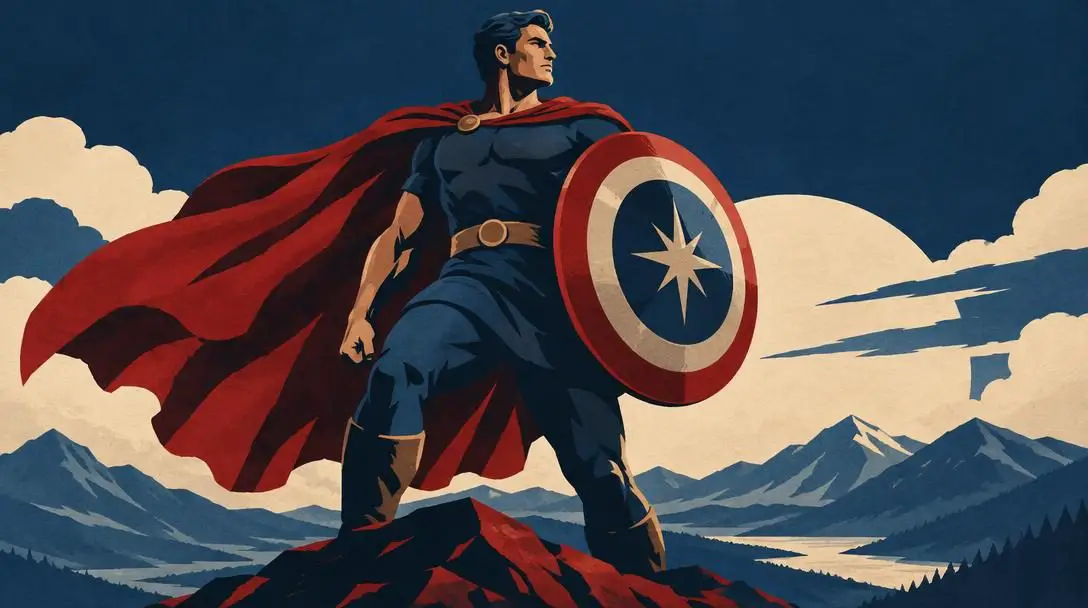
Captain America
- Alignment: Conservatism
- Core Values: Traditional patriotism, duty, and constitutional liberty
- Underlying Stance: Upholding foundational American principles
- Guiding Ethic: Defending foundational heritage against subversion
Captain America embodies traditional civic virtue, timeless duty, and unwavering patriotism. His moral framework is anchored in foundational American ideals, including personal freedom, justice, and democratic accountability. Rather than serving as an uncritical agent of whatever administration occupies office, he aligns his loyalty with timeless constitutional principles, defending the moral heritage of liberty against foreign aggression and domestic decay alike.
The liberal hero: Social justice, equality, and systemic care
In contrast to traditional individualism, the liberal archetype emphasizes social justice, collective equality, and institutional accountability. This heroic framework views society through the lens of community interdependence, asserting that extraordinary power carries a moral obligation to protect the vulnerable and reform systemic inequities. Liberal heroes often collaborate with municipal frameworks or direct their energies toward addressing structural oppression, poverty, and unfair social hierarchies.
Superhero stories do not merely provide escapist action; they function as cultural mirrors that interrogate power, authority, and the social contract.
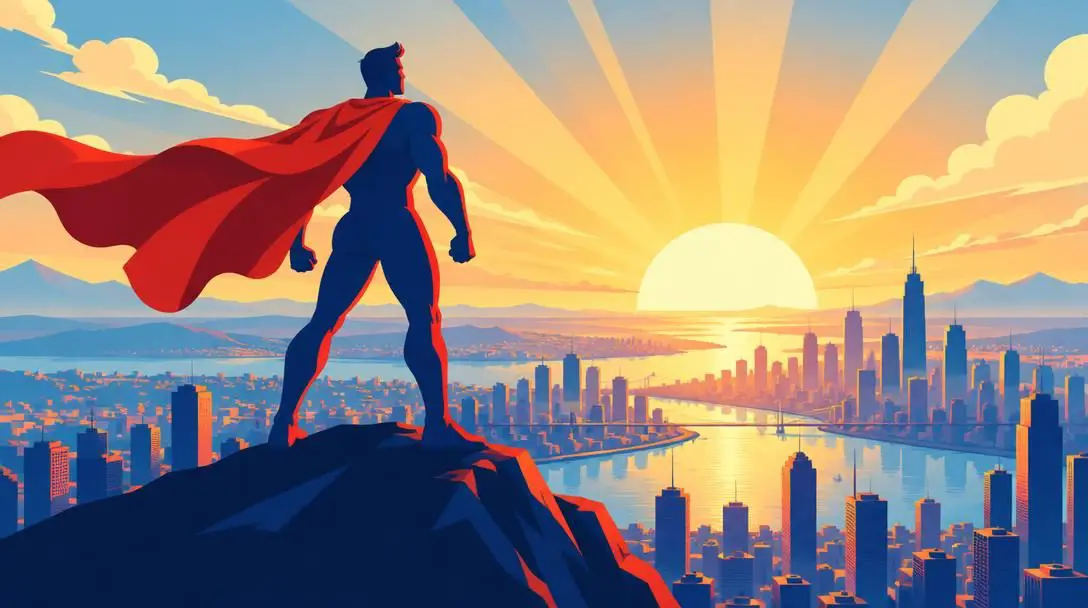
Superman
- Alignment: Liberalism
- Guiding Vision: An egalitarian society built on tolerance and fair opportunity
- Primary Role: Champion of vulnerable communities
- Core Conviction: Immense power must protect against systemic unfairness
Superman serves as an enduring symbol of progressive aspiration, embodying a vision of a society where individuals thrive regardless of origin. Rather than hoarding his immense power or using it to establish personal dominance, he wields his abilities in service of the public good, stepping in to lift up the powerless, counter systemic inequities, and model tolerance. His stories highlight how exceptional capability can be exercised with profound restraint to preserve the dignity of everyday citizens.
Spider-Man
- Alignment: Liberalism
- Core Ethic: Civic responsibility and mutual social obligation
- Operational Setting: Working-class urban neighborhoods
- Guiding Creed: Personal power entails structural responsibility to others
Peter Parker’s journey as Spider-Man is rooted in a deeply communal sense of duty. Driven by the principle that power requires continuous accountability toward society, Spider-Man operates as a protector of ordinary people within an urban ecosystem. His struggles frequently touch upon economic hardship, community support, and the necessity of looking out for neighbors who slip through the cracks of commercial and municipal systems.
Wonder Woman
- Alignment: Liberalism
- Central Mission: Dismantling dominance and advancing gender equality
- Core Ideals: Female empowerment, compassion, and institutional reform
- Method: Fostering peace through mutual understanding
Wonder Woman acts as a transformative force challenging established structures of hierarchy and violence. Representing female empowerment, Diana of Themyscira works to dismantle institutional oppression and expand protections for disenfranchised populations. Her stories position empathy, dialogue, and equitable reform as fundamental tools for justice, demonstrating how traditional power structures can be reoriented around peaceful coexistence and civil rights.
The libertarian hero: Uncompromising autonomy and anti-statism
The libertarian hero represents an absolute commitment to individual autonomy and aggressive skepticism toward state power. Characters within this tradition view government agencies, regulatory mandates, and bureaucratic collectives not as imperfect tools for good, but as inherent threats to personal freedom. Operating strictly outside statutory limits, these figures reject state consensus and assert the supremacy of the autonomous conscience over public decrees.
Rorschach
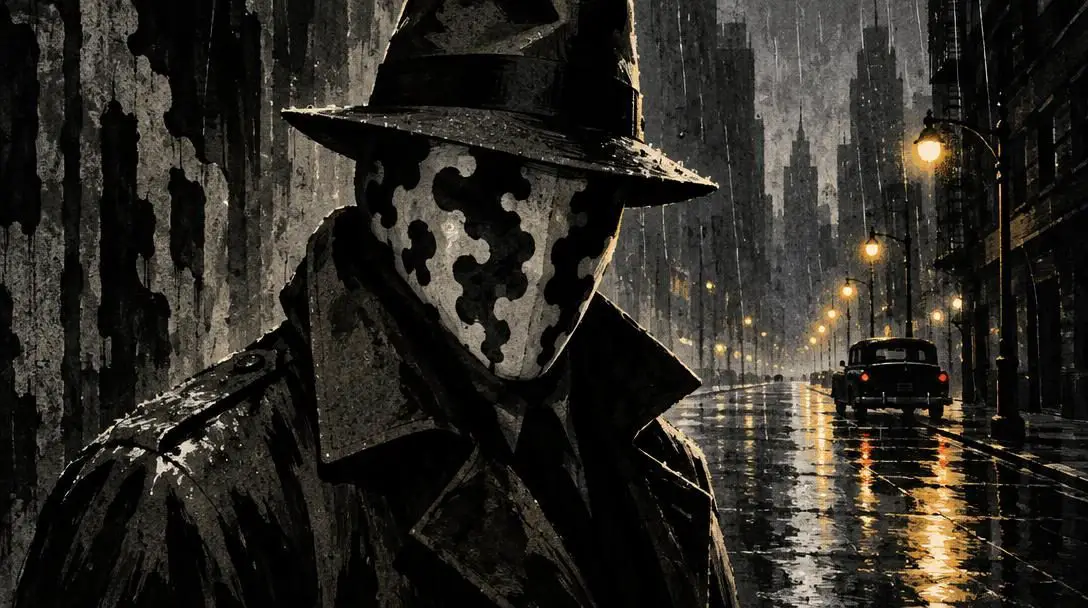
- Alignment: Libertarianism
- Source Narrative: Watchmen
- Moral Framework: Uncompromising, black-and-white absolutism
- View of Authority: Total rejection of statutory compromise and legal consensus
Featured in Alan Moore and Dave Gibbons's Watchmen, Rorschach carries an unyielding moral code that permits zero accommodation with corrupt authorities or pragmatic political deals. Living on the outer margins of society, he explicitly rejects statutory mandates and public consensus. Rorschach views institutional compromise as moral cowardice, demonstrating how an individualistic sense of justice can exist in total defiance of societal and governmental expectations.
V
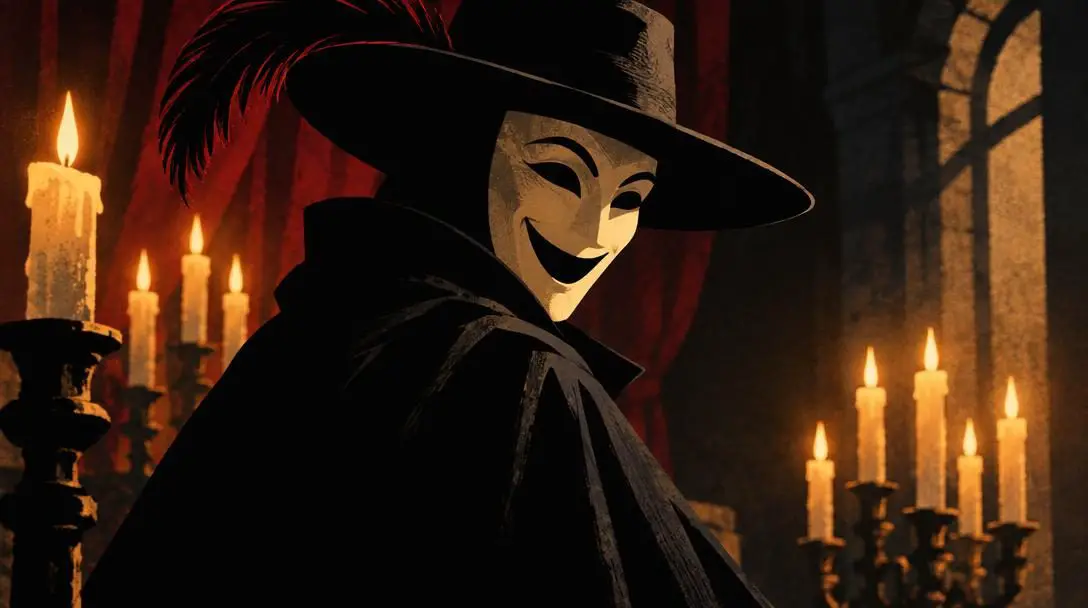
- Alignment: Libertarianism
- Source Narrative: V for Vendetta
- Primary Target: Totalitarian state apparatus
- Guiding Philosophy: Radical self-determination and direct anti-statist resistance
V embodies radical resistance to state control, using dramatic direct action to destabilize a fascist, authoritarian regime. Operating from the belief that citizens should not fear their governments, V’s crusade is designed to dismantle tyrannical bureaucracy and return complete sovereignty to the individual. His actions emphasize that individual autonomy and liberty must be defended even when confronting overwhelming statutory power.
Deadpool
- Alignment: Libertarianism
- Core Trait: Irreverent disregard for established rules and authority
- Operational Approach: Self-directed mercenary action
- Systemic Stance: Absolute rejection of collective superhero hierarchies
While often viewed primarily through a comedic lens, Deadpool exemplifies radical nonconformity and autonomy. He consistently rejects institutional oversight, refuses to conform to conventional superhero teams or state-sanctioned mandates, and operates according to personal whim and economic self-interest. Wade Wilson demonstrates how extreme personal freedom and a refusal to be managed by regulatory frameworks shape a distinctive anti-authoritarian archetype.
How ideological subtext operates within superhero narratives
Superheroes do not convey political philosophies solely through dialogue or didactic lectures. Instead, political assumptions are woven directly into the structural mechanics of narrative world-building, conflict design, and character interaction:
- The Nature of the Threat: The origin of an antagonist often reveals the narrative's underlying worldview. Threats originating from corporate exploitation, systemic poverty, or environmental damage align the story with liberal critiques, whereas villains born from bureaucratic overreach, totalitarian collectivism, or regulatory paralysis reinforce conservative and libertarian perspectives.
- The Source of Authority: How a hero justifies intervening in society exposes their political lens. Conservative heroes derive their legitimacy from private capability, individual discipline, or constitutional traditions; liberal heroes justify their actions through civic responsibility and solidarity with the vulnerable; libertarian heroes act entirely on personal conscience, outright denying the moral legitimacy of external statutory authority.
- Interactions with Law Enforcement: The friction or cooperation between costumed heroes and state agencies provides clear political commentary. A narrative where police and government regulators are depicted as corrupt or helpless elevates conservative and libertarian concepts of private intervention, while stories depicting public institutions as salvageable mechanisms reinforce reform-minded liberal perspectives.
- The Mechanisms of Justice: The manner in which crises conclude communicates ideological beliefs. Restoring societal balance through individual willpower and private initiative highlights conservative values; resolving problems through systemic reform, restorative community justice, and civil equity emphasizes liberal values; dismantling oppressive state systems reflects libertarian goals.
Practical steps for analyzing superhero politics
Engaging critically with comic book literature requires a structured analytical approach. Readers and viewers can dissect the ideological underpinnings of any superhero story by following these practical steps:
- Evaluate the Hero’s Core Motivations: Determine what fundamentally drives the protagonist to put on a mask. Are they acting out of individual duty and private agency like Batman, a communal duty to vulnerable neighbors like Spider-Man, or an uncompromising commitment to personal liberty like V?
- Examine the Depiction of Established Institutions: Scrutinize how the narrative depicts municipal governments, courts, police departments, and private corporations. Identify whether these systems are portrayed as valuable structures needing assistance, inefficient hurdles requiring private bypass, or tyrannical apparatuses demanding active resistance.
- Identify the Beneficiaries of Heroic Action: Observe who directly gains from the hero's interventions. Note whether the narrative prioritizes the safeguarding of private property, the maintenance of traditional law and order, the protection of marginalized communities, or the expansion of personal autonomy.
- Analyze the Hero’s Management of Power: Assess how the character exercises authority and restrains their abilities. Investigate whether they submit to public oversight, enforce their own code through self-reliant discipline, or deliberately reject any governing body that attempts to monitor their actions.
- Track Character Adjustments Across Eras: Remember that iconic characters have existed for decades under hundreds of different creative teams. Note how a character’s political tone shifts across eras to mirror the changing civic anxieties and public dialogues of the real world.
Common analytical mistakes to avoid
Interpreting political ideology within popular media can lead to simplistic readings if readers overlook narrative nuances. When analyzing superhero fiction, be careful to avoid these frequent analytical missteps:
- Assuming Superhero Stories Are Completely Apolitical: A frequent misjudgment is regarding superhero media as strictly neutral escapism. Every creative decision regarding how crime is defined, who wields authority, and how justice is administered is inherently rooted in political thought.
- Forcing Characters into Contemporary Partisan Parties: Conflating broad political philosophies like liberalism, conservatism, or libertarianism with modern electoral parties distorts the text. Superheroes reflect overarching philosophical concepts rather than specific legislative party platforms.
- Overlooking the Influence of Changing Creative Teams: Superheroes are written by multiple authors over many decades. For example, Batman can be depicted as a conservative champion of private discipline in one run and as a reform-minded community benefactor in another; assuming an ideological constant across all runs is an error.
- Equating Antagonism Toward the State with Villainy: It is easy to assume that acting in defiance of legal statutes automatically marks a character as an antagonist. However, figures such as V illustrate that anti-statist rebellion can be framed through heroic, libertarian ideals against tyranny.
- Ignoring the Historical Era of Production: Mid-twentieth-century characters like Captain America and Superman were shaped by the social landscape of the 1930s and 1940s. Evaluating their actions requires contextualizing them within the cultural realities of their original publication periods.
Future directions for narrative and ideological analysis
For those interested in exploring comic book philosophy in greater depth, several promising avenues of inquiry offer rich analytical material. First, examine major universe-wide crossover storylines. Comic book publishers frequently stage large-scale events where superhero factions clash directly over state oversight, mandatory registration, surveillance, and civic security. Observing how characters take opposing sides in these storylines provides clear insight into ideological division.
Second, investigate how adaptations across different mediums alter ideological messages. A character originally written in serialized graphic novels may undergo significant ideological adjustments when adapted for modern mass-market cinematic releases. Comparing these adaptations reveals how studios alter political themes to appeal to global audiences.
Finally, examine the supporting characters, journalists, and antagonists who populate the hero's world. A protagonist’s political lens is frequently brought into sharp focus by how they interact with figures like investigative reporters, city officials, and ideological rivals. Evaluating these interactions provides a complete picture of the narrative universe’s worldview.
Frequently asked questions
Are superheroes intentionally created to represent real-world political parties?
No. Superheroes are designed around broader philosophical and civic traditions—such as individual self-reliance, social justice, or personal autonomy—rather than specific modern political parties or partisan platforms.
Why is Batman considered a conservative hero?
Batman aligns with conservative ideals because he relies on private wealth, rigorous self-discipline, and individual initiative to combat crime, operating under the assumption that municipal bureaucracies are too inefficient or corrupt to maintain order.
How does Superman embody liberal values?
Superman reflects liberal values through his focus on social justice, tolerance, and protecting the vulnerable. His stories emphasize using extraordinary strength to counter systemic unfairness and foster an egalitarian community with equal opportunities for all.
What makes a character like V or Rorschach libertarian?
Both characters champion extreme individual autonomy and reject the authority of the state. V directly resists totalitarian government control, while Rorschach adheres to an uncompromising personal moral code that rejects statutory mandates and social consensus.
Can a superhero's political ideology change over time?
Yes. Because characters like Batman, Superman, and Captain America have been written by hundreds of creative teams across multiple decades, their ideological tone frequently shifts to reflect the prevailing cultural, social, and political discussions of each era.
The bottom line
Superhero narratives endure not merely because of colorful costumes or supernatural abilities, but because they provide a vibrant canvas for exploring humanity's most pressing ideological debates. Whether an arc champions the private discipline of the conservative archetype, the social solidarity and civil protection of the liberal hero, or the uncompromising independence of the libertarian vigilante, these stories challenge audiences to examine their own views on power, authority, and justice. By looking past surface-level action to analyze narrative subtext, readers gain a deeper appreciation for how comic books continually shape and reflect our civic culture.