The Art of Metalworking: Crafting Your Own Jewelry and Sculptures
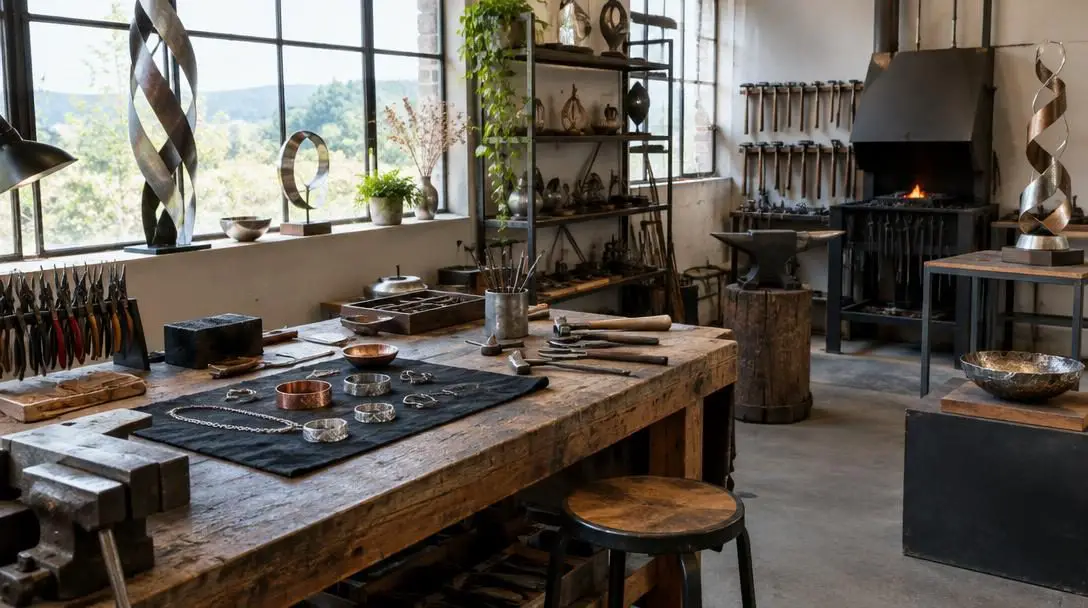
Metalworking stands as an ancient craft that continuously bridges the gap between raw mechanical discipline and expressive artistic vision. For thousands of years, human societies have heated, hammered, cut, and joined metal to fashion durable utilitarian tools, ornate adornments, and enduring architectural landmarks. Today, this time-honored discipline has stepped outside the industrial factory and commercial foundry, becoming an accessible and deeply fulfilling medium for modern artisans working in private studios and garage workshops.
Unlike organic mediums such as wood, stone, or clay, metal possesses singular physical qualities that allow it to be stretched, compressed, melted, and fused without forfeiting its core structural integrity. It responds dynamically to the impact of hand tools and the application of heat, retaining incredible strength even when worked into slender, delicate forms. Whether your aspiration is to craft wearable rings adorned with precious gemstones or construct monumental three-dimensional sculptures inspired by the natural world, mastering metalworking begins with understanding your raw materials, respecting workshop safety, and developing steady mechanical technique.
Key takeaways
- Metalworking combines physical manipulation, cutting, and heat fusion to transform rigid stock into jewelry and sculptural art.
- Foundational hand tools—including specialized hammers, chisels, pliers, and graded sandpaper—form the backbone of any metal studio.
- Prioritizing personal safety through heavy-duty gloves, protective eye goggles, and proper workshop ventilation prevents injuries and respiratory harm.
- Finishing processes like chemical patina treatments and mold casting expand creative possibilities beyond basic sheet fabrication.
- Transitioning metal craft into a business requires disciplined workshop organization, dependable tooling, and realistic material-and-labor pricing.
Essential Tools and Materials for the Workshop
Before striking your first piece of stock, setting up a functional workbench with reliable equipment is crucial. The right hand tools give you mechanical leverage, precision control over small components, and the ability to impart artistic texture onto unforgiving surfaces. Investing in dedicated metalworking instruments ensures cleaner results, minimizes hand fatigue, and accelerates your learning curve.
Metal Sheets
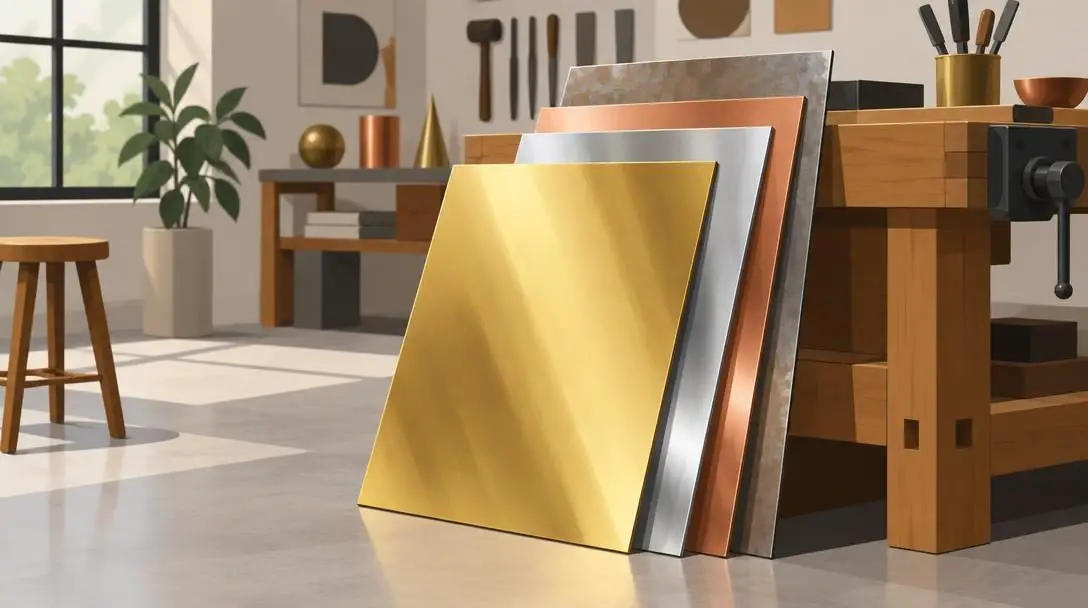
Available in a broad spectrum of compositions, hardness levels, and gauges, metal sheets serve as the primary raw base for flat jewelry blanks, layered plates, and shaped sculptural components. The thickness or gauge of the sheet determines how easily the metal bends under hand pressure and how much structural load the finished design can bear without buckling under its own weight.
Hammers
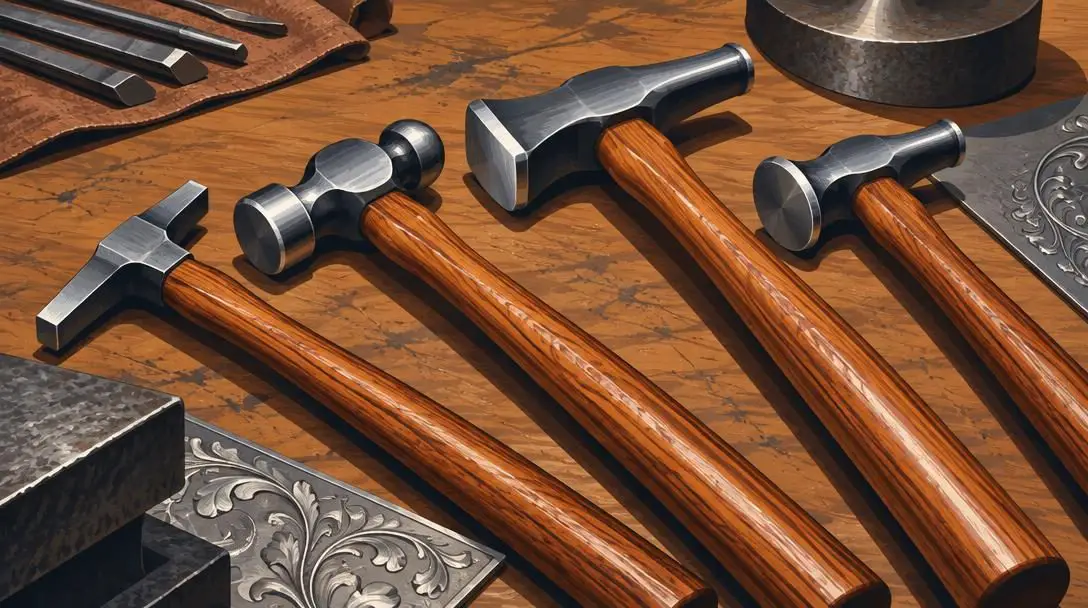
Far from standard carpentry tools, metalworking hammers are designed to shape, stretch, planish, and texture metal surfaces. Chasing hammers feature broad, flat faces for striking chasing tools, while ball-peen and cross-peen hammers leave dimpled, organic impressions that catch the light. Planishing hammers smooth out uneven bumps, gently refining contours into smooth, continuous curves.
Chisels
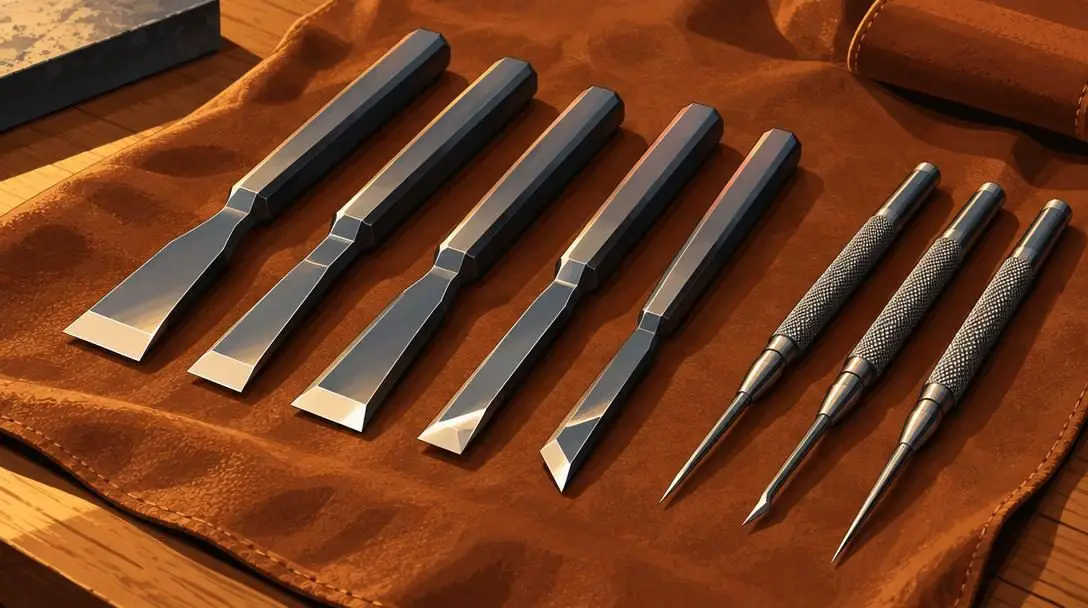
Hardened steel chisels allow makers to cut clean edges into plate stock, score fold lines, and carve intricate decorative relief patterns directly into metal surfaces. When struck with a chasing hammer, a sharp chisel acts as an engraving tool, enabling artisans to outline complex illustrative designs or text on both flat and curved surfaces.
Pliers
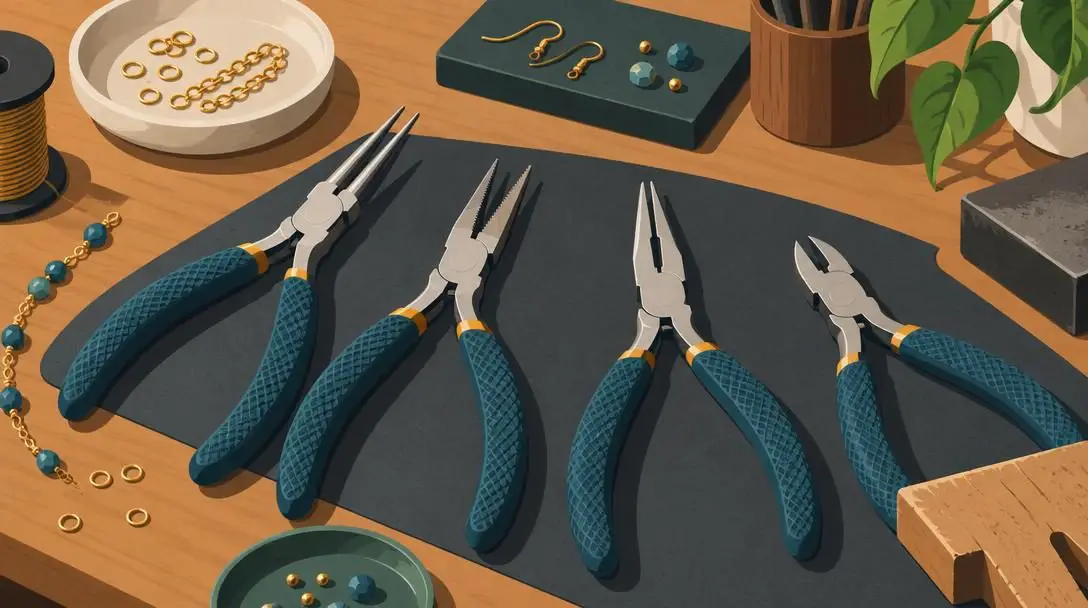
Working with small fragments, wires, and delicate mounts requires the mechanical grip of specialized pliers. Chain-nose, round-nose, and flat-nose pliers allow you to hold hot or sharp components securely, manipulate tight wire loops, and bend sheet edges without marring the pristine surface of your piece.
Sandpaper
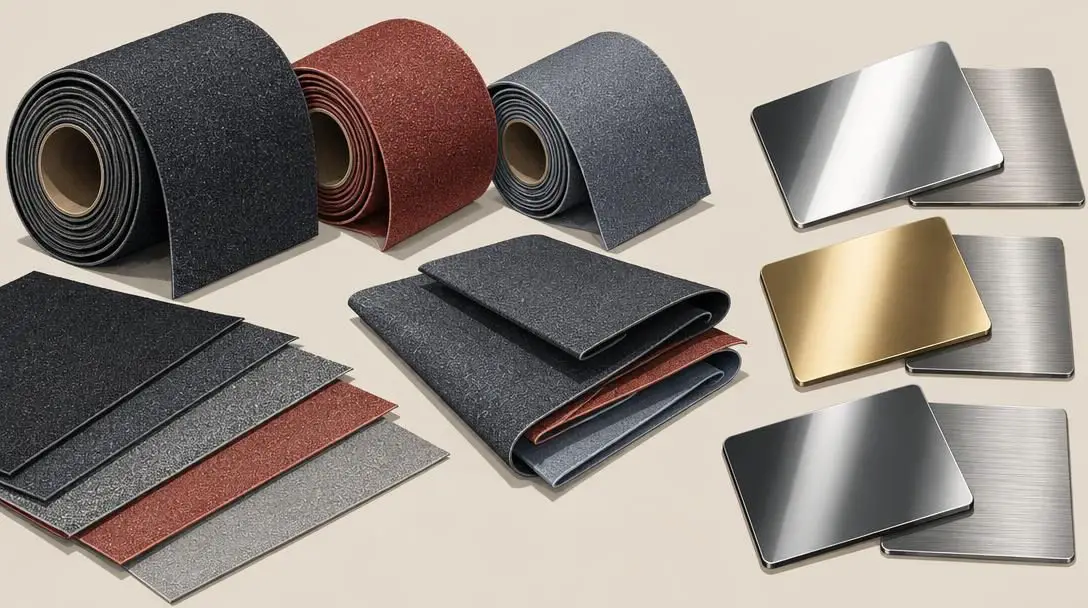
Surface refinement relies heavily on wet-and-dry sandpaper to smooth sharp cut edges, remove burrs, and erase unintended tool marks. Progressing sequentially through abrasive grits—from coarse sheets that cut away excess material to ultra-fine grits that polish the metal—prepares your piece for chemical coloring or a mirror-like mechanical buffing.
Non-Negotiable Workspace Safety Measures
Metalworking involves high-velocity debris, sharp edges, heavy striking tools, and extreme thermal energy. Establishing strict workshop protocols protects you from acute injuries and long-term health risks while keeping your focus centered on craftsmanship.
- Durable safety gloves: Handling sheared metal sheets, burred edges, and freshly cut wire poses a constant laceration risk. Sturdy gloves protect hands from sharp metal shards, sudden slivers, and abrasive friction during cutting and filing.
- Impact-resistant safety goggles: Flying metal fragments, snapping saw blades, and airborne abrasive dust from sanding can cause catastrophic eye damage in an instant. Quality eye protection shields your vision throughout cutting, hammering, and polishing.
- Well-ventilated workspace: Heating metal, soldering joints, welding frames, and applying chemical patinas release invisible fumes, vapors, and airborne particulates. Working under dedicated exhaust ventilation or in spaces with cross-flow air circulation prevents the inhalation of dangerous airborne toxins.
Core Materials for Handcrafted Metal Jewelry
Jewelry making offers an accessible entry point into metalworking because pieces are manageable in scale, require modest bench space, and teach foundational cutting and filing skills. The aesthetic personality and mechanical behavior of wearable art depend heavily on the raw metal you select.
| Metal | Visual Tone | Malleability and Workability | Primary Craft Applications |
|---|---|---|---|
| Silver | Bright, cool white luster | High malleability; accepts fine texturing and patinas readily | Fine rings, pendants, earrings, and gemstone settings |
| Gold | Warm yellow, rose, or white hues | Exceptional ductility; highly resistant to tarnish and oxidation | Heirloom jewelry, bespoke wedding bands, and high-value bezels |
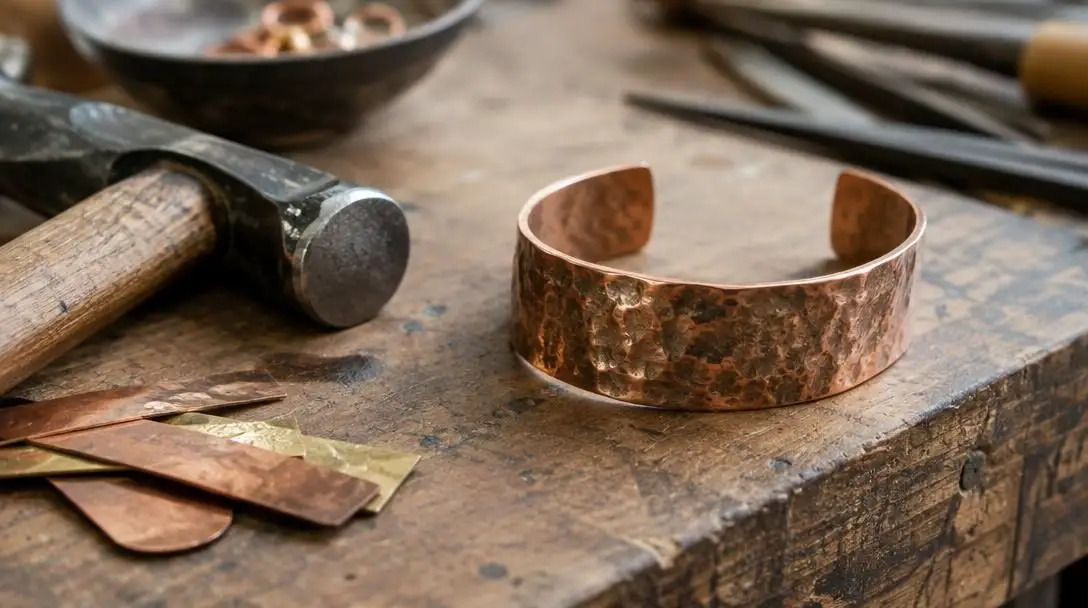
| Copper | Rich, warm reddish-brown | Very soft and forgiving; easy to hammer, dome, and fold | Practice blanks, wire jewelry, mixed-metal art, and heavy cuffs |
Silver
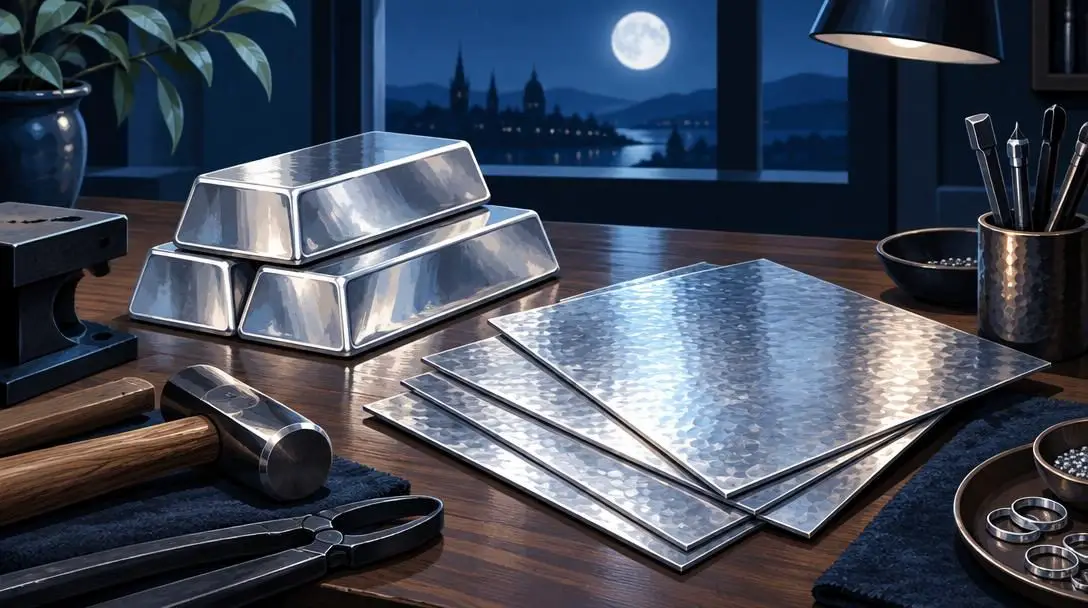
Renowned for its brilliance and timeless appeal, silver is a favorite among studio jewelers. It is soft enough to manipulate with hand tools, yet durable enough to withstand daily wear when fashioned into rings, earrings, and pendants. Silver takes surface textures beautifully and reacts cleanly with chemical oxidizers, allowing craftsmen to create high-contrast recessed accents alongside mirror-polished highlights.
Gold
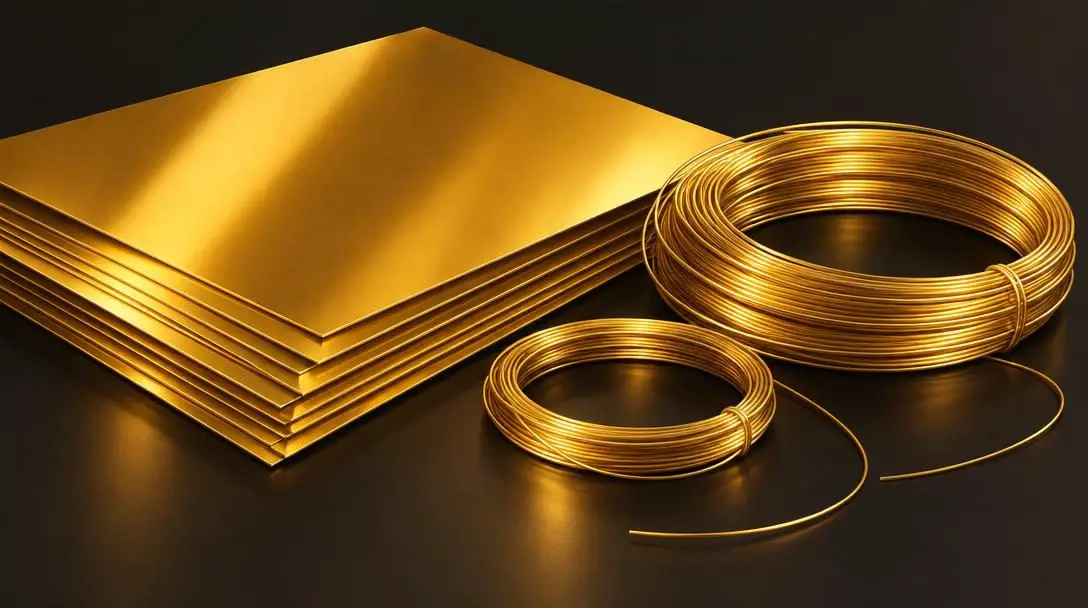
Prized for centuries for its warmth and rarity, gold offers unmatched working characteristics for high-end jewelry. It does not oxidize or tarnish under normal conditions, retaining its rich luster over generations. While more costly to work with, gold allows for razor-thin bezels, delicate wire structures, and exquisite stone settings that elevate wearable art into enduring family heirlooms.
Copper
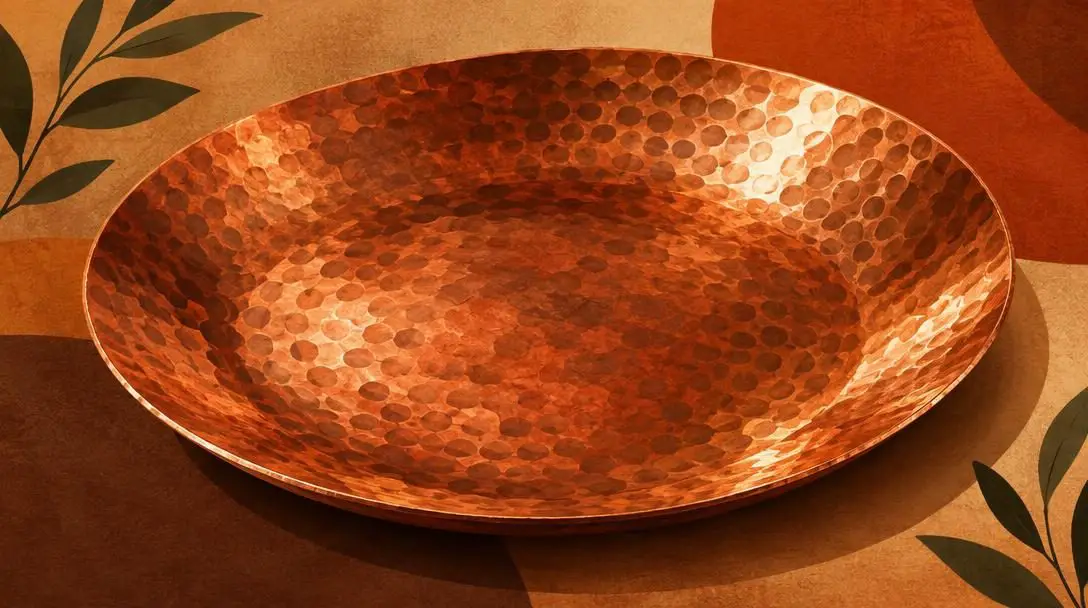
Warm, vibrant, and economical, copper is the premier medium for developing and honing metalworking skills. Because it is soft, malleable, and responsive to hammer strikes, copper allows beginners to practice complex cold-forging, chasing, and doming techniques without worrying about material costs. Beyond its educational utility, copper develops a deep, organic warmth that pairs gorgeously with rough gemstones and wire-wrapped designs.
Once you select and cut your metal sheet, you can fold the blank, carve delicate patterns using chisels, or add mounts, bezels, and wire settings to secure genuine gemstones, transforming basic metal into customized wearable art.
Sculptures and Three-Dimensional Metalwork
When you step beyond the miniature scale of jewelry, metal sculpture provides an expansive canvas for creative expression. Sculptural work frees the artist from structural size limitations, allowing raw metal sheets to be shaped into dynamic curves, abstract figures, and architectural silhouettes inspired by nature, wildlife, or mechanical structures.
Creating three-dimensional forms begins by cutting sheet components into geometric or organic outlines. Using heavy forming hammers, shaping stakes, and wooden doming blocks, the metal is repeatedly struck and stretched into compound curves. Connecting these contoured panels into rigid, self-supporting forms requires robust joining methods that fuse separate components together permanently.
Welding harnesses intense thermal energy to bridge separate metal elements into an indivisible, permanent structural bond.
MIG Welding
Metal Inert Gas (MIG) welding uses a continuous wire feed that acts as both an electrode and filler material under an inert shielding gas. MIG welding is exceptionally efficient for assembling structural armatures, joining thicker metal panels, and quickly tacking together foundational frameworks for freestanding outdoor or tabletop sculptures.
TIG Welding
Tungsten Inert Gas (TIG) welding uses a non-consumable tungsten electrode to produce an intensely focused electric arc. TIG welding gives artisans pinpoint control over the weld pool, making it the ideal choice for fine, detailed sculptures where clean, miniature joints and minimal surface spatter are required to preserve delicate design features.
Advanced Surface Finishing and Duplication
Beyond cutting and structural assembly, advanced decorative and manufacturing techniques elevate metal art into highly refined display pieces. These specialized processes allow artists to introduce rich antiqued colors and produce precise duplicates of their hand-carved originals.
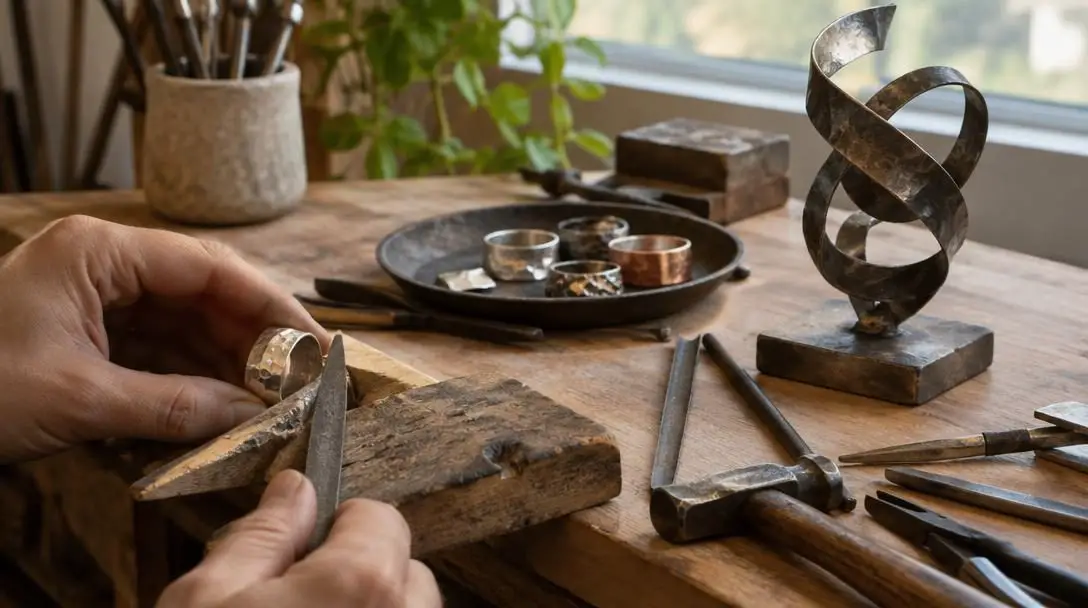
Patina Application
A patina application utilizes chemical reactions on the surface of metals like copper, bronze, and silver to alter how light reflects across the design. By applying specialized liquid solutions, artists produce earthy greens, deep velvety blacks, chocolate browns, or turquoise blooms across the metal. When lightly buffed with fine abrasive paper, the patina remains in the recessed hammer marks and chisel lines, creating striking visual depth and highlighting intricate textures.
Metal Casting
Unlike fabrication, which builds objects by cutting and assembling rigid sheets, metal casting begins with molten liquid metal. The craftsperson creates an original model in wax or clay, builds a refractory mold around it, and pours hot liquid alloy into the void. Once the metal solidifies and cools, the mold is broken open to reveal a precise metallic duplicate that requires only final cleanup, deburring, and surface polishing.
Step-by-Step Practical Workflow for Beginners
Approaching a metal project with an organized, methodical sequence preserves materials, avoids accidental errors, and ensures safe execution throughout the fabrication process.
- Design and layout: Sketch your intended design on paper with precise dimensional measurements. Scribe the layout directly onto the surface of your metal sheet using a steel marking tool or transfer template.
- Safety check: Clear the workbench of clutter. Put on your protective safety goggles and heavy gloves, and inspect your exhaust systems to verify adequate ventilation.
- Cutting the stock: Secure your metal sheet and carefully cut out your primary silhouettes using metal shears, a jeweler's piercing saw, or cold chisels, adhering strictly to your scribed layout lines.
- Forming and manipulation: Rest the cut shapes on an anvil or wooden shaping block. Strike the metal with texturing and forming hammers to achieve desired domed curves, and score decorative patterns into the surface with chisels.
- Joining components: Secure separate structural elements together using mechanical fasteners, silver soldering torches for jewelry, or TIG and MIG welding for larger sculptural assemblies.
- Surface refinement: Smooth sharp edges, remove tool marks, and level solder seams by working sequentially through coarse, medium, and fine grits of sandpaper.
- Finishing touches: Set your decorative gemstones, apply chemical patina solutions to emphasize recessed textures, and buff the exposed highlights to a soft satin or high-gloss shine.
Common Metalworking Pitfalls to Avoid
Mastering metalworking requires learning to anticipate how metal responds to stress, heat, and abrasive forces. Steering clear of these frequent oversights will protect your materials and keep your studio safe:
- Bypassing safety gear: Handling metal tools without goggles or gloves leaves your hands vulnerable to ragged burrs and exposes your eyes to high-speed shards from broken saw blades and grinding wheels.
- Ignoring workshop airflow: Soldering fluxes, heated metals, and chemical oxidizers emit hazardous gases. Working without dedicated ventilation risks dangerous respiratory irritation and toxic exposure.
- Rushing surface preparation: Skipping sandpaper grits or neglecting sharp outer edges leaves finished jewelry uncomfortable to wear and gives sculptures an unrefined, sloppy presentation.
- Overworking and thinning stock: Striking sheet metal too aggressively with hard steel hammers can unintentionally pinch the metal, cause severe warping, or induce stress tears along the edges.
- Using makeshift casting gear: Pouring molten alloys without specialized crucibles, tongs, flasks, and protective aprons poses severe burn hazards and results in incomplete, flawed mold castings.
Turning Metal Craft into a Creative Business
For dedicated artisans, metalworking can readily evolve from an engaging hobby into a profitable, fulfilling enterprise. Handcrafted metal jewelry and original metal sculptures possess an enduring appeal for collectors who value one-of-a-kind artistry over mass-produced goods.
Transitioning into a commercial business requires establishing an efficient, dedicated home studio. Having organized workbenches, reliable power supply feeds, secure sheet storage racks, and dedicated stations for welding or chemical work directly impacts how consistently you produce inventory. Reliable tooling saves precious hours on repetitive fabrication tasks, helping you scale production without sacrificing individual artistic quality.
Marketing your creations effectively demands a strategic pricing framework. When setting retail prices, account not only for the wholesale cost of raw materials—such as sterling silver, sheet copper, casting grains, and gemstones—but also for your direct labor hours, studio overhead, and equipment depreciation. Communicating the handmade nature of your work through high-quality photography and detailed descriptions at craft markets or online platforms reinforces the value of your artistic process to discerning buyers.
Frequently asked questions
Which metal is best for an absolute beginner to practice with?
Copper is widely regarded as the best metal for beginners. It is inexpensive, soft enough to shape and dome easily with hand hammers, accepts surface texturing well, and allows you to build mechanical confidence before investing in precious metals like silver or gold.
What is the main difference between MIG and TIG welding for sculptures?
MIG welding uses a continuously fed wire electrode and is ideal for quickly joining thicker panels and assembling structural steel armatures. TIG welding utilizes a stable tungsten electrode that produces very precise, spatter-free joints, making it better suited for delicate, detailed artistic assemblies.
Why is workspace ventilation so critical when working with metal?
Ventilation prevents the buildup of dangerous fumes and fine airborne particulates created during torch heating, brazing, welding, casting molten metals, and applying chemical patina treatments.
How does a chemical patina change the appearance of metal art?
A chemical patina reacts with the exterior surface of metals like copper, bronze, or silver to alter how light reflects, producing rich shades of black, brown, or green. When recessed areas retain the patina while raised highlights are polished, it enhances visual depth and surface texture.
Can you duplicate an original sculpture without hand-hammering each piece?
Yes, through metal casting you can replicate three-dimensional pieces. By creating a mold around an initial model and pouring in molten metal, you can produce exact duplicates that cool and solidify into solid metal forms.
The bottom line
The art of metalworking remains one of the most rewarding creative disciplines, fusing tactile physical labor with boundless artistic potential. By outfitting your workshop with foundational hand tools, observing rigorous health and safety standards, and mastering basic cutting, forming, and finishing techniques, you can transform rigid industrial stock into expressive wearable jewelry and striking sculptures. With patience, steady practice, and creative curiosity, working with metal provides a lifetime of craftsmanship and artistic growth.