The Best Crossword Puzzle Books for Beginners, Intermediate, and Advanced Solvers
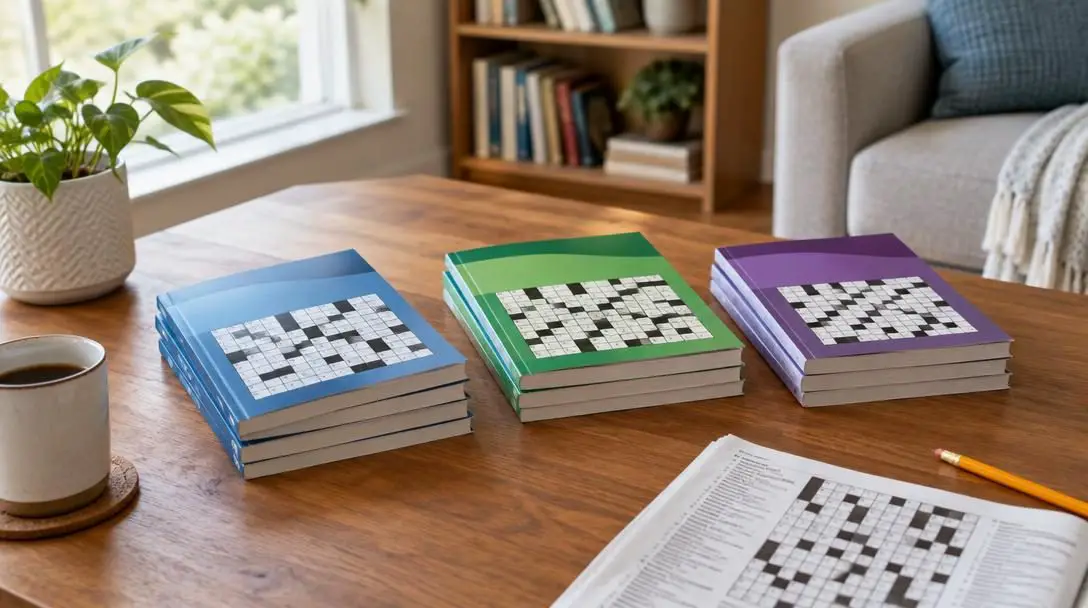
For generations, crossword puzzles have served as a cherished staple of daily newspapers, morning routines, and leisurely afternoons. Beyond simply passing the time, these word games offer an engaging blend of linguistic wordplay, general trivia, and vocabulary building. Working through a physical grid provides a satisfying, tactile experience that digital apps rarely match, offering a dedicated screen-free escape that stimulates mental focus and helps maintain lifelong cognitive agility.
Because an improperly matched puzzle can quickly lead to boredom or acute frustration, matching your current solving ability with the right compilation is essential. Whether you are learning how clue abbreviations work or navigating the labyrinth of a Sunday omnibus, finding a collection with an appropriate difficulty curve ensures that the hobby remains motivating, rewarding, and fun.
Key takeaways
- Crossword puzzle collections are deliberately categorized by difficulty to support solvers at every stage of skill development.
- Beginners benefit most from early-week newspaper reprints and large-print formats that emphasize straightforward definitions over complex wordplay.
- Intermediate solvers can bridge the gap to advanced play by tackling weekday progression volumes and curated anthologies.
- Advanced players require expansive Sunday grids, late-week pun-laden clues, and dedicated crossword reference dictionaries.
- Consistent solving relies on grammatical rules, anchor letters, and a willingness to rethink tentative entries.
Crossword puzzle book collections at a glance
Selecting the right volume depends heavily on your comfort with wordplay, your preferred grid size, and the level of challenge you want to tackle. The table below outlines top-rated puzzle collections across various skill levels.
| Book Title | Target Level | Puzzle Count / Length | Key Attribute |
|---|---|---|---|
| The New York Times Easy Crossword Puzzles | Beginner | Standard collection | Accessible early-week puzzles without obscure trivia |
| Simon & Schuster Mega Crossword Puzzle Book #1 | Beginner to Developing | Over 300 puzzles | Wide spectrum of difficulties in one massive book |
| The Everything Easy Large-Print Crosswords Book | Beginner | Standard collection | Enlarged grids and text that reduce visual fatigue |
| The New York Times Monday Through Friday Easy to Tough Crossword Puzzles | Intermediate | Weekday collection | Gradual day-by-day difficulty progression |
| Simon & Schuster Mega Crossword Puzzle Book #2 | Intermediate | Over 300 new puzzles | Substantial variety designed to build solving stamina |
| The New York Times Will Shortz Picks His Favorite Puzzles | Intermediate | 150 puzzles | Hand-selected grids featuring clever overarching themes |
| The New York Times Sunday Crossword Omnibus Volume 11 | Advanced | 200 Sunday puzzles | Expansive 21x21 grids with intricate themes |
| Simon & Schuster Mega Crossword Puzzle Book #5 | Advanced | Over 300 crosswords | Tough cluing and complex wordplay for experienced solvers |
| The Random House Webster’s Large Print Crossword Puzzle Dictionary | All Levels / Advanced Reference | Over 700 pages | Comprehensive reference tool for obscure definitions |
Top crossword puzzle books for beginners
Novice solvers need collections that build confidence rather than create barriers. Introductory books emphasize direct definitions, common vocabulary, and clear clue mechanics, providing a gentle learning curve.
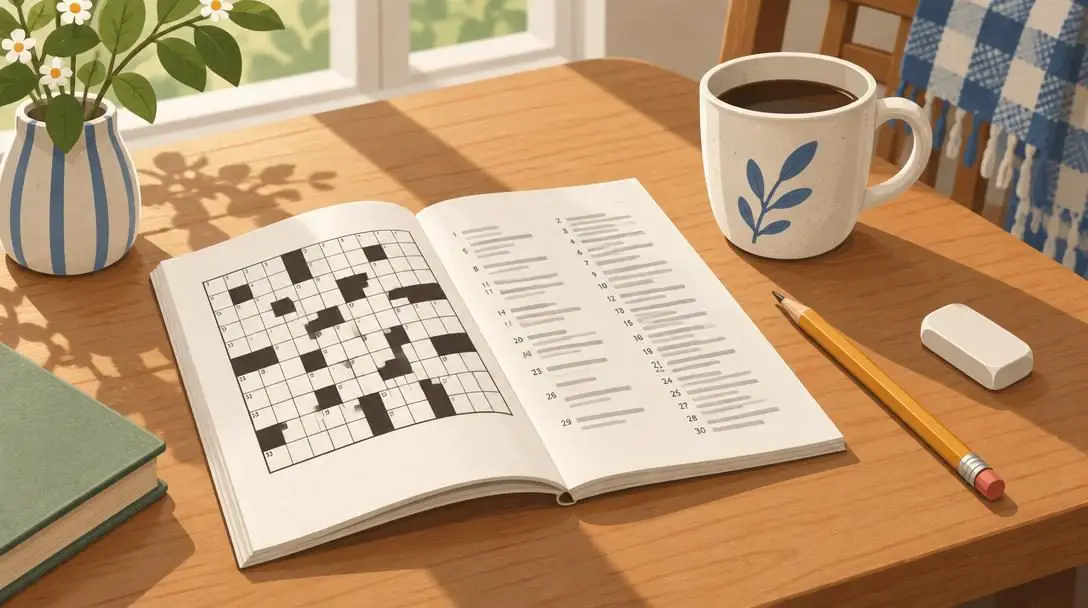
The New York Times Easy Crossword Puzzles
- Difficulty: Beginner
- Format: Paperback puzzle collection
- Focus: Accessible, straightforward early-week themes
For those taking their first steps into the crossword landscape, The New York Times Easy Crossword Puzzles serves as an ideal entry point. Early-week newspaper grids are known for their accessible vocabulary and literal definitions, avoiding the complex puns and deceptive double meanings found in later-week releases. This book allows newcomers to experience the prestige and polished construction of iconic newspaper puzzles without encountering obscure trivia that stops progress in its tracks.
Simon & Schuster Mega Crossword Puzzle Book #1
- Difficulty: Beginner to intermediate
- Puzzle Count: Over 300 puzzles
- Structure: Multi-tiered difficulty range
If you prefer an all-in-one volume that expands alongside your burgeoning abilities, Simon & Schuster Mega Crossword Puzzle Book #1 is an exceptional choice. Containing more than 300 distinct grids ranging from gentle to demanding, this thick omnibus invites new solvers to start on comfortable terrain. As your grasp of common crossword conventions solidifies, you can naturally test your skills on the tougher puzzles tucked deeper inside the volume.
The Everything Easy Large-Print Crosswords Book
- Difficulty: Beginner
- Format: Large-print paperback
- Key Benefit: Enhanced visual comfort and spacious grid squares
Visual fatigue can hinder an otherwise relaxing puzzle session, especially when wrestling with dense typography. The Everything Easy Large-Print Crosswords Book solves this issue by enlarging both the clue lists and the individual grid cells. Beginners benefit not only from gentle, definition-based clues, but also from having generous space inside each box to write clear capital letters and pencil in tentative solutions without crowding the page.
Top crossword puzzle books for intermediate solvers
Once you understand how standard themes operate and can fill early-week grids without assistance, intermediate volumes offer a natural step upward. These selections introduce more frequent misdirection, broader trivia categories, and nuanced wordplay.
The New York Times Monday Through Friday Easy to Tough Crossword Puzzles
- Difficulty: Progressive (Easy to Tough)
- Grid Progression: Monday through Friday weekday formats
- Core Appeal: Structured, incremental difficulty scaling
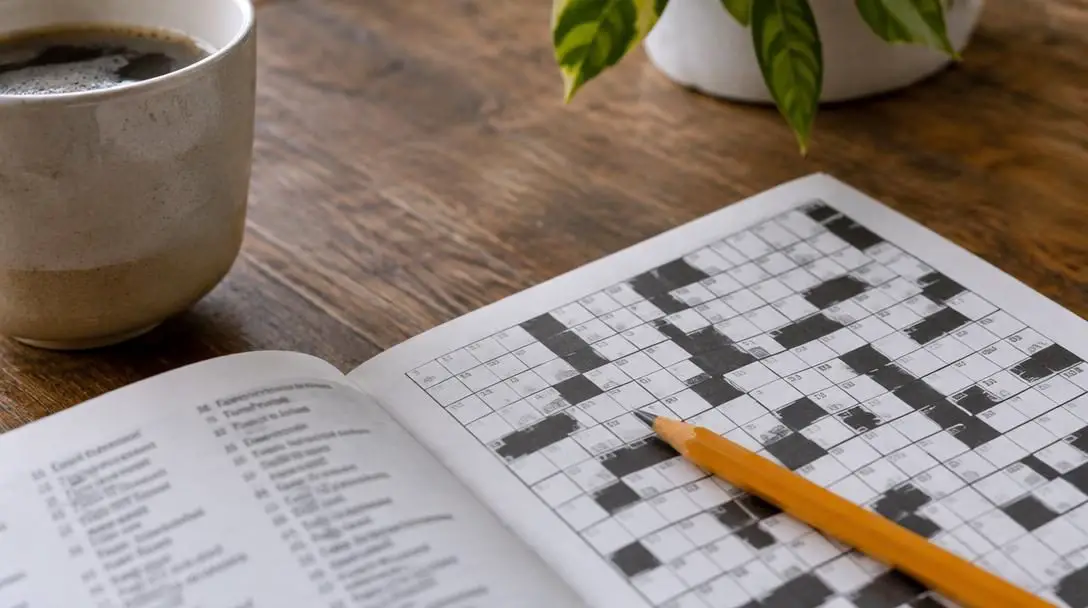
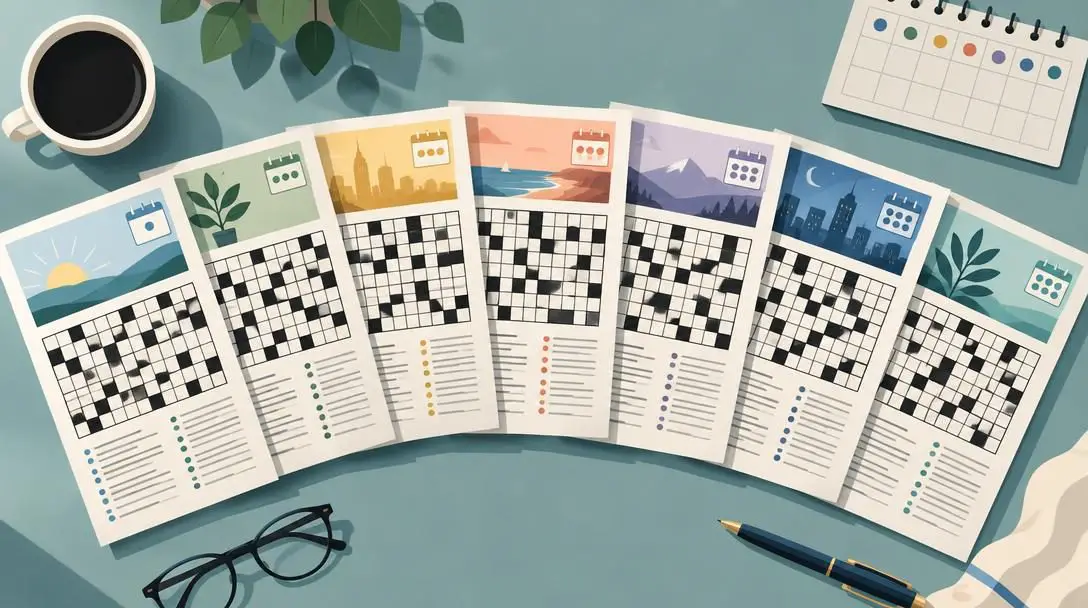
The standard calendar week at major newspapers represents a gradual climb in difficulty, and The New York Times Monday Through Friday Easy to Tough Crossword Puzzles captures this progression perfectly. Solvers start with straightforward Monday puzzles before working through increasingly subtle clues that culminate in tough late-week wordplay. This progressive design makes it an effective instructional volume for players wanting to transition away from beginner status.
Simon & Schuster Mega Crossword Puzzle Book #2
- Difficulty: Intermediate
- Puzzle Count: Over 300 new puzzles
- Style: Diverse themed and unthemed challenges
Building on the popularity of its predecessor, the Simon & Schuster Mega Crossword Puzzle Book #2 supplies an entirely fresh batch of more than 300 grids. Tailored to keep intermediate puzzlers challenged without causing undue frustration, this volume presents a rich variety of grid structures and creative clue formulations that demand flexibility and a broader knowledge base.
The New York Times Will Shortz Picks His Favorite Puzzles
- Difficulty: Easy to challenging
- Puzzle Count: 150 puzzles
- Curator: Legendary editor Will Shortz
Hand-selected by renowned puzzle editor Will Shortz, The New York Times Will Shortz Picks His Favorite Puzzles features 150 grids chosen specifically for their memorable themes, witty construction, and clever wordplay. Because the difficulty spans from moderate to genuinely challenging, intermediate solvers will find plenty of opportunities to stretch their reasoning skills against inventive puzzle architecture.
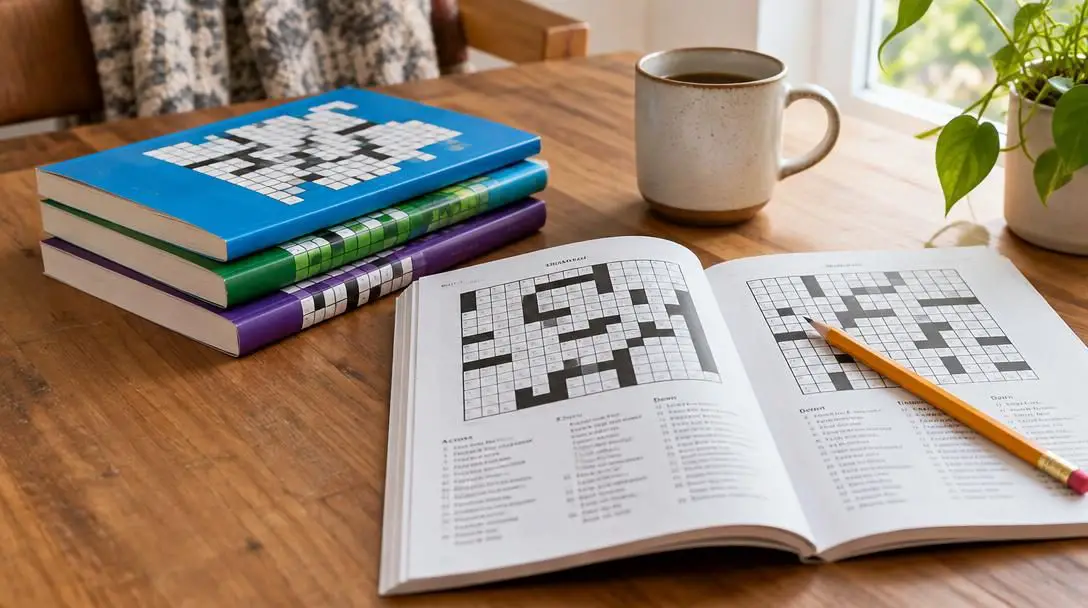
Working through a printed grid provides a tactile experience that digital apps cannot replicate, offering a dedicated screen-free activity that sharpens cognitive agility.
Top crossword puzzle books and reference tools for advanced solvers
Veteran enthusiasts require substantial grids, multi-layered misdirection, and expansive vocabulary challenges that push their deductive limits. These advanced collections deliver the rigorous mental workout experienced solvers seek.
The New York Times Sunday Crossword Omnibus Volume 11
- Difficulty: Advanced
- Puzzle Count: 200 Sunday crosswords
- Format: Large 21x21 grid dimensions
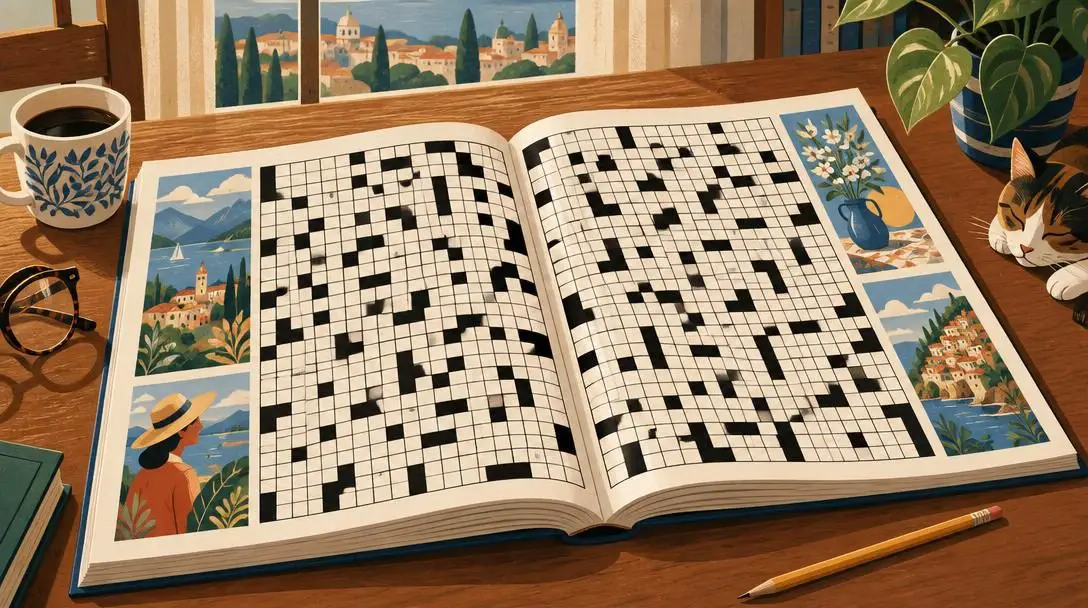
Sunday puzzles are the gold standard for many dedicated solvers, celebrated for their oversized grids and intricate overarching themes. The New York Times Sunday Crossword Omnibus Volume 11 packs 200 of these sprawling challenges into a single book. Navigating these vast playing fields requires patience, extensive general knowledge, and an ability to unravel complex puns that stretch across multiple interconnected entries.
Simon & Schuster Mega Crossword Puzzle Book #5
- Difficulty: Expert / Advanced
- Puzzle Count: Over 300 challenging crosswords
- Audience: Veteran solvers seeking deep complexity
Designed strictly for players who find typical collections too simplistic, Simon & Schuster Mega Crossword Puzzle Book #5 brings together over 300 intricate puzzles. Packed with misleading clues, complex theme entries, and high-level vocabulary, this volume offers enough high-difficulty material to keep seasoned enthusiasts occupied across months of dedicated solving.
The Random House Webster’s Large Print Crossword Puzzle Dictionary
- Difficulty: Comprehensive reference for all levels
- Length: Over 700 pages
- Special Feature: Large-print reference formatting
Even expert solvers occasionally hit an impasse when confronted with an unusual proper noun or rare archaic term. The Random House Webster’s Large Print Crossword Puzzle Dictionary spans more than 700 pages of curated clue-and-answer pairings. Organized to assist with rapid lookups, it serves as an indispensable desk companion when untangling the most demanding corners of an advanced grid.
How crossword books and grid difficulties work
Understanding how editors build and organize puzzle volumes makes it much easier to select a title suited to your skills. Crossword difficulty is rarely arbitrary; it follows established conventions developed over decades of syndication.
In standard newspaper syndication, difficulty correlates directly with the day of the week. Monday puzzles present straightforward, definition-style clues with minimal ambiguity. As the week advances toward Friday and Saturday, clues lean heavily on figurative language, homophones, double meanings, and cultural trivia. Saturday grids are frequently "themeless," requiring solvers to complete dense blocks of intersecting letters without the guiding aid of a central riddle or phrase.
Sunday puzzles balance broad accessibility with massive scale. While their clue difficulty usually aligns with a midweek challenge, their physical dimensions expand from the traditional 15x15 grid to a much larger 21x21 playing field. Omnibus editions gather hundreds of these past newspaper publications into unified volumes, including complete answer keys in the back so solvers can verify questionable letters or unpack confusing themes.
Essential strategies to sharpen your solving skills
A systematic methodology helps solvers finish more grids with fewer errors. Relying purely on inspiration often leads to dead ends, whereas structured problem-solving keeps your pencil moving forward.
- Complete the obvious entries first: Read through the entire list of Across and Down clues to identify immediate answers. Filling in these definite solutions provides a framework of crossing letters.
- Work outward from your intersections: Instead of jumping randomly across the board, focus on clues that intersect with words you have already entered. Having even one or two letters confirmed significantly narrows down possibilities.
- Analyze grammatical agreement: A fundamental rule of crossword construction dictates that the clue and answer must match in tense, voice, and plurality. Past-tense clues yield past-tense verbs, while plural clues almost invariably end in an "S" or "ES."
- Decode clue indicators and punctuation: Clues ending with a question mark signal that wordplay, puns, or non-literal meanings are in play. Similarly, an abbreviation inside the clue signals that the required answer is also an abbreviation.
- Select appropriate writing tools: Solvers working on intermediate or advanced grids should generally use a sharp pencil and a quality eraser. Being able to wipe away an incorrect deduction preserves the cleanliness of your grid.
- Consult reference guides when stuck: When progress halts entirely, consult an authoritative puzzle dictionary. Checking an obscure reference entry prevents burnout and teaches you recurring terminology for future puzzles.
Common solving mistakes to avoid
Solvers at every tier of experience can develop habits that slow their progress. Recognizing these common errors will make your practice far more efficient.
- Fixating on a single stubborn corner: Spending fifteen minutes trying to decipher one four-letter word drains mental energy. If an area refuses to yield, shift your attention to an entirely different quadrant and return later with fresh eyes.
- Ignoring construction conventions: Overlooking subtle signals like brackets, abbreviations, or tense markers leads to miscounted letters and incorrect entries that derail surrounding answers.
- Clinging to an unverified guess: It is easy to grow attached to an imaginative answer, but if multiple crossing clues become impossible to resolve, the original entry is likely incorrect. Clear the space and reconsider the clues.
- Skipping difficulty tiers too quickly: Diving directly into an advanced Sunday omnibus before mastering early-week conventions often leads to frustration. Gradual progression produces better long-term solving speed and pattern recognition.
Frequently asked questions
Why do crossword clues end with a question mark?
A question mark at the end of a crossword clue indicates wordplay, humorous intent, or a pun rather than a straightforward literal definition. When you see this punctuation, look for double meanings, idioms, or deceptive wording.
How do I know if an answer should be abbreviated?
If a crossword clue includes an abbreviation, acronym, or shortened word (such as "Apt." or "Govt."), the corresponding answer in the grid will almost always be an abbreviation or acronym of matching length.
Are Sunday crossword puzzles the hardest ones to solve?
Not necessarily. While Sunday puzzles feature the largest physical grids and complex overarching themes, their clue difficulty is generally comparable to a Wednesday or Thursday puzzle. Late-week puzzles, particularly Friday and Saturday themeless grids, typically feature much more difficult cluing.
Is it considered cheating to use a crossword puzzle dictionary?
Using a crossword dictionary is a recognized learning tool, especially for beginners and intermediate solvers encountering unfamiliar cultural references or archaic terminology. Looking up a troublesome clue expands your mental vocabulary bank for future grids.
Should I solve crosswords in pen or pencil?
While experienced solvers sometimes enjoy the finality of solving in pen, using a pencil with a reliable eraser is strongly recommended for intermediate and advanced puzzles where tentative guesses often need to be modified.
The bottom line
Crossword puzzle books remain one of the most practical, entertaining, and intellectually stimulating screen-free pastimes available today. By matching your book choice to your current experience level—starting with accessible large-print collections, progressing through weekday anthologies, and eventually mastering sprawling Sunday omnibuses—you can enjoy a continuous sense of accomplishment. Equipped with a pencil, an understanding of clue mechanics, and a reliable reference dictionary, you will be well prepared to tackle any grid you encounter.