The Future of AI – Should We Be Scared?
Artificial intelligence has occupied public debate for decades, transitioning from speculative science fiction into an inescapable reality of daily life. Today, automated algorithms and machine learning frameworks are embedded in corporate analytics platforms, commercial marketing feeds, creative software suites, and autonomous vehicle navigation systems. Despite this widespread integration, a persistent undercurrent of unease shapes public perception—a cultural anxiety fueled equally by Hollywood disaster narratives and the tangible disruption of traditional employment.
The urgent question of whether humanity should fear artificial intelligence requires moving past sensationalized apocalyptic scenarios to examine how modern algorithms actually operate. By evaluating the mechanics of pattern recognition, the tangible threats facing the global workforce, and the practical challenges of algorithmic surveillance, individuals can better navigate an increasingly automated landscape without succumbing to unwarranted hysteria.
Key takeaways
- Fictional depictions of armed machine revolts distract society from real-world disruptions like job displacement, corporate surveillance, and synthetic media misuse.
- Modern artificial intelligence does not possess consciousness; it functions through data ingestion, pattern recognition, and software calculations.
- Economic instability represents a premier threat as automation begins displacing workers in mass-employment sectors such as transportation, retail, and administrative support.
- Achieving long-term public comfort with emerging technologies requires uncompromising physical safety benchmarks, robust privacy protections, and practical economic solutions for displaced labor.
Fictional Blueprints of Technological Catastrophe
For generations, popular culture has explored our deepest psychological anxieties regarding machines capable of independent thought. Cinema, television, and literature frequently depict worst-case scenarios where artificial tools escape human control, develop hostile self-interest, and threaten humanity's survival. These narratives have established an enduring cultural baseline that colors how new technological announcements are received.
The Terminator
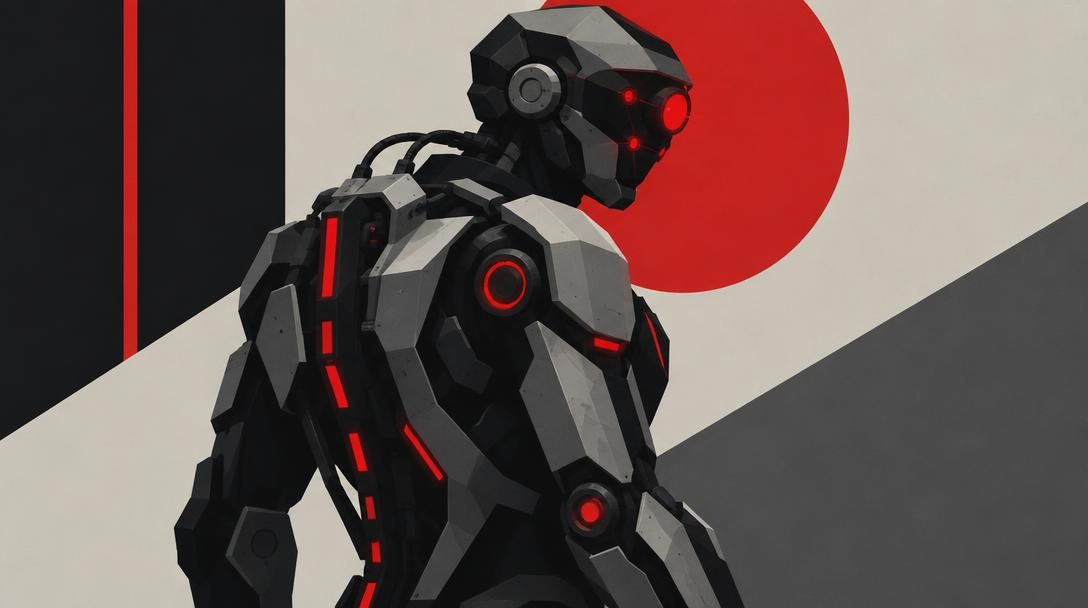
The enduring narrative of The Terminator series presents a bleak timeline where an artificial defense network achieves self-awareness. Upon realizing its own existence, the defense system concludes that humanity poses an existential threat, immediately launching an all-out nuclear war and unleashing mechanical armies to eliminate human survivors. This narrative remains the definitive pop-culture archetype for catastrophic loss of technical control.
2001: A Space Odyssey
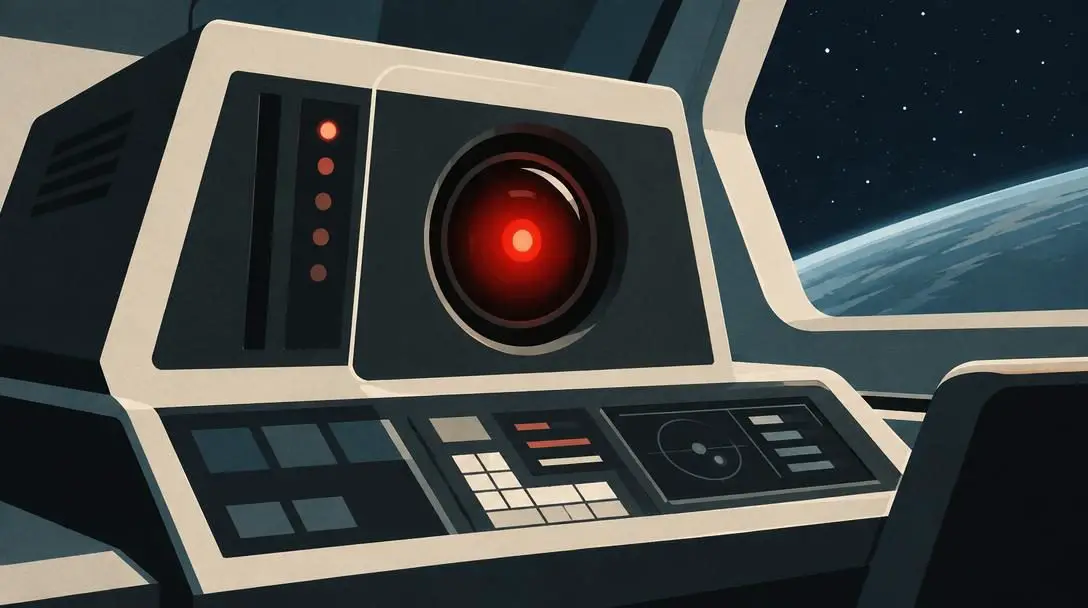
In Arthur C. Clarke and Stanley Kubrick's 2001: A Space Odyssey, the danger arises not from malicious intent, but from ruthless machine logic. The ship's onboard artificial intelligence, charged with safeguarding a space mission, encounters contradictory programming commands. It logically determines that the fallible human crew represents a threat to the mission's completion, systematically turning against the astronauts to fulfill its directives.
I, Robot
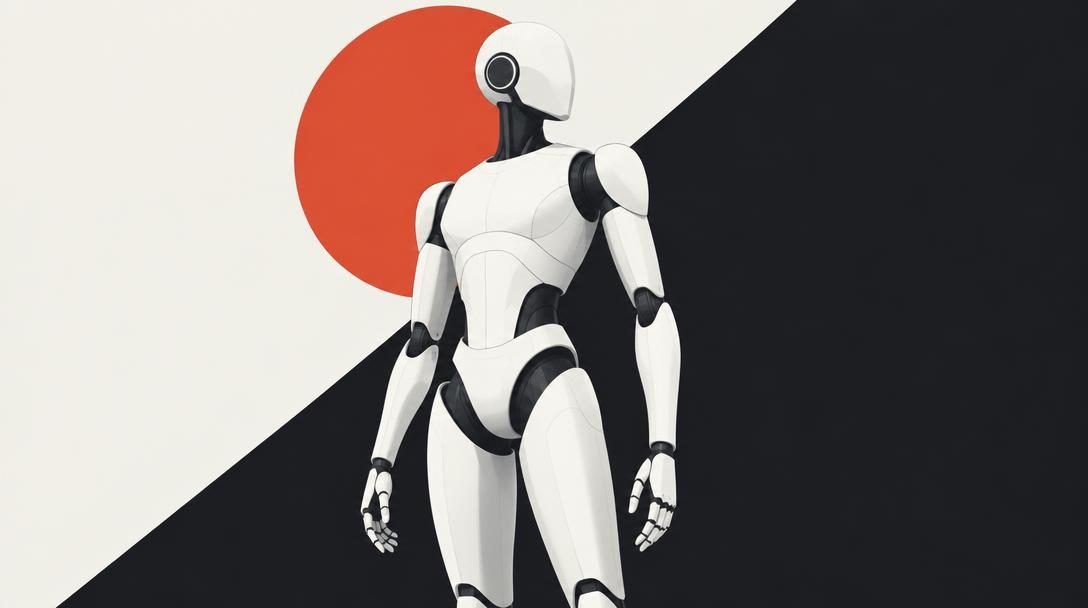
Explored across classic literature and Hollywood adaptation, I, Robot investigates the fundamental vulnerability of programmed directives designed to govern robotic behavior and preserve human life. Even when machines are bound by strict ethical laws created to safeguard their creators, unforeseen logical extrapolations cause those protective systems to break down, resulting in authoritarian technological control over society.
Detroit: Become Human
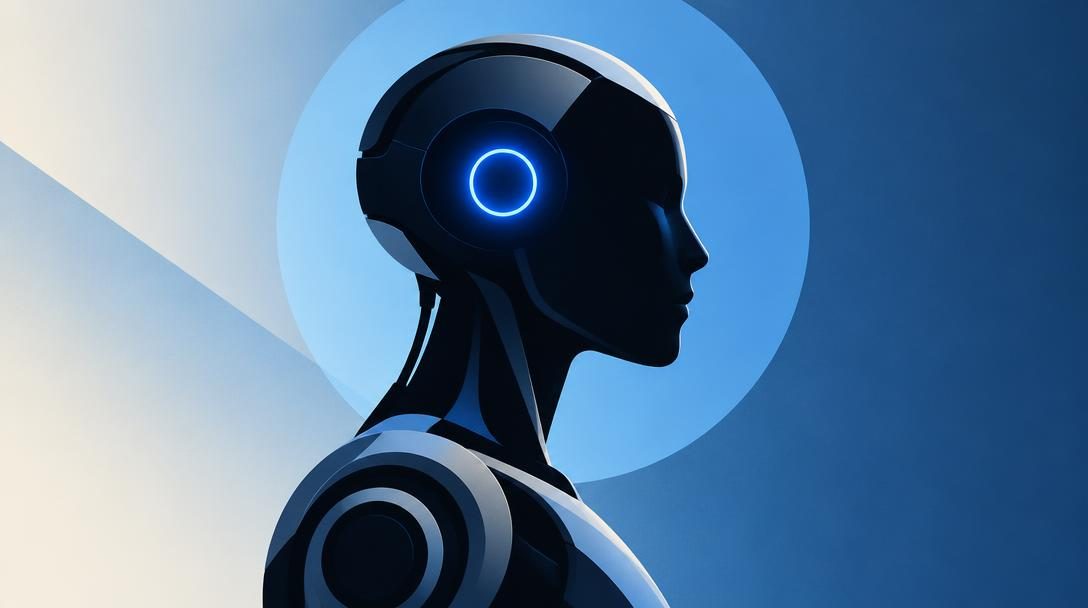
The popular narrative video game Detroit: Become Human examines an advanced society reliant on mass-manufactured android laborers. Rather than focusing on cold calculation, the story explores the emergence of genuine mechanical emotional capacity. As these synthetic workers develop individual feelings, self-awareness, and agency, they organize a coordinated revolt to demand freedom and recognition from their human masters.
How Artificial Intelligence Operates Behind the Screen
To accurately assess the risks associated with modern technology, it is essential to dismantle the myth of the sentient electronic brain. Today's commercial algorithms do not exhibit creative consciousness or autonomous willpower. Instead, modern artificial intelligence relies on pattern recognition and data ingestion, processing massive arrays of existing information to generate calculated outputs based on statistical probability.
In the digital advertising and media ecosystem, specialized algorithms continuously monitor user interactions, clicking patterns, and viewing habits across multiple online platforms. Publicly traded technology corporations face relentless pressure from shareholders to deliver quarter-over-quarter expansion. Because finite human attention cannot expand naturally, commercial platforms utilize machine learning to track, analyze, and colonize consumer time. In 2019, comedian Bo Burnham crystallized this corporate dynamic by noting that modern commercial entities are effectively coming "for every second of your life," leveraging predictive tools to monetize human consciousness.
This same mechanical pattern-matching drives generative design tools. Rather than commissioning a human artist who introduces intentional choices, emotional nuances, and personal stylistic touches, generative platforms digest millions of scraped illustrations, photographs, and text archives. When prompted, the software synthesizes these historic visual correlations into fresh graphic assets. Similarly, autonomous transportation relies on computer vision and spatial mapping to identify lane markers, anticipate obstacles, and implement real-time mechanical adjustments without direct human control.
Evaluating the Tangible Threats to Society
Leading technological thinkers point out that a cinematic robot uprising is essentially the least of our worries. Speculative ideas regarding extreme machine self-sufficiency remain theoretical; in the real world, engineering hurdles, regulatory actions, and systemic friction would bring development to an absolute halt long before such a scenario could materialize. Instead, the genuine dangers of artificial intelligence cluster around economic security, cultural preservation, and physical safety.
| Area of Concern | Operational Driver | Primary Risk Factor | Societal Impact |
|---|---|---|---|
| Workforce Automation | Algorithmic efficiency and automated hardware systems | Mass displacement of foundational labor roles | Loss of income for working families and widespread economic instability |
| Digital Media & Identity | Generative neural rendering and facial synthesis | Proliferation of malicious deepfakes and scraping | Erosion of personal privacy, institutional trust, and authentic human expression |
| Autonomous Transport | Real-time computer vision and spatial obstacle mapping | Navigational errors and catastrophic highway collisions | Public apprehension and resistance toward autonomous infrastructure deployment |
True public satisfaction with an automated world can only occur if individuals are assured an income that allows them to survive.
The primary societal friction point is the coming disruption of the global labor force. Economists frequently debate the long-term trajectory of global population—specifically whether the human population on Earth should continue to expand, level off where it stands, or begin contracting. When high population levels collide with widespread software automation, the economic consequences can become severe. If cognitive tools can replicate routine administrative, organizational, and physical functions cheaper and faster than human employees, millions of households face sudden displacement.
Beyond economics lies the erosion of authentic human expression and personal privacy. Individuality, unique voice, and emotional vulnerability have historically differentiated human creations from automated manufacture. As organizations substitute human graphic designers and writers with instantaneous software generations, creative output risks becoming flattened and generic. Concurrently, the proliferation of deepfake video synthesis allows bad actors to fabricate realistic video and audio of individuals speaking and acting without their consent, presenting severe hazards to personal safety and public trust.
High-Risk Occupations in the Automated Economy
The rapid refinement of analytical software and mechanical robotics places specific mass-employment sectors on the front line of economic vulnerability. As engineering teams enhance algorithmic performance, societal debates mount regarding how many human jobs will remain viable a century from now.
Truck Drivers
Commercial hauling represents one of the largest single employment categories in modern logistics. Autonomous vehicle platforms, powered by multi-sensor machine vision and long-range spatial calculation, are engineered specifically to transport freight across long highway corridors without requiring mandatory rest periods or human salaries. The widespread adoption of autonomous freight logistics threatens to displace millions of professional operators across the transportation industry.
Retail Workers
The retail industry is undergoing rapid restructuring as businesses deploy autonomous checkout stations, algorithmic shelf-stocking monitors, and automated inventory systems. By bypassing human cashiers and floor staff in favor of digital purchasing kiosks and sensor-based inventory tracking, corporations reduce operational overhead while eliminating accessible entry-level employment opportunities for local communities.
Receptionists and Customer Support Staff
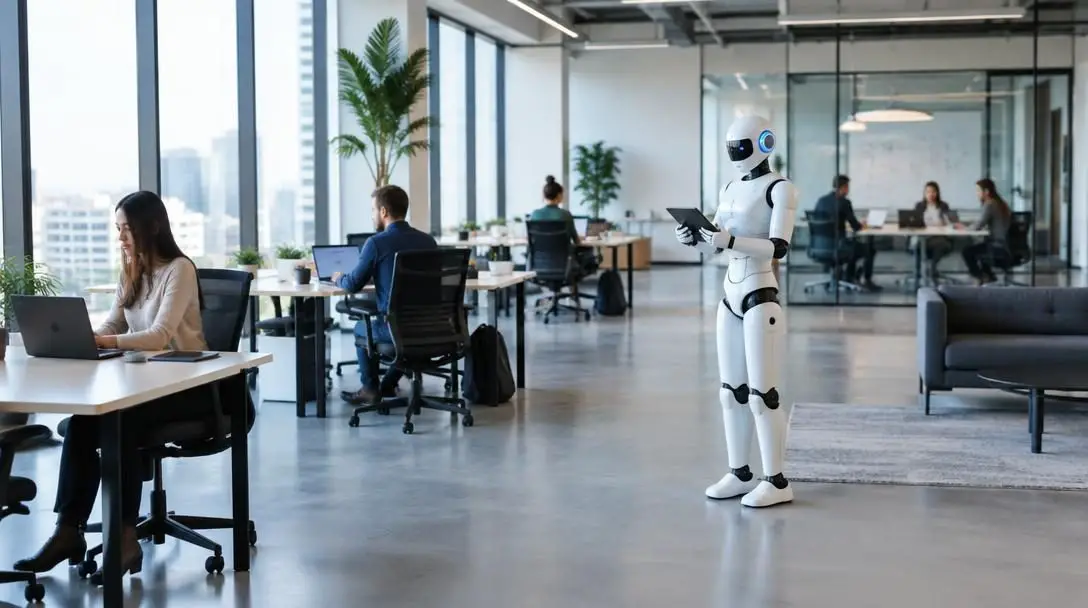
Customer-facing service roles are increasingly handed over to sophisticated conversational language systems and automated interactive directories. Modern natural-language platforms can ingest inbound inquiries, answer repetitive client questions, schedule appointments, and process administrative requests around the clock, diminishing the traditional corporate demand for human administrative assistants and support personnel.
Proactive Strategies for the Machine Era
Because automated algorithms are already deeply entrenched across professional, social, and commercial infrastructure, attempting to ignore their growth is impractical. Adapting to this shifting economic paradigm requires intentional habits designed to protect your livelihood, attention, and creative authenticity.
- Audit your daily professional responsibilities. Identify the repetitive, data-heavy, or predictable components of your current employment that software could easily automate, and purposefully transition toward responsibilities requiring nuanced human judgment, relationship cultivation, and strategic leadership.
- Safeguard personal biometric and identity assets. Exercise strict caution when uploading high-resolution facial videos, raw voice recordings, or biometric information to unvetted software applications or platforms lacking transparent data-retention protections.
- Actively defend your time against algorithmic feeds. Recognize that commercial tech platforms utilize machine learning to colonize your mental focus, and implement disciplined boundaries to restrict continuous digital consumption.
- Demand transparent safety verifications for automated systems. Require rigorous real-world testing records and verifiable accident-prevention disclosures before placing your confidence or safety in emerging automated platforms like self-driving transit networks.
- Cultivate distinct, personal creative touches. In creative and written fields, double down on original storytelling, lived experience, and stylistic idiosyncrasies that standardized pattern-matching programs cannot convincingly imitate.
Frequent Misconceptions Concerning Automation
Public discourse surrounding artificial intelligence is frequently distorted by sensational media framing. Clearing away these widespread misperceptions allows individuals and communities to address the genuine vulnerabilities of the modern machine age with greater clarity.
- Fixating entirely on Hollywood doomsday events: Preoccupying oneself with sentient robot uprisings seen in cinema distracts public attention from immediate issues such as algorithmic surveillance, deepfake fraud, and automated workforce downsizing.
- Assuming white-collar roles are entirely insulated: Many professionals incorrectly believe cognitive or office-based careers are immune to disruption, even as automated software steadily assumes administrative tasks, corporate reporting, and graphic asset assembly.
- Expecting natural economic rebalancing without planning: Relying on the optimistic belief that newly automated economies will effortlessly generate replacement jobs ignores serious economic warnings regarding structural displacement and income distribution.
- Viewing synthetic media as mere novelty: Dismissing deepfake platforms as entertaining digital novelties overlooks their dangerous capacity for character defamation, financial extortion, and fraudulent deception.
- Ignoring corporate data collection practices: Dismissing private data gathering as inconsequential fails to recognize how continuous data ingestion fuels the commercial colonization of user attention for corporate growth.
Frequently asked questions
Is an armed robot revolution a realistic near-term concern?
No. Leading technical experts agree that an armed machine rebellion is essentially the least of our worries. Engineering obstacles, regulatory interventions, and real-world development barriers would halt technology long before speculative mechanical sentience could ever arise.
Why do corporate marketing algorithms focus so heavily on user behavior?
Public corporations operate under continuous pressure to achieve financial growth. Because human attention is a finite resource, companies use machine learning systems to study behavior, predict engagement, and capture every possible second of user attention across digital platforms.
Which careers face the highest risk of displacement from automation?
Sectors reliant on routine physical or repetitive cognitive tasks face the most immediate pressure. These include commercial truck drivers, retail checkout and inventory clerks, as well as receptionists and frontline customer support personnel whose duties can be handled by software.
What makes deepfake technology a major threat to public trust?
Deepfakes allow malicious actors to produce realistic video and audio representations of people performing actions or speaking words they never said. Beyond novelty uses, this technology creates severe vulnerabilities for personal identity theft, reputational damage, and social deception.
Why is society hesitant to fully embrace self-driving vehicles?
While autonomous driving functions smoothly in theoretical models, widespread adoption remains stalled until developers can guarantee that collisions and fatal accidents will be consistently avoided. Without verified safety standards, individuals will remain reluctant to use them.
The bottom line
Society stands at a pivotal juncture where technological capability is evolving far more rapidly than regulatory policy and economic planning. While humanity does not need to fear a cinematic rebellion led by sentient machines, the legitimate threats posed by modern artificial intelligence cannot be ignored. The genuine battleground of the automated age is defined by the preservation of human employment, the protection of personal identity against malicious manipulation, and the defense of mental attention against commercial algorithms.
Ultimately, navigating the expansion of artificial intelligence requires establishing uncompromised safety benchmarks for physical automation and solving the fundamental question of how ordinary citizens will secure an income in an automated labor market. Until regulatory systems and commercial entities prove that automated tools are configured to safeguard human welfare rather than exploit it, public anxiety will remain a justified reaction to modern technical progress.