The Magic of Beirut – 5 Unique Attractions in This Amazing City
Nestled along the eastern shore of the Mediterranean Sea and framed by the dramatic rising peaks of the Lebanon Mountains, the Lebanese capital of Beirut stands as one of the world's most enduring and multifaceted urban centers. For millennia, this ancient metropolis has served as a pivotal crossroads connecting the Middle East with the wider Mediterranean basin and Europe. Its long narrative is stamped with the influence of Phoenician navigators, Roman administrators, medieval societies, and modern communities, all coexisting in a vibrant coastal environment.
Today, Beirut presents travelers with an astonishing architectural and cultural tapestry where antiquity and contemporary energy sit side by side. From seaside geological landmarks and peaceful university botanical grounds to grand religious structures standing shoulder to shoulder with ancient civic centers, the city reveals a rare urban depth. Exploring Beirut means navigating centuries of cultural survival and synthesis, encapsulated across five premier destinations that showcase the capital's distinct identity.
Key takeaways
- Beirut's unique geographic position between the Mediterranean Sea and the Lebanon Mountains forged its legacy as an international cultural gateway.
- The city's downtown landscape highlights religious and historical harmony, exemplified by the Mohammad Al-Amin Mosque resting beside Roman ruins and a Christian church.
- Academic and cultural institutions like the American University of Beirut and the National Museum preserve botanical sanctuaries and collections spanning 100,000 artifacts.
- Iconic natural wonders such as Raouche's Pigeon Rocks provide dramatic coastal views easily experienced by boat or from cliffside mainland cafés.
- Excavated Roman infrastructure continues to play an active civic role, hosting live musical concerts and artistic performances amid ancient stone baths.
At a glance: Five landmark destinations in Beirut
Each of Beirut's hallmark sights provides a distinct window into the capital's layered identity, ranging from geological monoliths carved by the sea to world-class repositories of antiquity.
| Attraction | Neighborhood / Setting | Primary Focus | Key Feature |
|---|---|---|---|
| Mohammad Al-Amin Mosque | Downtown Beirut | Post-modern Islamic architecture | 185-foot blue dome and 213-foot minarets |
| American University of Beirut | Coastal university campus | Education, botany, and archaeology | Botanical gardens, private beach, and on-site museum |
| National Museum of Beirut | Central municipal district | Lebanese antiquity and archaeology | 100,000 ancient and medieval regional artifacts |
| Raouche's Pigeon Rocks | Raouche coastline | Marine geological formations | Offshore monoliths viewable by speedboat or café |
| The Roman Baths | Downtown civic center | Classical archaeology and performance | Four-section bath complex with a Mediterranean garden |
A historic crossroads of Mediterranean civilizations
To fully grasp the character of Beirut's attractions, one must consider its unique position in world history. Bounded by the sea on the west and protected by high mountain ranges to the east, the city became a natural natural commercial hub and port. Phoenician traders launched maritime voyages from these shores, establishing trade routes across the Mediterranean. Centuries later, Roman builders transformed the settlement into an influential civic colony known as Berytus, constructing elaborate baths, public forums, and law centers.
As empires transitioned through the medieval and Ottoman periods toward modern statehood, Beirut continually adapted without erasing its earlier foundations. This geographic and historical layering remains visible in the streetscapes today. Travelers frequently encounter ancient archaeological digs situated mere steps from modern avenues, and historic houses of worship erected adjacent to classical forums, underscoring the resilience and pluralism of the Lebanese capital.
Centuries of coexisting communities and varying architectural traditions stand literally side by side, making Beirut an open-air testament to cultural synthesis.
Five unique attractions to explore in Beirut
Whether you are drawn to quiet botanical sanctuaries, dramatic natural sea arches, or ancient Phoenician relics, these five landmarks form the core of an enriching itinerary across the city.
Mohammad Al-Amin Mosque
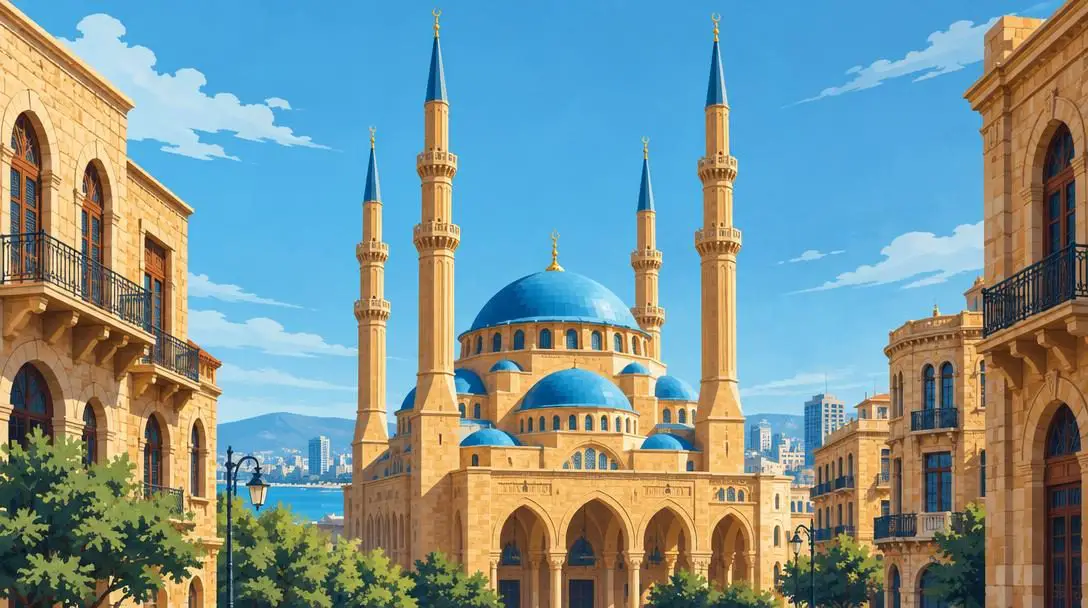
- Architecture: Post-modern Middle Eastern
- Dome Height: Approximately 185 feet
- Minaret Height: More than 213 feet
- Surroundings: Adjacent to Roman ruins and a Christian church
Widely celebrated as the Blue Masjid, the Mohammad Al-Amin Mosque is among the most recognized landmarks in the city's downtown skyline. The structure is distinguished by its massive central dome clad in vibrant blue, which ascends roughly 185 feet above the city streets. Soaring alongside this dome are majestic minarets that exceed 213 feet in height, balancing classical regional symmetry with post-modern Middle Eastern architectural execution.
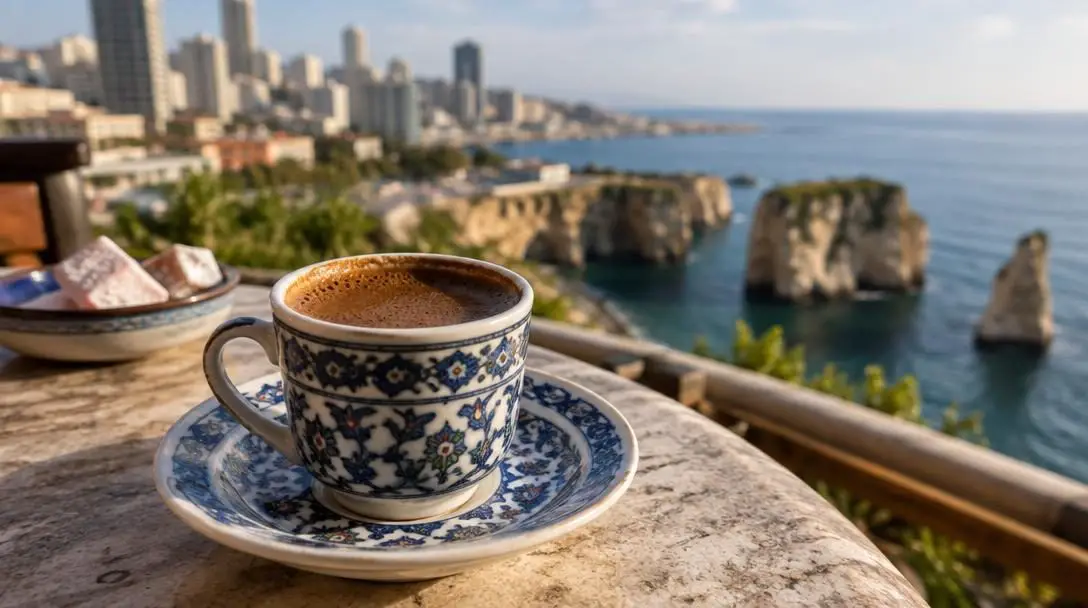
Beyond its striking visual geometry, the mosque serves as a profound symbol of Beirut's multi-confessional heritage. It stands directly beside a Christian church and immediately in front of excavated ancient Roman ruins. This physical coexistence provides an unmistakable visual demonstration of the religious diversity and civic endurance that characterizes the Lebanese capital.
The American University of Beirut (AUB)
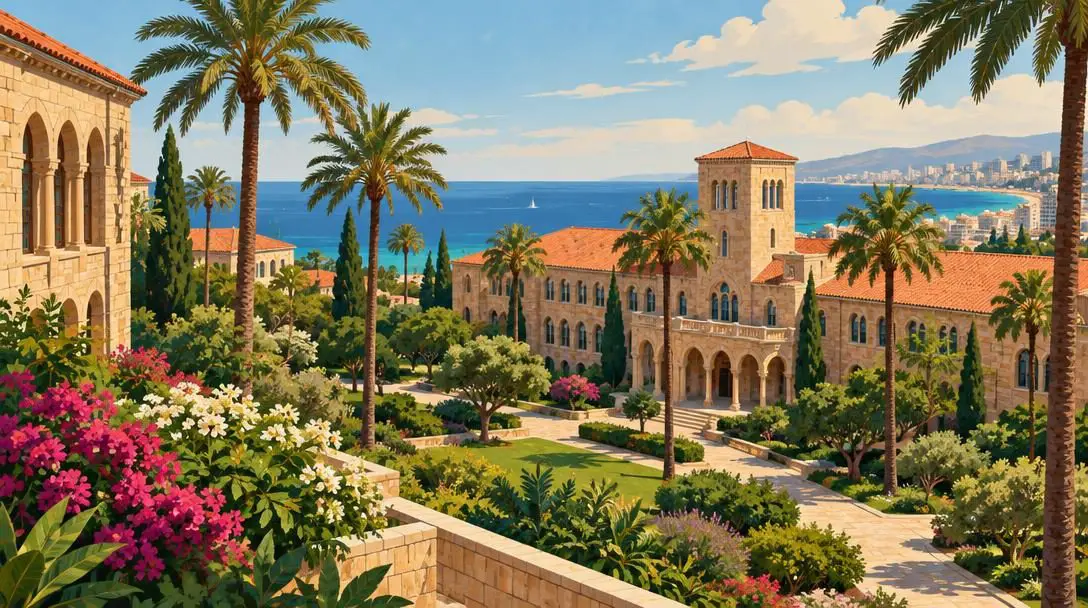
- Institution Type: Historic university campus
- Grounds Features: Botanical gardens, bird sanctuary, and private beach
- Flora Diversity: Hundreds of global tree species
- Cultural Facility: AUB Archaeological Museum open to the public
Recognized as Beirut's most prestigious center for higher learning, the American University of Beirut (AUB) is equally notable for its historic architecture and serene natural environment. Established as a sprawling urban oasis along the coastline, the campus offers a peaceful retreat from the fast-paced energy of surrounding commercial districts. Its meandering walkways wind through shaded pathways bordered by historic academic halls.
The campus functions as an ecological and scientific sanctuary, featuring comprehensive botanical gardens home to hundreds of tree species gathered from across the globe. Visitors can explore a tranquil bird sanctuary, relax along the university's private beach, or stop into the AUB Archaeological Museum. Open to the public throughout the week, the museum curates an immense collection of ancient artifacts, making the institution an intellectual and historic hub.
National Museum of Beirut
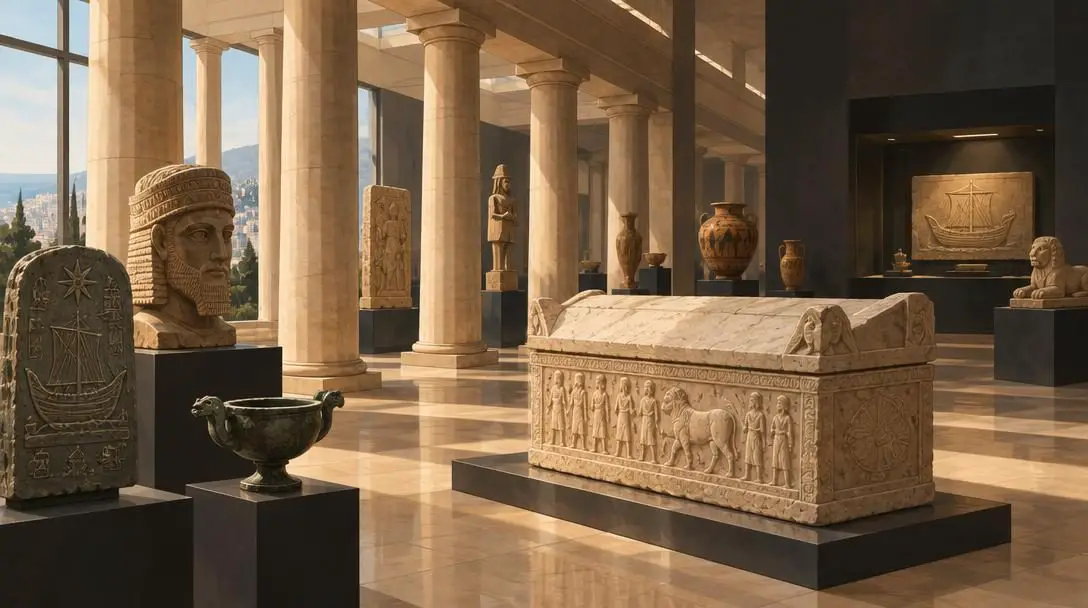
- Collection Size: 100,000 ancient and medieval artifacts
- Civilization Highlight: Ancient Phoenician artifacts
- Notable Artifact: Marble sarcophagus featuring a Phoenician ship
- Antiquity Treasure: Reshep bronze statue from the 19th century BC
For those seeking a comprehensive survey of the region's ancient past, the National Museum of Beirut is the nation's principal cultural institution. Housing an astounding collection of roughly 100,000 ancient and medieval artifacts, the museum traces human craftsmanship, commerce, and societal change across Lebanon from prehistoric times through classical antiquity and the Middle Ages.
The museum holds exceptional prominence for its ancient Phoenician relics, celebrating the seafaring culture that once defined the Lebanese coast. A centerpiece of the collection is an intricately carved marble sarcophagus bearing the sculpted likeness of a Phoenician ship. Another extraordinary treasure is an ancient bronze statue depicting the Phoenician god Reshep, which dates back to the 19th century BC, giving visitors direct access to the spiritual and material culture of the Bronze Age.
Raouche's Pigeon Rocks
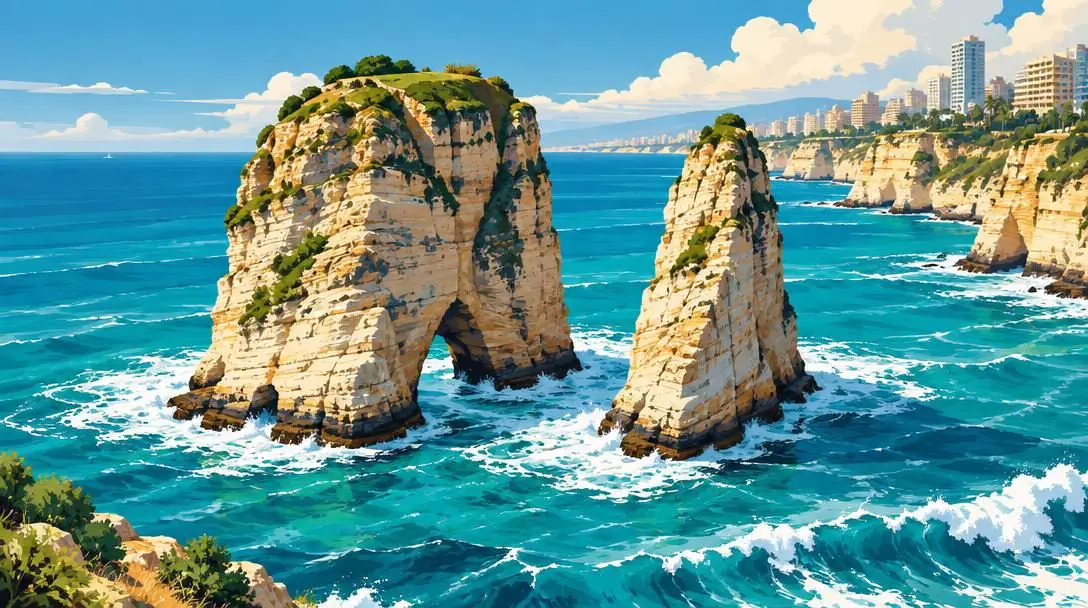
- Location: Off the coast of the Raouche neighborhood
- Formation: Offshore marine limestone monoliths
- Viewing Options: Mainland cafés or guided speedboat tours
- Atmosphere: Coastal landmark amidst crashing Mediterranean waves
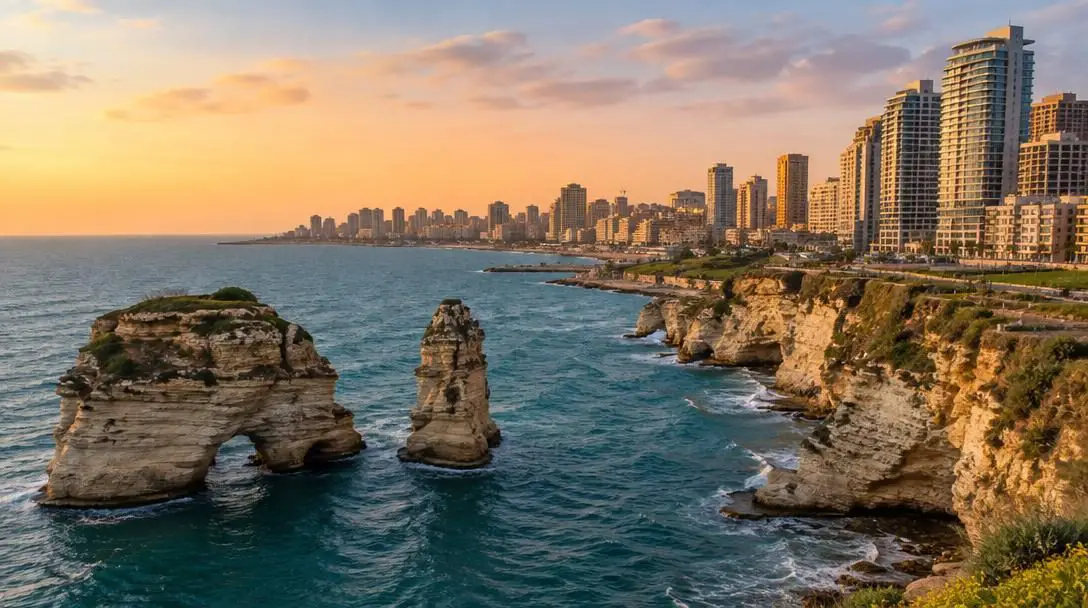
Standing as the premier natural landmark within Beirut's metropolitan borders, Pigeon Rocks consists of two towering geological monoliths rising directly out of the Mediterranean Sea. Situated off the coast of the energetic residential and commercial district of Raouche, these imposing rock arches have been sculpted over millennia by wind and crashing waves.
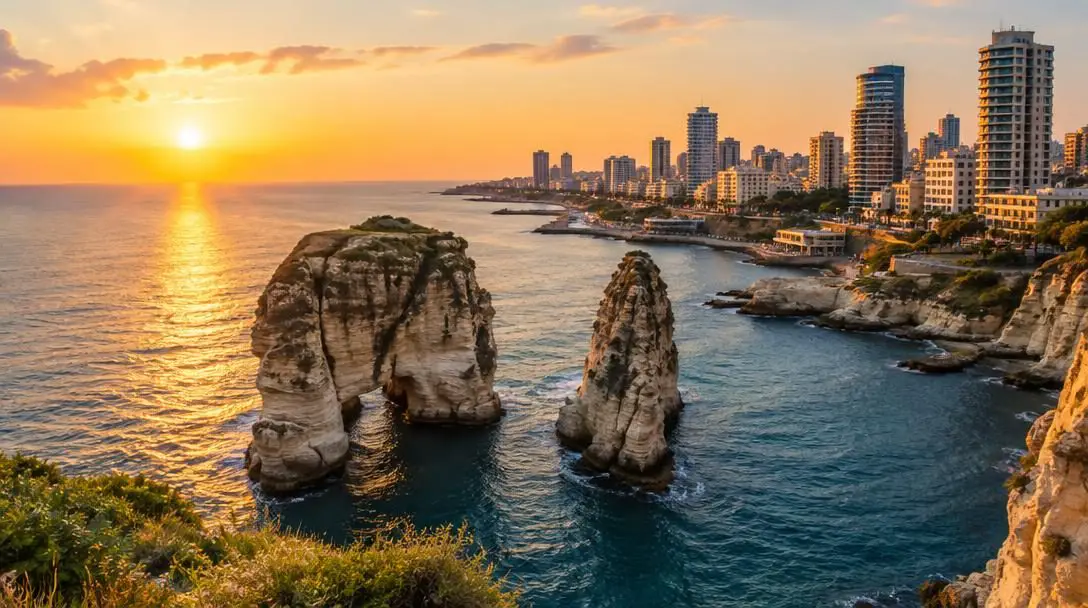
Visitors can appreciate the dramatic spectacle from multiple viewpoints along the coastal promenade. The surrounding cliff-top district offers numerous mainland cafés where guests can sit back with refreshments and take in the sea breeze while admiring the rocks from above. For a closer look at the rock textures and natural sea caverns, travelers can hire a speedboat at the shoreline to navigate right beside the formations.
The Roman Baths
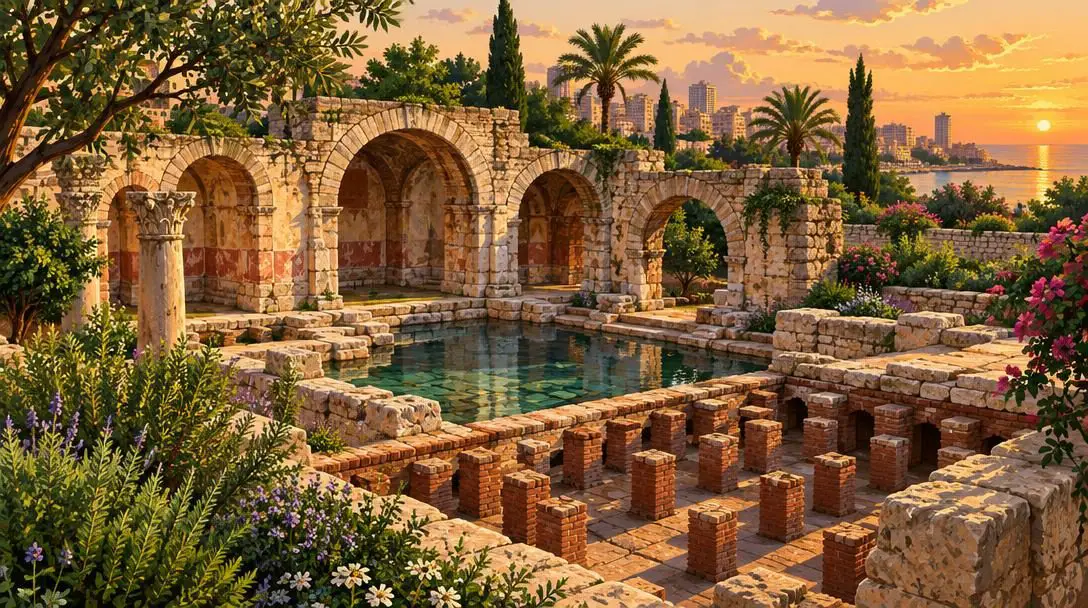
- Historical Identity: Ancient Roman Berytus thermal complex
- Layout: Excavated remains divided into four primary sections
- Modern Feature: World-class Mediterranean garden
- Cultural Usage: Regular venue for musical concerts and performances
Positioned right in the heart of downtown Beirut, the Roman Baths provide an extraordinary window into Roman Berytus during the heights of classical antiquity. The archaeological site features expansive excavated stone ruins that reveal the engineering prowess of ancient public bathing and underfloor heating systems. The entire bathhouse footprint is organized into four distinct sections, illustrating how ancient citizens socialized and maintained personal hygiene.
Rather than remaining a static relic, the site has been thoughtfully integrated into modern civic life. Surrounding the ancient stone pillars and vaults is a world-class Mediterranean garden filled with native flora. Furthermore, the historic complex regularly doubles as an open-air cultural venue, welcoming audiences for live musical concerts and artistic performances set directly against illuminated Roman stonework.
How to plan your Beirut itinerary
Because Beirut's primary landmarks are distributed across bustling downtown avenues, academic enclaves, and coastal promenades, coordinating your days thoughtfully will maximize your travel experience.
- Explore the downtown historical core together: Pair your visit to the Mohammad Al-Amin Mosque with the nearby Roman Baths. Strolling between these two sites allows you to view the 185-foot blue dome, adjacent Christian church architecture, and the ancient bathhouse ruins in a single walk.
- Budget dedicated hours for cultural collections: Plan your visits to the National Museum of Beirut and the AUB Archaeological Museum on separate days or half-day blocks. The National Museum requires several hours to view its 100,000 artifacts and Bronze Age treasures like the Reshep statue.
- Spend an afternoon on the AUB grounds: Allocate uninterrupted time to walk the pathways of the American University of Beirut. Stroll among the hundreds of tree species in the botanical gardens, visit the bird sanctuary, and wander along the private beach.
- Experience the Raouche coastline: Head to the Raouche neighborhood in the late afternoon. Choose between taking a leisurely seat at a cliffside mainland café to gaze at Pigeon Rocks or hiring a local speedboat to see the caverns from the Mediterranean water.
- Check for evening performances at the ruins: Review the local cultural schedule in downtown Beirut to see if your trip coincides with musical concerts or artistic performances staged inside the Roman Baths complex.
Mistakes to avoid when exploring Beirut
Visiting a city with thousands of years of layered development can be overwhelming. Keeping these common pitfalls in mind will keep your trip organized and respectful:
- Walking past downtown monuments too quickly: Do not just snap a photo of the Mohammad Al-Amin Mosque from afar. Take time to observe its placement directly next to a Christian church and ancient Roman ruins to appreciate the city's pluralistic history.
- Underestimating the depth of the National Museum: Treating the museum as a brief photo stop means overlooking singular world treasures, including the marble sarcophagus with its depiction of a Phoenician ship.
- Assuming AUB is closed to outside travelers: Many tourists mistakenly bypass the American University of Beirut thinking it is restricted solely to registered students, missing out on its public archaeological museum, botanical grounds, and private beach.
- Viewing Pigeon Rocks strictly from the roadside: Viewing the geological formations exclusively from the sidewalk overlooks the immersive experience of watching the sunset from a mainland café or exploring the stone caverns via speedboat.
- Missing the Roman Baths after sunset: Visiting the Roman ruins purely as a daytime archaeological site causes travelers to miss the atmospheric lighting and regular live musical concerts held within the Mediterranean garden setting.
Frequently asked questions
What architectural style defines the Mohammad Al-Amin Mosque?
The Mohammad Al-Amin Mosque is built in a post-modern Middle Eastern architectural style. It is recognized for its vibrant central blue dome that rises 185 feet and minarets extending more than 213 feet into the sky, sitting adjacent to a Christian church and ancient Roman ruins.
Can members of the public visit the American University of Beirut campus?
Yes. Beyond its student body, the American University of Beirut welcomes visitors to explore its extensive grounds, which include an open botanical garden with hundreds of global tree species, a tranquil bird sanctuary, a private beach, and the AUB Archaeological Museum, which is open to the public during the week.
What are the standout exhibits inside the National Museum of Beirut?
Among its collection of roughly 100,000 ancient and medieval artifacts, the National Museum features prominent Phoenician treasures. Standouts include a sculpted marble sarcophagus featuring a Phoenician ship and a historic bronze statue of the god Reshep that dates back to the 19th century BC.
How can visitors experience Raouche's Pigeon Rocks?
Visitors can view these offshore geological limestone monoliths from mainland cafés along the Raouche cliffside promenade or arrange a speedboat excursion on the water to examine the rock arches, caverns, and stone surfaces up close.
Are the Roman Baths in Beirut used for anything today?
In addition to serving as an excavated archaeological park illustrating ancient bathing and heating systems across four sections, the Roman Baths feature a world-class Mediterranean garden and regularly host musical concerts and artistic performances for the public.
The bottom line
Beirut remains one of the world's most compelling destinations precisely because it does not hide its past behind closed doors. The city invites travelers to step directly into its living history, where Roman thermal heating systems coexist with botanical gardens, and soaring minarets stand side by side with historic Christian sanctuaries. By balancing the urban energy of districts like Raouche with contemplative visits to the National Museum and peaceful walks along the Mediterranean coastline, visitors will discover an unforgettable crossroads where ancient heritage and modern spirit thrive together.