The Mars Face: Hoax, Coincidence, Or Sign Of Alien Life?
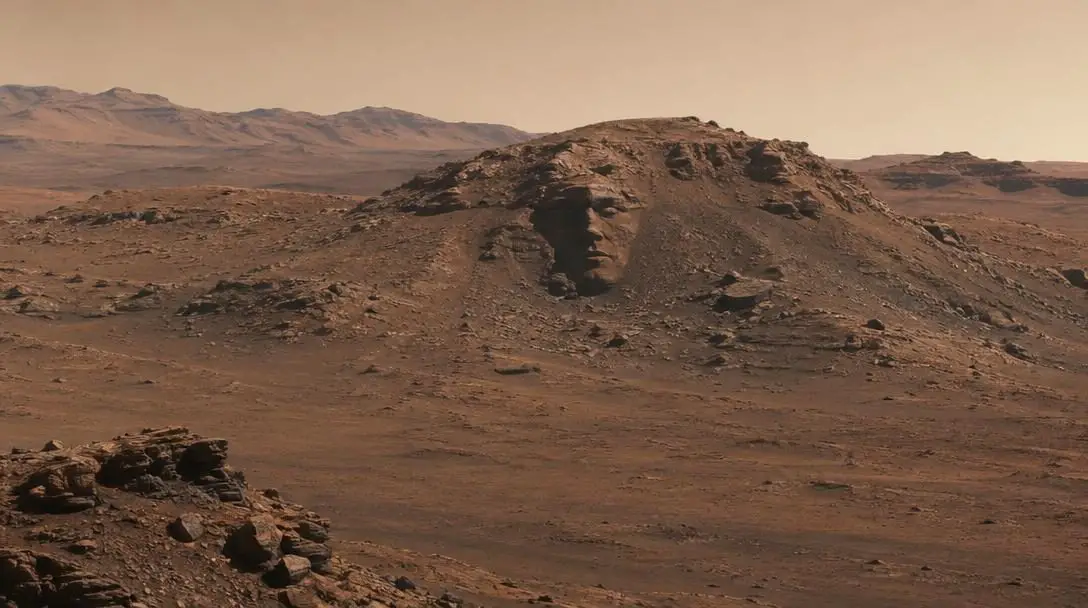
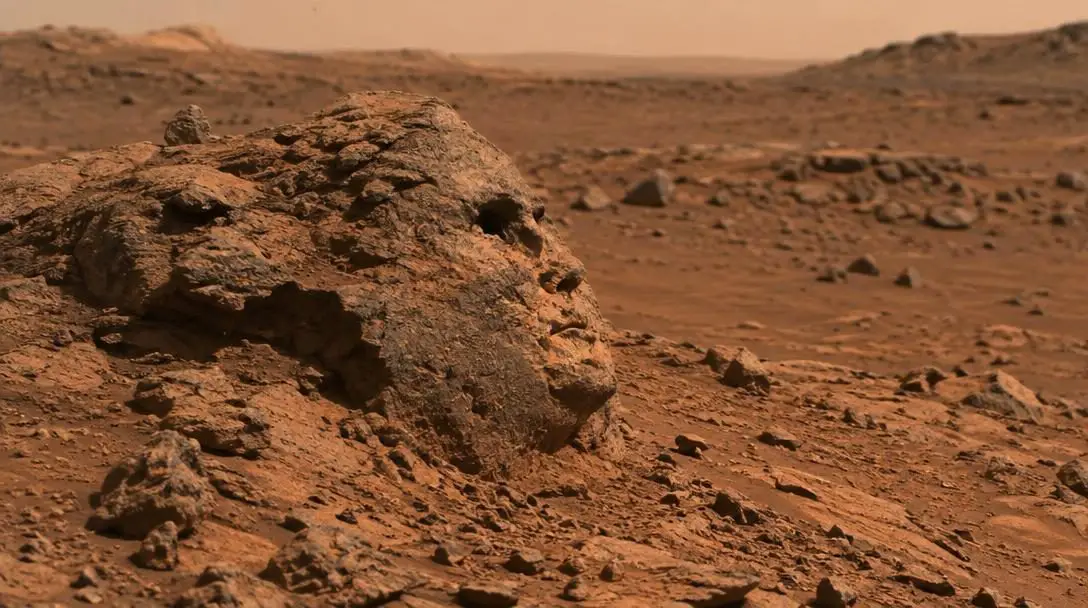
Because no human being has ever walked on Mars, an enduring aura of mystery surrounds the Red Planet. For decades, planetary scientists, aerospace researchers, and amateur stargazers have gazed across the interplanetary void with intense curiosity. Orbiting spacecraft have gradually mapped the Martian surface in remarkable detail, yet remote observation frequently challenges human perception, presenting ambiguous landscapes that defy initial expectations. Over the course of modern robotic exploration, odd shapes have sparked both wild speculation and serious scientific inquiry. Spacecraft cameras have captured everything from rock formations resembling sharp spikes to what looked like a carved doorway set directly into a mountainside, and even tangled landing debris mistaken for an exotic organism. Yet among all these planetary curiosities, none has captivated the public imagination quite like the celebrated Face on Mars discovered in the planet's northern plains. <div class="takeaways"> <h2>Key takeaways</h2> <ul> <li>The perceived humanoid face in the Cydonia region was an optical illusion created by low-resolution cameras and low-angle sunlight.</li> <li>NASA's Viking orbiters first captured the formation in the mid-1970s, but higher-resolution imagery in 1998 revealed it to be a heavily eroded natural mesa.</li> <li>Human pareidolia frequently causes observers to see familiar faces, animals, and architectural ruins in random planetary geology.</li> <li>Scientific missions on Mars are designed to look for basic microscopic organisms and geological history rather than monuments built by intelligent civilizations.</li> <li>Modern multi-angle orbital photography and three-dimensional ray tracing confirm the Cydonia mesa lacks facial symmetry when viewed from other perspectives.</li> </ul> </div> <h2>Curious surface anomalies and visual illusions on Mars</h2> <p>Remote cameras surveying Mars have documented thousands of unusual landforms. When viewed across millions of miles with varying image quality, natural erosion and artificial debris can easily be mistaken for biological life or intelligent architecture.</p> <h3>The Cydonia Mesa</h3> <ul class="facts"> <li><strong>Location:</strong> Northern Cydonia region of Mars</li> <li><strong>Initial observation:</strong> Viking 1 and Viking 2 orbiters in the mid-1970s</li> <li><strong>Follow-up survey:</strong> Mars Global Surveyor in 1998</li> <li><strong>Geological classification:</strong> Natural eroded mesa and rock plateau</li> </ul> <p>The Cydonia mesa remains the most famous geological anomaly on Mars. Rising from the northern plains, the rock formation captured international attention when 1976 photographs showed two apparent eye sockets, a distinct nose bridge, and an elongated horizontal mouth. Viewed under specific solar angles, the formation appeared uncannily symmetrical, convincing many observers that it was an artificial monument carved by extraterrestrial hands.</p> <h3>Spacecraft Crash Netting</h3> <p>In one notable instance of surface exploration, an image returned from the Martian soil appeared to depict a living organism or strange biological entity. Subsequent investigation revealed that the object was merely a piece of synthetic netting left behind from a previous spacecraft crash site. As human missions land probes and rovers across the planet, discarded thermal blankets, parachutes, and protective netting occasionally scatter across the terrain, creating man-made artifacts that can deceive remote observers.</p> <h3>The Mountain Doorway Formation</h3> <p>Another widely circulated visual oddity appeared in high-resolution rover photography as a clean, rectangular opening carved into a hillside, closely resembling a finished doorway. Planetary geologists demonstrated that the feature was a <strong>natural geological fracture</strong> produced by rock stress and wind shear. Fractures in stratified Martian bedrock often break along clean, straight planes, creating shapes that look deliberately engineered to terrestrial eyes.</p> <h3>Wind-Eroded Rock Spikes</h3> <p>Martian surface missions have periodically documented rock formations shaped into sharp, towering spikes. Unlike Earth, where liquid water and organic plant matter soften weathering processes, Mars experiences billions of years of dry wind erosion and cosmic bombardment. This environmental reality produces jagged, unnatural-looking spires, along with comical natural shapes that observers have compared to a bear's face and popular Sesame Street characters.</p> <table> <thead> <tr> <th>Martian Anomaly</th> <th>Observed Region or Site</th> <th>Initial Misinterpretation</th> <th>Verified Scientific Reality</th> </tr> </thead> <tbody> <tr> <td>Cydonia Mesa</td> <td>Northern Cydonia plains</td> <td>Sculpted humanoid monument</td> <td>Natural rock mesa shaped by lighting and shadows</td> </tr> <tr> <td>Crash Site Netting</td> <td>Martian surface / rover track</td> <td>Exotic surface organism</td> <td>Synthetic debris from an earlier spacecraft crash</td> </tr> <tr> <td>Mountain "Doorway"</td> <td>Bedrock hillside slope</td> <td>Carved architectural portal</td> <td>Natural fracture along stratified rock planes</td> </tr> <tr> <td>Sharp Rock Spikes</td> <td>Exposed bedrock fields</td> <td>Engineered spires or artifacts</td> <td>Wind-sculpted rock formations produced by dry erosion</td> </tr> </tbody> </table> <h2>The Cydonia discovery: Viking missions and alien speculation</h2> <p>The story of the Face on Mars began during the mid-1970s when NASA's twin Viking 1 and Viking 2 orbiters arrived at the Red Planet. While surveying landing sites and mapping Martian geography, the orbiters photographed a northern zone designated as the Cydonia region. When the raw frames arrived on Earth, one particular mesa stood out: a two-kilometer formation that seemed to gaze directly upward into space with humanoid features.</p> <p>NASA scientists originally dismissed the appearance as an optical trick caused by sunlight and deep shadows. However, when subsequent orbital passes photographed the formation from different lighting conditions more than thirty orbits later, the humanoid features remained recognizable to the naked eye. This persistence fueled widespread speculation among the public, leading to theories that ancient alien architects had constructed a massive memorial on the dusty plains.</p> <aside class="callout note"><strong>Good to know:</strong> NASA's scientific exploration of the Martian surface is designed to identify microscopic organisms and prebiotic chemistry rather than monuments or architectural ruins left by an advanced civilization.</aside> <p>John Grant of the Center for Earth and Planetary Studies highlighted a fundamental disconnect between the scientific community and the general public regarding Martian exploration. While enthusiasts believed the space agency was searching for intelligent beings capable of erecting massive monuments, NASA was focused entirely on identifying simple, single-celled life forms. Grant noted that Earth contains numerous rock formations that closely resemble human faces, yet terrestrial formations rarely inspire theories of extraterrestrial construction.</p> <p>Public skepticism intensified because more than twenty years passed before another spacecraft photographed the Cydonia region. This extensive interval convinced conspiracy theorists that NASA was concealing evidence of extraterrestrial intelligence. Gerhard Neukum, a planetary scientist working on subsequent Mars photography projects, stated that he received hundreds of personal emails pleading for new imagery because many citizens refused to accept official scientific explanations.</p> <blockquote class="pull">Higher-resolution orbital cameras revealed that the face seen across Cydonia was merely an optical illusion produced by natural geology and harsh sunlight.</blockquote> <h2>The science of the illusion: Resolution, lighting, and 3D modeling</h2> <p>The mystery of the Cydonia mesa is ultimately an object lesson in camera resolution, digital sensor limitations, and the physics of solar illumination. To understand why the 1976 photograph appeared so lifelike, one must evaluate the technical constraints of early space missions.</p> <p>The Viking cameras relied on digital sensor arrays that possessed low spatial resolution by modern standards. Individual pixels covered expansive tracts of the Martian ground, blending tiny boulders, irregular fractures, and jagged ridges into unified visual blocks. This pixel blurring smoothed out rough stone contours, creating the false impression of soft human skin, rounded foreheads, and symmetrical cheekbones.</p> <p>Sunlight played an equally vital role. When Viking 1 took the historic photograph, the Sun sat at a low, oblique angle relative to the Cydonia plain. This shallow illumination cast deep, opaque shadows across the western side of the mesa. These shadows filled natural geological depressions precisely where human vision expects to find an eye socket, a nasal ridge, and an open mouth line.</p> <aside class="callout warn"><strong>Watch out:</strong> Pareidolia regularly tricks the human visual cortex into recognizing familiar humanoid faces, animals, and tools in low-resolution space photography.</aside> <p>The definitive resolution arrived in 1998 when the <strong>Mars Global Surveyor</strong> spacecraft entered orbit equipped with modern high-resolution cameras. Targeted directly at Cydonia, the new orbital frames stripped away the illusion. The mesa was revealed as a heavily eroded, asymmetrical hill peppered with natural ridges, impact craters, and wind-blown dust dunes.</p> <p>Despite the clarity of the 1998 data, some skeptics argued that high-altitude hazes or inappropriate viewing angles had obscured the true face. Subsequent missions photographed the mesa from multiple orbital elevations and angles, confirming that the humanoid structure disappears under varied lighting. Advanced three-dimensional ray tracing models have further demonstrated that when the mesa is rendered from alternate viewing angles, its facial resemblance vanishes entirely.</p> <h2>How to evaluate Martian anomalies like a planetary scientist</h2> <p>Whenever new orbital frames or surface panoramas reach public archives, anomalous shapes inevitably attract attention. Anyone can apply a systematic methodology to separate authentic geological features from optical artifacts.</p> <ol class="steps"> <li><strong>Compare multiple lighting conditions:</strong> Analyze the landform across different Martian hours. Natural rock formations shift their apparent shape dramatically as the Sun moves across the sky, whereas artificial monuments retain their physical contours.</li> <li><strong>Inspect the camera resolution:</strong> Determine whether the image is a raw, high-resolution frame or an enlarged, pixelated crop. Low-resolution sensors blend sharp fractures into smooth shapes that human eyes misinterpret.</li> <li><strong>Examine surrounding terrain:</strong> Study the surrounding geological environment. If a mesa exhibits the same wind-sculpted erosion channels, layers, and impact marks as neighboring hills, it represents natural geology.</li> <li><strong>Review multiple angles and altitudes:</strong> Cross-examine photographs taken from different orbits, orbital inclinations, and elevations to verify whether the perceived structure holds its form in three dimensions.</li> <li><strong>Cross-reference scientific mission catalogs:</strong> Consult raw, uncompressed image archives from official mission repositories to verify camera calibration data, filter settings, and lighting geometry rather than relying on reposted web graphics.</li> </ol> <h2>Common cognitive and technical traps in Mars photography</h2> <p>Interpreting surface imagery from an alien planet requires resisting intuitive perceptual biases. Amateur analysts frequently stumble into well-documented pitfalls when reviewing raw space photography.</p> <ul> <li><strong>Assuming terrestrial logic:</strong> Earth landscapes are smoothed by rainfall, river networks, and dense vegetation. Mars undergoes dry aeolian erosion in a thin atmosphere, creating sharp angles, pyramid-like rock edges, and dramatic spires that look artificial to terrestrial observers.</li> <li><strong>Unchecked psychological pareidolia:</strong> The human brain possesses hardwired neural circuitry dedicated to detecting faces in chaotic visual environments. This cognitive reflex causes observers to find faces in clouds, rock walls, and distant Martian hills.</li> <li><strong>Confusing mission debris with alien biology:</strong> Decades of robotic exploration have left heat shields, discarded parachutes, and protective netting scattered across Mars. Debris fields can easily be mistaken for biological organisms or native artifacts.</li> <li><strong>Assuming cover-ups over mission constraints:</strong> Lengthy intervals between planetary photography missions stem from funding limits, orbital mechanics, and scientific priorities, not deliberate institutional suppression.</li> <li><strong>Ignoring digital sensor artifacts:</strong> Cosmic rays, pixel dropouts, and compression algorithms can produce bright specks, geometrical squares, and dark lines on digital sensors that look like physical monoliths.</li> </ul> <section class="faq"> <h2>Frequently asked questions</h2> <details> <summary>Why did the Face on Mars look so human in 1976?</summary> <p>The original Viking orbiter cameras had low resolution, causing pixels to blend rough rock contours into smooth surfaces. At the same time, shallow sunlight cast long shadows into natural depressions, mimicking an eye socket, nose, and mouth.</p> </details> <details> <summary>What did the Mars Global Surveyor reveal in 1998?</summary> <p>High-resolution cameras aboard the Mars Global Surveyor photographed the Cydonia formation in detail, showing an asymmetrical, eroded natural rock mesa with no signs of human features or artificial construction.</p> </details> <details> <summary>What was John Grant's explanation regarding NASA's mission on Mars?</summary> <p>John Grant of the Center for Earth and Planetary Studies explained that while the public thought NASA was hunting for intelligent civilizations, the agency was actually searching for simple microscopic life. He also emphasized that similar face-like formations exist naturally on Earth.</p> </details> <details> <summary>Why did Gerhard Neukum receive hundreds of emails about Cydonia?</summary> <p>Gerhard Neukum, a planetary scientist working on Mars photography, received hundreds of inquiries because a twenty-year imaging gap had led many skeptics to believe NASA was hiding evidence of extraterrestrial monuments.</p> </details> <details> <summary>How has 3D ray tracing helped resolve the Cydonia debate?</summary> <p>Computer ray tracing models built from topographical elevation data show that the Cydonia mesa only suggests a human face when illuminated from one specific low sun angle and viewed from directly above; the illusion disappears from all other perspectives.</p> </details> </section> <h2>The bottom line</h2> <p>The Face on Mars stands as one of the most instructive episodes in the history of modern space exploration. What initially appeared to be a symmetrical humanoid monument gazing up from Cydonia was ultimately unmasked as a triumph of coincidence, lighting geometry, and human pareidolia. The gradual resolution of the Cydonia mystery illustrates how advancing camera technology and rigorous multi-angle orbital observation replace speculative fantasy with empirical reality.</p> <p>As space agencies and private aerospace programs prepare for future human missions to the Red Planet, the Cydonia region will undoubtedly remain a site of intense interest. Future astronauts may eventually walk across the wind-sculpted ridges that captivated millions of people during the late twentieth century, collecting geological core samples and ground measurements that will unlock the true ancient history of Mars.</p>