The Most Memorable Moments in Olympic History: Celebrating Legendary Athletic Performances
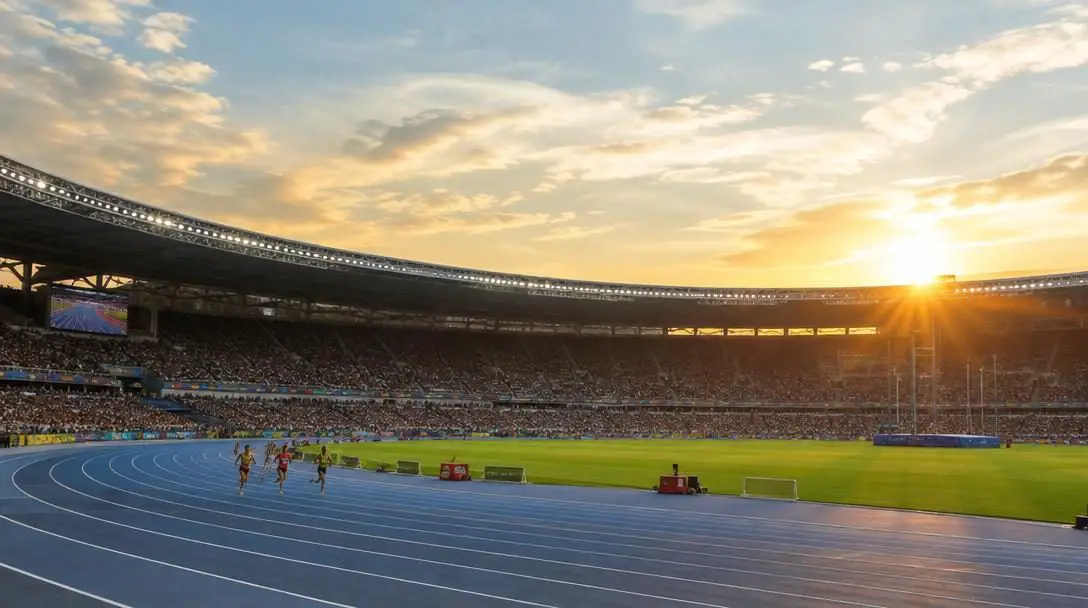
The Olympic Games serve as the premier global showcase where elite competitors assemble to test the absolute limits of human endurance, speed, and strength. While regional championships and seasonal tournaments routinely captivate sports fans, the quadrennial Olympic spectacle gathers international focus like no other event on earth. Over more than a century of modern competition, the Games have repeatedly converted amateur competitors into permanent cultural icons whose athletic feats resonate far beyond the boundaries of their sporting arenas.
The historical importance of these landmark achievements often stems directly from the turbulent eras during which they occurred. Whether unfolding against the tense political backdrops of the 1930s and the Cold War or shattering physiological boundaries in modern aquatics and track, these unforgettable moments demonstrate how extraordinary individuals perform under immense international pressure. Exploring the finest performances in Olympic history reveals not only athletic brilliance, but also profound lessons in perseverance, tactical preparation, and cultural impact.
Key takeaways
- Jesse Owens dismantled ideological propaganda at the 1936 Berlin Games by capturing four track and field gold medals.
- The 1980 United States men's ice hockey team achieved one of the greatest upsets in sports history by overcoming the Soviet Union's powerhouse professional roster.
- Florence Griffith Joyner established enduring sprint standards at the 1988 Seoul Olympics while transitioning her athletic fame into nationwide public health advocacy.
- Usain Bolt and Michael Phelps fundamentally rewrote the record books by displaying unprecedented consistency across multiple Olympic cycles.
Five legendary performances that shaped the Games
Across both summer and winter events, certain performances stand out for their historic significance, sheer athletic dominance, and enduring cultural resonance. The following comparative table highlights the key achievements of these iconic Olympic milestones before examining each competitor in detail.
| Athlete or Team | Olympic Games | Primary Discipline | Key Gold Medal Accomplishments |
|---|---|---|---|
| Jesse Owens | 1936 Berlin | Track and Field | 4 golds: 100m, 200m, Long Jump, 4x100m relay |
| 1980 U.S. Men's Ice Hockey Team | 1980 Lake Placid | Ice Hockey | 1 gold: 4-3 upset over USSR; win over Finland |
| Florence Griffith Joyner | 1988 Seoul | Track and Field | 3 golds: 100m, 200m, 4x100m relay |
| Usain Bolt | 2008 Beijing to 2016 Rio | Track and Field | 8 career golds: Three consecutive 100m/200m titles |
| Michael Phelps | 2004 Athens to 2016 Rio | Swimming | 23 career golds: Record 8 golds at 2008 Beijing Games |
Jesse Owens
- Olympic appearance: 1936 Summer Olympics (Berlin, Germany)
- Gold medals won: 4 (100m, 200m, Long Jump, 4x100m relay)
- Historical significance: Disrupted state-sponsored ideological propaganda
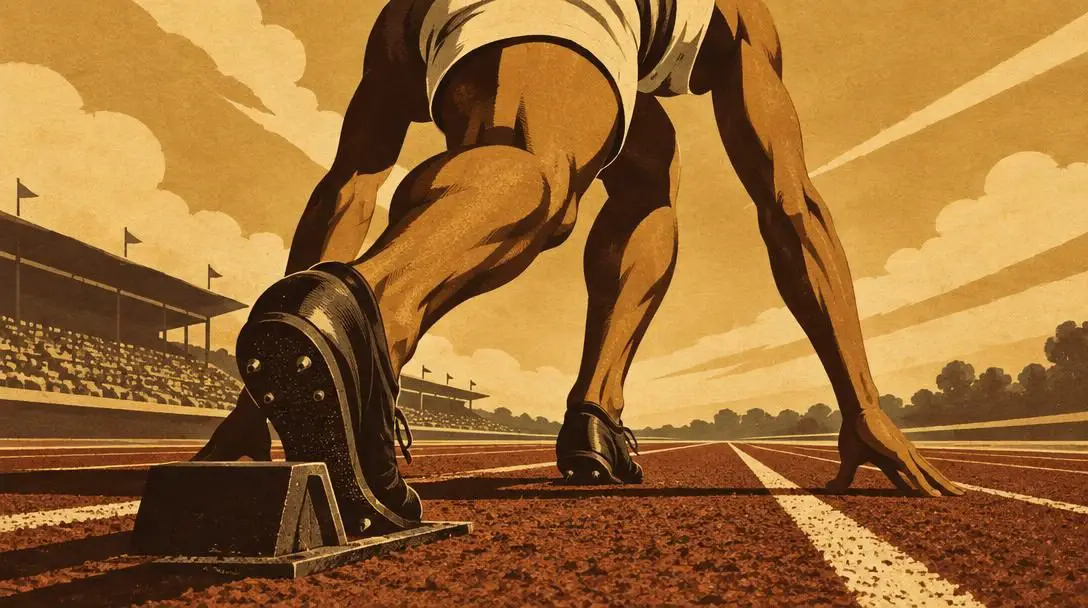
The 1936 Olympic Games in Berlin took place during a period of escalating global anxiety fueled by the rise of Nazi Germany and Adolf Hitler. The host regime intended to turn the international sporting platform into a showcase for its racial and ideological theories, going so far as attempting to exclude athletes of African descent from taking part in the competition. When that discriminatory effort was thwarted, American track star Jesse Owens delivered a decisive repudiation of the regime's dogmas through pure athletic excellence.
Owens dominated the competition by securing gold in the 100-meter dash, the 200-meter sprint, the long jump, and the 4x100-meter relay. His performance in the sprints proved electrifying, but pairing that raw straightaway speed with the vertical launch and precision required for the long jump captured the imagination of spectators worldwide. When Owens stood atop the medal podium saluting the American flag, he generated an indelible image of courage and excellence that remains one of the most celebrated moments in sporting history.
1980 United States Men's Ice Hockey Team

- Olympic appearance: 1980 Winter Olympics (Lake Placid, United States)
- Key match score: 4-3 victory against the Soviet Union
- Final outcome: Olympic Gold Medal (defeated Finland in final round)
Winter Olympic history witnessed its most dramatic athletic confrontation during the 1980 Winter Games hosted in Lake Placid, New York. The Soviet Union arrived at the men's ice hockey tournament as the undisputed favorite, fielding an elite roster of seasoned, world-class professional players who had dominated international hockey for decades. In contrast, the United States team was constructed entirely of amateur and collegiate players, positioning the upcoming medal-round matchup as an insurmountable challenge for the young American squad.
During the medal-round encounter, the underdog Americans matched the aggressive tempo of the powerhouse Soviets, trading goals to enter the first intermission deadlocked at 2-2. The Soviets regained control during the second period, scoring the frame's lone goal to carry a 3-2 lead into the final period of play. Rather than collapsing against the relentless Soviet attack, the American amateurs rallied in the third period, scoring two late goals to secure an astonishing 4-3 upset. Crucially, the tournament did not end there; the United States capitalized on the momentum of their historic triumph by defeating Finland in their final match to claim the Olympic gold medal.
Florence Griffith Joyner

- Olympic appearance: 1988 Summer Olympics (Seoul, South Korea)
- Gold medals won: 3 (100m, 200m, 4x100m relay)
- Civic leadership: Co-chair of the President's Council on Physical Fitness and Sports
The 1988 Summer Olympics in Seoul witnessed one of the most explosive individual sprint performances in track and field history courtesy of Florence Griffith Joyner. Known affectionately around the world as Flo-Jo, she entered the Seoul Games after shattering sprint records during Olympic trials and pre-Olympic competitions. Griffith Joyner matched the celebrated sprint double first achieved by Jesse Owens, capturing gold medals in both the 100-meter and 200-meter events before anchoring the American team to another gold in the 4x100-meter relay.
Griffith Joyner's impact extended rapidly beyond the track. Her distinctive style, confidence, and charisma turned her into a major cultural figure, earning her appearances on magazine covers and Wheaties cereal boxes across the nation. Recognizing her influence as a role model, President Bill Clinton appointed her in 1993 as the Co-chair of the President’s Council on Physical Fitness and Sports, where she advocated for youth athletics and national wellness. Though her life ended prematurely in 1998 at the age of 38 due to an epileptic seizure, her record-setting sprint achievements remain monumental benchmarks in women's athletic history.
Usain Bolt
- Olympic appearances: 2008 Beijing, 2012 London, 2016 Rio de Janeiro
- Career Olympic medals: 8 gold medals (zero silver or bronze)
- Key record: Three consecutive 100m and 200m Olympic titles
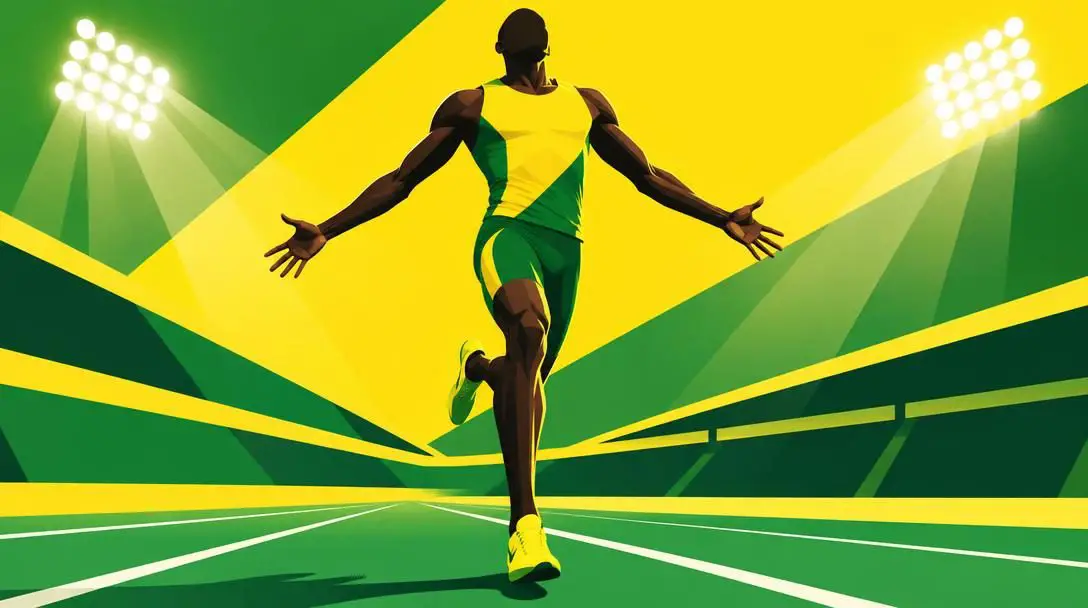
Modern sprinting reached a completely new threshold of speed and international popularity with the emergence of Jamaica's Usain Bolt. Bursting onto the global stage at the 2008 Summer Olympics in Beijing, Bolt seized gold medals in both the 100-meter and 200-meter races with jaw-dropping ease. What separated Bolt from brief sensations was his unprecedented longevity at the summit of sprinting. He sustained his peak performance across three consecutive Olympic cycles, finishing his Olympic career at the 2016 Games in Rio de Janeiro.
In Rio, Bolt completed an unprecedented sequence by capturing his third consecutive gold medal in the 100-meter dash, his third consecutive gold in the 200-meter dash, and his second gold medal in the 4x100-meter relay. This achievement brought his career total to eight Olympic gold medals, tying the all-time individual record for gold medals earned exclusively in running events. Most impressively, Bolt maintained a spotless record across his Olympic finals: every single Olympic medal he earned throughout his storied career was gold.
Remarkably, every single Olympic medal Usain Bolt earned across his career was gold.
Michael Phelps

- Career gold medals: 23 (most in Olympic history)
- Record single-games haul: 8 gold medals at the 2008 Beijing Olympics
- Prior shared gold record: 9 medals (Latynina, Nurmi, Spitz, Lewis)
While track sprinters command the world's attention with seconds-long bursts of speed, American swimmer Michael Phelps established a legacy built on superhuman versatility and endurance across four Olympic Games. Prior to Phelps's era, the record for the most career Olympic gold medals across all sports stood at nine, a mark shared by historic legends Larisa Latynina, Paavo Nurmi, Mark Spitz, and Carl Lewis. Phelps did not merely break this standard; he completely shattered it, ultimately collecting an astonishing twenty-three gold medals.
Phelps's crowning achievement arrived at the 2008 Beijing Games, where he accomplished the unprecedented feat of winning eight gold medals in a single Olympiad. His grueling campaign spanned three distinct swimming strokes: taking three golds in freestyle, three in individual medley events, and two in butterfly races. He proved his enduring dominance by capturing four additional gold medals at the 2012 London Olympics and five more at the 2016 Rio Games, cementing a career record that stands unmatched in the history of international competitive sport.
The anatomy of peak athletic execution
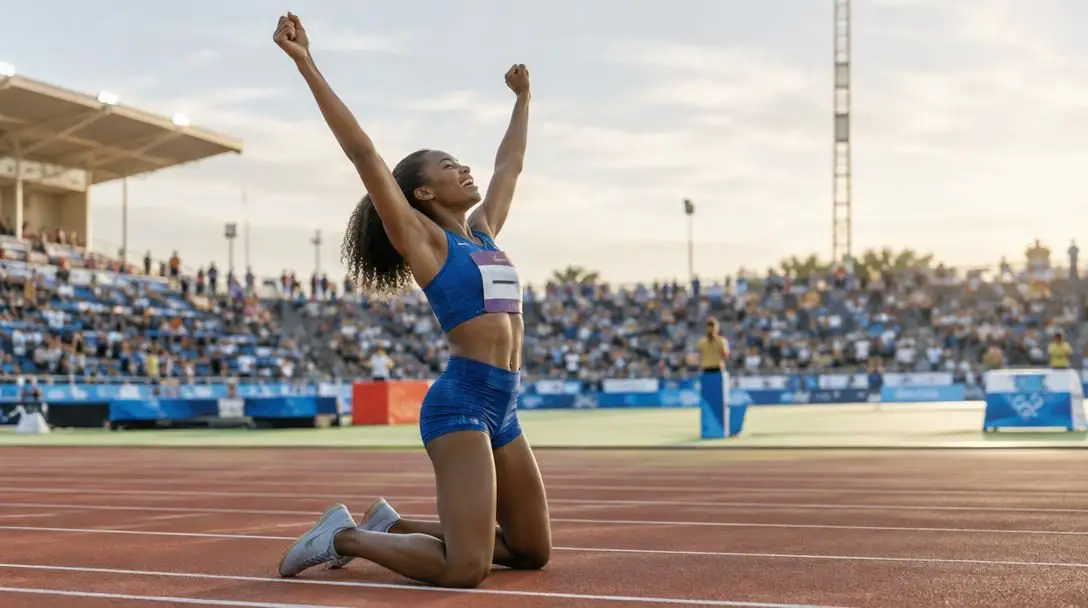
Achieving iconic status on the Olympic stage requires far more than natural physical gifts; it demands flawless tactical execution during the most high-stakes moments of an athlete's life. The mechanics behind these performances demonstrate how top performers operate when under immense competitive pressure:
- Sprint acceleration and maintenance: Short-distance races like the 100m and 200m sprints require rapid explosive power directly from the starting blocks, seamless transition into an upright sprint posture, and top-end speed maintenance all the way through the tape.
- Relay baton precision: Team relays such as the 4x100m require individual velocity to blend seamlessly with teammates. Passing the baton inside the legal exchange zone demands intense trust, spatial awareness, and acceleration to prevent disqualification or lost hundredths of a second.
- Underdog tactical endurance: The 1980 American hockey victory demonstrated how disciplined defense and opportunistic counter-attacking can neutralize superior talent. Surviving deficits and capitalizing on late-game opportunities allowed amateur players to outlast seasoned professionals.
- Multidisciplinary adaptability: Excelling across different events, as Jesse Owens did when combining sprint velocity with the explosive verticality of the long jump, requires mastering contrasting physical mechanics without compromising either discipline.
- Stroke diversification and aerobic recovery: Swimming eight grueling championship events across freestyle, butterfly, and medley disciplines requires distinct stroke mechanics, strategic pacing in preliminary rounds, and rapid physiological recovery between races.
How to study and evaluate historic Olympic achievements
For sports historians, researchers, and enthusiastic fans seeking to thoroughly understand and document milestones in Olympic history, following an organized approach ensures a balanced and historically grounded perspective.
- Examine the global geopolitical context: Investigate the political climate surrounding the Games. Analyze how events like the state propaganda of the 1936 Berlin Games or the Cold War tensions of the 1980 Lake Placid Games gave athletic matchups elevated real-world significance.
- Trace historic record progressions: Track how longstanding records shifted over time. Follow how the historic benchmark of nine career gold medals—shared for decades by Larisa Latynina, Paavo Nurmi, Mark Spitz, and Carl Lewis—was transformed into twenty-three by Michael Phelps.
- Analyze multi-discipline excellence: Identify competitors who mastered distinct athletic disciplines within a single Olympiad, such as Jesse Owens sweeping sprinting and long jumping, or Michael Phelps conquering butterfly, freestyle, and medley races.
- Evaluate cultural and civic impact: Look at the lasting societal influence athletes exerted beyond the stadium. Trace how figures like Florence Griffith Joyner leveraged their platform into national health initiatives through presidential appointments.
- Measure long-term consistency: Assess how elite competitors maintained their dominance across multiple Olympiads, evaluating the career longevity of champions like Usain Bolt across three Games and Michael Phelps across four.
Common misconceptions in Olympic sports history
When analyzing legendary athletic milestones, casual observers and researchers frequently encounter pervasive misconceptions that distort the reality of historical achievements. Recognizing these common errors provides a more accurate appreciation of athletic legacy:
- Assuming identical competitive backgrounds: Modern observers often assume all Olympic tournaments featured equal eligibility rules. In the 1980 hockey tournament, the Soviet team was composed of elite professional stars, while the American squad consisted solely of collegiate amateurs.
- Forgetting tournament structures: Highlighting a single dramatic match often obscures the necessary follow-up work. The U.S. hockey team's upset over the USSR did not award them the gold medal on the spot; they still had to rally to beat Finland in the final game.
- Confusing medal quantity with medal purity: When tallying medal tables, many assume multi-time champions hold a mixture of podium finishes. Usain Bolt stands out because every single Olympic medal in his eight-medal collection was gold, with zero silver or bronze finishes.
- Isolating solo crowns from relay teamwork: Observers frequently celebrate individual sprint dominance while overlooking relay contributions. Champions like Owens, Griffith Joyner, and Bolt were vital relay contributors, anchoring decisive 4x100m victories.
- Separating the athlete from the political moment: Treating competitions as isolated athletic events diminishes their magnitude. Jesse Owens's triumphs in Berlin were not merely track victories, but direct rebuttals to state-sanctioned racial dogmas before a global audience.
Frequently asked questions
How many gold medals did Jesse Owens win at the 1936 Olympics?
Jesse Owens won four gold medals at the 1936 Berlin Olympics. He placed first in the 100-meter dash, the 200-meter dash, the long jump, and the 4x100-meter relay, completely disrupting the host regime's political propaganda.
Did the 1980 U.S. hockey team win the gold medal by beating the Soviet Union?
Not directly. The 4-3 victory over the Soviet Union took place during the medal round. To secure the Olympic gold medal, the United States still had to play a final game, in which they defeated Finland.
What public role did Florence Griffith Joyner hold after her track career?
Following her record-setting sprint career, President Bill Clinton appointed Florence Griffith Joyner in 1993 as the Co-chair of the President's Council on Physical Fitness and Sports, where she championed youth athletics and nationwide wellness.
Did Usain Bolt ever win an Olympic silver or bronze medal?
No. Usain Bolt compiled a flawless Olympic medal record across his career. Every single one of his eight career Olympic medals was a gold medal, earned across the 2008, 2012, and 2016 Summer Games.
Who previously held the record for most Olympic gold medals before Michael Phelps?
Before Michael Phelps accumulated twenty-three gold medals, the record for the most career Olympic gold medals stood at nine, shared among four legendary athletes: Larisa Latynina, Paavo Nurmi, Mark Spitz, and Carl Lewis.
The bottom line
The history of the Olympic Games is defined by moments where personal discipline, technical perfection, and historical circumstance intersect. Jesse Owens confronting state-sponsored ideology in 1936, the 1980 American hockey team executing a monumental tactical upset against seasoned professionals, and Florence Griffith Joyner pairing world-record sprint speed with public service all show how sports can reverberate far past the stadium walls. Modern icons like Usain Bolt and Michael Phelps pushed human potential into entirely new realms, setting benchmarks that continue to challenge future generations.
By studying these iconic performances within their true historical and geopolitical contexts, fans and researchers gain a richer appreciation of international sport. Examining the physical mechanics, tournament progressions, and civic contributions of these champions proves that Olympic excellence is measured not only in medals won, but in the lasting impact left on the world.