The Neuroscience Of Puzzles – And How To Get Better At Solving Them
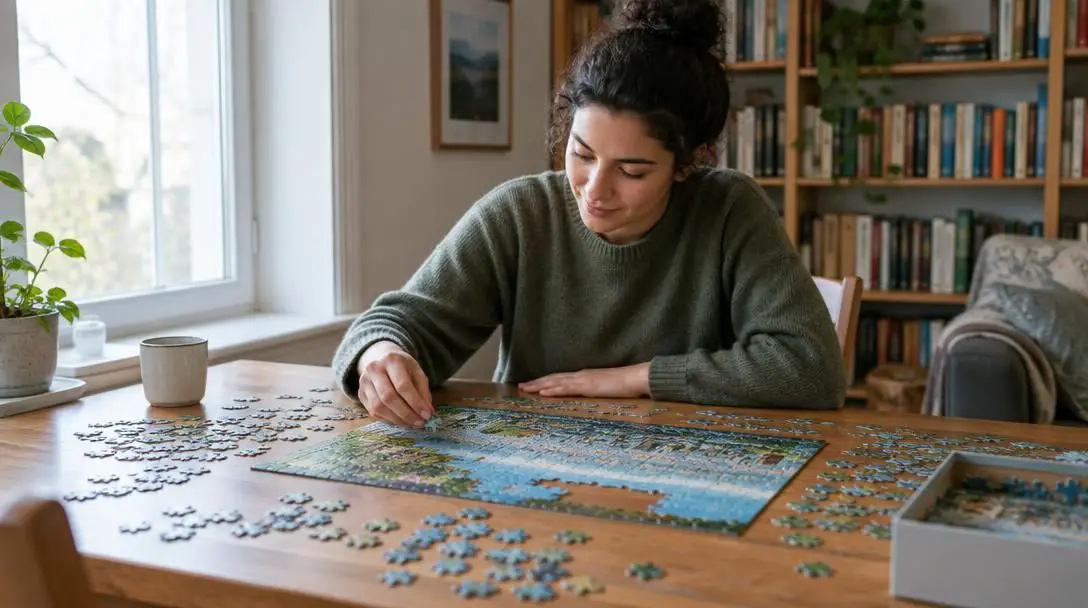
For centuries, human beings have turned to puzzles to pass the time, stimulate their intellect, and experience the quiet satisfaction of discovering hidden patterns. From ancient riddles etched into stone monuments to daily newspaper crosswords, intricate cardboard jigsaws, and numerical grids, people across cultures have created structured challenges that test perception, logic, and patience. What was once treated as a pleasant kitchen-table pastime is now recognized by modern science as a window into the inner workings of human thought.
Cognitive scientists and neurologists increasingly study how structured problem-solving affects neural pathways. As our culture seeks practical ways to preserve mental agility across the lifespan, puzzles have evolved from quiet diversions into valuable instruments for studying executive function, memory retrieval, and mental resilience. Examining the neuroscience behind these pastimes reveals not only what takes place across our neural circuits during a solving session, but also how deliberate habits can dramatically sharpen our problem-solving skills.
Key takeaways
- Puzzle-solving activates cognitive control by requiring working memory, mental flexibility, and distraction suppression to operate simultaneously.
- Different puzzle formats stimulate distinct brain systems, ranging from the semantic retrieval of crosswords to the spatial scanning of jigsaws.
- Research published in Frontiers in Aging Neuroscience links regular puzzle engagement with measurable improvements in attention, reasoning, and working memory.
- Stepping away from an unsolved section clears cognitive fixation, allowing the brain to process solutions without unhelpful mental bias.
- Deliberate techniques, such as systematic candidate elimination and visual pattern sorting, consistently outperform impulsive guessing.
The Neurological Architecture of Cognitive Control
When you sit down to tackle a puzzle, your brain does not simply rely on instinct or automated habits. Instead, it activates cognitive control, an executive management system coordinated largely by the prefrontal cortex. This high-level neurological network allows individuals to interact purposefully with an environment, evaluate competing stimuli, organize intermediate objectives, and pursue long-term goals. Without cognitive control, the brain would struggle to organize messy or incomplete data into coherent actions.
During any challenging puzzle session, cognitive control coordinates several distinct neurological operations in real time:
- Working memory: The mind retains active bits of information while actively manipulating them. When calculating possibilities, your working memory tracks constraints, discarded options, and spatial alignments without needing to write down every fleeting deduction.
- Inhibiting distractions: Solving requires the suppression of irrelevant external noises and stray internal thoughts. Crucially, it also demands cognitive inhibition, which stops you from choosing an intuitive but incorrect answer before verifying the underlying logic.
- Selecting the appropriate response: Puzzles present multiple divergent paths, most of which lead to dead ends. The brain runs mini-simulations of these paths, discarding faulty assumptions and selecting the action that strictly complies with the puzzle's internal rules.
As you progress through a problem, your brain constantly engages in a cycle of hypothesis testing, error detection, and tactical adjustment. If an initial assumption produces a contradiction, the brain relies on mental flexibility to abandon that track and adopt an alternative point of view.
When an initial hypothesis fails, cognitive control enables the mental flexibility required to abandon a stalled path and formulate a completely fresh strategy.
How Different Formats Challenge the Brain
While all puzzles enlist executive function, individual formats rely on different specialized neural networks. Understanding how specific puzzle styles stimulate the mind can help solvers tailor their mental workouts to target particular cognitive capacities.
Crossword Puzzles
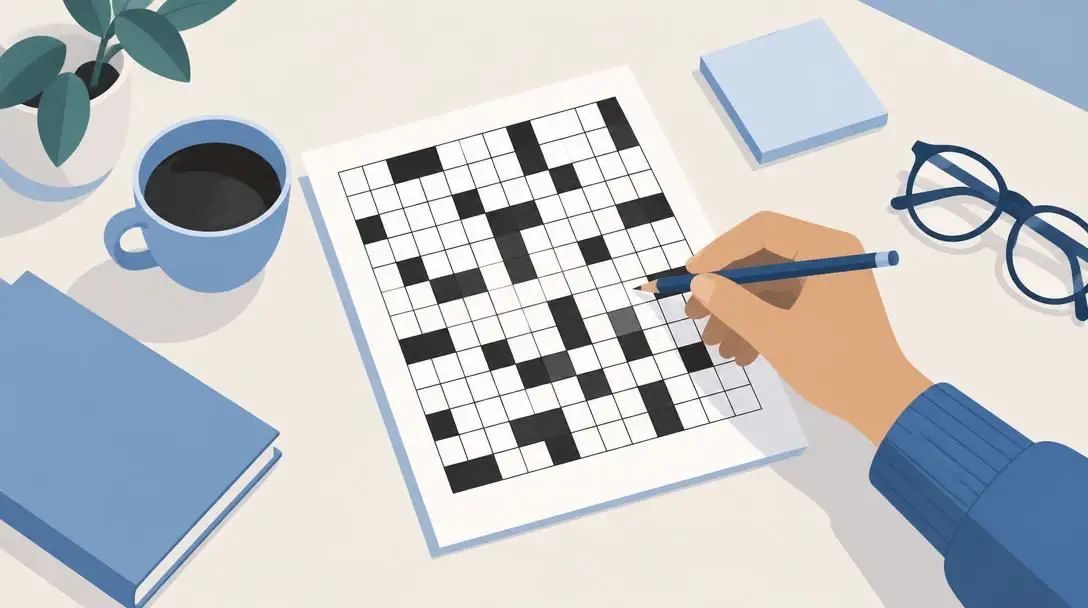
Crosswords engage language centers, relying heavily on semantic memory, verbal comprehension, and associative networks. Deciphering a clue requires the solver to search long-term memory stores, parse clever wordplay, and distinguish between literal and figurative definitions. Once a candidate word is retrieved, the brain applies the constraints of the grid, using working memory to confirm whether the word fits intersecting letters and thematic patterns.
Sudoku Puzzles
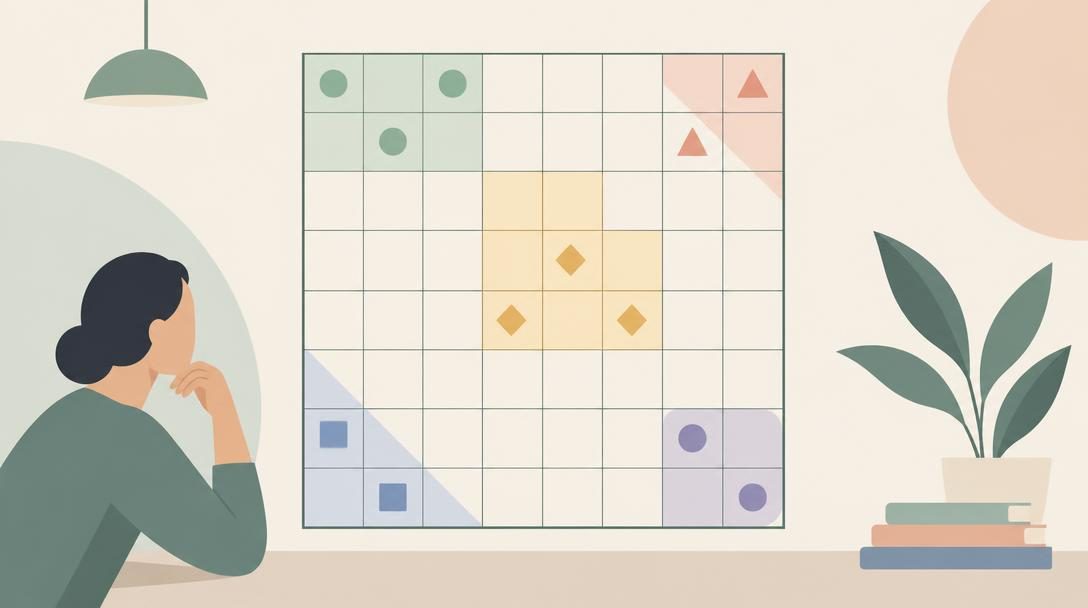
Sudoku completely strips away linguistic context, replacing words with pure deductive logic, visual scanning, and rule-governed relationships. Solvers do not perform mathematical calculations; instead, they manage sets of numbers as discrete symbols across intersecting rows, columns, and subgrids. The task demands systematic elimination, where working memory holds open candidate possibilities while the visual system scans the grid to identify spatial restrictions.
Jigsaw Puzzles

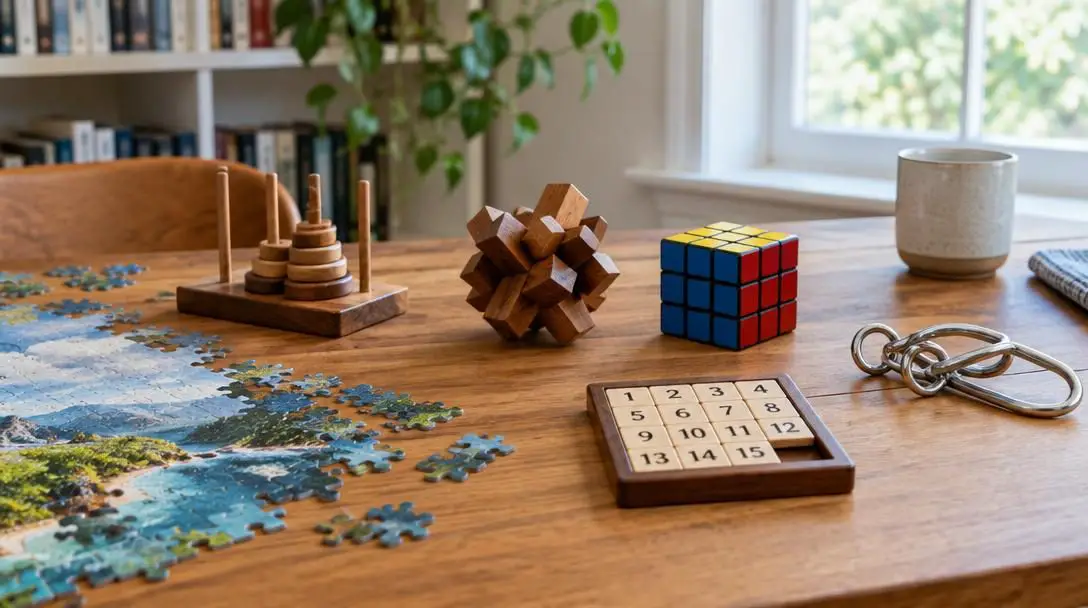
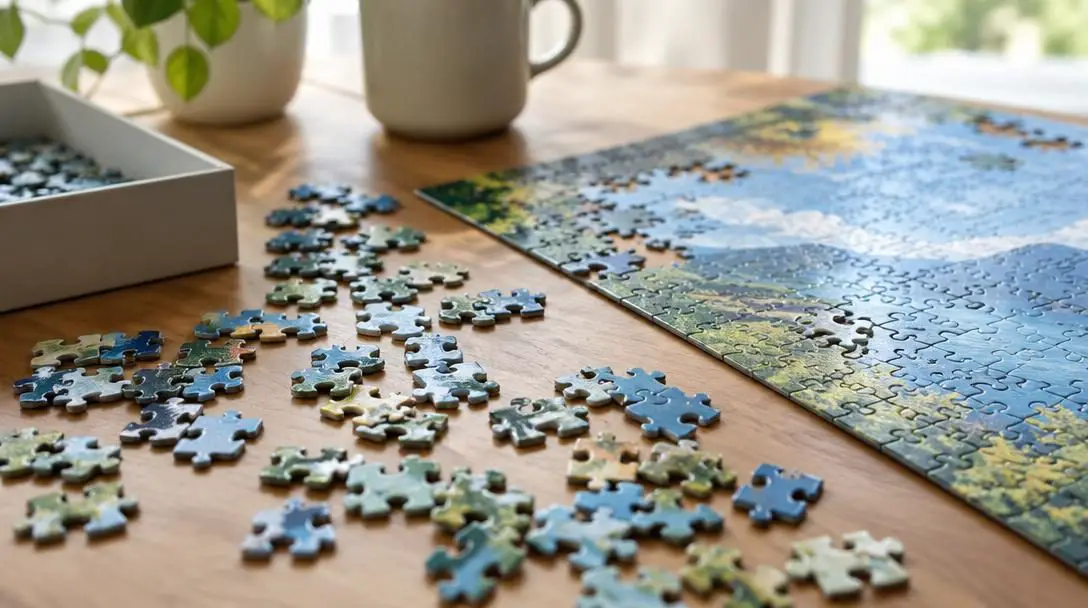
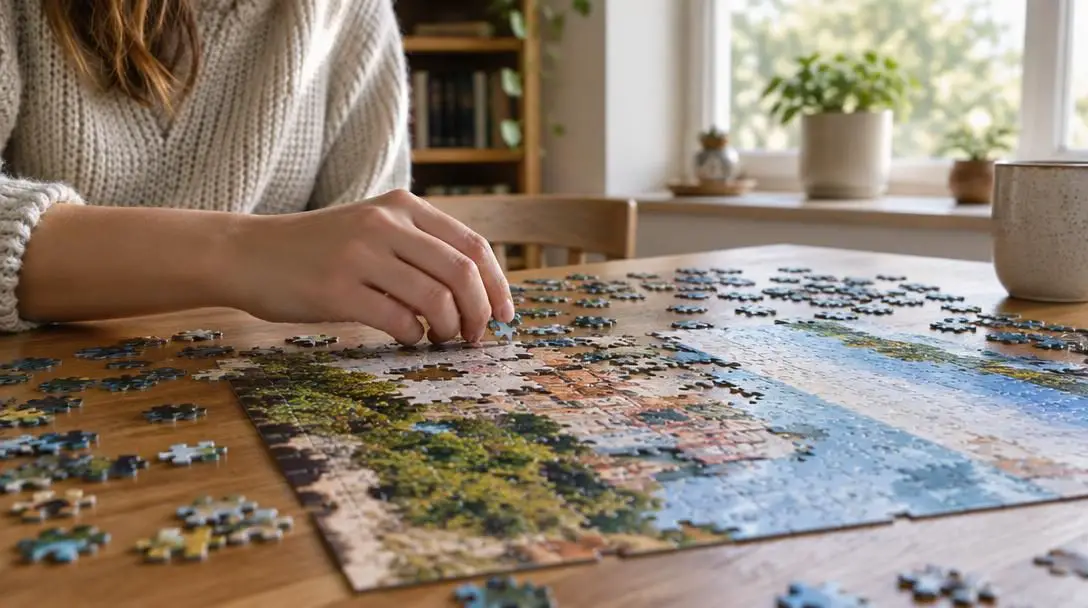
Jigsaw puzzles emphasize visuospatial processing, mental rotation, and fine motor coordination. Solvers must inspect physical shapes, subtle color gradients, surface textures, and line continuity. The visual cortex works in tandem with spatial memory systems to assess how an isolated piece might integrate into the larger composition, comparing individual tabs and blanks to the gaps visible on the table.
| Puzzle Format | Primary Brain Networks | Core Mental Mechanisms | Primary Solving Bottleneck |
|---|---|---|---|
| Crosswords | Semantic memory, verbal processing centers | Linguistic retrieval, lateral wordplay translation | Vocabulary limitations and ambiguous clue phrasing |
| Sudoku | Deductive logic systems, visual scanning circuits | Rule-based elimination, spatial constraint tracking | Premature guessing without absolute verification |
| Jigsaw Puzzles | Visuospatial networks, motor coordination cortex | Pattern recognition, mental rotation, edge matching | Visual clutter and unorganized piece collections |
Scientific Findings on Puzzles and Healthy Brain Aging
The long-term value of puzzle-solving extends far beyond transient entertainment. A notable body of scientific research indicates that routinely subjecting the brain to structured intellectual challenges supports healthy cognitive function and may provide defense against age-related cognitive decline.
In a study published in the journal Frontiers in Aging Neuroscience, researchers examined the effects of regular puzzle engagement on older adults. The participants who regularly solved puzzles exhibited measurable improvements across several fundamental cognitive dimensions, specifically working memory capacity, focused attention, and complex reasoning skills. Because the brain retains significant neuroplasticity throughout adult life, regularly presenting it with novel, structured problems helps maintain efficient communication between neural circuits.
Step-by-Step Strategies to Improve Your Solving Ability
Becoming an adept puzzle solver does not require innate genius. Rather, high-level solving is a structured skill built on consistent habits, deliberate methods, and emotional regulation. By formalizing your approach, you can systematically improve your accuracy and speed across any format.
- Master the foundational mechanics: When entering a new puzzle type, begin with introductory tiers. Working through basic puzzles solidifies the core rules, helps your brain build pattern-recognition templates, and prevents the frustration that stalls learning.
- Implement mental visualization: Before making a physical mark or moving a piece, manipulate the elements in your mind's eye. Practice mentally rotating a jigsaw piece to assess its alignment or running candidate numbers through a Sudoku cell to check for rule conflicts.
- Schedule deliberate cognitive breaks: If you find yourself staring blankly at a section without making progress, step away completely. Taking a brief walk or shifting tasks interrupts cognitive fixation, allowing subconscious processing to untangle the problem so you can return with fresh eyes.
- Collaborate with a solving partner: Working alongside another person exposes you to alternate analytical perspectives. A partner will frequently spot word associations, logic paths, or color gradations that fall outside your personal cognitive tendencies.
- Commit to regular, brief sessions: Daily engagement for fifteen to twenty minutes produces far greater cognitive adaptation than sporadic, multi-hour marathons. Regular practice cements deductive protocols into automatic mental routines.
Common Solving Pitfalls to Avoid
Even seasoned solvers encounter plateaus when unproductive habits creep into their routines. Recognizing these errors helps preserve your mental energy and maintain smooth cognitive processing.
- Rushing to guess without logical proof: In deductive formats like Sudoku, guessing introduces errors that cascade across the board. An unchecked assumption in one cell can invalidate an entire grid, forcing you to erase significant amounts of work.
- Tunneling on a single stubborn obstacle: Fixating on a solitary crossword clue or an elusive jigsaw segment consumes finite working memory and breeds cognitive fatigue. When an area resists your efforts, deliberately move your focus to an entirely different section.
- Neglecting initial organization: Diving directly into the center of a jigsaw puzzle without separating border pieces or grouping similar colors creates visual confusion that overwhelms the senses. Systematic sorting frees up working memory for pattern recognition.
- Pushing through extreme mental exhaustion: Continuing to solve when deeply fatigued leads to careless mistakes and diminishes the mental benefits of the activity. When solving feels tedious rather than engaging, set the puzzle aside.
- Remaining indefinitely in your comfort zone: Solving puzzles that present zero challenge deprives the brain of the friction required to trigger neuroplastic adaptations. Periodic exposure to harder puzzles is essential for mental growth.
How to Expand Your Mental Toolkit Over Time
Once you have developed solid solving habits, you can expand your cognitive benefits by diversifying your portfolio of puzzles. Solvers often settle into a single favored format, but broad cognitive health benefits from varied mental demands. If you primarily work through language-heavy crosswords, consider introducing number deduction or spatial challenges into your weekly routine.
Cross-training across formats ensures that different brain networks remain active. Balancing verbal retrieval with visuospatial manipulation and deductive logic builds broader mental resilience. Furthermore, you can vary the physical parameters of your hobby by attempting puzzles with tighter time limits, higher piece counts, or unconventional clue frameworks.
Frequently asked questions
Can regular puzzle-solving prevent cognitive decline as we age?
Research published in Frontiers in Aging Neuroscience shows that older adults who solve puzzles regularly experience tangible improvements in attention, working memory, and reasoning. While puzzles are not a guaranteed cure for neurodegenerative conditions, they build cognitive reserve and support healthy mental operations throughout life.
Why does stepping away from a stuck puzzle often reveal the solution?
When you focus intensely on a difficult problem, your brain can fall into cognitive fixation, repeatedly pursuing the same unworkable line of thought. Stepping away breaks this mental loop, allowing your attention to reset so you can evaluate the puzzle from a neutral perspective upon your return.
Does Sudoku require advanced mathematical skills to solve?
No. Sudoku is entirely a game of deductive logic and spatial elimination. Although it utilizes the digits one through nine, the numbers serve strictly as non-mathematical symbols; they could easily be replaced with letters, colors, or geometric shapes without altering the logic of the game.
How much time should I spend solving puzzles each day?
Consistency is far more beneficial than session duration. Dedicating fifteen to thirty minutes per day to structured puzzle-solving is sufficient to stimulate executive cognitive control, reinforce working memory, and build reliable deductive habits without causing mental fatigue.
Which type of puzzle provides the best overall brain workout?
No single puzzle format exercises every cognitive domain. Crosswords primarily challenge semantic memory and verbal associations, Sudoku trains deductive logic and systematic scanning, and jigsaws engage visuospatial processing. A balanced rotation of multiple formats provides the most comprehensive mental stimulation.
The bottom line
Puzzles are far more than idle diversions; they are dynamic workouts that recruit the brain's executive control systems, working memory, and analytical networks. Whether you are deciphering an obscure crossword clue, eliminating candidates in a Sudoku grid, or fitting fragments of a jigsaw together, you are actively engaging in hypothesis testing, spatial analysis, and mental problem-solving.
By approaching puzzles with deliberate methods—starting at approachable difficulties, using visualization, stepping away when stuck, and avoiding the urge to guess—you can rapidly elevate your solving proficiency. Embracing a diverse selection of puzzles enriches your leisure time, sharpens your reasoning faculties, and helps keep your mind agile and engaged for years to come.