The Survival Guide: Ranking 5 Countries Based On How They Would Fare In A Zombie Apocalypse
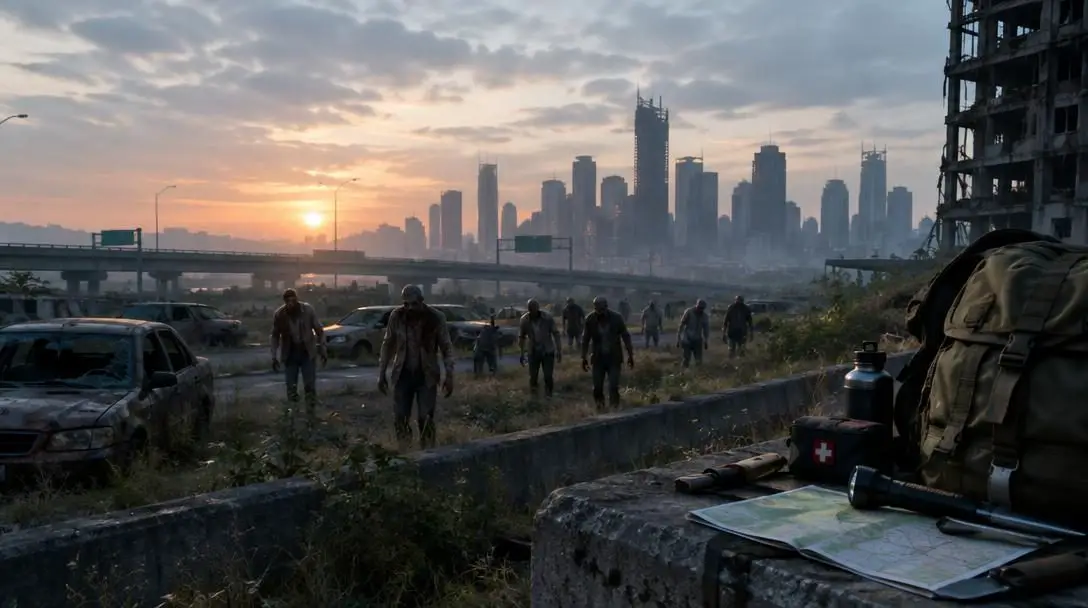
Pop culture has long maintained a deep fascination with global collapse scenarios sparked by the living dead. Through apocalyptic cinema, bestselling fiction, and television dramas, audiences frequently analyze how modern civilization might fracture when conventional social orders disintegrate. While an actual reanimation of the deceased belongs firmly within the realm of fantasy, evaluating how sovereign nations would manage an overwhelming systemic collapse serves as an insightful thought experiment in geography, civil defense, public health logistics, and strategic resource allocation.
Every nation on Earth operates under a distinct set of geographical, demographic, and logistical circumstances that dictate its survival potential. In an unprecedented national emergency, variables such as territorial border security, regional climate extremes, population density, civilian self-defense access, and underlying civic preparedness determine whether a country can hold its ground or rapidly collapse. Examining these dynamics reveals why certain nations possess built-in operational advantages while others would face severe structural crises from the onset of a disaster.
Key takeaways
- The United States claims the top position due to an expansive military, vast civilian firearm ownership, and a massive, topographically varied landmass.
- Russia secures second place through its enormous geographic footprint, remote wilderness retreat zones, and historically brutal winter climate.
- Australia and Iceland demonstrate how maritime isolation and low population density significantly minimize the rate of external contamination.
- Japan offsets high urban density and restricted civilian weapon access through rigorous organizational culture, disaster readiness frameworks, and natural island borders.
At a glance: National survival capabilities compared
Evaluating national resilience requires balancing defensive assets against inherent geographic and demographic vulnerabilities. The following matrix highlights how the five ranked nations compare across key strategic categories during an unprecedented civil defense crisis.
| Country | Rank | Primary Geographic Advantage | Defensive Profile | Key Structural Vulnerability |
|---|---|---|---|---|
| United States | 1 | Immense land area with diverse terrain | Vast military power and widespread civilian firearms | High-density metropolitan clusters |
| Russia | 2 | Vast territorial expanse and freezing climate | Resilient regional populations and remote outposts | Harsh seasonal weather requiring survival expertise |
| Australia | 3 | Continental oceanic isolation | Extended response time to secure ports and borders | Dense coastal population centers |
| Iceland | 4 | Isolated North Atlantic island territory | Tiny base population of roughly 350,000 residents | Absence of major military hardware |
| Japan | 5 | Surrounding ocean waters enabling early detection | Institutional disaster preparedness and coordinated planning | Extremely crowded cities and lack of civilian firearms |
Ranking the top five countries for apocalypse survival
When assessing how individual countries would fare against a catastrophic biological or societal collapse, strategic evaluation must emphasize border security, defensive tools, climate resilience, and population dispersion. These five nations demonstrate the most distinctive advantages for outlasting a catastrophic event.
United States

- Rank: 1
- Defensive strength: Vast civilian armaments and powerful military
- Terrain profile: Mountain ranges, deserts, thick forests, and open plains
The United States claims the foremost rank due to its unmatched defensive capabilities and immense geographical depth. Central to its defensive posture is an extraordinary abundance of firearms and ammunition distributed throughout the civilian population, complemented by one of the most technologically advanced and well-equipped armed forces in the world. In the event of widespread civil unrest or an overwhelming external threat, the country maintains the logistical and kinetic capacity to suppress mass incursions and construct fortified perimeters.
Beyond defensive firepower, the physical dimensions of the United States present a monumental strategic asset. Spanning millions of square miles, the American landscape encompasses towering mountain systems, arid deserts, vast interior plains, and dense forests. These varied topographies provide displaced populations, civilian survivor networks, and military remnants with innumerable safe harbors to establish self-sustaining fortifications far away from failing urban hubs.
Russia

- Rank: 2
- Primary asset: Enormous land area and extreme seasonal cold
- Population distribution: Scattered settlements across vast wilderness zones
Holding the second position, Russia benefits directly from its unmatched territorial scale and famously unforgiving climate. Historically, severe sub-zero temperatures and unforgiving winter conditions have thwarted well-organized invading armies, and those exact environmental barriers would offer decisive protection against hordes of mindless undead. Sub-zero temperatures would inevitably freeze biological threats in their tracks, granting survivors prolonged seasonal lulls to reinforce outposts and forage for resources.
Furthermore, the general population across Russia possesses an inherent cultural resilience shaped by enduring extreme meteorological conditions. Outside of sprawling urban hubs like Moscow and Saint Petersburg, the country contains immense swathes of uninhabited wilderness and dense taiga. Small groups of survivors could readily retreat into these remote inland frontiers, effectively insulating themselves from high-density contagion points while relying on regional self-sufficiency.
Australia

- Rank: 3
- Strategic edge: Oceanic isolation from continental landmasses
- Interior geography: Expansive, sparsely populated outback territory
Australia secures the third rank primarily through the defensive power of continental isolation. Unlike nations situated along contiguous land corridors, Australia is separated from foreign population centers by thousands of miles of ocean. In the event of a rapidly advancing global virus, Australian authorities would enjoy precious advance warning, allowing civil defense authorities ample time to shutter maritime ports, ground international flights, and establish strict quarantine protocols before incoming vessels could compromise the mainland.
Although the Australian civilian population does not possess the staggering firearm reserves found in the United States, its internal geography offers an effective secondary shield. Most of the nation's residents reside in coastal cities, leaving a massive, arid interior that is largely uninhabited. Survivors capable of navigating the outback could establish highly secure, decentralized encampments where the risk of encountering infected individuals would remain practically nonexistent.
Geographical barriers serve as the first line of defense during any border-wide containment operation, halting contamination simply because open water cannot be crossed without functional transit.
Iceland

- Rank: 4
- Population size: Approximately 350,000 residents
- Location: Isolated North Atlantic island
Iceland stands out as an exceptional refuge due to its extreme geographic remoteness and sparse demographic footprint. Perched in the North Atlantic, the nation is structurally insulated from continental Europe and North America. Massive waves of infected carriers or displaced refugees would find it virtually impossible to reach Iceland's rocky shores without operational maritime or aviation transport, both of which would collapse rapidly during a catastrophic event.
Demographics further elevate Iceland's defensive stability. With a total population of approximately 350,000 individuals spread over rugged volcanic terrain, the nation has an exceptionally low population density. In a hypothetical contagion, a tiny baseline population means there are simply very few people available to contract an infection and turn into threats, ensuring that any localized outbreaks remain small, traceable, and physically manageable for local communities.
Japan

- Rank: 5
- Defensive profile: High institutional discipline and civil coordination
- Geographic border: Island perimeter facilitating maritime surveillance
Rounding out the ranking at number five, Japan presents a complex combination of notable vulnerabilities and formidable structural advantages. The country faces serious defensive liabilities due to its dense metropolitan clusters and strict legal restrictions on civilian firearm ownership, which would leave ordinary urban residents with limited tools to defend themselves against immediate threats in enclosed environments.
However, Japan balances these challenges with an island perimeter and an institutional culture steeped in comprehensive disaster preparedness. Encircled by water, Japan's defense apparatus can effectively monitor shorelines and intercept maritime threats before they breach coastal defenses. More importantly, Japanese society maintains world-class civic coordination, institutional planning, and emergency protocols, ensuring that administrative agencies and neighborhood organizations can rapidly mobilize orderly defensive measures when catastrophic disasters strike.
Core dynamics: What determines national survival in a collapse?
The ability of an entire society to withstand an overwhelming systemic shock rests on foundational structural components. When regular commerce, digital networks, and centralized civil governance fail, a country must fall back entirely on its geography, demographics, and baseline emergency culture.
Natural geographic boundaries represent the initial barrier against uncontrollable infection. Mountain chains, broad rivers, vast deserts, and open seas dramatically restrict movement. Insular landmasses and remote island nations enjoy a natural buffer against external threats because water cannot be crossed without functional maritime navigation or aviation. Conversely, landlocked countries featuring porous, flat borders struggle to prevent cross-border contamination from sweeping across adjacent territories.
Population density and dispersion dictate the speed at which a societal breakdown intensifies. High-density urban corridors present extraordinary hazards during a viral or biological catastrophe. Millions of people packed into close quarters, sharing subways, high-rise buildings, and centralized utility grids, create an environment where contagion and panic spread exponentially. In contrast, vast rural regions dilute threats, giving remote communities the time and space required to construct sustainable defenses.
Defensive infrastructure and community planning determine whether a society can sustain prolonged resistance. While high stockpiles of firearms and munitions enable communities to eliminate immediate physical hazards, long-term survival hinges equally on administrative resilience. Societies that regularly conduct disaster drills, maintain decentralized emergency plans, and foster civic discipline can organize communal defense and resource allocation far more effectively than nations that lack systemic preparation.
Actionable protocols: Practical steps for severe disruptions
While an invasion by the undead is fictional, the core competencies required to navigate catastrophic breakdowns apply directly to extreme natural disasters, electrical grid failures, and severe pandemic events. Implementing structured, proactive steps safeguards families and local networks during systemic emergencies.
- Establish redundant communication protocols: Because modern cellular networks and commercial internet services fail rapidly during structural crises, invest in analog communication tools. Secure battery-powered emergency radios, multi-channel walkie-talkies, and prearranged physical rendezvous locations to coordinate movements without cellular infrastructure.
- Secure shelf-stable food and hydration supplies: Supply chains empty within hours of a major disruption. Stockpile non-perishable foodstuffs, high-volume gravity water filtration units, and sealed potable water reserves to maintain independent survival capabilities during the chaotic initial phase of a crisis.
- Identify secondary retreat locations: Metropolitan centers become hazardous bottlenecks during sustained emergencies. Map out primary and secondary escape routes toward sparsely populated, naturally defensible locations equipped with access to clean water and defensible shelter.
- Compile essential medical and safety tools: Assemble comprehensive trauma kits, personal prescription medications, broad-spectrum sanitizing agents, and tools for physical perimeter security to manage critical health issues without external medical infrastructure.
- Develop self-reliance and field repair skills: Gear is useless without operational knowledge. Practice manual land navigation using compasses and topographical maps, learn basic mechanical repair, and train in emergency first aid to preserve functional independence when civil services vanish.
Critical pitfalls: Common mistakes during emergency situations
In high-stress survival scenarios, psychological panic often produces impulsive decisions that drastically increase vulnerability. Avoiding these well-documented missteps is vital to maintaining operational safety.
- Hesitating to execute emergency plans: Waiting until a crisis reaches an absolute breaking point severely narrows available survival options, leaving evacuees trapped by congested roadways, stripped supply shelves, and emergency border closures.
- Flocking to major transit hubs and distribution centers: Gravitating toward airports, main interstate corridors, and crowded government relief stations places individuals directly into chaotic bottlenecks where contamination, theft, and crowd stampedes peak.
- Underestimating the importance of climate and geography: Fleeing aimlessly into rugged wilderness or freezing northern forests without specialized environmental gear or survival expertise often leads to hypothermia, dehydration, and fatal exposure.
- Neglecting operational security: Broadcasting possession of food stores, fuel caches, or tactical equipment draws immediate, unwanted attention; maintaining a low noise, light, and visual profile is essential for safeguarding any outpost.
- Failing to account for mental fatigue and morale: Sustained emergencies inflict severe psychological trauma, and ignoring emotional exhaustion leads to clouded judgment, internal group friction, and critical lapses in situational awareness.
Frequently asked questions
Why is the United States ranked first for surviving a zombie apocalypse?
The United States leads the ranking due to its exceptional defensive firepower, including an immense military apparatus and vast civilian firearm ownership, combined with millions of square miles of diverse, defensible terrain such as mountain ranges, deserts, and forests.
How does Russia's climate provide an advantage during a catastrophic outbreak?
Russia's freezing temperatures and severe seasonal weather act as natural environmental barriers against physical threats, while its sprawling territorial landmass offers remote wilderness frontiers where survivors can retreat far from densely populated urban centers.
What makes Australia safer than nations connected by land borders?
Australia benefits from its complete geographic isolation as an island continent, which grants authorities significant lead time to seal ports, ground flights, and enforce quarantines, alongside a vast, uninhabited interior outback that offers expansive safe zones.
Why does Iceland's small population work in its favor during a crisis?
With only around 350,000 residents, Iceland's low population density means that there are very few people who could potentially spread contagion, keeping any potential outbreak localized, manageable, and easy to contain across its rugged terrain.
How can Japan survive without widespread civilian firearm ownership?
Japan compensates for restricted firearm access and high population density through its surrounding maritime perimeter, which allows coastal defenses to intercept threats, paired with an institutional culture that excels at coordinated disaster preparedness and emergency planning.
The bottom line
Hypothetical apocalyptic exercises demonstrate that national survival is not determined by a single factor, but rather by the intersection of geography, demography, defensive capabilities, and civil organization. The United States provides unmatched defensive assets, Russia offers harsh climate protection and boundless frontiers, Australia and Iceland prove the overwhelming value of maritime isolation, and Japan exemplifies the importance of disciplined institutional planning. For individuals and communities, studying these national dynamics highlights the vital importance of evaluating local geography, avoiding crowded transit centers, and maintaining personal self-reliance when navigating severe real-world emergencies.